The RBG Necklace: Anatomy of the Iconic Dissent Collar Pendant
Explore the technical anatomy of the RBG necklace. We analyze metal grades, enamel techniques, and chain gauges of the iconic dissent collar pendant.

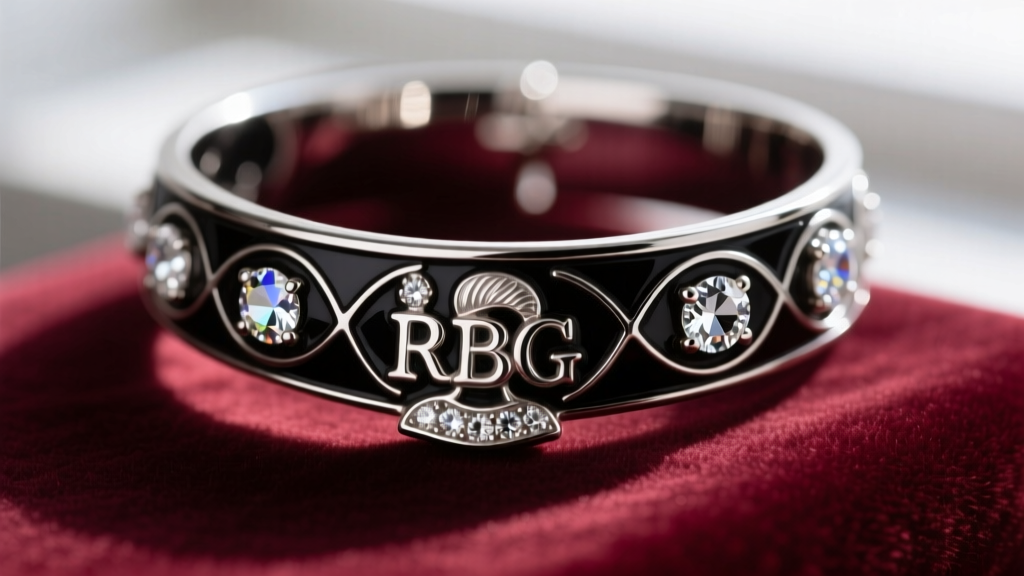
The Historical Blueprint: Translating Judicial History into Jewelry
The "RBG necklace" has transcended mere political merchandise to become a sophisticated category of statement jewelry. Inspired by the late Supreme Court Justice Ruth Bader Ginsburg, these pieces specifically replicate her iconic judicial collars, or jabots. As documented by NPR in their landmark 2014 interview, Justice Ginsburg utilized specific collars to signal her judicial stance: a cream-colored, gold-embroidered collar for majority opinions, and a stark black collar with metallic mirrors for her famous dissents.
Translating a fabric jabot into a rigid metallic pendant requires precise engineering. A proportional RBG dissent collar pendant typically measures between 42mm and 48mm in width, with a center drop of 30mm to 38mm. Because the original collar featured a scalloped, ruffled neckline, high-end jewelers utilize 3D CAD (Computer-Aided Design) modeling to recreate the undulating waves of the fabric, ensuring the metal casting captures the organic flow of the original textile before it is sent to the lost-wax casting tree.
Metallurgy and Material Grades in RBG Pendants
The longevity and wearability of an RBG necklace depend entirely on the base metal and subsequent plating processes. Because the dissent collar design relies heavily on high-contrast black backgrounds, the choice of metal is critical.
Base Metals and Rhodium Flashing
Premium RBG pendants are cast in 925 sterling silver. However, raw sterling silver is highly susceptible to oxidation, which would quickly ruin the stark contrast required for a dissent collar. To combat this, expert manufacturers apply a rhodium flashing—a platinum-group metal that is highly resistant to tarnish. A standard rhodium plate is 0.1 to 0.2 microns thick, providing a bright, white-metal finish that ensures the black enamel elements remain visually striking for decades.
Gold Vermeil vs. Standard Plating
For those preferring the "Majority Collar" aesthetic or gold accents on the dissent piece, understanding the difference between gold vermeil and standard gold plating is vital. According to the Federal Trade Commission Jewelry Guides, gold vermeil must consist of a sterling silver base plated with at least 10-karat gold to a minimum thickness of 2.5 microns. Entry-level RBG necklaces often use brass bases with a mere 0.5 microns of gold plating, which will wear through to the base metal within months of daily friction against the skin and clothing. Always verify the "2.5-micron vermeil" specification when purchasing gold-toned RBG jewelry.
Enamel Techniques: Champlevé vs. Cold Epoxy
The defining feature of the dissent collar is its deep, opaque black sections interspersed with metallic or crystalline accents. Jewelers achieve this through enamel work, but the technique used dictates the heirloom value of the piece.
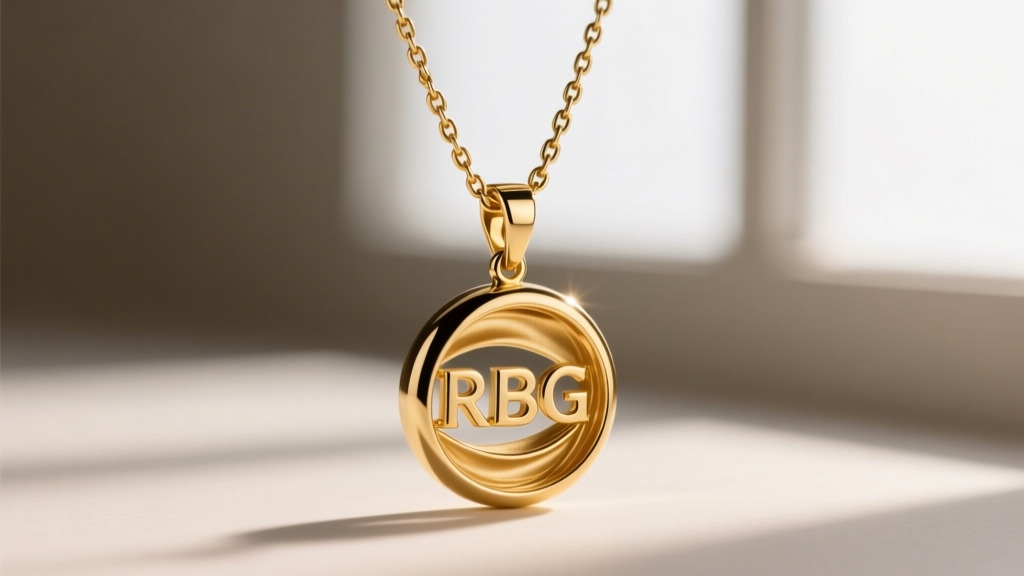
Vitreous Enamel (Champlevé)
Master jewelers use the champlevé technique, where troughs are carved or cast into the sterling silver base and filled with vitreous (glass) enamel powder. The piece is then fired in a kiln at approximately 1400°F (760°C). This fuses the glass to the metal, creating a scratch-resistant, UV-stable black finish that will never yellow or chip under normal wear conditions. The surface is then lapped and polished flush with the silver bezels.
Cold Enamel (Epoxy Resin)
Mass-market RBG necklaces often substitute vitreous enamel with "cold enamel," which is essentially a two-part epoxy resin tinted with black pigment. While cheaper to produce and capable of being cured at room temperature, epoxy resin has a Mohs hardness of only 2 to 3, making it highly susceptible to micro-scratches. Furthermore, epoxy resins degrade under prolonged UV exposure, often developing a cloudy, yellowish undertone after two to three years of regular wear.
Articulation and Drape: Engineering the Collar Necklace
The most common failure point in poorly designed RBG necklaces is a rigid, solid-cast pendant that sticks out awkwardly from the wearer's sternum. The human chest is curved, and a flat, 45mm-wide piece of metal will not lay flush against the collarbone.
To solve this, expert jewelry engineers utilize micro-articulation. Instead of casting the collar as a single solid piece, the pendant is designed in three to five distinct horizontal segments. These segments are joined by microscopic stainless steel or sterling silver hinge pins, similar to the links of a luxury watch band. This segmented drop technique allows the metal collar to flex and drape naturally over the clavicle, mimicking the actual behavior of Justice Ginsburg's fabric jabot. When evaluating an RBG necklace, gently flex the pendant; if it moves fluidly in horizontal segments, it is a mark of superior craftsmanship.
Material and Construction Matrix
| Tier | Base Metal | Enamel Type | Articulation | Estimated Price Range |
|---|---|---|---|---|
| Entry-Level | Brass / Zinc Alloy | Cold Epoxy Resin | Solid Cast (Rigid) | $25 - $50 |
| Mid-Tier | 925 Sterling Silver | Cold Epoxy / Basic Glass | Solid Cast with Curved Mold | $60 - $120 |
| Heirloom | 925 Silver / 2.5μ Vermeil | Kiln-Fired Champlevé | Micro-Hinge Segmented | $150 - $350+ |
Chain Selection: Gauge, Length, and Clasp Mechanics
An articulated, enameled RBG collar pendant is surprisingly heavy, typically weighing between 10 and 16 grams. Suspending this weight requires a chain engineered for tensile strength, not just delicate aesthetics.
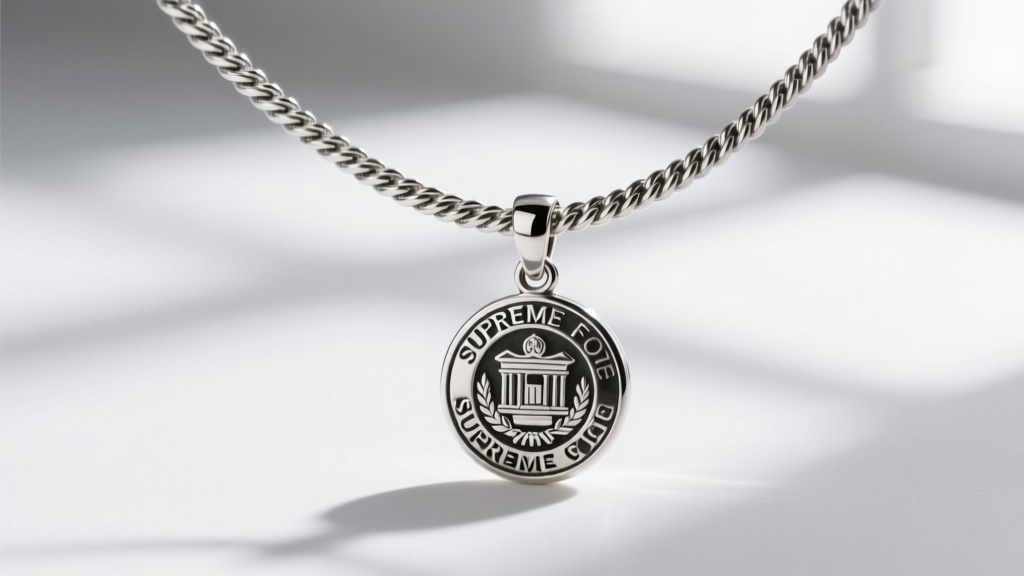
Optimal Chain Gauges and Weaves
Avoid chains thinner than 1.0mm. The ideal pairing for an RBG pendant is a 1.2mm to 1.5mm Box chain or Rope chain. Box chains offer excellent structural integrity due to their interlocking square links, which distribute the pendant's weight evenly and resist kinking. Rope chains provide a more traditional, textured look that complements the intricate scalloping of the collar pendant. Both weaves possess a high tensile strength capable of supporting up to 30 grams of dead weight without link deformation.
Clasp Hardware and Bail Integration
The bail (the loop connecting the pendant to the chain) on a high-quality RBG necklace should be a soldered, 3mm inner-diameter tube bail rather than a flimsy pinch-bail. For the clasp, a standard spring-ring is insufficient and difficult to operate one-handed. Look for a 12mm or 15mm swivel lobster claw clasp. The swivel mechanism is crucial; it prevents the chain from twisting upon itself, which is a common issue when wearing heavy, front-loaded pendants. As noted by the Smithsonian Magazine, the cultural weight of these collars is immense, and the hardware supporting them should reflect that gravity with uncompromising mechanical reliability.
Conclusion: Wearing the Legacy
An RBG necklace is more than a tribute; it is a complex intersection of historical homage and precision metallurgy. By scrutinizing the micron thickness of the vermeil, demanding kiln-fired champlevé enamel over cheap epoxies, and insisting on micro-hinged articulation, collectors can acquire a piece of jewelry that truly honors the enduring, unyielding legacy of the Notorious R.B.G. Whether signaling a dissent or celebrating a majority, the structural integrity of your collar ensures the message remains sharp, polished, and unbreakable.


