Examining the Real Necklace in the Titanic: Gemology and History
Discover the technical truth behind the necklace in the Titanic. We analyze Edwardian metallurgy, recovered artifacts, and cinematic gemology.

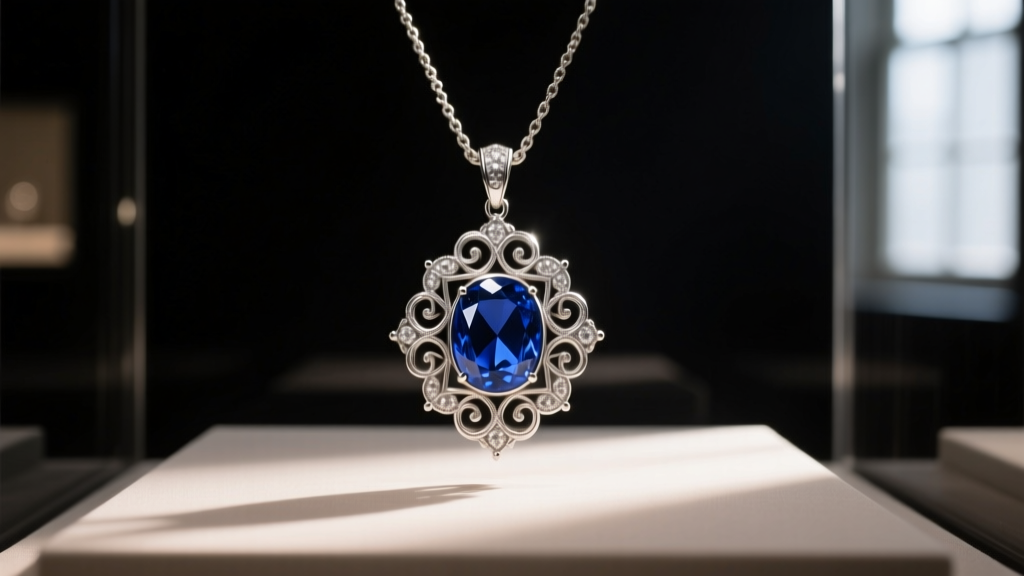
When enthusiasts and historians search for the real necklace in the Titanic, they are often chasing a cinematic ghost. The legendary "Heart of the Ocean" is a fictional construct designed for James Cameron’s 1997 blockbuster. However, the RMS Titanic was carrying millions of dollars in real jewelry, including exquisite Edwardian necklaces, lockets, and pendants that ultimately rested at the bottom of the North Atlantic for over a century.
As jewelry historians and gemologists, we must separate Hollywood lore from metallurgical reality. This deep dive examines the actual necklace artifacts recovered from the wreck, the technical specifications of 1912 Edwardian jewelry manufacturing, and the gemological anomalies of the cinematic replicas that continue to confuse modern collectors.
The Artifact Record: Real Necklaces Recovered from the Wreck
Expeditions led by RMS Titanic Inc. have recovered over 5,500 artifacts, including several deeply personal pieces of jewelry. Unlike the massive blue diamond of film lore, the real necklaces aboard the ship reflected the height of the Edwardian era (1901–1915). The most famous recovered necklace is a gold locket containing photographs, often referred to as the "Amy" necklace, alongside various platinum and diamond pendants.
The survival of these necklaces is a testament to the nobility of the metals used. Resting at a depth of 3,800 meters, the artifacts were subjected to near-freezing temperatures, immense pressure, and Halomonas titanicae—a rust-eating bacterium. While the steel hull and iron chain links succumbed to galvanic corrosion and bacterial decay, the platinum and high-karat gold pendant settings remained remarkably intact, albeit encased in hard, calcified concretions.
Technical Breakdown: 1912 Edwardian Metallurgy and Gemology
To understand the authentic necklace in the Titanic, one must understand the technological leaps in jewelry making that occurred just prior to 1912. The Edwardian era was defined by the widespread adoption of platinum and specific diamond cutting styles.
The Platinum Revolution
Before the invention of the oxyacetylene torch in 1903, jewelers struggled to melt platinum due to its high melting point (1,768°C). By 1912, platinum had become the premier metal for high-society necklaces. Its immense tensile strength allowed jewelers to create incredibly delicate, lace-like openwork and millegrain (tiny beaded metal edges) that would snap if crafted in silver or gold. An authentic 1912 pendant would likely be stamped with a "900 Pt" or "950 Pt" hallmark, often alloyed with iridium or ruthenium for hardness.
Old European Cut (OEC) Diamonds
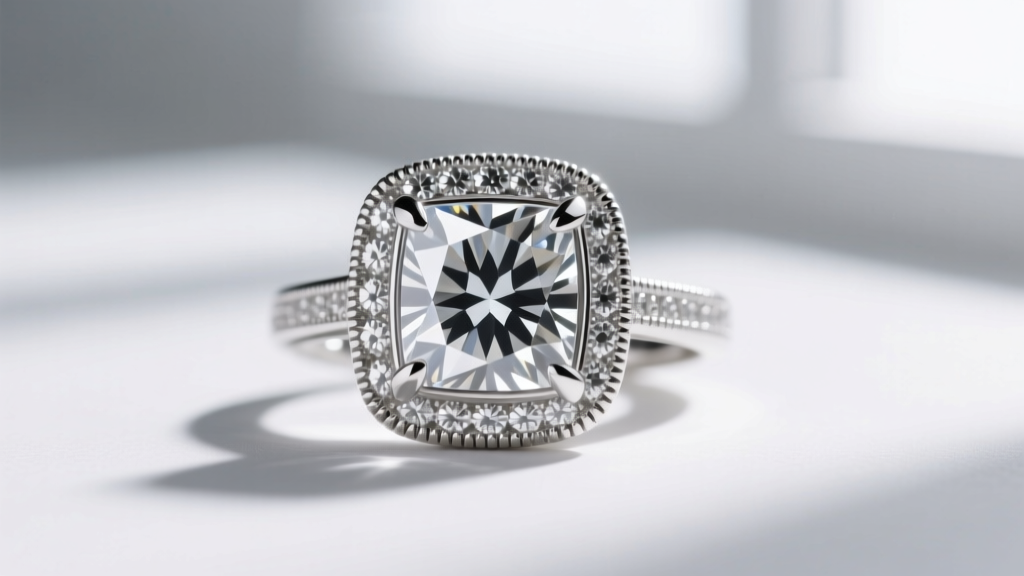
If a pendant from the Titanic featured diamond accents, they were almost certainly Old European Cuts. Unlike modern Round Brilliant cuts optimized for maximum light return via precise mathematical angles, OEC diamonds were cut by hand to preserve carat weight. They feature:
- High Crowns: Giving the stone a deeper, chunkier profile.
- Small Tables: The top flat facet is significantly smaller than modern standards (often under 53%).
- Large, Open Culets: The bottom point is cut flat, visible to the naked eye as a tiny dark circle in the center of the stone.
- Facet Count: Typically 57 or 58 facets, but with highly irregular symmetry.
Gemological Autopsy: The Cinematic "Heart of the Ocean"
The most famous necklace in the Titanic lore is the cinematic Heart of the Ocean. The primary prop was crafted by the historic London jeweler Asprey & Garrard. However, from a strict gemological perspective, the prop contains a massive historical anachronism that collectors must be wary of when evaluating "replica" antiques.
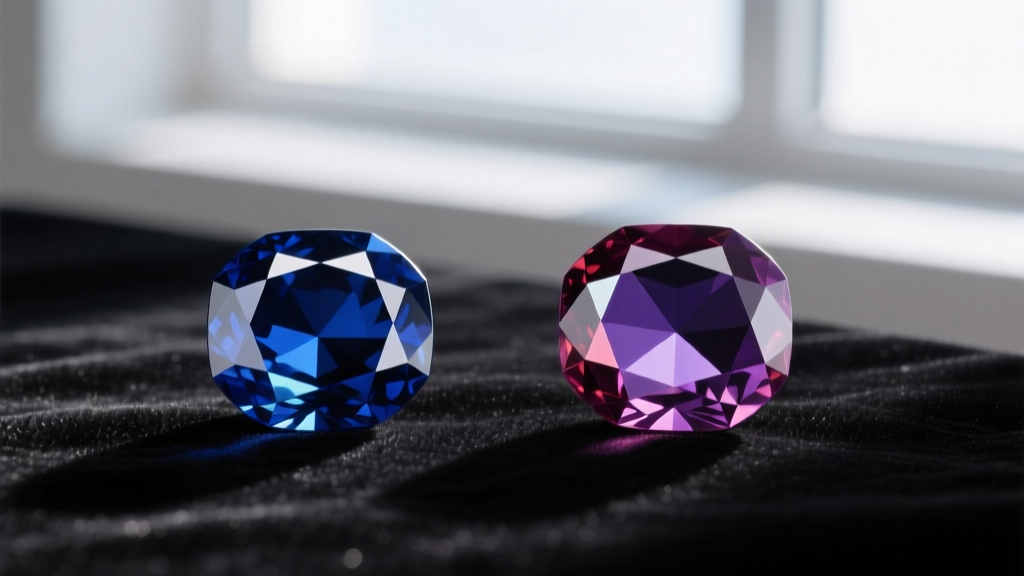
"The primary stone in the Asprey & Garrard prop was not a sapphire, but a tanzanite. Because tanzanite was not discovered in the Merelani Hills of Tanzania until 1967, any 'authentic 1912' necklace featuring tanzanite is an immediate red flag for fraud."
According to the Gemological Institute of America (GIA), tanzanite's pleochroism (the ability to show different colors when viewed from different angles) made it highly desirable for film, as it photographed with a deeper, more vibrant blue-violet hue under studio lights than many sapphires. Furthermore, a 15-carat Ceylon sapphire of that caliber would have been prohibitively expensive for a movie prop budget in the 1990s.
| Feature | 1912 Edwardian Original | 1997 Cinematic Prop (Asprey & Garrard) | Modern Museum Replica |
|---|---|---|---|
| Primary Gemstone | Ceylon Sapphire (Mohs 9) | Tanzanite (Mohs 6.5-7) | Lab-Created Sapphire or Cubic Zirconia |
| Metal Alloy | 900/950 Platinum | 18k White Gold | 925 Sterling Silver (Rhodium plated) |
| Diamond Accents | Old European Cut | Modern Round Brilliant | Single Cut or Moissanite |
| Setting Technique | Millegrain & Bezels | Prong & Pave | Cast-in-place Prongs |
Sourcing the 1912 Aesthetic: A Buyer's Framework
For collectors looking to acquire a genuine Edwardian necklace reminiscent of the styles worn by first-class passengers aboard the Titanic, the secondary market requires rigorous technical scrutiny. As detailed by the Antique Jewelry University, the market is flooded with "Edwardian-style" pieces cast in the 1970s or later.
Authentication Checklist for Edwardian Pendants
- Examine the Millegrain: Authentic 1912 millegrain is applied by hand using a knurling tool. It should look slightly imperfect and crisp. Cast millegrain (common in modern reproductions) looks rounded, soft, and overly uniform.
- Check the Diamond Culets: Use a 10x triplet loupe. If the accent diamonds are modern brilliant cuts with pointed, closed culets, the piece has been altered or is a reproduction.
- Inspect the Chain Links: Original Edwardian platinum chains feature incredibly fine, uniform links that feel almost like liquid fabric. If the chain is marked "PT950" but features thick, laser-welded modern jump rings, it is a replacement chain.
- Blacklight Test: Many early 20th-century diamonds exhibit strong blue fluorescence, but more importantly, later synthetic stones or glass fillings used in repairs will glow anomalously under UV light.
Preservation and the Reality of Oceanic Decay
When RMS Titanic Inc. recovers a gold or platinum necklace from the debris field, it does not look like it belongs in a jewelry store. The pieces are encased in concretion—a rock-like matrix of rust, sand, and marine organisms.
Conservators must use electrolytic reduction to slowly strip the concretion without damaging the surviving metal. Interestingly, while platinum and gold survive, any silver components (often used as a backing for early diamonds before platinum became widespread) will have entirely converted to silver sulfide, appearing as a brittle, blackened crust. Understanding this metallurgical reality is crucial for historians and jewelers studying the physical remnants of the ship's cargo.
Final Thoughts on the Legacy
The search for the real necklace in the Titanic reveals a fascinating intersection of history, geology, and cinema. While the Heart of the Ocean remains a beautiful myth, the genuine Edwardian pendants that perished with the ship represent the absolute zenith of early 20th-century platinum craftsmanship. For modern collectors, studying these technical details ensures that the true artistry of 1912 is preserved, authenticated, and respected.


