Iron Chain Necklace Guide: Alloys, Gauges, and Rust Care
Explore the metallurgy of the iron chain necklace. Learn about carbon steel alloys, protective coatings, gauge sizes, and how to prevent oxidation.

The Metallurgical Reality: Is It Really Iron?
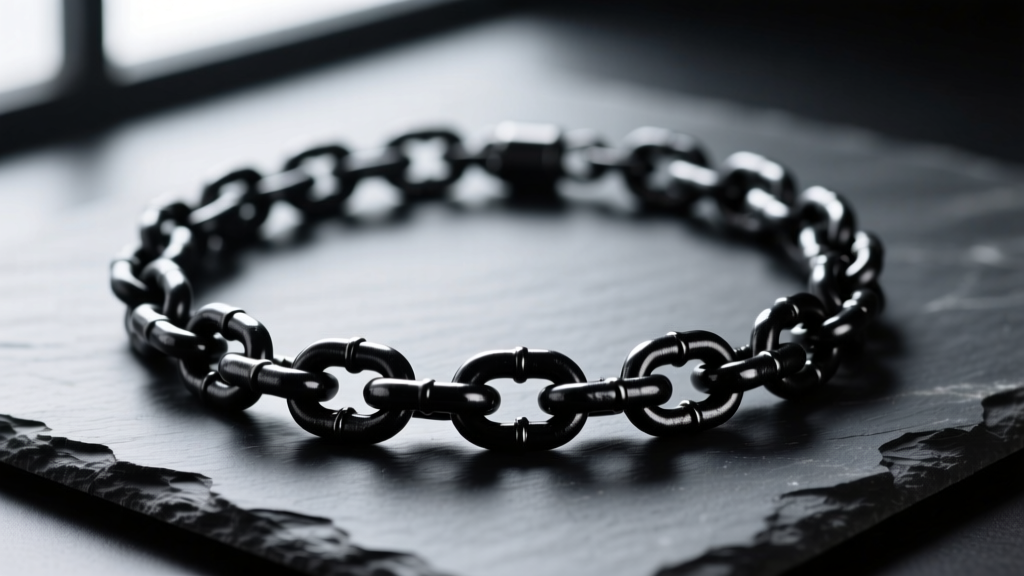
When shopping for an iron chain necklace, the first technical hurdle is understanding metallurgy. Pure elemental iron (Fe) is almost never used in modern jewelry manufacturing. In its pure state, iron is relatively soft, highly malleable, and notoriously susceptible to rapid galvanic corrosion (rust) when exposed to ambient humidity and the natural salts in human sweat. Therefore, what the jewelry industry markets as "iron" is almost exclusively low-carbon steel (often referred to as mild steel) or, in higher-end artisan pieces, traditional wrought iron.
Low-carbon steels, such as the widely used 1018 steel alloy, contain between 0.05% and 0.25% carbon. This slight carbon addition provides the necessary tensile strength to draw the metal into fine wire for chain links without sacrificing the dark, industrial aesthetic that buyers seek. Conversely, many mass-market retailers deceptively label 316L stainless steel or even black-plated brass as "iron" to capitalize on the gothic or industrial trend. To verify the authenticity of your iron chain necklace, perform a simple neodymium magnet test. True iron and carbon steel alloys are highly ferromagnetic and will snap aggressively to a magnet, whereas brass, copper, and most austenitic stainless steels will not.
Expert Insight: If your "iron" necklace lacks magnetic pull, you are likely wearing electroplated zinc alloy or brass. While these resist rust, they lack the structural integrity and authentic patina potential of true ferrous metals.
For a deeper dive into how ferrous metals are manipulated in jewelry fabrication, resources like Ganoksin's technical guides on steel in jewelry provide excellent metallurgical breakdowns for bench jewelers.
Gauge Sizes and Tensile Strength
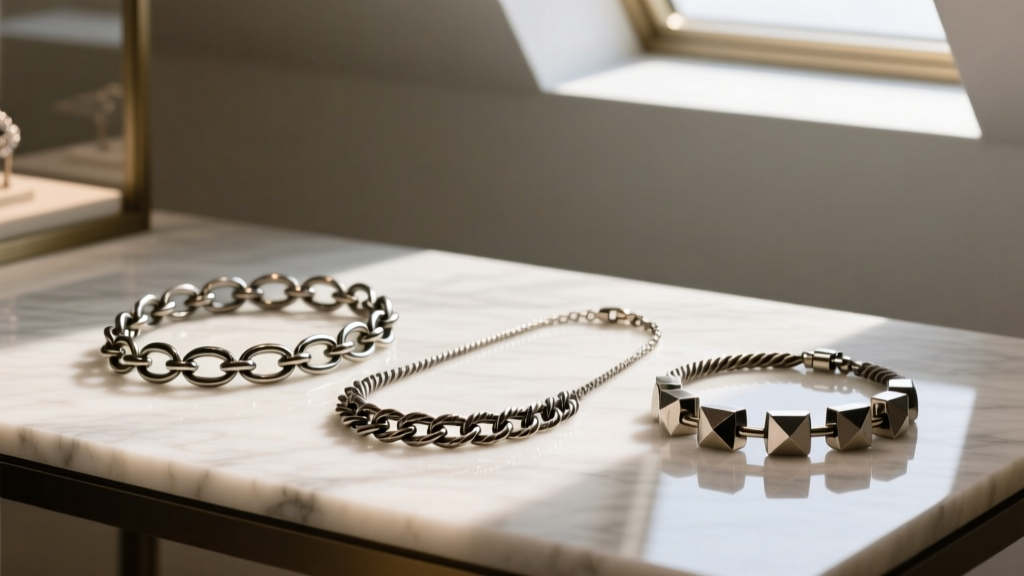
The durability of an iron chain necklace is dictated by its wire gauge. In jewelry, the American Wire Gauge (AWG) system is standard; counterintuitively, a lower gauge number indicates a thicker, heavier wire. Because iron alloys possess high tensile strength compared to precious metals like sterling silver or 14k gold, they can be drawn into thinner gauges while maintaining structural integrity. However, for industrial and statement pieces, thicker gauges are preferred to support the weight of heavy pendants and to resist deformation.
| AWG Size | Millimeter (mm) | Tensile Profile | Best Application |
|---|---|---|---|
| 20-Gauge | 0.81 mm | Low / Delicate | Lightweight layering, small lockets |
| 18-Gauge | 1.02 mm | Medium / Standard | Everyday wear, standard dog-tag pendants |
| 14-Gauge | 1.63 mm | High / Heavy | Statement pieces, gothic/industrial styles |
| 10-Gauge | 2.59 mm | Extreme / Structural | Heavy chains, harness attachments, subculture fashion |
When selecting a gauge, consider the clasp mechanics. A 10-gauge iron chain requires a heavy-duty steel lobster clasp or a custom-forged toggle; standard spring-ring clasps will fail under the sheer weight of thick ferrous chains.
Protective Coatings and Finishes
Because low-carbon steel will oxidize (rust) within days if exposed to moisture and oxygen, an iron chain necklace must be treated with a protective finish. The method of application drastically alters the chain's lifespan, skin reactivity, and maintenance requirements.
Black Oxide Conversion Coatings
Black oxide is not a surface layer but a chemical conversion coating. The steel is submerged in an alkaline salt solution (typically sodium hydroxide and nitrates) at boiling temperatures. This reacts with the iron to form magnetite (Fe3O4), a stable, black iron oxide layer. While it provides a beautiful, matte-black, non-reflective finish, black oxide is highly porous. It requires a secondary sealant, such as microcrystalline wax or oil, to prevent moisture ingress. According to Corrosionpedia, without a topcoat, black oxide offers minimal corrosion resistance in high-humidity environments.
Physical Vapor Deposition (PVD)
PVD coating involves vaporizing a material (like titanium nitride) in a vacuum chamber and bonding it to the iron chain at a molecular level. PVD-coated iron chains are incredibly resistant to sweat, friction, and UV degradation. They often mimic the look of gunmetal or dark hematite. While more expensive, PVD is the superior choice for daily-wear iron jewelry.
Failure Modes: Galvanic Corrosion
A common failure mode in iron necklaces occurs at the clasp junction. If a steel chain is connected to a brass or copper clasp, the presence of sweat (an electrolyte) creates a galvanic cell. The iron, being more anodic, will corrode rapidly at the connection point. Always ensure your iron chain necklace utilizes a stainless steel or similarly coated ferrous clasp to prevent localized galvanic rust.
Link Architectures for Iron Alloys
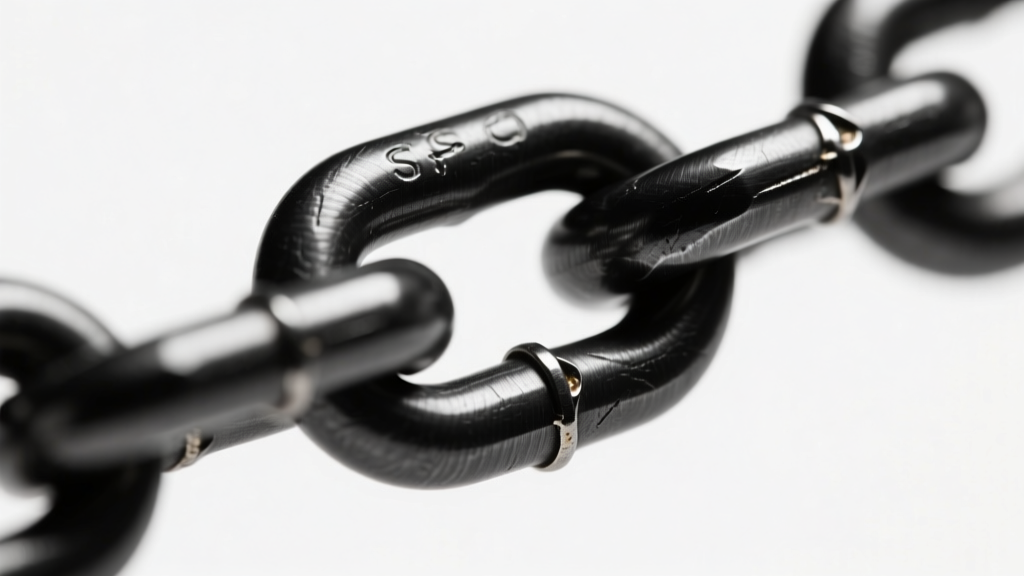
The geometry of the chain link affects how the iron wears against the skin and how easily it traps moisture. Because iron requires meticulous drying and oiling to prevent rust, open link structures are vastly superior to tightly woven ones.
- Cable Chains: The most traditional oval-link design. Excellent for iron because the links are spacious, allowing for easy cleaning and wax application. Ensure the links are soldered shut; unsoldered iron links can easily be pried open, and the exposed raw metal inside the joint will rust first.
- Rolo (Belcher) Chains: Featuring uniform, round links. Rolo chains offer a heavy, industrial aesthetic that perfectly complements the dark, rugged nature of black oxide iron. The rounded edges also prevent the chain from pulling chest hair.
- Curb Chains: Links are flattened and interlocked. While visually striking, tightly woven curb chains trap dead skin cells, sweat, and moisture between the flattened links, accelerating oxidation. If you choose an iron curb chain, it must be ultrasonically cleaned and thoroughly dried after every wear.
Maintenance and Oxidation Reversal
Owning an iron chain necklace is an active commitment to material maintenance. Unlike gold or platinum, iron demands a proactive care regimen to preserve its structural integrity and aesthetic.
Daily Prevention
After wearing your iron chain, wipe it down with a dry, lint-free microfiber cloth to remove sebum and lactic acid. Store the necklace in an airtight polyethylene bag alongside a packet of silica gel desiccant to maintain a zero-humidity microenvironment. For long-term sealing, rub a microscopic layer of Renaissance Wax (a museum-grade microcrystalline wax) into the links. This fills the microscopic pores of the black oxide coating and creates an impenetrable moisture barrier.
Rust Removal and Restoration
If your iron chain develops surface rust (red iron oxide), do not use harsh abrasives that will strip the protective black oxide layer beneath. Instead, utilize a chelating agent like Evapo-Rust. This non-toxic, water-based solution selectively bonds to iron oxide and lifts it away without damaging the base metal or the surrounding blackened finish. Submerge the rusted section for 2 to 4 hours, rinse with distilled water, dry immediately with compressed air, and reapply a microcrystalline wax sealant.
By understanding the specific alloy composition, gauge mechanics, and coating technologies, you can confidently select and maintain an iron chain necklace that serves as a durable, striking staple in your jewelry wardrobe for decades.


