Decoding the Nolan Miller Necklace: Materials & Properties
Explore the metallurgy and gemology of a vintage Nolan Miller necklace, comparing gold electroplate, Austrian crystals, and base metals.

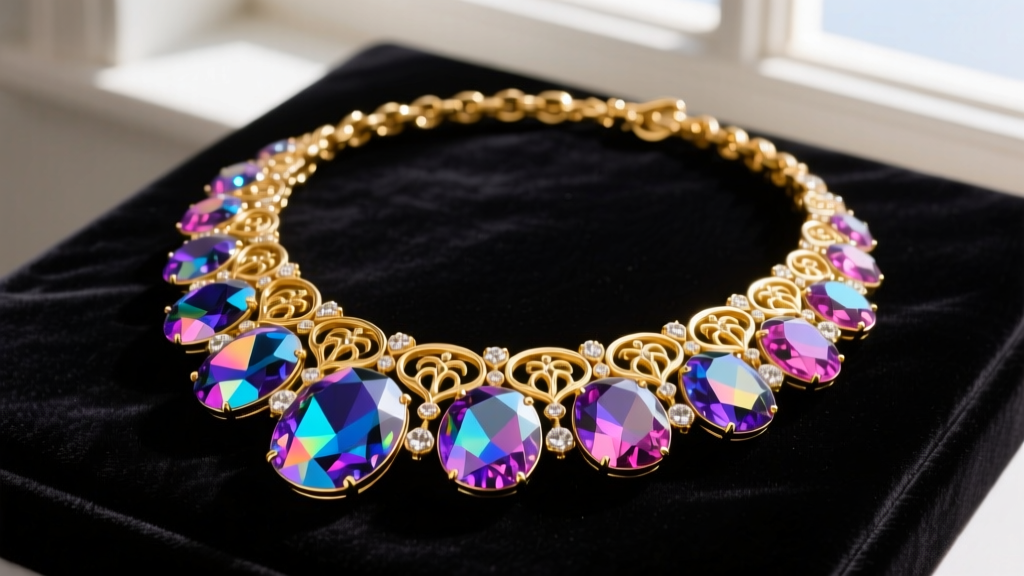
When discussing iconic Hollywood glamour, few names carry the weight of Nolan Miller. As the legendary costume designer behind the extravagant wardrobes of Dynasty and The Love Boat, Miller understood that a look was incomplete without the right accessories. In the 1980s and 1990s, he translated his television magic into a highly successful line of fashion jewelry. Today, a vintage Nolan Miller necklace is a prized collector's item, celebrated for its bold, unapologetic opulence. However, beyond the dazzling aesthetics lies a fascinating study in mid-to-late 20th-century costume jewelry manufacturing. As of 2026, understanding the specific material properties, metallurgical compositions, and gemological traits of these pieces is essential for collectors, authenticators, and conservators alike.
The Metallurgy of Glamour: Base Metals and Gold Electroplating
Unlike fine jewelry, which relies on the intrinsic value of solid precious metals, the structural foundation of a Nolan Miller necklace is rooted in industrial base metals and advanced electroplating techniques. The primary base metal used in Miller's gold-toned pieces was typically a high-quality brass alloy or a zinc-based white metal (often referred to as pot metal or pewter in the costume trade). These metals were chosen for their excellent casting properties, allowing for the intricate, heavy, and detailed motifs that defined the '80s power-dressing era.
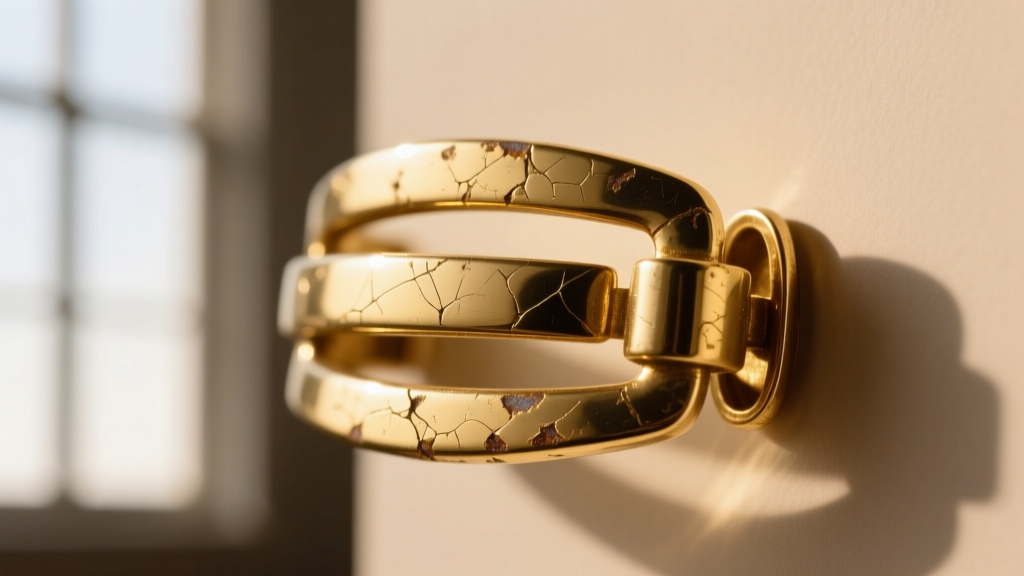
To achieve the luxurious appearance of solid gold, Miller's manufacturers utilized heavy gold electroplating. According to the Victoria and Albert Museum's archives on costume jewelry, high-end fashion pieces from this era often featured gold plating ranging from 1.5 to 3.0 microns in thickness. This is significantly thicker than modern 'flash plating' (which is often less than 0.5 microns) but falls short of the 2.5-micron minimum required to be legally classified as gold vermeil (which also mandates a sterling silver base). The electrochemical deposition process bonded a layer of 18k or 22k gold-toned alloy to the brass base, creating a durable, highly reflective surface that resisted tarnishing under normal wear conditions.
Gemological Breakdown: Austrian Crystals and Refractive Indices
The true visual impact of a Nolan Miller necklace comes from its prolific use of large, faceted rhinestones. Miller favored Austrian crystals, which were historically manufactured using leaded glass. The addition of lead oxide (historically between 24% and 32% by weight) served a critical optical purpose: it increased the glass's refractive index (RI) to approximately 1.70 and boosted its specific gravity, giving the stones a heavy, diamond-like 'fire' and brilliance.
For context, the GIA Gem Encyclopedia notes that while a natural diamond boasts an RI of 2.41, leaded Austrian crystals provided a remarkably convincing visual proxy at a fraction of the cost. Modern crystal manufacturers, responding to environmental and health regulations, have largely transitioned to lead-free formulations (such as Swarovski's Advanced Crystal, introduced in 2012). These modern, lead-free alternatives possess a lower RI (around 1.52 to 1.54), meaning that vintage Nolan Miller pieces possess a distinct, fiery optical dispersion that is virtually impossible to replicate with modern, eco-friendly glass formulations.
The Aurora Borealis Effect and Foil Backing
Many Miller necklaces feature the iconic 'Aurora Borealis' (AB) finish. This iridescent effect was achieved through early chemical vapor deposition (CVD), where microscopic layers of metallic oxides were baked onto the surface of the faceted glass. Furthermore, to maximize light return, the flat backs of these rhinestones were coated with a highly reflective silver or gold foil. This foil backing acts as a mirror, bouncing light back through the faceted crown of the stone, creating the intense sparkle synonymous with Miller's television designs.
Faux Pearl Coatings: Guanine and Lacquer
When a Nolan Miller necklace incorporates pearls, they are almost exclusively faux. Unlike cheap plastic beads, high-end vintage costume pearls were crafted from solid glass cores dipped in 'pearl essence.' Historically, this essence was derived from guanine—crystalline material extracted from fish scales—suspended in a nitrocellulose lacquer. This organic-inorganic composite created a soft, deep luster with a high RI that closely mimicked the orient of a natural nacreous pearl. Over decades, however, the nitrocellulose binder is prone to UV degradation and chemical breakdown.
Material Comparison: Vintage Costume vs. Modern Alternatives
To contextualize the material quality of a vintage Nolan Miller necklace, we must compare it against both modern costume jewelry and fine jewelry alternatives. The table below outlines the specific material properties across these categories.
| Material Property | Vintage Nolan Miller (1980s-90s) | Modern High-End Costume (2026) | Traditional Fine Jewelry |
|---|---|---|---|
| Base Metal | Cast Brass or Zinc Alloy | Sterling Silver (925) or Stainless Steel | 14k or 18k Solid Gold |
| Surface Plating | Heavy Gold Electroplate (1.5 - 3.0 μm) | Gold Vermeil (2.5+ μm) or PVD Coating | N/A (Solid Alloy) |
| Primary Gemstone | Leaded Austrian Glass (RI ~1.70) | Lead-Free Crystal (RI ~1.53) or CZ | Natural Diamonds/Sapphires |
| Stone Setting | Prong-set over Silver/Gold Foil | Prong-set or Epoxy-set (No Foil) | Prong, Bezel, or Channel |
| Expected Lifespan | 40-60 years (with strict conservation) | 10-20 years (depending on PVD wear) | Generational (100+ years) |
Failure Modes: How Costume Materials Degrade Over Time
Despite their heavy construction, the material properties of vintage costume jewelry dictate specific, predictable failure modes. Understanding these degradation pathways is critical for anyone looking to acquire or restore a Nolan Miller necklace.
Foil Oxidation and 'Desilvering'
The most common and devastating failure in vintage rhinestone jewelry is the oxidation of the foil backing. Because the stones are typically set using simple prongs rather than waterproof bezels, ambient humidity, skin oils, and perfume aerosols can eventually penetrate the setting. When moisture reaches the metallic foil, it oxidizes, turning black or dark brown. In the collector's market, this is known as 'desilvering' or 'foil death.' Once the foil degrades, the stone loses its brilliance and appears cloudy or dead. Because the foil is sealed beneath the glass, this damage is irreversible without completely unsetting and re-foiling the stone—a process that is rarely cost-effective.
Galvanic Corrosion and Plating Delamination
Where the gold electroplate wears away at high-friction points (such as the toggle clasp or the jump rings), the exposed brass base metal is vulnerable. If the piece is stored in a humid environment, the brass can undergo dezincification, leading to a powdery green corrosion (copper carbonate). Furthermore, if a piece is improperly cleaned using harsh chemical dips, the galvanic reaction between the gold layer and the brass base can cause the plating to blister and delaminate entirely.
Preservation Protocols for Electroplated and Foiled Jewelry
Preserving the material integrity of a Nolan Miller necklace requires abandoning standard jewelry cleaning practices. Ultrasonic cleaners, which are safe for solid gold and diamonds, will violently vibrate the delicate foil backing right off the back of an Austrian crystal, and will instantly shatter the lacquer coating on faux pearls.
- Surface Cleaning: Use only a dry, ultra-fine microfiber cloth to remove skin oils. If moisture is absolutely necessary, use a slightly damp cloth with distilled water, avoiding the stone settings entirely.
- Chemical Avoidance: Never use silver polish, brass dip, or ammonia-based cleaners. These will strip the gold electroplating and cloud the metallic oxide coatings on AB stones.
- Storage Environment: Store the necklace flat to prevent stress on the brass linkages. Use acid-free tissue paper and anti-tarnish strips. Avoid airtight plastic bags if the piece contains faux pearls, as the complete absence of ambient humidity can cause the glass core to contract slightly, leading to the cracking and peeling of the pearl essence lacquer.
'The longevity of mid-century costume jewelry relies entirely on the stability of its micro-layers. Treat the gold plating and stone foils as you would the fragile glazes on antiquities, not as durable precious metals.' — Conservation Guidelines for Mixed-Media Fashion Accessories.
Sourcing and Authenticating Material Markers
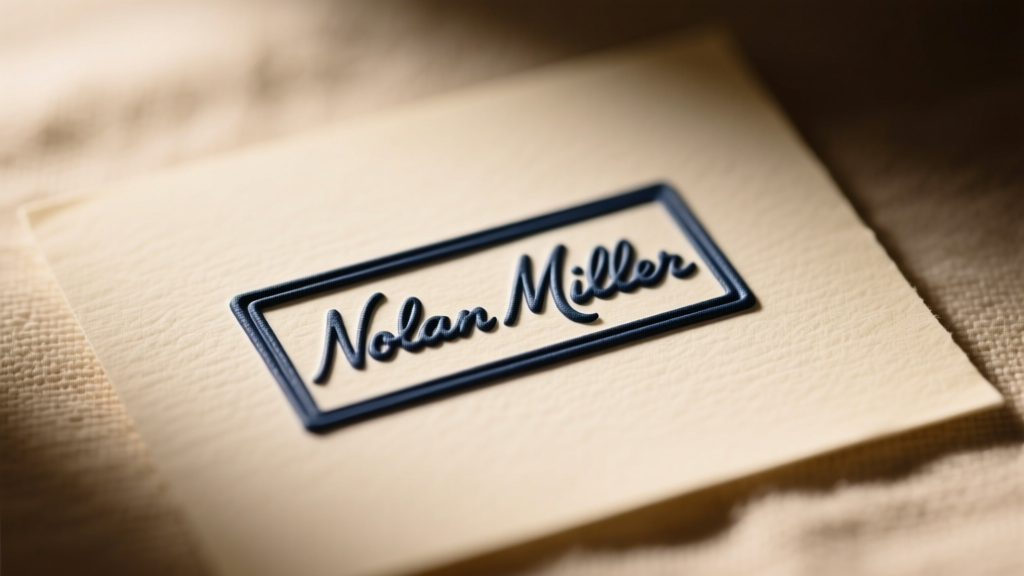
As the secondary market for vintage fashion jewelry continues to mature in 2026, authenticating a Nolan Miller necklace requires looking beyond the overall design and examining the material markers. Authentic pieces will typically bear a distinct, deeply stamped maker's mark—often 'NOLAN MILLER' in a crisp serif or script font, sometimes accompanied by an 'NM' in an oval cartouche. Because the base metals were cast and finished before plating, the stamping should be visible through the gold layer, though it may be slightly softened by the electroplating buildup. Furthermore, the heavy, cold feel of the leaded glass and the specific, warm hue of the 1980s gold electroplate serve as tactile and visual confirmations of the piece's authentic material heritage.


