A Step-by-Step Guide to Wearing a Crucifix Necklace Elegantly
Learn the art of wearing a crucifix necklace with our step-by-step styling guide. Discover chain lengths, layering tips, and material care.

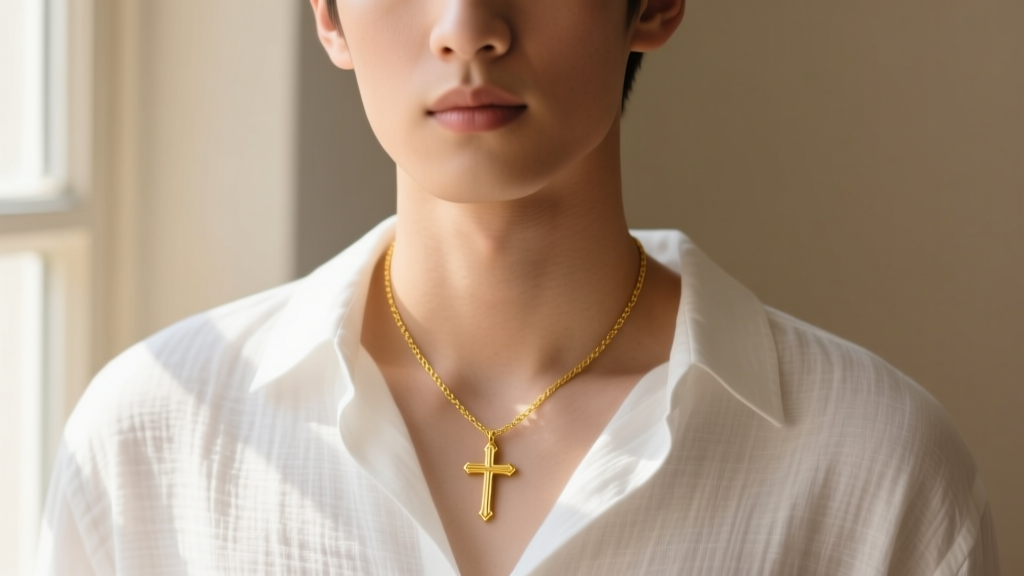
The Intersection of Faith, Heritage, and Modern Style
The crucifix is one of the most recognizable and historically significant pendants in the world. While its roots are deeply embedded in religious devotion and cultural heritage, the modern approach to wearing a crucifix necklace transcends traditional boundaries. Today, it serves as a powerful symbol of personal identity, a family heirloom, and a striking sartorial anchor. However, mastering the art of styling this iconic piece requires more than simply slipping a chain over your head. It demands an understanding of proportions, metal grades, chain mechanics, and neckline harmony.
Whether you are styling a vintage family piece, a minimalist modern design, or a bold streetwear-inspired crucifix, the way you wear it dictates its impact. In this comprehensive guide, we break down the exact steps to selecting, pairing, and maintaining your crucifix necklace so that it elevates your wardrobe with elegance and intention.
Step 1: Selecting the Right Proportions and Metal Grades
The foundation of a well-styled crucifix lies in its material integrity and physical proportions. A pendant that is too heavy for its chain will cause the bail (the loop connecting the pendant to the chain) to wear down prematurely, while a pendant that is too small can look lost against the chest. For a standard men's or bold women's crucifix (typically measuring 1.5 to 2.5 inches in height), you need a metal that can withstand daily friction and environmental exposure.
Understanding Material Grades and Tarnish Resistance
When investing in a piece you intend to wear daily, the metal grade is non-negotiable. According to the Gemological Institute of America (GIA), understanding the alloy composition of your jewelry is critical for longevity. Here is how the most common crucifix materials perform:
- 14k and 18k Gold: The gold standard for heirloom jewelry. 14k gold (58.5% pure gold) offers the perfect balance of rich color and structural durability, resisting scratching better than 18k. It will not tarnish and is safe for continuous wear, including in water.
- 925 Sterling Silver: Composed of 92.5% pure silver and 7.5% copper. While beautiful and affordable, sterling silver is prone to oxidation (tarnish) when exposed to sulfur and moisture. Look for pieces that are rhodium-plated to delay tarnishing and provide a bright, white-gold-like finish.
- 316L Surgical Stainless Steel: An excellent, budget-friendly alternative for streetwear and heavy, oversized crucifix designs. It is highly resistant to corrosion, hypoallergenic, and maintains its gunmetal or polished silver aesthetic without requiring polishing.
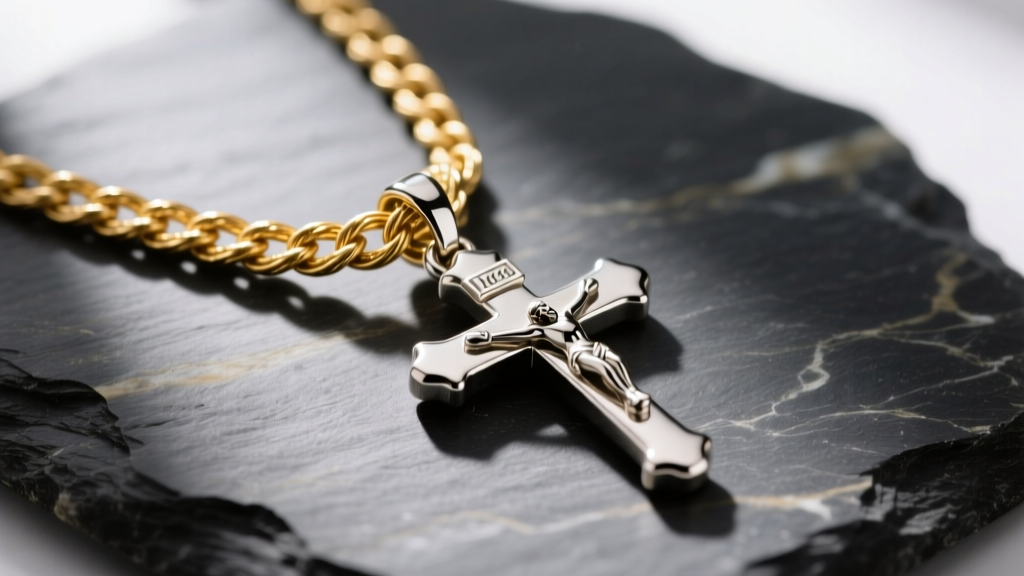
Step 2: Choosing the Ideal Chain Length and Gauge
The chain is the structural backbone of your necklace. When wearing a crucifix necklace, the chain's gauge (thickness) must be visually and physically balanced with the weight of the pendant. A 3mm thick Cuban link chain will overpower a delicate 1-inch crucifix, while a fragile 0.8mm cable chain will snap under the weight of a solid 2-inch silver cross.
The Chain Length and Neckline Matrix
Where the crucifix rests on your chest completely changes how it interacts with your clothing. The Blue Nile Jewelry Education center emphasizes that chain length should be chosen based on the wearer's anatomy and typical wardrobe. Refer to the table below to find your ideal drop length:
| Chain Length | Placement on Body | Ideal Chain Gauge | Best Wardrobe Pairings |
|---|---|---|---|
| 16 - 18 Inches | Collarbone to Base of Throat | 1.0mm - 1.5mm | V-necks, unbuttoned linen shirts, scoop necks |
| 20 - 22 Inches | Upper Chest / Sternum | 1.5mm - 2.5mm | Crew neck t-shirts, turtlenecks, casual button-downs |
| 24 - 30 Inches | Mid-Chest to Solar Plexus | 2.5mm - 4.0mm | Streetwear, hoodies, oversized knitwear, outerwear |
Expert Tip: Always opt for a chain with a lobster clasp rather than a spring-ring clasp for pendants over 10 grams. Lobster clasps offer a secure, self-closing mechanism that prevents the devastating loss of a cherished heirloom.
Step 3: Mastering the Art of Layering
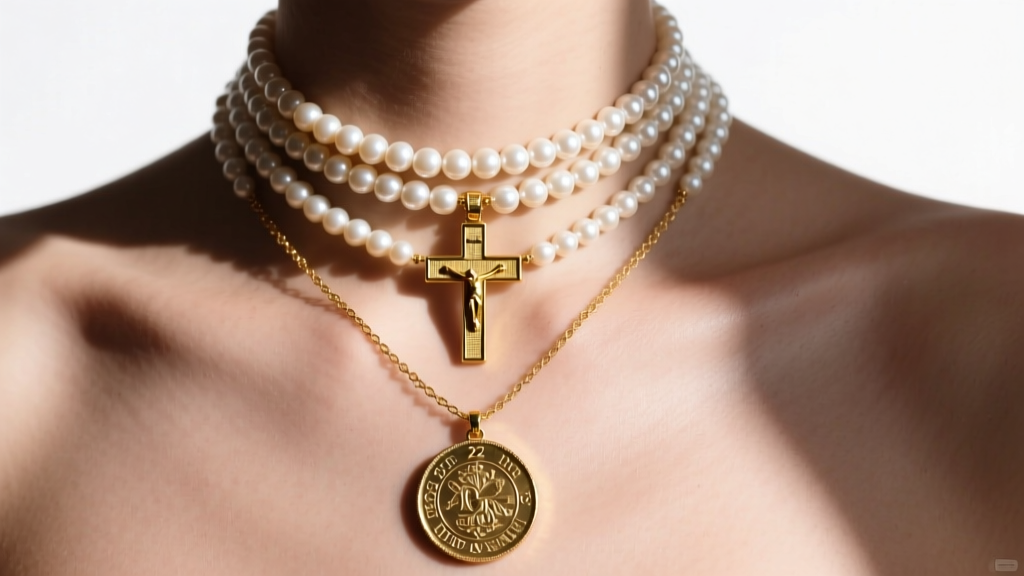
Layering has transformed the crucifix from a solitary statement piece into a dynamic component of a curated jewelry stack. However, layering necklaces improperly leads to a tangled, chaotic mess that hides the very pendant you want to showcase. The secret to successful layering lies in varying both the length and the texture of the chains.
The 2-2-1 Layering Rule
To create a visually pleasing cascade that avoids severe tangling, follow the 2-2-1 rule: separate your chains by at least 2 inches in length, use 2 different chain textures, and anchor the stack with 1 dominant pendant (your crucifix).
"When layering a crucifix, place it in the middle of the stack. Pair a 16-inch delicate bead chain at the top, your 18-inch crucifix on a rope chain in the center, and a 20-inch plain gold herringbone chain at the bottom. The differing textures prevent the links from interlocking and tangling."
Step 4: Matching the Crucifix to Necklines and Occasions
A crucifix is incredibly versatile, but its visual impact shifts dramatically depending on the garment framing it. Treating your necklace as an integrated part of your outfit, rather than an afterthought, is the hallmark of true style.
- The Classic V-Neck: A V-neck sweater or t-shirt naturally draws the eye downward, perfectly mirroring the vertical lines of a crucifix. An 18-inch or 20-inch chain allows the pendant to rest exactly at the vertex of the V, creating a harmonious geometric flow.
- The Crisp Button-Down: For business casual or smart-casual environments, wear a minimalist, polished gold or silver crucifix (under 1.5 inches) inside the collar, resting against the skin with the top two buttons undone. This offers a subtle, sophisticated glimpse of the piece without overpowering your tailored clothing.
- The Heavy Knit or Hoodie: In casual or streetwear settings, contrast is key. Pair a dark, heavy garment with a bright, oversized 14k gold or rhodium-plated silver crucifix on a 24-inch chain. The high contrast and lower drop length make the piece the undeniable focal point of the ensemble.
Step 5: Care, Maintenance, and Preservation
Because a crucifix is often worn close to the skin and exposed to the elements, proper maintenance is required to preserve its detail and structural integrity. The crevices of a crucifix—where the horizontal and vertical beams intersect—are natural traps for skin oils, lotions, and environmental dust.
For solid gold and plain stainless steel pieces, a weekly wipe-down with a microfiber cloth is sufficient. However, if your crucifix features intricate filigree, oxidized silver detailing (blackened crevices for contrast), or inlaid gemstones like black onyx, never use an ultrasonic jewelry cleaner. The high-frequency vibrations can fracture inlaid stones and strip away the intentional oxidation that gives the piece its depth and vintage character. Instead, use a soft-bristled baby toothbrush dipped in a mild solution of warm water and phosphate-free dish soap, gently agitating the crevices before rinsing and patting dry with a lint-free towel.
Conclusion: Wearing Your Story
Wearing a crucifix necklace is a deeply personal choice that bridges the gap between historical reverence and contemporary fashion. By carefully selecting the right metal grade, balancing your chain gauge, mastering the geometry of layering, and committing to proper maintenance, you ensure that your pendant remains a striking and meaningful element of your personal style for decades to come. Approach your jewelry not just as an accessory, but as an enduring artifact of your personal narrative.


