The Red Coral Bead Necklace: Material Properties & Buying Guide
Discover the material properties of a red coral bead necklace. Compare natural, dyed, and simulated options, plus expert care and sourcing tips.

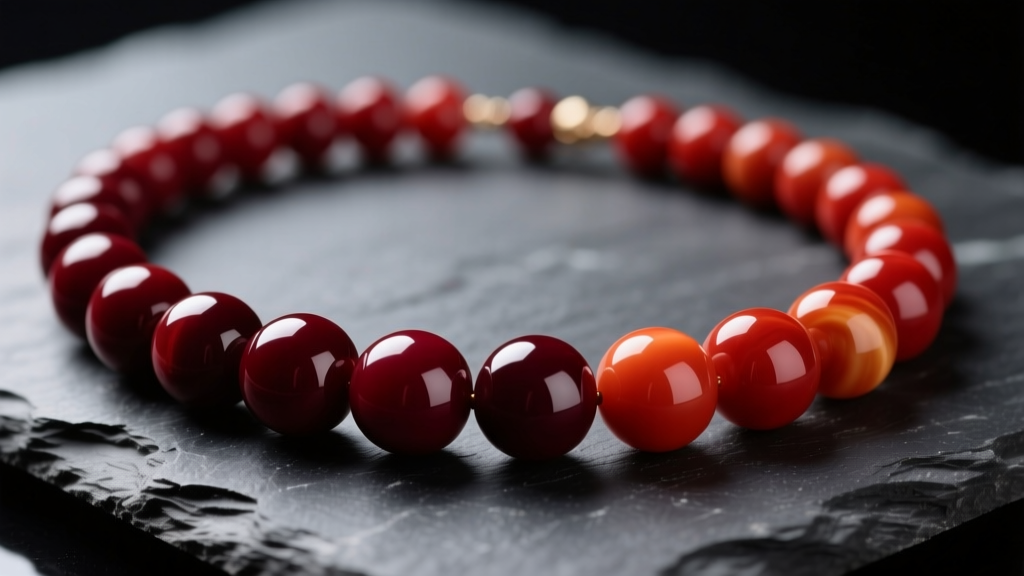
For centuries, the red coral bead necklace has remained one of the most coveted organic gemstone adornments in the world. Unlike crystalline gemstones mined from the earth, red coral is a biological creation, harvested from the depths of the Mediterranean and Pacific oceans. However, the modern jewelry market is flooded with dyed alternatives, simulated resins, and misidentified species. Understanding the exact material properties, gemological characteristics, and structural vulnerabilities of red coral is essential for any serious collector or buyer.
In this comprehensive guide, we dissect the mineralogy of Corallium rubrum, compare it against common market imitations, and provide actionable frameworks for authentication, care, and design selection.
The Mineralogy and Material Properties of Red Coral
Red coral is not a stone; it is the calcified axial skeleton of marine polyps. Its unique physical properties dictate how it must be cut, polished, drilled, and worn.
- Chemical Composition: Primarily calcium carbonate (CaCO3) in a microcrystalline calcite form, bound together by an organic protein called conchiolin.
- Mohs Hardness: 3.5 to 4.0. This makes it significantly softer than quartz (7) or beryl (7.5-8), meaning it is highly susceptible to scratching from everyday dust and harder jewelry.
- Specific Gravity (SG): 2.60 to 2.70. This density gives a high-quality red coral bead necklace a satisfying, substantial weight that plastic or resin imitations completely fail to replicate.
- Refractive Index (RI): 1.48 to 1.65. Coral does not possess the brilliance or light return of faceted gems; its beauty lies in its waxy-to-vitreous luster and deep, saturated body color.
- Porosity: Natural red coral is semi-porous. The conchiolin matrix creates microscopic channels that can absorb oils, acids, and dyes.
The Chemistry of Color: Oxblood vs. Salmon
The value of a red coral bead necklace is heavily dictated by its color saturation, which is influenced by trace elements and the specific polyp species. Oxblood (a deep, dark, brownish-red) is traditionally the most prized and commands the highest price per carat, often sourced from older, deeper-water Mediterranean colonies. Salmon or Momo coral features lighter, orangey-red to pinkish-red hues. While beautiful, salmon coral is generally more abundant and therefore more affordable. The color in natural coral is structurally integrated into the calcium carbonate lattice, meaning it will not fade or rub off under normal conditions.
Natural vs. Dyed vs. Simulated: A Material Comparison
Because genuine Corallium rubrum is expensive and heavily regulated, the market is saturated with treated and simulated alternatives. Below is a comparative breakdown of the materials you will encounter.
| Material Type | Base Composition | Hardness (Mohs) | Market Price (16" Strand) | Identification Method |
|---|---|---|---|---|
| Natural Mediterranean | Corallium rubrum (CaCO3) | 3.5 - 4.0 | $1,500 - $10,000+ | Magnification (growth rings), SG testing |
| Natural Pacific (Japonicum) | Corallium japonicum | 3.5 - 4.0 | $800 - $5,000 | Distinct white core visible in cross-section |
| Dyed Bamboo Coral | Lepidisis / Isis species | 3.0 - 3.5 | $30 - $150 | Acetone test, visible dye concentration in pits |
| Simulated (Glass/Resin) | Lead glass or Epoxy resin | 5.5 (Glass) / 2.5 (Resin) | $15 - $80 | Thermal conductivity, hot point test, SG |
According to the Gemological Institute of America (GIA), the most common deception is selling dyed bamboo coral as genuine red coral. Bamboo coral is naturally grey or white and highly porous, making it an excellent sponge for red chemical dyes. To test a suspect bead, apply a small drop of acetone (nail polish remover) on a cotton swab and rub it on an inconspicuous area. If the swab turns red, the coral is dyed.
Sourcing, Sustainability, and CITES Regulations
Buying a red coral bead necklace is not just a gemological decision; it is an environmental one. Overharvesting and ocean acidification have severely impacted global coral populations.
The Convention on International Trade in Endangered Species (CITES) strictly monitors the trade of many coral species. While Mediterranean red coral (Corallium rubrum) is not currently listed on the main CITES appendices, it is heavily protected by European Union and Italian national laws, which dictate strict depth limits (usually below 50 meters) and harvesting quotas. Conversely, certain Pacific species face different regional protections. Always request a CITES certificate or proof of legal, pre-ban harvest when purchasing vintage or high-value antique coral necklaces to ensure compliance with international wildlife trade laws.
Design Variations and Bead Sizing
The physical properties of coral dictate how it is best fashioned into beads. Because large, flawless pieces of raw coral are exceptionally rare, bead sizing directly impacts the necklace's value and structural integrity.
Uniform vs. Graduated Strands
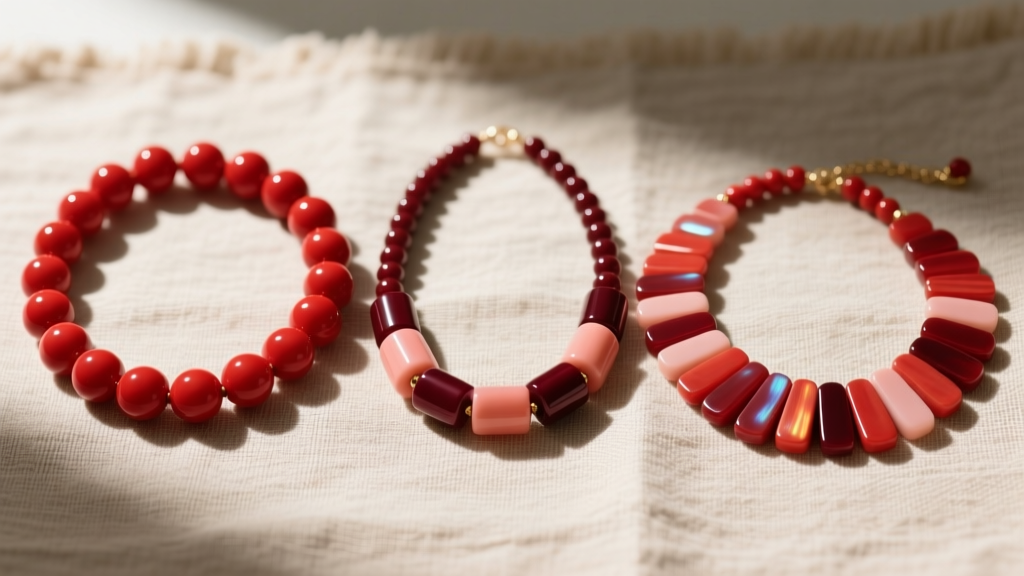
A uniform strand of 8mm natural oxblood coral beads requires a massive amount of high-quality rough material, resulting in an exponential price increase compared to a graduated strand (where beads range from 4mm at the clasp to 10mm at the center). Graduated strands are more material-efficient and historically more common in vintage Italian coral jewelry.
Heishi and Barrel Cuts
For lower-grade rough with minor surface pitting, cutters often fashion flat heishi discs or short barrel beads. These shapes minimize waste. However, ensure the edges of heishi beads are smooth; rough edges will eventually cut through the stringing material.
Expert Care and Failure Mode Prevention
Organic gems are highly reactive. A red coral bead necklace requires specific maintenance protocols to prevent irreversible chemical and physical damage.
Chemical Vulnerabilities (The Acid Threat)
Because coral is calcium carbonate, it reacts violently with acids.
Expert Warning: Human sweat contains lactic acid. Wearing a coral necklace during exercise or in high-humidity environments will slowly etch the polish, leaving the beads dull and chalky over time. Always wipe your coral with a soft, damp microfiber cloth immediately after wearing.
Furthermore, never expose coral to vinegar, citrus juices, or harsh commercial jewelry dips. Ultrasonic cleaners are strictly forbidden; the high-frequency cavitation can shatter the microcrystalline structure or shake loose fracture fillings in treated stones.
Stringing and Structural Integrity
The failure mode of most bead necklaces is the stringing material. Coral beads have sharp, unpolished drill holes that can saw through standard threads.
- Knotting is Mandatory: Every single bead must be hand-knotted. This prevents bead-on-bead abrasion (which damages the softer coral) and ensures that if the strand snaps, you lose only one bead, not the entire necklace.
- Material Choice: Avoid natural silk if you live in a humid climate, as silk degrades and stretches when exposed to moisture. Instead, opt for high-tenacity synthetic threads like Griffin Power Pro or bonded nylon, which offer the drape of silk with the tensile strength of steel.
- Clasp Hardware: Use a secure barrel clasp or a high-quality gold-filled lobster clasp with a soldered jump ring. Avoid magnetic clasps, which can pull apart under the specific gravity weight of a heavy coral strand.
Final Thoughts on Authentication
Investing in a genuine red coral bead necklace requires diligence. Rely on the tactile weight (specific gravity), the visual evidence of organic growth structures under 10x magnification, and the chemical inertness to acetone. By understanding the exact material properties and respecting the organic nature of this marine gemstone, you can acquire and preserve a piece of jewelry that will outlast synthetic trends and retain its historical and material value for generations.


