The Red String Necklace in 2026: Styling Kabbalah & Modern Layers
Discover how the red string necklace evolved in 2026. Learn to layer Kabbalah, evil eye, and macrame styles with precise material guides.

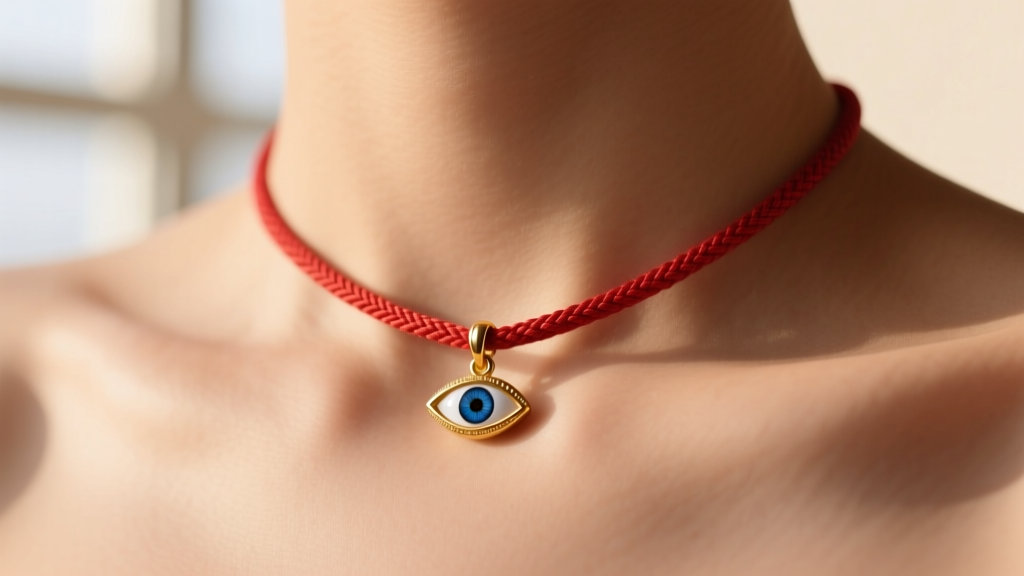
The Evolution of the Red String: From Ancient Talisman to 2026 Runways
The red string necklace has undergone a radical transformation. Once relegated to the realm of simple tourist souvenirs or strictly religious artifacts, the crimson thread has firmly established itself as a cornerstone of the "meaningful maximalism" jewelry trend dominating 2026. No longer just a solitary strand worn for spiritual protection, today's red string is an anchor piece in complex, multi-textured necklace stacks.
Historically, the red string is deeply rooted in Kabbalah and various Middle Eastern traditions, where it is tied around the wrist to ward off the "Evil Eye" (Nazar) and negative energy. According to The Jewish Virtual Library, the practice of using red threads as amulets dates back centuries, often associated with the matriarch Rachel and the wrapping of her tomb. However, as The Kabbalah Centre notes regarding traditional wrist placement, modern jewelry design has adapted this ancient talisman for the neckline, integrating it with high-end metallurgy and gemstone accents to bridge the gap between spiritual grounding and contemporary high fashion.
Material Breakdown: What Makes a High-Quality Red String?
The biggest failure mode of cheap red string necklaces is color bleed. Low-tier manufacturers use inexpensive acid dyes on porous fibers, which react with the slightly acidic pH of human sweat, turning the wearer's skin pink and the thread a dull orange. In 2026, luxury fiber jewelers have pivoted to advanced textile engineering.
| Material | Diameter | Dye Chemistry | Durability | Best Application |
|---|---|---|---|---|
| Pure Silk | 0.8mm | Acid Dye | Low (frays at knot points) | Delicate, short-term wear |
| Mercerized Cotton | 1.0mm | Fiber-Reactive | High (resists pilling) | Everyday 7-knot styles |
| Waxed Nylon | 1.2mm | Solution-Dyed | Very High (waterproof) | Sliding macrame, active wear |
For a necklace that sits against the sensitive skin of the suprasternal notch and collarbone, mercerized cotton treated with fiber-reactive dyes is the gold standard. The mercerization process swells the cotton fibers, increasing their luster and dye affinity, ensuring the crimson hue remains vibrant even after months of continuous wear.
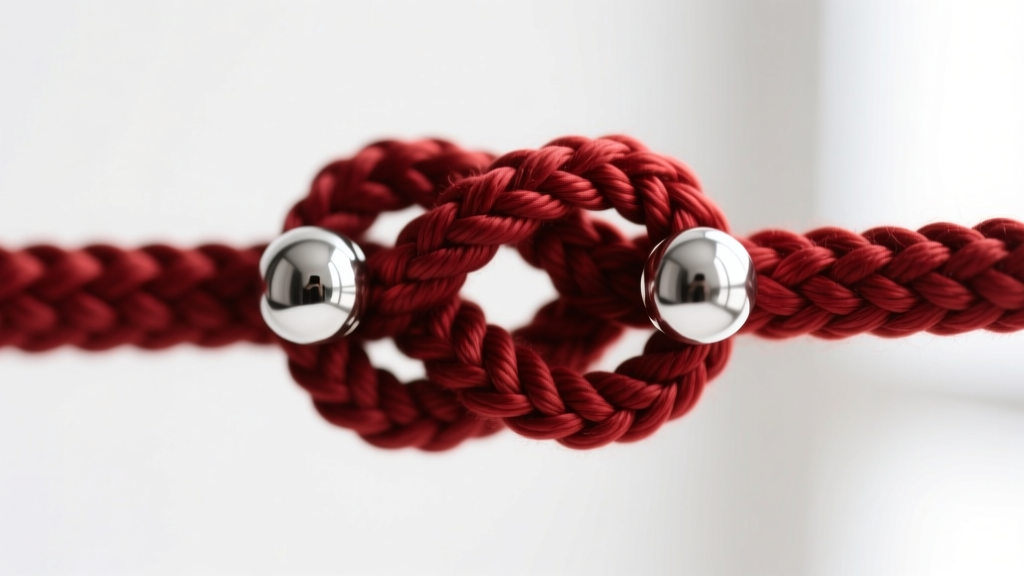
The Anatomy of the Knot: 7-Knot vs. Sliding Macrame
The structural integrity of a red string necklace relies entirely on its closure mechanism. Unlike chain necklaces that utilize spring rings or lobster clasps, fiber necklaces depend on friction and knotting.
The 7-Knot Benediction
Traditionally, the red string is secured with seven overhand knots, each representing a different spiritual protection or benediction. In modern necklace construction, these knots are spaced precisely 2mm apart to create a flexible, comfortable band that rests flat against the back of the neck. The final knot is sealed with a micro-drop of flexible cyanoacrylate adhesive to prevent unraveling without making the fiber brittle.
Modern Slide-Knot Closures
The sliding macrame knot (often a square knot or cobra weave) allows for adjustable sizing, making it ideal for layering. However, the tension beads used to lock the sliding knot are a critical point of failure. Avoid brass-core beads with thin gold plating; the copper in the brass will oxidize and leave a green ring on your neck. Always opt for solid 14k gold beads or rhodium-plated 925 sterling silver beads with a 1.5mm hole size to smoothly accommodate 1.2mm waxed nylon threads.
Layering Frameworks: Integrating the Red String into Your Stack
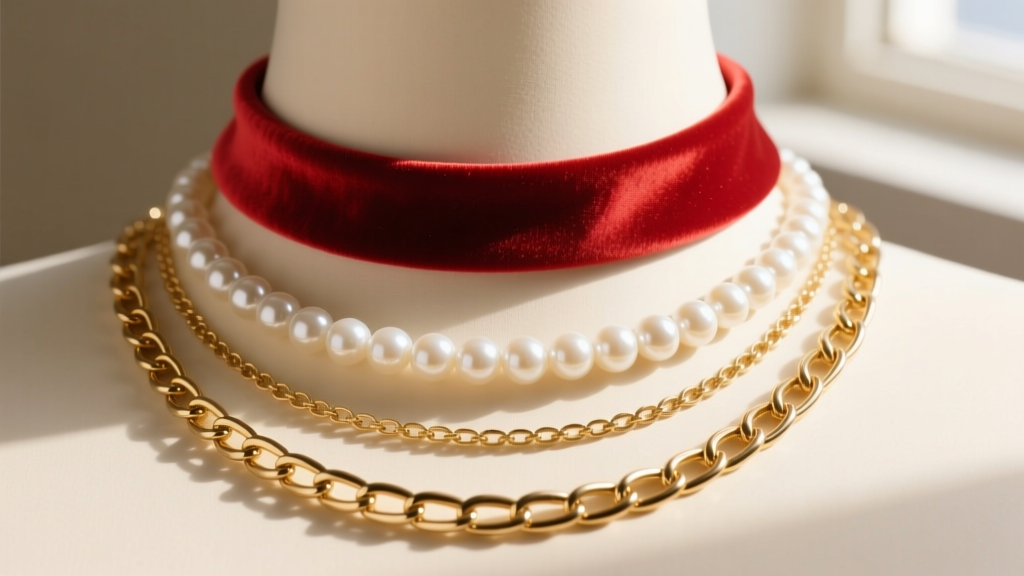
The 2026 approach to necklace layering rejects uniformity. The goal is to mix organic fibers with rigid metals, creating visual tension. Here is a precise, actionable framework for building a stack around your red string necklace:
- The Anchor (14-15 inches): Your red string necklace. Opt for a 1mm mercerized cotton thread featuring a 4mm micro-pave diamond or sapphire evil eye charm. This sits high on the collarbone, drawing the eye upward and framing the face.
- The Bridge (16-17 inches): A 2mm oxidized sterling silver herringbone or snake chain. The darkened grooves of the oxidized silver complement the deep red of the thread, while the fluid drape of the chain contrasts with the rigid tension of the knotted cotton.
- The Statement (18-20 inches): A 14k solid gold paperclip or cable chain featuring a heavy enamel Hamsa or coin pendant. This outer layer provides the necessary weight to anchor the visual stack and prevents the delicate red string from looking isolated.
Caring for Dyed Fibers: Preventing Color Bleed and Fraying
Even high-quality, solution-dyed nylon and mercerized cotton require specific maintenance to preserve their structural and aesthetic integrity. The primary enemy of red fiber jewelry is UV degradation and chlorine exposure.
Ultraviolet light breaks down the molecular bonds of red dyes faster than any other color spectrum, leading to a faded, coral-like appearance. When spending extended time in direct sunlight, or when swimming in chlorinated pools, it is highly recommended to remove the necklace. Chlorine not only strips the dye but also degrades the wax coating on nylon threads, leading to rapid fraying at the macrame closure points.
To clean a red string necklace that has accumulated skin oils and environmental dust, do not submerge it in water. Instead, use a soft-bristled makeup brush dipped in a mild, alcohol-free micellar water to gently sweep the fibers. Allow it to air dry completely flat to prevent the knots from warping.
Final Verdict: The Enduring Power of the Crimson Thread
The red string necklace in 2026 is a masterclass in jewelry duality. It honors ancient traditions of spiritual protection while serving as a highly versatile, textural element in modern fashion styling. By paying close attention to thread composition, dye chemistry, and the metallurgy of the accompanying hardware, you can elevate this humble talisman into a lifelong staple of your jewelry wardrobe. Whether worn as a solitary Kabbalah marker or as the foundational layer in a complex metallic stack, the crimson thread remains an undeniable symbol of resilience, intention, and style.


