How to Get Hair Out of a Necklace Chain: Safe Removal Guide
Learn how to get hair out of a necklace chain safely. Step-by-step methods, tool recommendations, and chain-specific tips to prevent breakage.

The Anatomy of a Snag: Why Chains Catch Hair
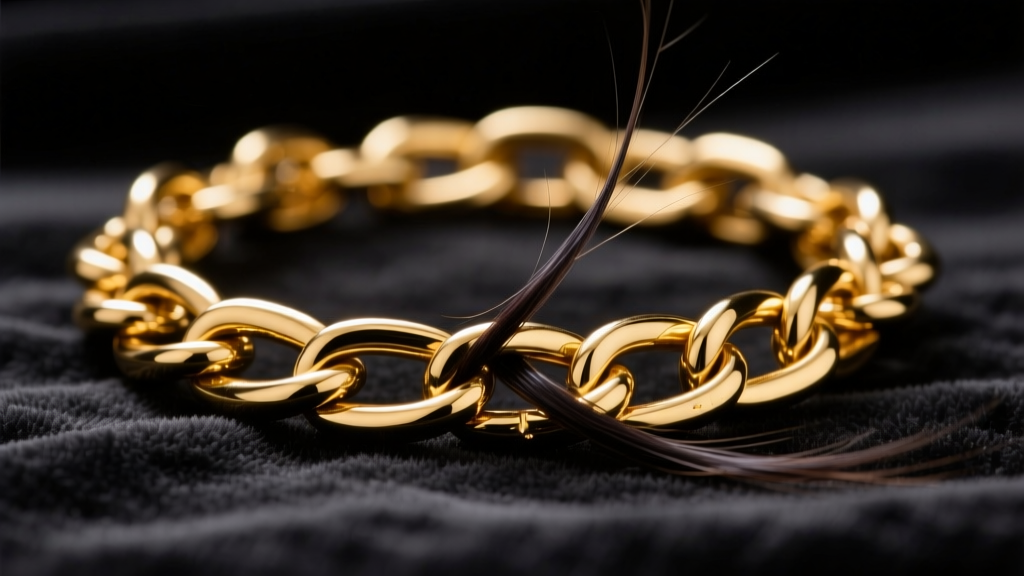
Few jewelry emergencies are as universally frustrating as a beloved necklace suddenly pulling and snagging on your hair. Understanding how to get hair out of a necklace chain requires a basic understanding of chain anatomy. Hair strands, which typically range from 0.017 to 0.18 millimeters in diameter, are incredibly adept at slipping into the microscopic gaps between metal links. Once inside, the natural oils from your scalp and skin act as an adhesive, binding the hair to the metal and creating a stubborn knot.
The risk of snagging is heavily dependent on the chain weave. Snake chains, for example, are constructed from tightly joined, overlapping metal plates that create a smooth, tubular surface. However, these overlapping plates act much like the scales on a snake or the teeth of a ratchet. When a hair slips under a plate, pulling the chain in one direction will only tighten the grip, potentially snapping the hair or, worse, kinking the delicate metal. Herringbone chains and rope chains present similar challenges due to their high surface area and twisted geometries, which provide endless entry points for stray strands.
Essential Tools for Safe Hair Extraction
Before attempting to remove a tangle, you must gather the right tools. Pulling blindly at a snagged chain is the leading cause of stretched links and broken solder joints. To safely extract hair, assemble the following items:
- 10x Jeweler's Loupe: Magnification is non-negotiable. You need to see the exact direction the hair is wrapped around the link or jump ring.
- Fine-Point Tweezers: Opt for non-magnetic titanium or Dumoxel tweezers with ultra-fine tips. Standard cosmetic tweezers are too thick and will push the hair deeper into the weave.
- Sewing Needles: A size 9 or 10 'sharps' needle (approximately 0.4mm to 0.5mm in diameter) is perfect for lifting hair out of fine 0.9mm cable chains or 1.2mm box chains.
- Mineral Oil or Baby Oil: A safe, gentle lubricant that will not damage gold, silver, or platinum. Never use harsh chemical solvents, WD-40, or heavy cooking oils, which can degrade certain gemstone treatments and leave a rancid residue.
- Soft-Bristled Baby Toothbrush: Ideal for gently working lubricants into dense weaves like foxtail or wheat chains.
Method 1: The Dry Extraction Technique
The dry method is your first line of defense for surface-level snags and loose strands that have wrapped around the clasp or outer links.
Step 1: Secure and Illuminate
Lay the necklace flat on a non-slip jewelry pad or a dark microfiber cloth. The dark background provides high contrast, making light-colored or blonde hair much easier to see under bright, direct LED lighting.
Step 2: Analyze the Wrap Direction
Use your 10x loupe to inspect the snag. Identify where the hair enters the link and where it exits. You must always pull the hair in the direction that unwinds it, never against the grain of the chain weave.
Step 3: Lift and Slide
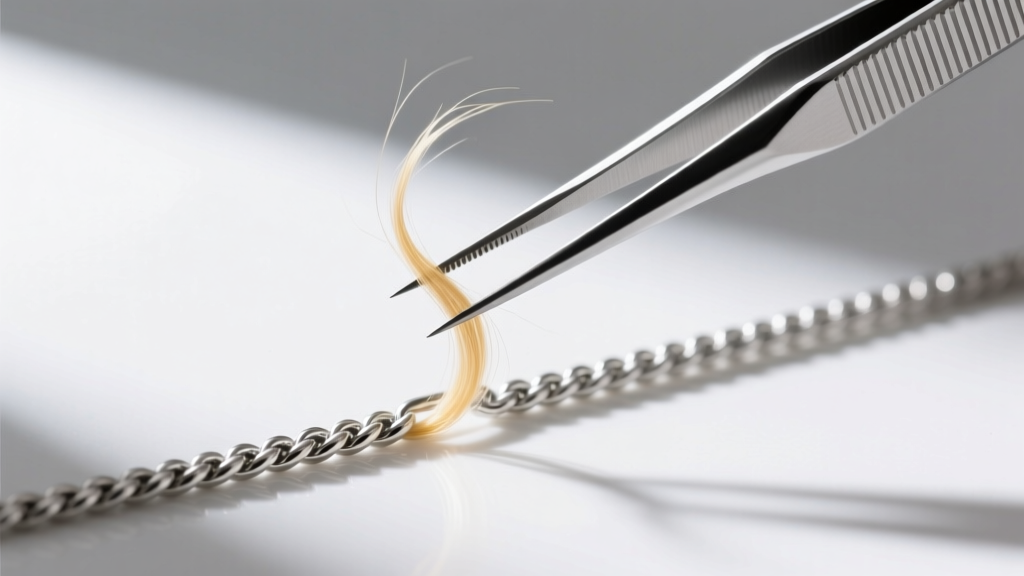
Take your sewing needle and gently slide the tip under the loop of the hair. Lift the hair slightly away from the metal to create slack. Then, use your fine-point tweezers to grasp the lifted loop. Pull the hair parallel to the chain, sliding it out of the gap rather than yanking it perpendicularly, which could bend the delicate metal links.
Method 2: The Lubrication Technique for Embedded Strands
When hair is deeply embedded in a tight weave like a 1.5mm rope chain, or when multiple strands have created a dense mat near the pendant bail, dry extraction will likely fail. This is where lubrication becomes essential.
Expert Warning: Never use the lubrication method if your necklace features porous gemstones such as pearls, opals, turquoise, or emeralds. Mineral oil can seep into the microscopic fissures of these stones, causing permanent discoloration and structural weakening. For gemstone-heavy pieces, stick to the dry method or seek professional help.
Step 1: Apply a Micro-Drop of Oil
Using a glass dropper or the tip of a toothpick, apply a tiny drop of baby oil or pure mineral oil directly to the tangled area. Allow it to sit for three to five minutes. The oil will break down the natural sebum and dead skin cells that are effectively gluing the hair to the metal.
Step 2: Agitate Gently
Take your soft-bristled baby toothbrush and gently brush the oiled area in the direction of the chain's links. Do not scrub in circles, as this will only wind the hair tighter. The goal is to encourage the oil to penetrate the knot and loosen the fibers.
Step 3: Extract and Cleanse
Once the hair has loosened, use your tweezers to slide it out. After the hair is completely removed, you must clean the chain to remove the oil. Submerge the metal portion of the necklace in a bowl of warm water mixed with a few drops of mild, phosphate-free dish soap (like Dawn). Gently agitate, rinse with distilled water, and pat dry with a lint-free cloth. As recommended by the Gemological Institute of America (GIA), regular gentle cleaning prevents the buildup of oils that attract hair and dust in the first place.

Chain Weave Risk Assessment & Removal Matrix
Not all chains behave the same way when tangled. Use the matrix below to determine the primary failure mode of your specific chain type and the safest approach for removal.
| Chain Type | Snag Risk Level | Primary Failure Mode | Recommended Removal Method |
|---|---|---|---|
| Snake Chain | Extreme | Kinking and permanent bending of overlapping plates | Lubrication method; never pull against the scale grain |
| Herringbone | High | Flattening and fraying of flat-lying links | Dry extraction with needle; avoid toothbrush agitation |
| Rope Chain | Moderate-High | Hair wrapping deep inside the twisted spiral grooves | Lubrication method with baby toothbrush |
| Box Chain | Low | Hair caught in the clasp jump ring or hollow link interiors | Dry extraction; tweezers work best on geometric edges |
| Cable Chain | Low | Strands wrapping around the entire outer circumference | Dry extraction; simply unwind the loop |
Troubleshooting: Dealing with Knots and Clasp Tangles
The most common area for hair to accumulate is the jump ring connecting the lobster clasp to the chain. This area experiences the most friction against the nape of the neck and features a small gap where the jump ring meets the link. If the hair has formed a tight, microscopic knot, do not pull. Instead, use the 'Two-Needle Technique'.
Take a sewing needle in each hand. Insert the tip of the first needle into the center of the knot to create a tiny opening. Insert the second needle into that opening and gently push them in opposite directions to stretch the knot out. Once the knot is loosened, apply a micro-drop of mineral oil and slide the hair out. According to the Jewelers of America, maintaining the integrity of your clasp and jump rings is vital, as excessive pulling can warp the metal and compromise the security of your necklace.
Preventative Maintenance & Storage Best Practices
Learning how to get hair out of a necklace chain is a valuable skill, but prevention is always the superior strategy. Implementing a few daily habits will drastically reduce the frequency of tangles:
- The 'Last On, First Off' Rule: Always put your necklace on after you have finished brushing, styling, and applying hairspray or products to your hair. Remove it immediately when you get home, before changing clothes or brushing your hair again.
- Proper Storage: Never toss your necklace into a jewelry box where it can mingle with other pieces and loose fibers. Store it in a dedicated silk pouch or an anti-tarnish ziplock bag. Ensure the clasp is fastened to prevent it from catching on the interior lining of the pouch.
- Avoid Sleeping in Chains: Tossing and turning against cotton or synthetic pillowcases creates static and friction, driving stray fibers deep into the chain links.
When to Seek Professional Jeweler Help
While most hair tangles can be resolved at home with patience and the right tools, there are scenarios where professional intervention is required. If you are dealing with a hollow tube chain (such as a thick foxtail or a tubular herringbone) and the hair has been pulled inside the hollow core of the metal, it is nearly impossible to extract without specialized ultrasonic equipment and microscopic hooks. Furthermore, if your attempts to remove the hair have resulted in a kinked snake chain, stretched cable links, or a warped jump ring, stop immediately. A professional bench jeweler can use specialized mandrels to round out stretched links and carefully steam-clean the piece to remove any embedded debris without causing further structural damage.


