Troubleshooting Your Evil Eye Bead Necklace: Fixes & Care
Is your evil eye bead necklace fading or breaking? Learn expert troubleshooting tips for restringing, cleaning glass beads, and preventing knot failure.


The Anatomy of an Evil Eye Bead Necklace
The traditional evil eye bead, or Nazar, is more than just a trendy pendant; it is a cultural talisman rooted in Mediterranean and West Asian history. Authentic beads are crafted using lampwork glass techniques, featuring four distinct concentric layers: a dark cobalt blue outer rim, a white middle ring, a light blue inner circle, and a black or dark blue pupil. However, because these beads are hand-formed in high-heat kilns, they possess unique structural vulnerabilities. The drill holes, typically ranging from 1.0mm to 1.5mm in diameter, often have micro-serrated glass edges left behind by the diamond core bits. Over time, these sharp internal edges act like tiny saws, fraying and eventually snapping the stringing material. Understanding this anatomy is the first step in troubleshooting why your favorite necklace keeps breaking or losing its luster.
Troubleshooting Common Stringing and Knot Failures
The most frequent complaint among wearers is the sudden snapping of the cord. This is rarely due to the weight of the bead, but rather the friction between the glass hole and the cord, compounded by the degradation of the knot. If you are using standard cotton or cheap nylon threads, they will degrade within months due to skin acidity and friction. To solve this, you must upgrade your stringing material to match the 1.0mm+ hole size while providing high tensile strength.
| Material | Diameter | Tensile Strength | Best Use Case & Notes |
|---|---|---|---|
| Griffin 100% Silk (Size 6) | 0.30mm | Moderate | Traditional knotting between beads. Requires French wire at the clasp to prevent wear. Degrades over 2-3 years. |
| WildFire (Beading Thread) | 0.008 in (0.20mm) | Very High | Thermally bonded polyethylene. Waterproof, zero stretch, and highly resistant to glass-edge fraying. Ideal for single-strand pendants. |
| Power Pro Braided Line | 0.15mm | Extreme | Ultra-thin but incredibly strong. Best for beads with very narrow, jagged drill holes where thicker cords get stuck. |
According to the experts at Fire Mountain Gems, matching the cord diameter to the bead hole is critical; too thick, and the bead cracks under pressure; too thin, and the bead shifts, causing uneven wear. Furthermore, standard square knots will slip on synthetic threads. You must use a Surgeon's Knot (adding an extra twist on the first pass) and secure it with a micro-drop of G-S Hypo Cement. Allow the cement to cure for a full 24 hours before wearing.
Solving the 'Cloudy Glass' and Enamel Fading Problem
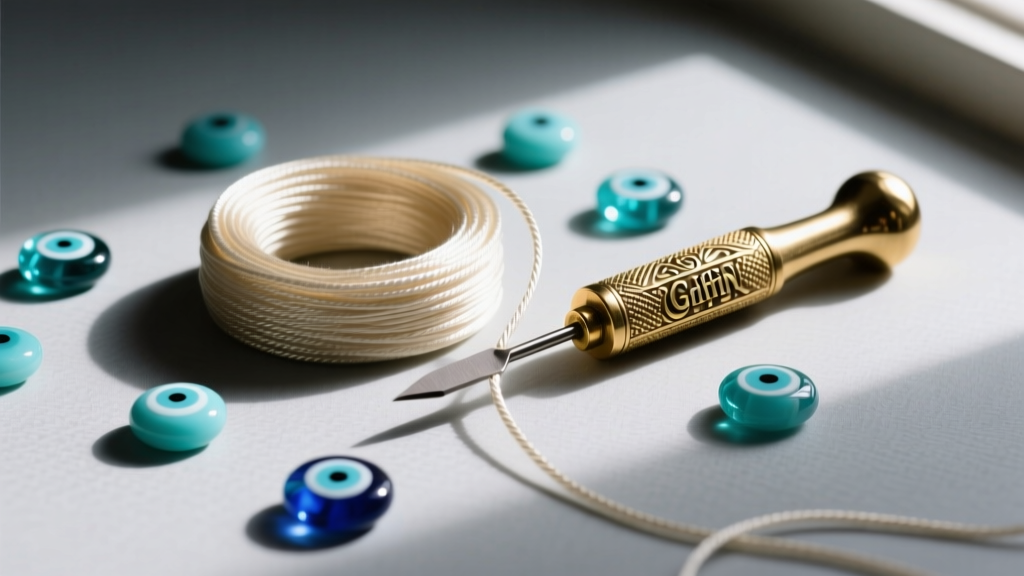
Another major issue is the glass losing its vibrant, glossy finish, turning cloudy or chalky. This is typically caused by hard water calcification, the buildup of sebum (skin oils), and the chemical reaction between lotions and the metallic backing found on some modern enamel evil eye beads. Never use ultrasonic jewelry cleaners on lampwork glass. The high-frequency vibrations can exploit microscopic internal stress fractures created during the glass cooling process, causing the bead to shatter unexpectedly.
To safely restore the glass, create a cleaning solution using distilled water (to avoid adding more mineral deposits) and a single drop of pH-neutral dish soap, such as Dawn. Soak the necklace for no more than 5 minutes. Use a soft-bristled baby toothbrush to gently agitate the area around the drill hole, where grime accumulates. Rinse with distilled water and dry immediately with a lint-free microfiber cloth. If your bead features a painted or enameled metallic backing rather than solid glass layers, avoid soaking it entirely; instead, use a barely damp cloth to wipe the surface, as prolonged moisture will cause the enamel to lift and peel.
How to Verify Authenticity: Glass vs. Resin Fakes
As the Gemological Institute of America (GIA) notes, glass and synthetic resins can look identical to the untrained eye, but they behave very differently when worn. Mass-produced resin evil eye beads are prone to yellowing, scratching, and trapping moisture against the skin. Here is a troubleshooting framework to verify your bead's material:
- The Temperature Test: Glass is a thermal conductor. When pressed against your cheek or the inside of your wrist, authentic glass will feel distinctly cool to the touch and take several seconds to warm up. Resin and plastic will feel room-temperature immediately.
- The Bubble Test: Examine the bead under a 10x jeweler's loupe. Authentic lampwork glass will often contain microscopic, perfectly round air bubbles trapped inside the colored layers. Resin beads are either perfectly clear or feature irregular, elongated mold lines.
- The Sound Test: Gently tap the bead against a ceramic plate or another piece of glass. Authentic glass produces a sharp, high-pitched 'clink.' Resin produces a dull, muted thud.
Step-by-Step Restringing Guide for Evil Eye Beads
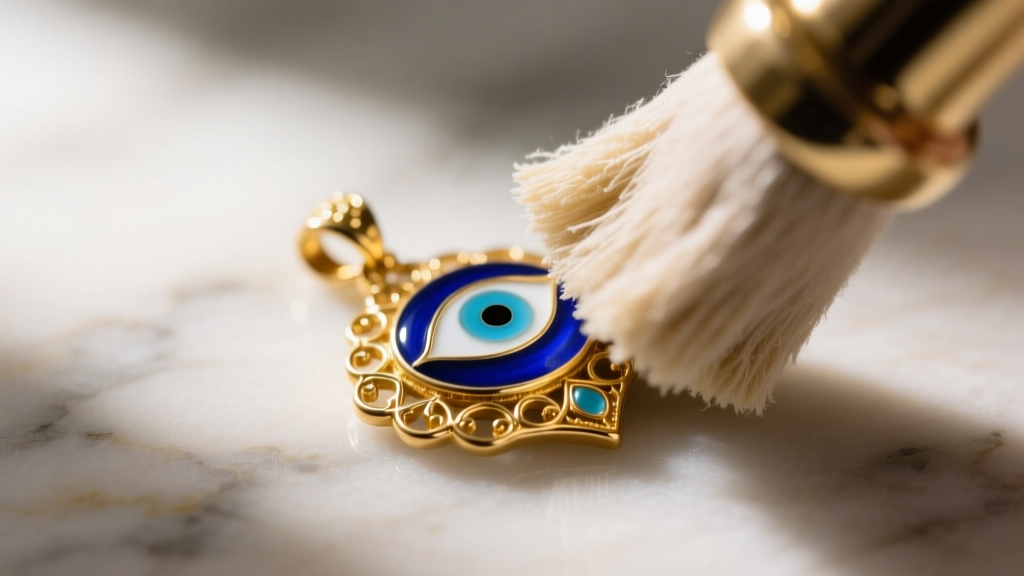
If your cord has frayed or snapped, do not simply tie it back together. The structural integrity is compromised. Follow this professional restringing protocol:
- Inspect the Hole: Before threading new material, use a bead reamer or a folded piece of 600-grit wet/dry sandpaper on a toothpick to gently smooth the inside of the glass hole. This removes the micro-serrations that cause fraying.
- Thread and Center: Cut a 24-inch length of WildFire or Power Pro thread. Thread your clasp components and center the evil eye bead.
- Tie the Surgeon's Knot: Cross the ends over each other, loop one end through twice (creating the surgeon's double twist), pull tight, and repeat in the opposite direction.
- Seal the Knot: Apply a pinpoint drop of G-S Hypo Cement directly to the knot using the needle-nose applicator. Do not use superglue (cyanoacrylate), as it dries brittle and will crack against the hard glass surface when bent.
- Hide the Ends: Thread the excess tail ends through the adjacent beads or clasp loops, trim flush with flush-cutters, and let cure for 24 hours.
Preventative Maintenance Checklist
To ensure your evil eye bead necklace survives daily wear without requiring constant repairs, adopt these professional jewelry care habits:
- Last On, First Off: Always put your necklace on after applying perfumes, hairsprays, and lotions. The alcohol and chemical solvents in cosmetics can degrade synthetic cords and strip the polish from the glass.
- Proper Storage: Never toss the necklace into a communal jewelry box. The hard glass evil eye bead will scratch softer gold or silver chains, and conversely, heavier metal pendants can chip the glass rim. Store it flat in a dedicated anti-tarnish pouch.
- Water Exposure: While the glass itself is waterproof, the metal jump rings and clasps are usually not. Remove the necklace before showering or swimming in chlorinated pools to prevent galvanic corrosion at the connection points.
By understanding the material science behind your evil eye bead necklace and applying these targeted troubleshooting techniques, you can preserve both the structural integrity and the symbolic protection of your jewelry for decades to come.


