How to Clean and Style Your Tree of Life Sterling Silver Necklace
Learn how to clean, restore, and style your tree of life sterling silver necklace with our expert step-by-step guide and chain pairing tips.

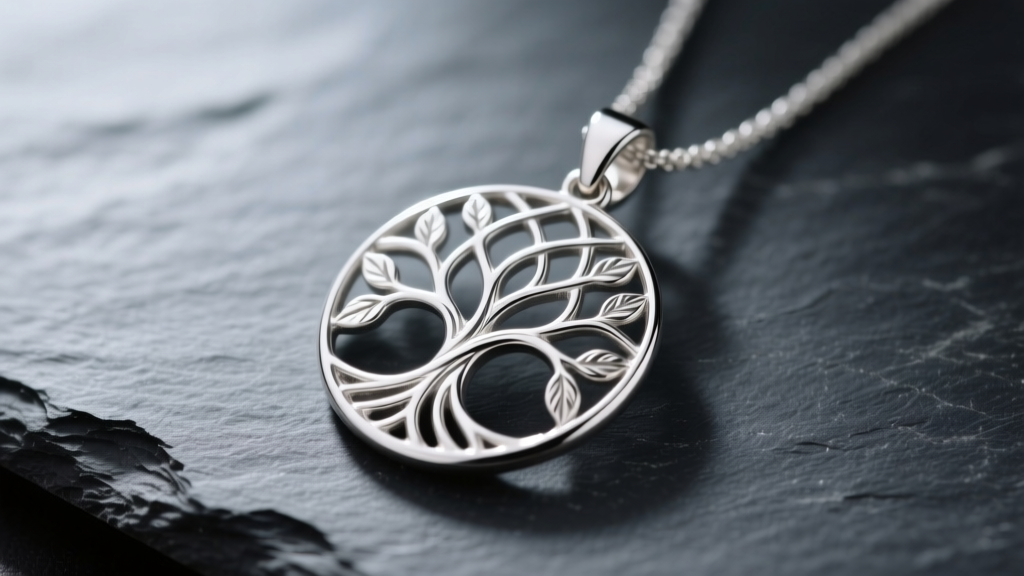
The tree of life is a universal symbol of connection, deep roots, and expansive growth. When cast in .925 sterling silver, it transforms into a wearable heirloom that carries profound personal meaning. However, the intricate branches, woven roots, and delicate filigree of a tree of life sterling silver necklace create microscopic crevices that easily trap sebum, dead skin cells, and environmental pollutants. Over time, this leads to rapid tarnishing and a dull, grayish appearance. This comprehensive, step-by-step guide will teach you the metallurgical science behind silver tarnish, how to safely restore your piece without damaging the delicate branchwork, and how to select the perfect chain and neckline pairing for long-term wear.
The Metallurgy of .925 Sterling Silver and Tarnish
To properly care for your jewelry, you must first understand its composition. Pure silver (99.9%) is far too soft to hold the complex, wire-wrapped, or cast details of a tree of life design. To achieve structural integrity, jewelers alloy pure silver with copper, creating the standard known as .925 sterling silver (92.5% silver, 7.5% copper).
While the copper provides necessary durability, it also introduces a chemical vulnerability. According to the Gemological Institute of America (GIA), copper readily reacts with hydrogen sulfide in the atmosphere to form silver sulfide (Ag2S). This chemical reaction manifests as the yellowish-black film we recognize as tarnish. High humidity, exposure to wool, latex, and even sulfur-rich foods like onions and eggs will accelerate this process. Because the tree of life motif features deep undercuts and overlapping branches, standard polishing cloths cannot reach the tarnish hiding in the recesses, requiring a more advanced cleaning approach.
Step-by-Step Electrochemical Restoration Method
Never use abrasive silver dips, liquid polishes, or baking soda pastes on a tree of life pendant. Abrasive compounds will become permanently lodged in the tiny crevices between the silver branches, leaving a chalky white residue that ruins the contrast of the design. Instead, utilize an electrochemical reduction method. This process reverses the tarnish chemically, converting the silver sulfide back into pure silver without removing any base metal.
The Cleaning Protocol
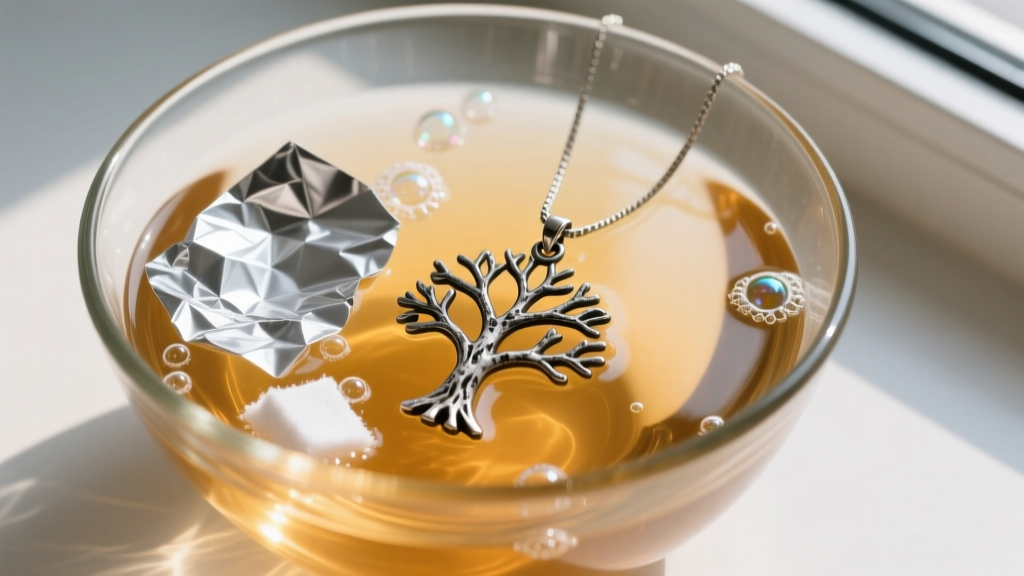
- Prepare the Bath: Line a heat-safe glass bowl with aluminum foil, ensuring the shiny side faces up. The aluminum will act as the sacrificial anode in our electrochemical cell.
- Heat the Solvent: Boil 2 cups of distilled water and carefully pour it into the foil-lined bowl.
- Add the Catalysts: Stir in 2 tablespoons of baking soda (sodium bicarbonate) and 1 tablespoon of non-iodized sea salt until completely dissolved. You will see immediate fizzing.
- Submerge the Necklace: Drop your tree of life sterling silver necklace into the solution. It is critical that the silver pendant physically touches the aluminum foil to complete the electrical circuit.
- Observe the Reaction: Wait 5 to 10 minutes. You will likely notice a faint sulfur (rotten egg) odor. This is the hydrogen sulfide releasing from the silver and bonding to the aluminum foil.
- Rinse and Dry: Remove the necklace using wooden or plastic tongs (never metal, as it will disrupt the reaction). Rinse thoroughly under distilled water and pat completely dry with a clean microfiber cloth.
Selecting the Optimal Chain Gauge and Profile
A common styling mistake is pairing a heavy, 30mm cast tree of life pendant with a flimsy 0.8mm cable chain. This creates a high center of gravity, leading to chain kinking, bail wear, and eventual snap points. Conversely, a thick 3mm chain will visually overwhelm the delicate, organic branchwork of the pendant. The Jewelers of America recommends matching the chain's tensile strength and visual weight to the pendant's dimensions.
| Chain Type | Ideal Gauge | Pros for Tree Pendants | Cons |
|---|---|---|---|
| Box Chain | 1.2mm - 1.5mm | Lies flat, high tensile strength, won't pull chest hair | Can be difficult to repair if a square link snaps |
| Rope Chain | 1.5mm - 2.0mm | Reflects light beautifully, complements organic branch shapes | Prone to stretching over time if heavy pendants are used |
| Cable Chain | 1.0mm - 1.2mm | Classic, unobtrusive, lets the pendant be the focal point | Lower structural integrity, links can warp under heavy weight |
| Snake Chain | 2.0mm - 3.0mm | Sleek, modern, very strong and durable | Too rigid for small bails, can kink permanently if bent |
Mitigating Bail Friction and Metal Loss
The bail—the loop connecting the tree of life pendant to the chain—is a critical failure point often overlooked by consumers. As you move throughout the day, the silver bail acts as a microscopic saw against the chain links. Over 3 to 5 years of daily wear, this continuous friction can wear completely through a soft sterling silver chain, resulting in the loss of your pendant.
Expert Fix: Take your necklace to a professional jeweler and ask them to install a tiny 14k gold or platinum jump ring inside the sterling silver bail. The harder gold alloy will absorb the friction, saving your silver chain from snapping and preserving the structural integrity of the tree of life design for decades.
Neckline Pairing and Length Calibration
The visual impact of your tree of life sterling silver necklace changes dramatically depending on the length of the chain and the neckline of your clothing. Use this calibration guide to achieve perfect proportions:
- V-Neck (18-inch to 20-inch length): The V-shape of the neckline naturally frames the V-taper of the tree's roots and branches. An 18-inch chain allows the pendant to rest perfectly in the negative space of the collar, drawing the eye downward and elongating the neck.
- Crew Neck (22-inch to 24-inch length): When wearing a crew neck sweater or t-shirt, the pendant must be worn over the fabric. A longer matinee-length chain ensures the tree of life clears the thick ribbed hem of the collar, preventing awkward snagging and allowing the silver to contrast sharply against the cotton or wool.
- Scoop Neck (16-inch to 18-inch length): A princess length allows the tree of life to rest directly on the bare skin of the upper chest. This maximizes the visual contrast between the oxidized, darkened crevices of the silver branches and your natural skin tone, making the intricate details pop.

Archival Storage for Heirloom Silver
How you store your tree of life sterling silver necklace when it is not being worn is just as important as how you clean it. Never store silver in cardboard jewelry boxes; as cardboard degrades, it emits sulfur gases that will rapidly tarnish your piece. Instead, invest in a Pacific Silvercloth pouch. These specialized storage bags are embedded with microscopic silver particles that act as a sacrificial anode, absorbing ambient sulfur before it can reach your necklace. For added protection in humid climates, drop a small, color-indicating silica gel desiccant packet into the pouch to control moisture levels and halt the electrochemical tarnishing process entirely.


