Rick Owens Pentagram Necklace: Material & Wear Guide
Explore the metallurgy of the Rick Owens pentagram necklace. Compare brass, bronze, and silver editions, patina aging, and skin safety.

The Metallurgy of Darkness: Decoding the Alloys
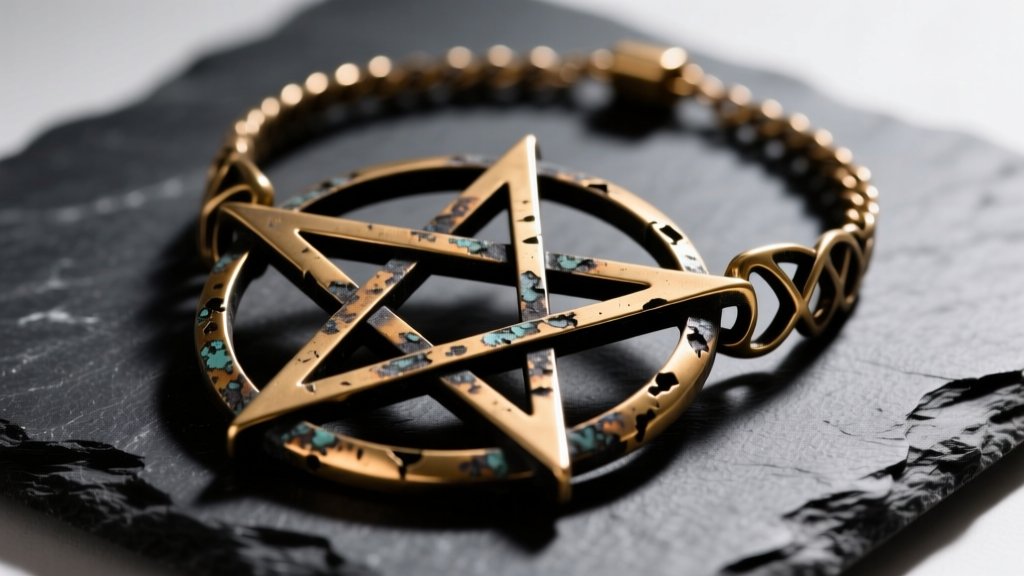
The Rick Owens pentagram necklace stands as a monolithic staple in avant-garde and gothic jewelry. Yet, beyond the brutalist geometry and the inverted star motif lies a complex narrative of metallurgy and material degradation. For collectors and daily wearers navigating the 2026 archival market, understanding the specific alloys used in these pieces is not just an academic exercise—it dictates how the jewelry ages, reacts to human skin, and retains its structural integrity over decades of wear. Rick Owens’ jewelry line, often produced via lost-wax investment casting in specialized Italian and American foundries, primarily relies on three distinct base metals: architectural brass, cast bronze, and sterling silver. Each material offers a vastly different tactile experience, weight profile, and oxidation trajectory.
Unlike mass-market fashion jewelry that relies on thin electroplating over pot metal, authentic Rick Owens pentagram pendants are cast as solid, homogenous alloys. This means that as the piece scratches, wears, and oxidizes, the underlying material remains consistent. However, the high copper content in the brass and bronze editions introduces specific chemical reactivity that wearers must actively manage. According to material science guidelines outlined by the Gemological Institute of America (GIA), copper-rich alloys are highly susceptible to environmental chlorides and acids, making the wearer’s unique body chemistry a primary factor in the necklace's evolving aesthetic.
Material Breakdown: Brass vs. Bronze vs. Silver
When sourcing a Rick Owens pentagram necklace on the secondary market, you will encounter three primary material categories. The table below synthesizes the metallurgical properties, average physical metrics, and current 2026 resale valuations for each alloy variant.
| Alloy Variant | Primary Composition | Avg. Pendant Weight | Patina Trajectory | 2026 Archival Value |
|---|---|---|---|---|
| Oxidized Brass | ~85% Cu, 15% Zn | 35g - 45g | High contrast, verdigris risk | $250 - $450 |
| Cast Bronze | ~90% Cu, 10% Sn | 50g - 65g | Deep brown, slow oxidation | $400 - $750 |
| Sterling Silver | 92.5% Ag, 7.5% Cu | 40g - 55g | Sulfur tarnish, polishable | $950 - $1,800+ |
Oxidized Brass & The Verdigris Factor
The most common and accessible iteration of the pentagram necklace is cast in jewelry-grade brass. Fresh from the foundry, these pieces are typically treated with potassium sulfide or liver of sulfur to achieve the signature matte-black, oxidized finish that highlights the recessed gothic detailing. However, brass is fundamentally a copper-zinc alloy. When exposed to the lactic acid, sebum, and sodium chloride present in human sweat, the copper undergoes a chemical reaction that produces copper chloride and copper carbonate—commonly known as verdigris.
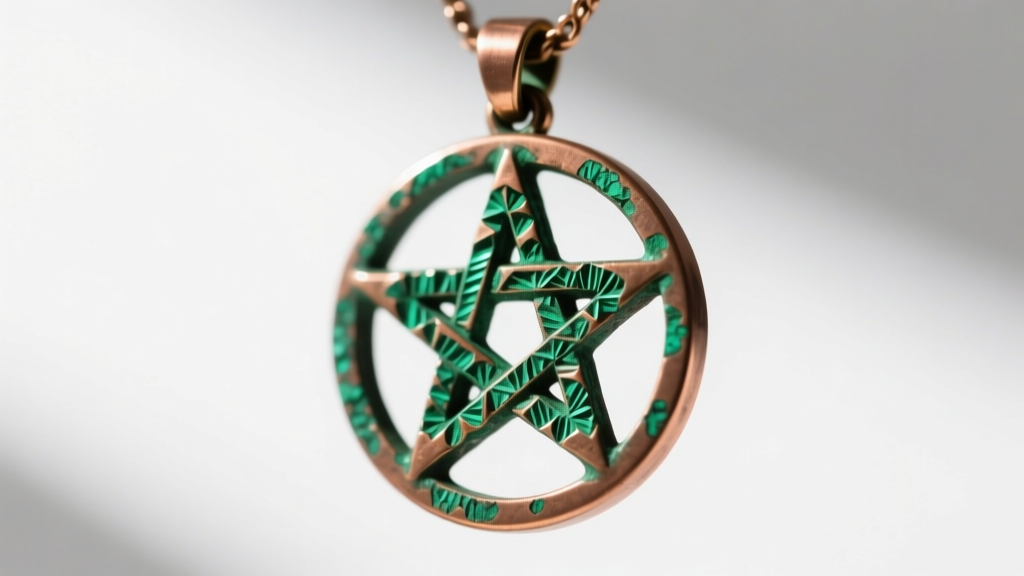
This results in the infamous "green neck" phenomenon. While chemically harmless and easily washed off with soap and water, it is a nuisance for daily wearers. Early 2010s brass editions found in today's vintage market often exhibit heavy verdigris buildup in the chain links and pendant bails. To mitigate this without stripping the intentional blackened crevices, experts recommend applying a microcrystalline polymer coating, such as Renaissance Wax, to the back of the pendant and the inner links of the chain. This creates an invisible, inert barrier against skin acids while preserving the raw, brutalist aesthetic of the metal.
Cast Bronze: Heft and Ancient Aging
Bronze editions of the pentagram necklace are rarer and significantly heavier. By replacing zinc with tin (typically a CuSn8 or CuSn10 ratio), the resulting alloy is denser, harder, and more resistant to the rapid green oxidation seen in brass. Instead, bronze develops a rich, mottled brown and dark olive patina over years of wear. The acoustic properties of bronze also differ; when tapped, a solid bronze pentagram emits a deeper, resonant ring compared to the higher-pitched clink of brass. The added heft (often exceeding 60 grams for the pendant alone) requires a more robust chain, and collectors prize bronze pieces for their "ancient artifact" feel, which aligns perfectly with the Owens design ethos.
Sterling Silver Editions: The Grail Pieces
Sterling silver (.925) pentagram necklaces represent the apex of the Rick Owens jewelry hierarchy. As noted by The Silver Institute, sterling silver possesses natural antimicrobial properties and a distinct, bright luster that contrasts sharply with the brand's typically dark palette. To maintain the gothic aesthetic, silver editions are usually heavily oxidized using liver of sulfur, turning the surface a deep charcoal grey. Unlike brass, silver does not produce verdigris; instead, it reacts with atmospheric hydrogen sulfide to form silver sulfide (tarnish). While the 7.5% copper content in sterling silver can cause minor localized tarnishing, it will not stain the skin green. Silver editions command a massive premium on platforms like Grailed and Vestiaire Collective, often doubling in value if they originate from specific archived runway seasons.
Chain Hardware and Clasp Failure Modes
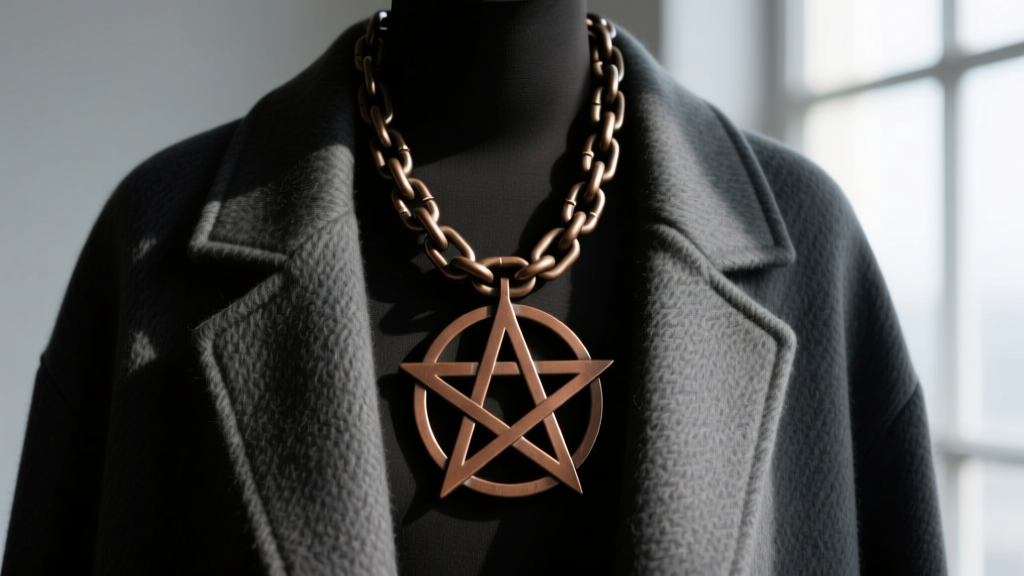
The pendant is only half the equation; the chain hardware on Rick Owens necklaces is subjected to immense mechanical stress. The standard chains paired with the pentagram pendants are typically 3.5mm to 4.5mm rolo or heavy cable chains, crafted from 16-gauge or 18-gauge wire. While the links themselves are highly resistant to snapping, the failure points almost always occur at the terminal hardware.
- Jump Ring Shear: The 1.5mm or 2.0mm jump ring connecting the heavy pendant to the chain is the most common point of failure. The constant pendulum motion of a 50g+ brass or bronze pendant causes friction wear, eventually thinning the metal until the jump ring snaps open.
- Lobster Clasp Springs: The internal steel spring inside the brass or silver lobster clasp is prone to corrosion from sweat and humidity. Once the spring rusts or fatigues, the clasp fails to close securely, leading to catastrophic loss of the pendant.
- Clasp Soldering: On older archival pieces, the solder joint where the clasp meets the final chain link can develop micro-fractures. Always inspect this joint with a jeweler's loupe when purchasing vintage.
Sourcing in 2026: Authenticity & Material Tells
"The weight and the porosity of the casting are the ultimate tells. Fakes often use hollow electroforming or cheap zinc alloys that feel unnaturally light and lack the microscopic pitting inherent to authentic lost-wax casting."
As the Rick Owens pentagram necklace continues to be a highly counterfeited item, material analysis is your best defense. Authentic pieces will feature precise, deeply stamped hallmarks—usually "RICK OWENS", the metal purity (e.g., "925"), and often "MADE IN ITALY". Counterfeiters frequently use superficial laser engraving that lacks depth. Furthermore, authentic brass and bronze pieces will exhibit a specific density; if the pendant feels suspiciously light, it is likely a zinc-alloy die-cast fake. Genuine silver pieces will not attract a magnet, whereas many counterfeit chains use steel cores with thin silver plating.
Care Protocols for Oxidized Finishes
Maintaining the intentional oxidation on a Rick Owens pentagram necklace requires a departure from traditional jewelry cleaning methods. Never use ultrasonic cleaners or chemical silver dips. These methods will strip the liver of sulfur treatment from the recessed areas, leaving you with a flat, unnaturally bright pendant that ruins the contrast of the design. Instead, use a soft-bristled horsehair brush with a mild, phosphate-free dish soap to gently remove sebum and environmental grit from the crevices. Dry the piece immediately and thoroughly with a microfiber cloth to prevent water spots, and reapply a thin layer of Renaissance Wax every six months to stabilize the patina and protect your skin from copper reactivity.
Final Verdict: Which Alloy Suits Your Wear Pattern?
Choosing the right Rick Owens pentagram necklace depends entirely on your maintenance tolerance and budget. If you desire the most authentic, raw, and evolving gothic aesthetic and do not mind occasional skin discoloration or the need for wax sealing, the oxidized brass editions offer the best entry point and the most dramatic aging. If you prefer a heavier, more substantial piece that ages slowly into a rich, ancient-looking brown without the green verdigris, hunt for the rarer cast bronze variants. Finally, for collectors seeking a grail-level investment piece that offers superior skin safety, intrinsic metal value, and unparalleled archival prestige, the sterling silver editions remain the undisputed pinnacle of the Rick Owens jewelry canon.


