How to Style and Care for a Multi Strand Gold Necklace
Learn how to style, untangle, and maintain your multi strand gold necklace. Expert tips on clasp security, chain gauges, and storage.

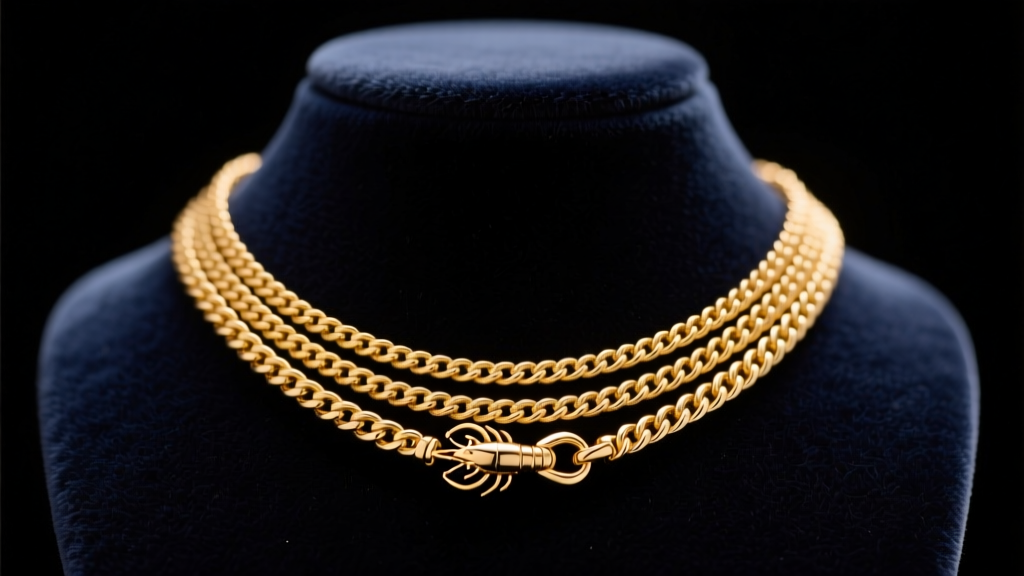
The Anatomy of a Multi Strand Gold Necklace
When investing in a multi strand gold necklace, understanding the metallurgy and structural engineering of the piece is critical for its longevity. Unlike single-strand pendants, multi-strand pieces carry cumulative kinetic stress. Every time you move, the individual chains pull against the central clasp and each other, creating friction and tension that can compromise weaker links.
Karat Selection: 14k vs. 18k Gold
While 18k gold (75% pure gold) offers a richer, deeper yellow hue, it is inherently softer. For a multi strand gold necklace, 14k gold (58.3% pure gold) is the superior structural choice. The higher alloy content (typically copper, silver, and zinc) increases the tensile strength by up to 30%, significantly reducing the risk of the chains stretching or the jump rings warping under the combined weight of multiple strands. According to the Gemological Institute of America (GIA), the alloy mix not only dictates color but fundamentally alters the durability and wear-resistance of fine jewelry.
Chain Gauge and Construction
Individual strands in a multi-strand piece typically range from 0.8mm to 1.5mm in gauge. Avoid hollow-core chains (often sold as lightweight tubular ropes). Hollow chains are prone to crushing and kinking, which is disastrous when multiple strands tangle and pull against one another. Always opt for solid or semi-solid cable, rolo, or figaro chains to ensure structural integrity.
Step-by-Step: How to Untangle Multi-Strand Chains Without Breaking Them
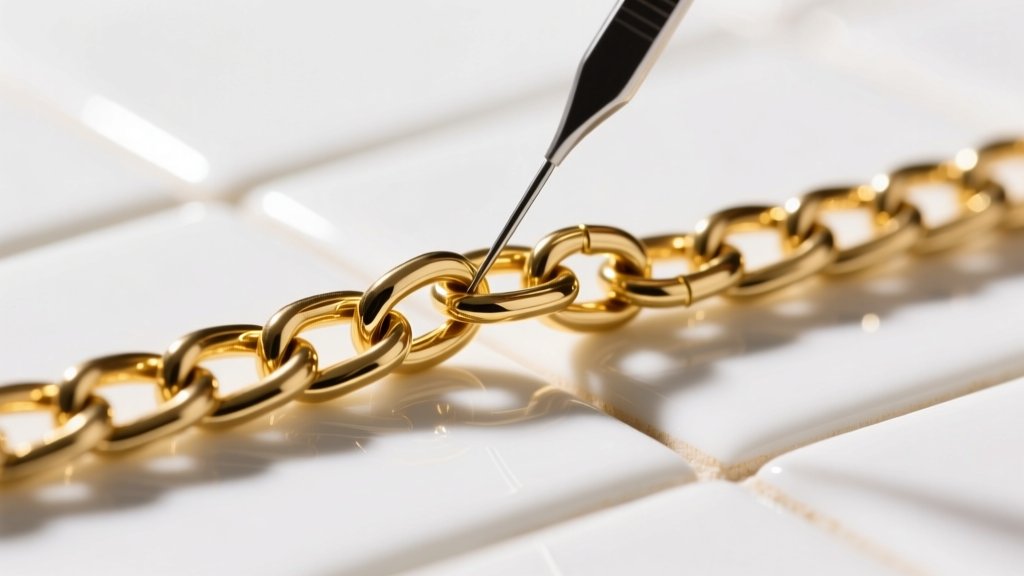
Tangling is the most common failure point for multi-strand necklaces. Pulling at a knot tightens the links, causing micro-abrasions and eventual snapping. Follow this jeweler-approved method to safely detangle your gold without causing permanent damage.
- Unclasp Immediately: Never attempt to untangle a closed loop. Unfasten the clasp to give the strands maximum slack and reduce overall tension.
- Prepare the Surface: Lay the necklace flat on a hard, non-porous surface like a glass or ceramic tile. Avoid fabric or carpet, which creates friction and catches on the links.
- Apply a Dry Lubricant: Dust the knot generously with cornstarch or unscented baby powder. Do not use baby oil or WD-40. Oils leave a sticky residue that attracts microscopic grit, which acts like sandpaper inside the delicate gold links over time.
- Use Precision Tools: Take two fine sewing needles or specialized jewelry prying tools. Gently work the needles into the center of the knot, wiggling them to create space. Push the links apart laterally rather than pulling the chain ends.
- Clean the Residue: Once untangled, wash the necklace in a lukewarm bath of distilled water and a few drops of mild, phosphate-free dish soap to remove the powder completely.
Styling Guide: Necklines and Occasions
A multi strand gold necklace is a statement piece that requires strategic pairing with your wardrobe. Because it occupies significant visual real estate on the décolletage, the neckline of your garment must frame, not fight, the jewelry.
| Neckline Type | Compatibility | Styling Advice |
|---|---|---|
| Deep V-Neck | Excellent | Allows the cascading strands to follow the natural line of the garment. Ensure the longest strand sits at least 1 inch above the fabric's hem. |
| Scoop Neck | Good | Best for shorter, choker-style multi-strand pieces (14-16 inches). Avoid long opera-length multi-strands here, as they will clash with the curved hem. |
| Off-the-Shoulder | Excellent | Provides a blank canvas of skin. A 3-to-5 strand gold collar necklace sits beautifully against the collarbone without competing with fabric. |
| Crew Neck / Turtleneck | Poor | The fabric competes with the gold. The strands will bunch up and tangle against the high collar. Avoid this pairing entirely. |
Maintenance: Cleaning and Securing the Clasps
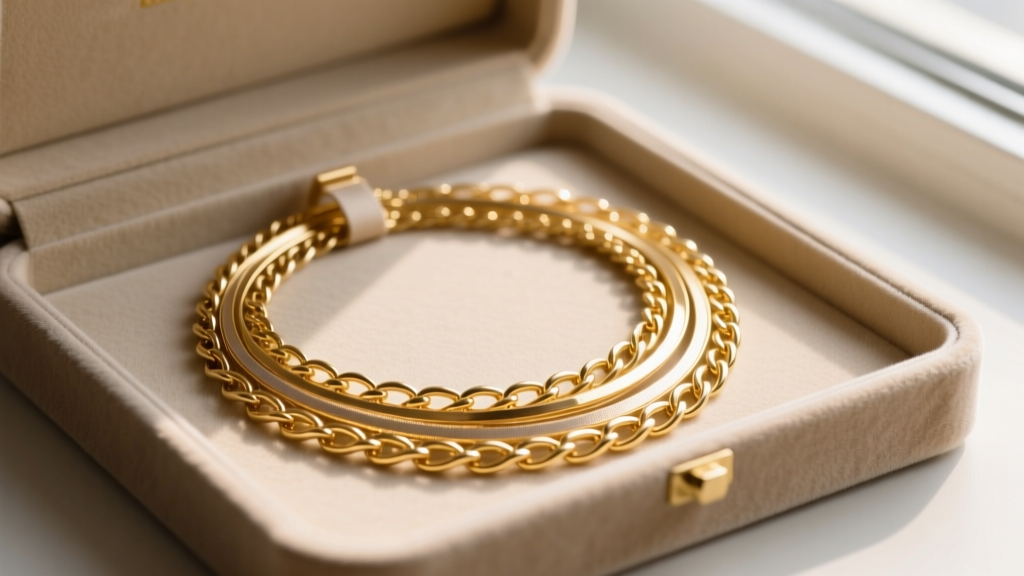
Proper maintenance extends the life of your multi strand gold necklace and preserves its resale value. The Jewelers of America recommends regular, gentle cleaning to remove sebum, cosmetics, and environmental pollutants that degrade gold alloys over time.
The Safe Cleaning Protocol
Never use ultrasonic cleaners on multi-strand necklaces unless you are absolutely certain there are no hollow links, tension-set stones, or integrated pearls. The high-frequency vibrations can shatter soft gems and weaken the soldered joints connecting the strands to the central clasp. Instead, use a soft baby toothbrush and a solution of warm water and mild dish detergent. Brush gently in the direction of the chain links to avoid bending them out of shape.
Clasp Security and Upgrades
The clasp is the single point of failure for a heavy multi-strand piece. If your necklace weighs more than 25 grams, discard any magnetic clasps or standard spring-ring clasps. Magnetic clasps can easily detach if snagged on clothing, and spring rings lack the internal spring tension to hold heavy multi-strand weights securely. Upgrade to a heavy-duty lobster clasp or a specialized multi-strand slide clasp (often featuring a silicone insert for friction grip) to ensure your investment stays safely around your neck.
Storage Strategies to Prevent Multi-Strand Tangling
How you store your multi strand gold necklace is just as important as how you wear it. Tossing multiple strands into a communal jewelry box guarantees a frustrating detangling session the next time you want to wear it.
The Flat-Lay Method
Always store multi-strand necklaces completely flat. Hanging them on standard jewelry hooks allows gravity to pull the individual strands at different angles, causing them to twist around one another. Use a suede-lined drawer insert or a flat jewelry tray to maintain the structural alignment of the piece.
Barrier Protection
Place a piece of acid-free tissue paper or a soft microfiber cloth between the layers of the necklace before closing the box. This creates a physical barrier that prevents the links of the top strand from catching on the bottom strand. Additionally, include anti-tarnish strips in the storage compartment to absorb sulfur compounds in the air, keeping the gold alloy bright and reducing the need for frequent abrasive polishing.
Troubleshooting Common Chain Failures
Even with meticulous care, multi-strand necklaces endure significant wear and tear. Here is how to identify and address common structural issues before they result in a lost piece.
- Stretched Links: If one strand hangs noticeably lower than the others when unclasped, the links have stretched. This happens when a heavy pendant is added to a single strand of a multi-strand piece. A jeweler can sometimes compress the links using a rolling mill, but replacement is often necessary.
- Worn Jump Rings: The small rings connecting the chains to the clasp endure constant friction. Inspect these every six months. If the slit in the jump ring has opened even a fraction of a millimeter, take it to a jeweler to be laser-welded shut immediately.
- Discoloration at the Clasp: If the gold near the clasp appears darker or slightly greenish, it is likely a reaction between the copper alloy in the 14k gold and your skin's pH or lotions. Clean the area with a specialized jewelry polishing cloth to restore the luster without removing gold mass.
Mastering the care and styling of a multi strand gold necklace transforms it from a high-maintenance accessory into a timeless, reliable staple in your fine jewelry collection. By respecting the metallurgy, utilizing proper detangling techniques, and ensuring clasp integrity, your layered gold will remain pristine for decades.


