The Hammered Silver Necklace: Alloys, Properties & Care
Discover how metal alloys affect your hammered silver necklace. Compare sterling, Argentium, and fine silver properties, durability, and care tips.

The Metallurgy of a Hammered Silver Necklace
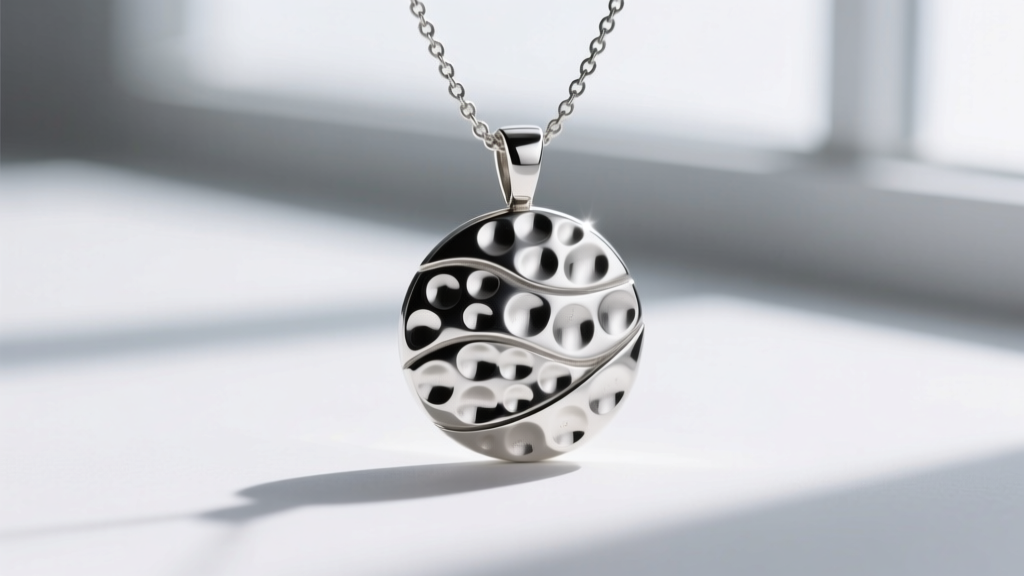
When you browse for a hammered silver necklace, you are likely drawn to the organic, light-catching divots that give the metal a rustic yet sophisticated aesthetic. However, from a metallurgical perspective, the hammering process—often referred to as planishing or peening—is a functional technique that fundamentally alters the physical properties of the jewelry. According to The Silver Institute, pure silver is inherently soft and malleable. To make it viable for daily wear, it is alloyed with other metals and mechanically worked. The rhythmic striking of a silversmith’s hammer compresses the metal’s crystal lattice, a process known as strain hardening or work-hardening. This increases the yield strength and rigidity of the necklace, ensuring that delicate pendants and chain links resist bending and deformation over time. Understanding the interplay between the chosen silver alloy and the mechanical forces applied during hammering is crucial for evaluating the longevity, tarnish resistance, and overall quality of your jewelry.
Silver Alloy Comparison Chart
Not all silver is created equal. The base alloy dictates how the metal responds to the hammer, how it wears against the skin, and how quickly it oxidizes. Below is a comprehensive comparison of the most common silver alloys used in hammered necklace designs, detailing their composition and mechanical properties.
| Alloy Type | Silver Purity | Secondary Metals | Vickers Hardness (HV) | Tarnish Resistance |
|---|---|---|---|---|
| Fine Silver (999) | 99.9% | 0.1% Trace | 25 HV (Annealed) | Excellent |
| Sterling Silver (925) | 92.5% | 7.5% Copper | 65 HV (Annealed) / 120 HV (Work-Hardened) | Moderate |
| Argentium Silver (935) | 93.5% | Copper, Germanium | 70 HV (Annealed) / 130 HV (Work-Hardened) | Very High |
| Coin Silver (900) | 90.0% | 10.0% Copper | 80 HV (Annealed) / 140 HV (Work-Hardened) | Low |
Sterling silver remains the industry standard for a hammered silver necklace due to its optimal balance of ductility and strength. However, as noted by the Gemological Institute of America (GIA), the copper content in sterling silver is highly reactive to sulfur and moisture, leading to tarnish. Argentium silver, which replaces some copper with germanium, offers superior tarnish resistance and a brighter white luster, making it an increasingly popular choice for high-end textured necklaces where polishing the deep crevices is difficult.
How Hammering Alters the Crystal Structure
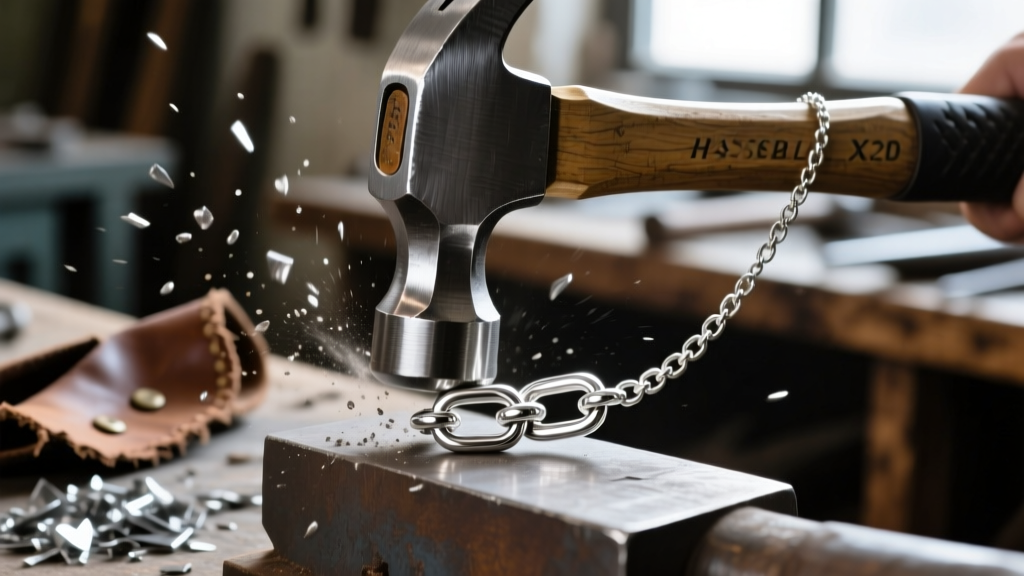
When a jeweler strikes a flat sheet of 18-gauge (1.02mm) sterling silver, the mechanical force introduces 'dislocations' into the metal's crystalline structure. These dislocations tangle and lock together, preventing the atomic planes from sliding past one another. This is why a hammered silver pendant feels noticeably stiffer and more durable than a cast piece of the exact same dimensions. The hammering effectively increases the metal's Vickers Hardness (HV), sometimes doubling its resistance to surface scratching.
The Annealing Balance
There is a physical limit to work-hardening. If a silversmith hammers a piece too aggressively without pausing, the silver becomes brittle and will eventually crack along the edges. To prevent this, the metal must be 'annealed'—heated to approximately 1100°F (593°C) and then quenched or air-cooled. This thermal treatment relaxes the crystal lattice, restoring the metal's ductility so it can be hammered further. A masterfully crafted hammered silver necklace will exhibit uniform dimpling without microscopic stress fractures, a testament to the artisan's careful management of the annealing cycle.
Tarnish Resistance in Textured Surfaces
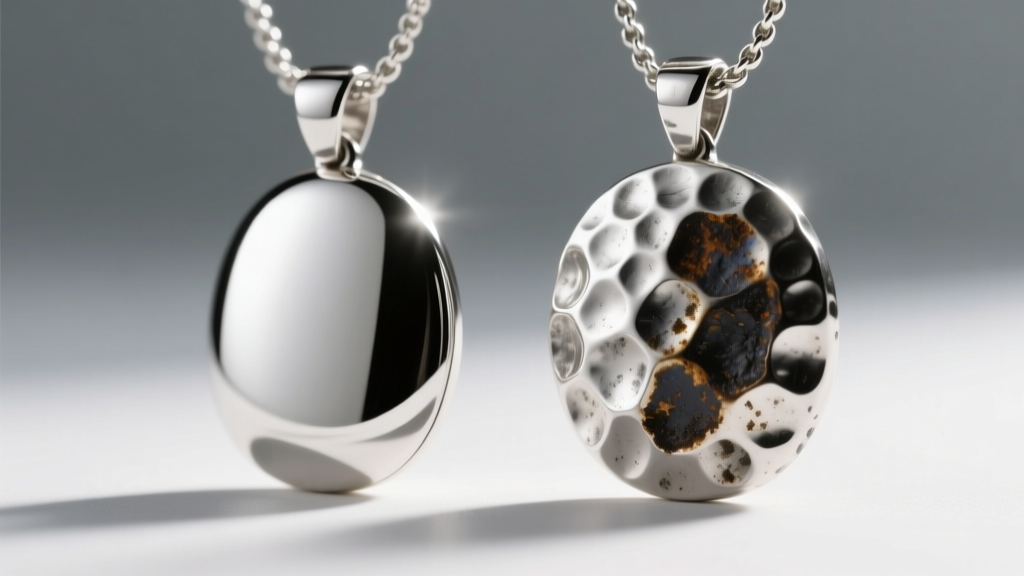
One of the most critical material properties to consider with textured jewelry is the surface-area-to-volume ratio. A smooth, high-polish sterling silver pendant has a relatively low surface area exposed to the atmosphere. In contrast, a heavily hammered silver necklace features hundreds of microscopic craters and divots, exponentially increasing the total surface area. Because tarnish (silver sulfide) forms when silver and copper react with airborne sulfur compounds, a hammered piece will inherently tarnish faster and more visibly than a smooth one. Furthermore, the recessed divots trap moisture, skin oils, and environmental pollutants, creating localized micro-climates that accelerate oxidation. This is why choosing an alloy like Argentium, or applying a protective nano-coating, is highly recommended for deeply textured designs.
Buying Guide: Cast vs. Hand-Forged
When shopping for a hammered silver necklace in 2026, it is vital to distinguish between genuine hand-forged pieces and mass-produced cast imitations. Many commercial jewelry manufacturers use 3D-printed wax models with a pre-textured 'hammered' surface, which is then cast in molten silver. While visually similar, cast silver lacks the compressed, strain-hardened crystal structure of forged metal. Cast pendants are more porous, softer, and prone to snapping under stress.
How to verify quality:
- Weight and Thickness: A genuine hand-hammered pendant should be forged from sheet metal or heavy wire, typically starting at 16-gauge (1.29mm) or 14-gauge (1.63mm). If the piece feels unusually thick but lightweight, it may be hollow-cast.
- The Reverse Side: Hand-hammering compresses the metal, often leaving a slightly domed or warped reverse side unless meticulously planished flat. Cast pieces are often perfectly flat with uniform, repetitive dimple patterns.
- Hallmarks: Look for stamped quality marks such as '.925', '.935', or 'Sterling'. Reputable suppliers like Rio Grande provide certified alloy compositions that independent jewelers rely on for forging.
- Pricing Expectations: A genuine hand-forged, 18-gauge sterling silver hammered pendant typically ranges from $85 to $180, reflecting the labor-intensive annealing and planishing process. Cast equivalents usually retail between $35 and $60.
Maintenance and Polishing Textured Silver
Maintaining the brilliant highlights and shadowed depths of a hammered silver necklace requires specialized care. Traditional silver polishing pastes and abrasive cloths are highly discouraged for deeply textured pieces. The abrasive compounds will become trapped in the divots, drying into a chalky white residue that is nearly impossible to remove without professional ultrasonic cleaning. Furthermore, aggressive rubbing will polish away the dark patina that naturally settles in the crevices, resulting in a flat, one-dimensional appearance that ruins the intended contrast of the hammered design.
Actionable Cleaning Protocol:
- Chemical Dips (Use with Caution): For sterling silver, a mild chemical dip can remove heavy sulfide tarnish from the deep craters. However, never use chemical dips on oxidized or intentionally blackened silver, as it will strip the antiquing.
- Electrochemical Bath: A safer, non-abrasive home method involves lining a glass bowl with aluminum foil, adding hot water, a tablespoon of baking soda, and a pinch of salt. Submerging the necklace for 3 to 5 minutes creates an ion exchange that lifts tarnish from the deepest dimples without scrubbing.
- Targeted Polishing: To restore the high-polish 'peaks' of the hammered texture without affecting the dark 'valleys', wrap a microfiber polishing cloth around the tip of a wooden toothpick or a soft-bristled brass detailing brush. Gently buff only the raised edges of the dimples to bring back the light-catching facets.
By understanding the material science behind the alloy and the mechanical forces of the hammer, you can select a hammered silver necklace that is not only visually striking but metallurgically engineered to last a lifetime.


