Beginner Guide to Buying a Riviera Necklace Diamond
Discover everything you need to know before buying a riviera necklace diamond. Learn about settings, carat weights, and pricing in this beginner guide.

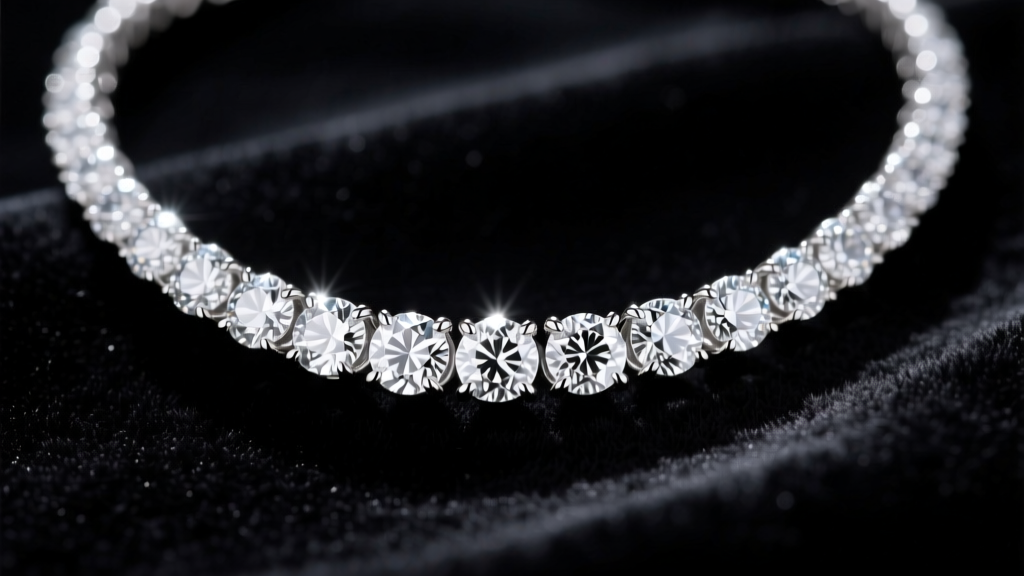
What Exactly is a Riviera Necklace?
When you begin exploring high-end diamond jewelry, you will inevitably encounter the term "riviera necklace diamond." Often misspelled or anglicized from the French rivière (meaning river), this iconic style features a continuous line of diamonds that flow around the neck like a shimmering river. For beginners, navigating the nuances of this specific necklace style can feel overwhelming. Unlike a standard pendant or a simple chain, a riviera is a major investment piece that requires a solid understanding of diamond grading, setting mechanics, and structural integrity.
According to the Natural Diamond Council, the rivière necklace originated in the 18th century. Historically, these necklaces featured diamonds set in individual collets (metal rings) linked together, allowing the piece to drape fluidly. Today, the term is often used interchangeably with the "tennis necklace," but purists note a distinct difference: a traditional riviera often features graduated stones (largest at the center, tapering toward the clasp) and sits higher on the collarbone, whereas a tennis necklace typically features uniform stones and sits lower on the décolletage.
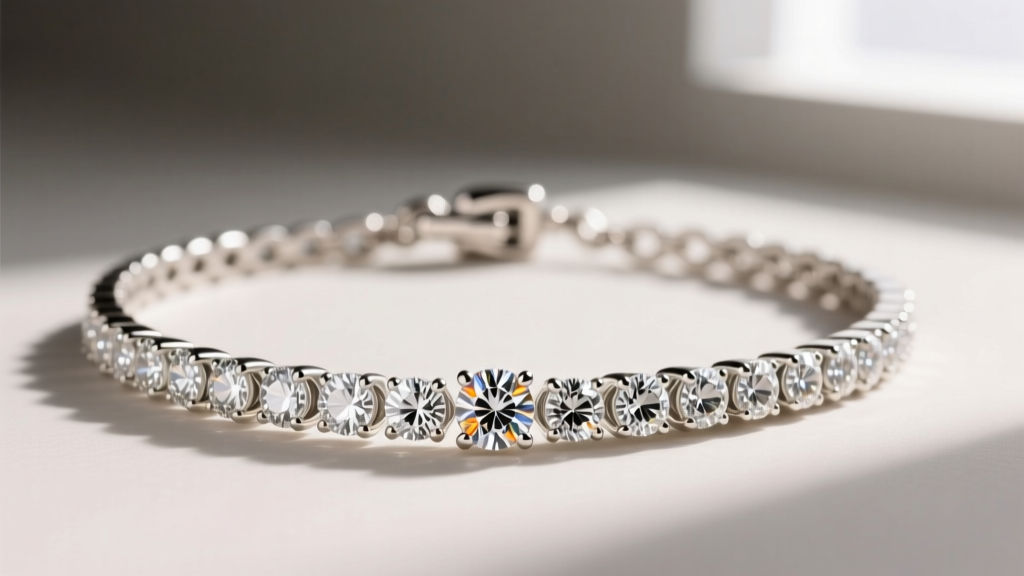
The Anatomy of a Riviera Necklace Diamond
Choosing the right diamonds for a riviera requires a different strategy than selecting a single solitaire engagement ring. Because the stones are viewed in a continuous line, consistency is far more critical than absolute perfection in a single stone.
Stone Shape, Cut, and Matching
The round brilliant cut is the undisputed standard for a riviera necklace diamond. Its 58-facet geometry maximizes light return, creating the continuous "river of light" effect. When evaluating cut quality, always refer to the Gemological Institute of America (GIA) cut grading scale. For a riviera, insist on "Excellent" or "Very Good" cut grades. A poorly cut diamond will create a dark "dead spot" in the otherwise continuous sparkle of the necklace.
Color matching is equally vital. In a solitaire, you might compromise on color to save money, but in a riviera, mismatched colors are glaringly obvious. The sweet spot for most buyers is the G-H color range (near colorless). These stones face up brilliantly white when set in platinum or white gold, without the steep premium of D-F colorless grades. For clarity, SI1 (Slightly Included) is perfectly acceptable, as the intense sparkle and the metal settings naturally obscure minor inclusions.
Setting Styles: Prong vs. Bezel
The metalwork holding your diamonds dictates both the aesthetic and the security of the piece:
- Three-Prong or Four-Prong Settings: This is the classic choice. By minimizing the metal covering the diamond's crown, prong settings allow maximum light entry from all angles. However, prongs can snag on delicate fabrics like silk or lace.
- Bezel Settings: Each diamond is encircled by a thin rim of metal. Bezel-set rivieras offer a sleek, modern, and highly secure profile. While they slightly reduce the visible surface area of the diamond, they are virtually snag-proof and ideal for daily wear.
Carat Weight and Sizing Matrix
The total carat weight (CTW) and the individual millimeter (mm) size of the stones will determine the necklace's visual impact and price. Use this matrix to align your purchase with your intended use case.
| Total Carat Weight (CTW) | Average Stone Size | Visual Impact | Best Occasion |
|---|---|---|---|
| 5.00 - 8.00 CTW | 3.5mm - 4.5mm | Subtle, elegant sparkle | Everyday wear, office, daytime events |
| 10.00 - 15.00 CTW | 5.0mm - 6.5mm | Prominent, luxurious statement | Evening wear, weddings, galas |
| 20.00 - 30.00+ CTW | 7.0mm - 9.0mm+ | Opulent, red-carpet dominance | Black-tie events, high-profile galas |
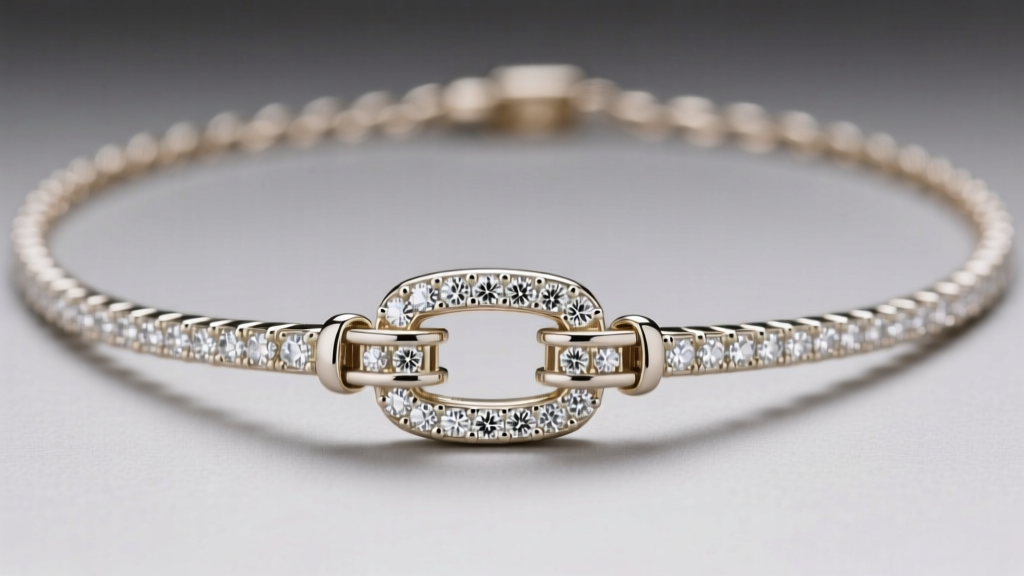
Metal Choices for Maximum Brilliance
The metal you choose serves as the canvas for your diamonds. For a riviera necklace diamond, the goal is to make the metal "disappear" so only the diamonds are visible.
Platinum (950 Pt): The premier choice for fine diamond jewelry. Platinum is naturally white, meaning it will never fade or require replating. More importantly, platinum is incredibly dense and durable. When a platinum prong is bent, the metal displaces rather than breaking, making it the safest option for securing expensive diamonds. The trade-off is a higher initial cost and a slightly heavier feel on the neck.
18k White Gold: A popular, more affordable alternative. White gold is an alloy of yellow gold and white metals (like palladium or nickel), plated with rhodium to achieve a bright white finish. Over time, the rhodium plating will wear off, revealing a slightly yellowish undertone that can reflect into the diamonds. If you choose white gold, budget for a professional rhodium replating every 2 to 3 years.
Clasp Mechanics and Security
A heavy diamond riviera can easily weigh 20 to 40 grams. A standard lobster clasp is entirely insufficient and poses a massive risk of loss. You must inspect the clasp mechanism before purchasing.
Look for a box clasp (also known as a tongue-and-groove clasp). This mechanism features a folded piece of metal that compresses and clicks securely into a boxed frame. Crucially, the box clasp must be accompanied by dual figure-eight safety catches—small wire loops on either side of the clasp that snap over a metal pin. If the primary box mechanism fails or is accidentally bumped open, the safety catches will keep the necklace securely around your neck.
Pricing Tiers: What to Expect in 2026
Pricing for a riviera necklace diamond varies wildly based on whether you choose natural or lab-grown diamonds. As of 2026, lab-grown diamond prices have stabilized, offering exceptional value for buyers who prioritize size and visual impact over natural rarity.
- Lab-Grown (10 CTW, G-H Color, VS Clarity): $3,500 – $6,000. Ideal for buyers wanting a massive, flawless look without the luxury tax.
- Natural (10 CTW, G-H Color, SI1-VS2 Clarity): $25,000 – $45,000. Prices scale exponentially as color and clarity increase. Natural stones hold intrinsic resale value and carry the romance of geological formation.
When insuring your riviera, always provide the retailer's detailed invoice and a recent appraisal to your jewelry insurer, as replacement costs for matched diamond sets can fluctuate based on market availability.
Expert Tips for First-Time Buyers
Before finalizing your purchase, request a high-definition video of the necklace draped on a bust or model, rather than relying on flat, heavily edited studio photos. Pay close attention to the articulation of the links; the necklace should fold and drape like liquid, without any stiff, rigid sections that cause the diamonds to flip upside down.
Consider the neckline of your wardrobe. A 16-inch riviera sits perfectly on the collarbone and pairs beautifully with V-necks and scoop necks, while a 14-inch choker-style riviera demands an off-the-shoulder or strapless silhouette to truly shine. Finally, always ensure the piece comes with a grading report from a top-tier laboratory like the GIA or IGI, verifying the total carat weight and the color/clarity ranges of the stones.


