Roman Pearl Necklace Trends: The 2026 Antiquity Revival
Discover how the roman pearl necklace is dominating 2026 fashion. Explore material grades, styling techniques, and the antiquity revival trend.

The Resurgence of the Roman Pearl Necklace in 2026
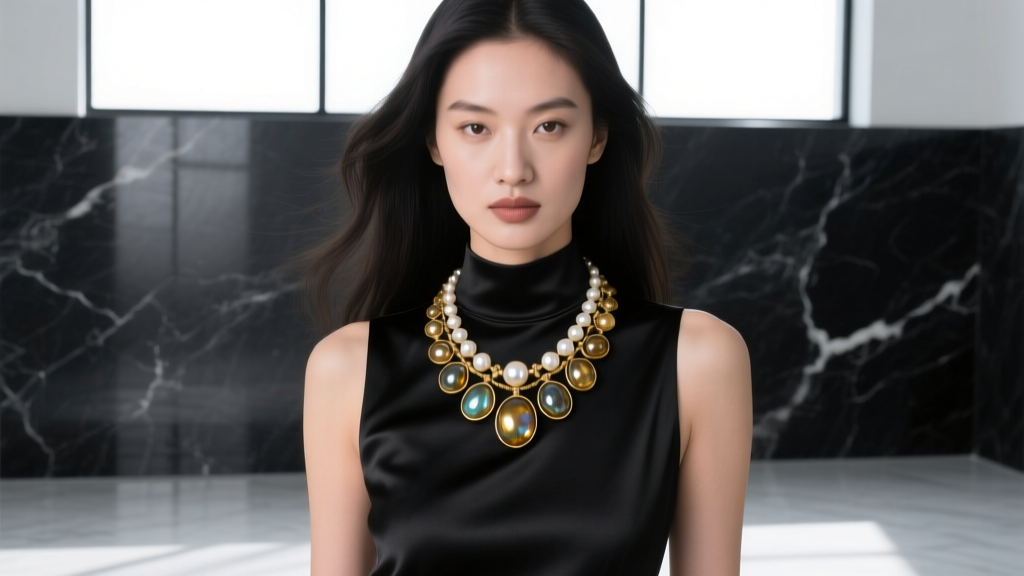
The fashion cycle has officially bypassed the minimalist, barely-there jewelry trends of the early 2020s, landing firmly in an era of historical maximalism and textured antiquity. At the forefront of this shift is the roman pearl necklace, a design category that bridges the gap between ancient adornment and contemporary couture. Unlike perfectly spherical, high-luster Akoya or South Sea pearls, the modern interpretation of the roman pearl necklace embraces irregularity, matte finishes, and a distinctly archaeological aesthetic. In 2026, top-tier designers and heritage artisans are reimagining these simulated gems not as cheap alternatives to freshwater pearls, but as deliberate stylistic choices that evoke the grandeur of the Byzantine and Roman empires.
According to trend forecasters, the demand for historically inspired jewelry has surged by over 40% since 2024, driven by the mainstream adoption of 'dark academia' and 'antiquity core' aesthetics. The roman pearl necklace perfectly encapsulates this movement, offering a heavy, tactile presence that feels both excavated and elevated.
Material Anatomy: What Defines a Roman Pearl?
To understand the value and styling potential of a roman pearl necklace, one must first deconstruct its material anatomy. True historical 'Roman pearls' were early simulants crafted from blown glass and coated with essence d'orient—a pearlescent substance derived from guanine crystals found in herring scales. While the Gemological Institute of America (GIA) notes that essence d'orient is still used in luxury simulants today, the 2026 market has largely bifurcated into two distinct material grades.
High-Grade Borosilicate & Titanium Dioxide
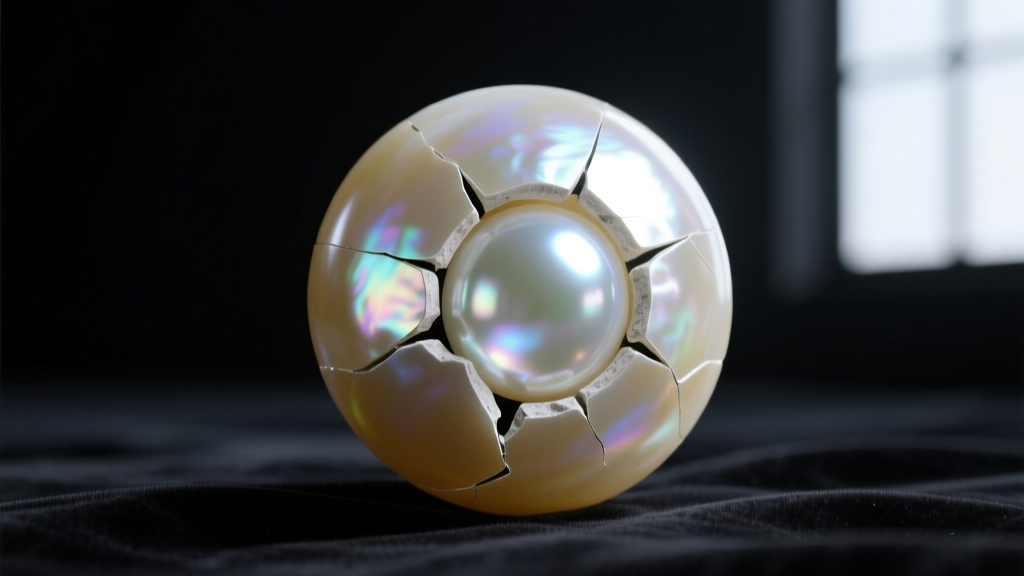
Premium roman pearl necklaces utilize heavy borosilicate or lead-free crystal cores. These are dipped multiple times in a titanium dioxide (TiO2) or synthetic mica suspension. The result is a bead with a deep, almost milky luminescence that mimics the orient of a natural baroque pearl. The weight of the glass core gives the necklace a substantial drape, which is critical for achieving the authentic 'excavated artifact' look.
Resin & Bismuth Oxychloride (Commercial Grade)
Conversely, mass-market interpretations often rely on hollow resin cores coated with bismuth oxychloride. While these offer a high initial shine, they suffer from a critical failure mode: the coating is highly susceptible to micro-abrasions and chemical degradation from human sebum, leading to a patchy, yellowed appearance within six months of regular wear.
Core & Coating Comparison Matrix
| Material Grade | Core Substance | Coating Agent | Expected Lifespan | Weight Profile |
|---|---|---|---|---|
| Heritage Luxury | Lead-free Crystal | Essence d'Orient (Guanine) | 50+ Years | Heavy / Substantial |
| Artisanal Premium | Borosilicate Glass | Titanium Dioxide (TiO2) | 15-20 Years | Medium-Heavy |
| Commercial Fast | Hollow Resin | Bismuth Oxychloride | 1-3 Years | Lightweight / Hollow |
Design Motifs Driving the Antiquity Trend
The roman pearl necklace in 2026 is rarely just a simple strand of beads. The prevailing design language incorporates specific historical motifs that elevate the piece from a basic accessory to a wearable artifact. The Victoria and Albert Museum's jewelry archives frequently highlight how ancient civilizations mixed organic gems with metallic talismans, a practice that modern jewelers are aggressively reviving.
- Byzantine Cross & Reliquary Pendants: Central pendants featuring oxidized gold vermeil and raw, uncut glass pearls simulate the look of religious artifacts.
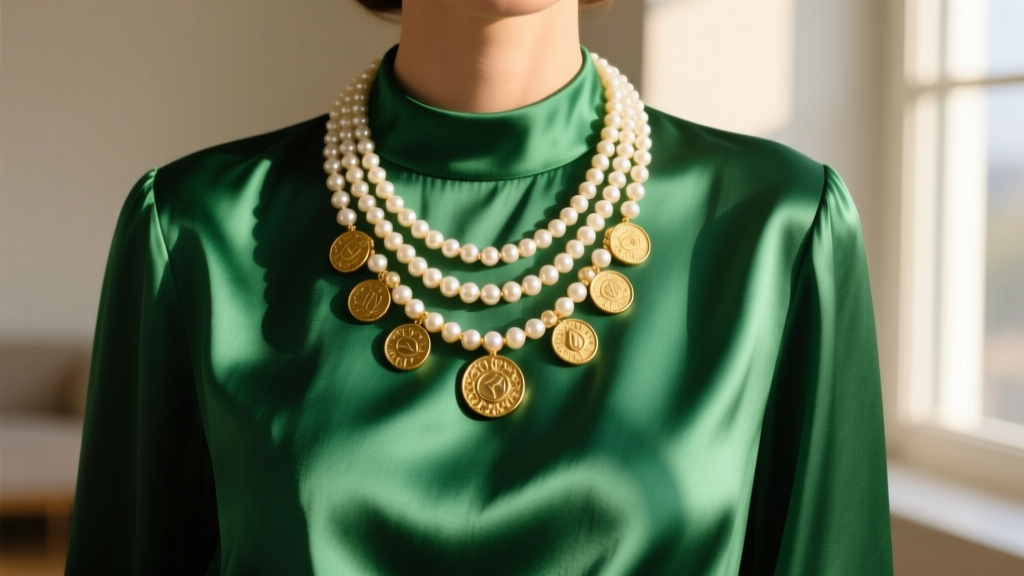
- Denarius Coin Integration: Interlocking links that feature replica Roman denarius coins alongside irregular, matte-finished roman pearls.
- Oxidized & Hammered Metals: High-polish gold is out; heavily textured, oxidized 18k gold vermeil or darkened sterling silver is the standard for chain links and clasps, providing a stark contrast to the milky white pearls.
Styling Framework: Necklines & Layering Techniques
Because of their visual weight and historical connotations, styling a roman pearl necklace requires a strategic approach to necklines and layering. The goal is to create a deliberate juxtaposition between the ancient aesthetic of the jewelry and modern tailoring.
The Square-Neck Juxtaposition
A structured square-neck blouse or bodice provides a geometric, modern frame that prevents the roman pearl necklace from looking like a costume piece. Opt for a choker-length (14-16 inches) roman pearl strand with a single, heavy coin pendant resting precisely at the clavicle notch. The sharp angles of the neckline contrast beautifully with the organic, irregular shapes of the baroque glass pearls.
The Asymmetric Drape
For evening wear, pair a long, opera-length (28-32 inches) roman pearl necklace with an asymmetric, one-shoulder gown. Allow the pearls to drape off-center, mimicking the way ancient Roman patricians would drape togas and fibulae. This technique works best with pearls that feature a matte, unpolished finish, as high-luster pearls can distract from the architectural lines of the garment.
Multi-Strand Torsade Layering
Twisting three strands of 18-inch roman pearls into a torsade creates a thick, rope-like effect that sits heavily on the collarbone. This is best worn over a deep V-neck or a simple silk camisole, allowing the texture of the twisted pearls to serve as the primary focal point of the outfit.
Market Tiers & Investment Guide for 2026
When shopping for a roman pearl necklace, understanding the market tiers is essential to avoid overpaying for commercial-grade simulants. Here is the current pricing landscape for authentic, high-quality pieces:
True luxury in simulated pearls is not about deceiving the buyer into thinking they are real; it is about the mastery of the glass-blowing and coating process, resulting in a piece of jewelry that outlives the wearer.
- Entry-Level Artisan ($85 - $150): Features solid glass cores with TiO2 coatings, strung on silk with gold-filled clasps. Brands in this tier focus on small-batch production and unique baroque shapes.
- Heritage Simulant ($250 - $600): The domain of historic European houses (e.g., Majorica). These pieces use proprietary, multi-layered coating processes over crystal cores, often set in solid 14k or 18k gold rather than vermeil. They offer unparalleled luster and longevity.
- Bespoke Antiquity ($800+): Independent jewelers who hand-forge oxidized gold links and integrate genuine ancient Roman glass fragments alongside high-grade simulated pearls. These are investment-grade wearable art pieces.
Care & Maintenance: Preventing Coating Failure
The primary vulnerability of any simulated pearl necklace is the degradation of its outer coating. To ensure your roman pearl necklace maintains its milky, archaeological allure, strict maintenance protocols are required.
The Sebum Threat: Human skin oils are mildly acidic and will slowly dissolve bismuth oxychloride and degrade poorly cured TiO2 coatings. Always wipe your pearls with a dry, untreated microfiber cloth immediately after removal.
Chemical Isolation: Never expose the necklace to aerosolized perfumes, hairsprays, or sulfur-heavy environments. The oxidized metal accents commonly found in roman pearl designs will rapidly tarnish and turn black if exposed to sulfur, ruining the intended 'ancient patina' effect.
Storage Mechanics: Never store a roman pearl necklace in a sealed plastic bag, which can trap moisture and cause the glass core's coating to delaminate. Store flat in a breathable linen pouch, away from direct UV light which can yellow the synthetic binders in the pearlescent paint.
Final Verdict on the Antiquity Revival
The roman pearl necklace has successfully transcended its origins as a mere pearl alternative to become a cornerstone of the 2026 antiquity revival. By prioritizing heavy glass cores, matte titanium dioxide finishes, and oxidized historical motifs, modern jewelers have created a category of jewelry that feels deeply rooted in history while remaining fiercely contemporary. Whether layered over a sharp silk square-neck or draped across an asymmetric evening gown, the roman pearl necklace offers a masterclass in textured, historical maximalism.


