The Ultimate Rose Gold Sapphire Necklace Buying Guide
Expert guide to buying a rose gold sapphire necklace. Learn about gemstone origins, gold karats, heat treatments, and real pricing tiers for 2026.

The Allure of Rose Gold and Sapphires
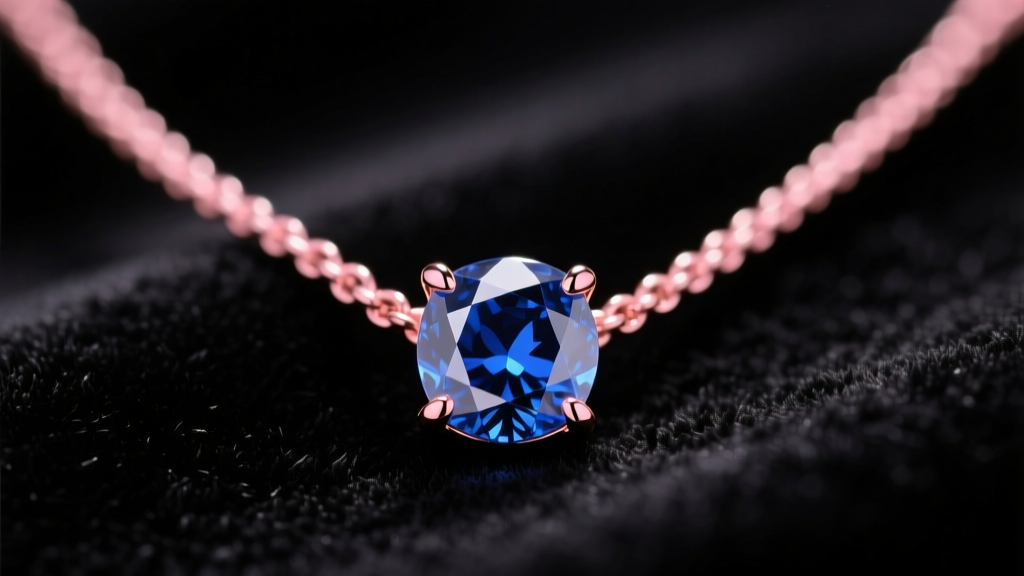
The combination of a rose gold sapphire necklace represents a masterclass in color theory and metallurgical elegance. The warm, copper-infused blush of rose gold provides a striking complementary contrast to the cool, velvety depths of a blue sapphire. Unlike traditional yellow or white gold, rose gold offers a vintage-inspired romance that has solidified its place in modern fine jewelry. However, purchasing a high-quality piece requires navigating a complex landscape of gemstone treatments, alloy compositions, and pricing structures. This comprehensive buying guide will equip you with the technical knowledge needed to make an informed investment in 2026.
Decoding the Sapphire: Color, Clarity, and Origin
Sapphires are a variety of the mineral corundum, ranking at a 9 on the Mohs hardness scale, making them exceptionally durable for everyday pendants. The blue hue is caused by trace amounts of iron and titanium within the crystal lattice. When evaluating a sapphire, color is the paramount value driver.
Natural vs. Lab-Grown Corundum
Lab-grown sapphires are chemically, physically, and optically identical to their mined counterparts. Created via the Verneuil (flame fusion) or Czochralski (pulling) methods, they offer flawless clarity and intense saturation at a fraction of the cost. However, for collectors and investors, natural sapphires carry an inherent rarity premium. According to the Gemological Institute of America (GIA), natural sapphires often feature microscopic inclusions—such as rutile silk—that not only prove their earthly origin but can also scatter light to create a desirable velvety appearance.
Heat Treatment and Disclosure
Approximately 95% of natural sapphires on the market undergo standard heat treatment to dissolve rutile inclusions and improve color saturation. This is a stable, universally accepted practice. However, you must be wary of beryllium diffusion, a process where beryllium is introduced during heating to artificially enhance or alter the stone's color. Beryllium-diffused sapphires are significantly less valuable and must be explicitly disclosed by the seller. Always demand a report from a top-tier laboratory like the American Gemological Laboratories (AGL) or GIA, which will clearly note any lattice diffusion.
The Metal: Choosing the Right Rose Gold Alloy
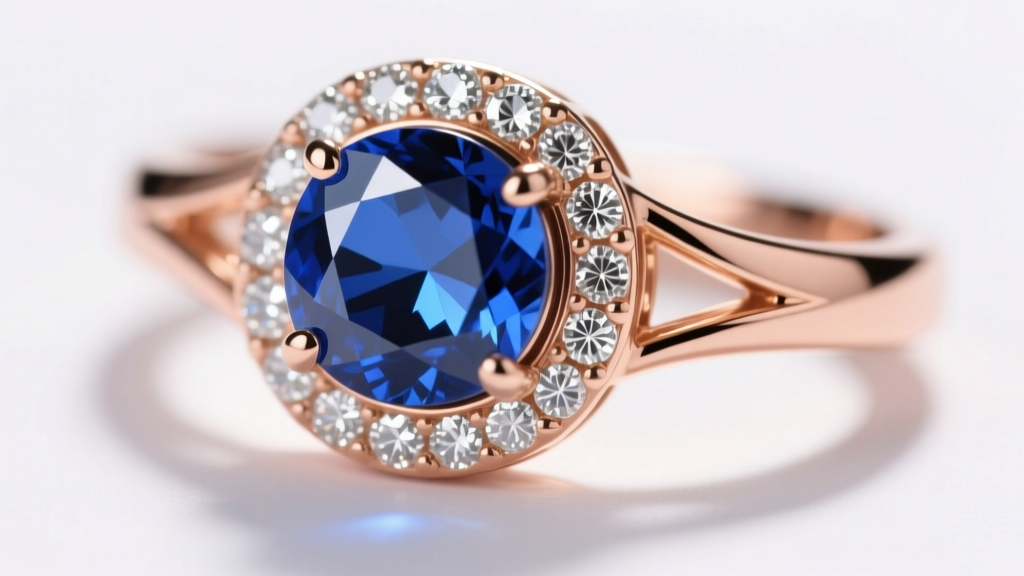
Rose gold is not a naturally occurring metal; it is an alloy of pure yellow gold, copper, and a small amount of silver. The copper is what imparts the signature pinkish-red hue. The karat weight determines both the color depth and the structural integrity of the necklace.
| Alloy Grade | Composition | Color Profile | Durability & Use Case |
|---|---|---|---|
| 18K Rose Gold | 75% Gold, 22.25% Copper, 2.75% Silver | Soft, subtle peach-pink | Softer metal; ideal for bezel settings and low-impact pendants. |
| 14K Rose Gold | 58.3% Gold, 31.6% Copper, 10.1% Silver | Deeper, richer rose-red | Highly durable; excellent for delicate prong settings and daily wear chains. |
For a pendant holding a heavy sapphire, 14K rose gold is often preferred by master jewelers because the higher copper and silver content increases the tensile strength of the prongs, reducing the risk of the gemstone dislodging over time.
Chain Styles, Lengths, and Pendant Settings
The architecture of the necklace dictates how the sapphire interacts with your neckline and how securely the stone is held.
Prong vs. Bezel Settings
A prong setting (typically 3 or 4 prongs for a round or oval sapphire) allows maximum light entry, enhancing the gem's brilliance. However, prongs can catch on knitwear. A bezel setting, where a rim of rose gold completely encircles the sapphire's girdle, offers superior protection against chipping and provides a sleek, modern silhouette. Given the hardness of corundum, chipping is rare, but a bezel setting protects the delicate culet (the bottom point) from hard impacts against tables or countertops.
Chain Length Pairing
- Choker (14-16 inches): Sits at the base of the neck. Best paired with V-neck or open-collar blouses. Ideal for smaller sapphires (under 1.0 carat) to avoid overwhelming the collarbone.
- Princess (18 inches): The industry standard. Rests on the collarbone and pairs effortlessly with almost any neckline, from crew necks to scoop necks.
- Matinee (20-24 inches): Falls at or just above the bust. Perfect for business attire, turtlenecks, or layering over longer gold chains.
2026 Pricing Tiers: What to Expect
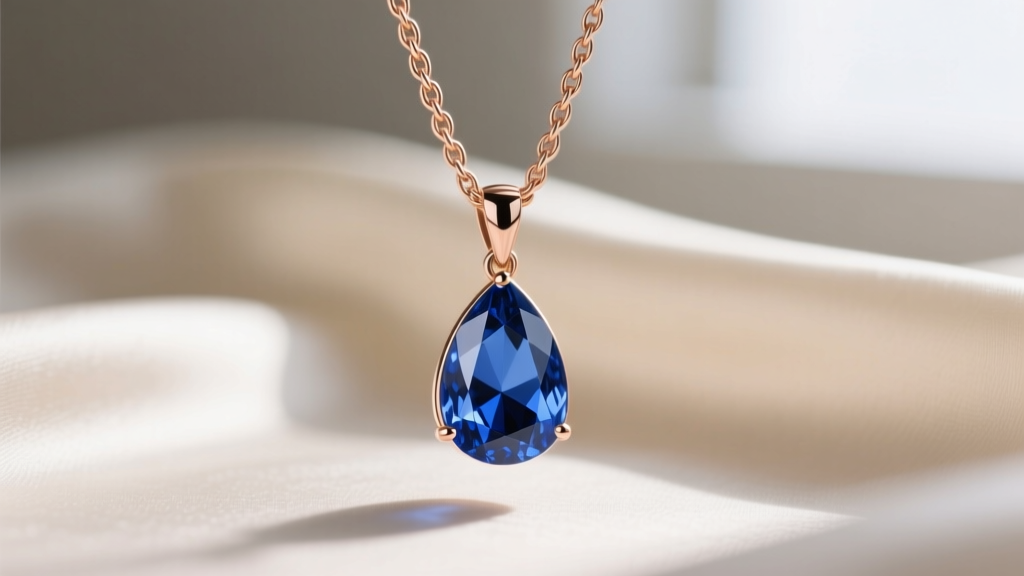
Pricing for a rose gold sapphire necklace varies wildly based on the gemstone's origin, treatment status, and carat weight. The American Gem Society advises consumers to establish a clear budget based on these realistic market tiers:
- Entry-Level ($400 – $900): Features lab-grown sapphires or heavily included, opaque natural stones set in 10K or 14K rose gold. Often mass-produced with cast settings.
- Mid-Range ($1,500 – $4,500): Natural, heat-treated sapphires (0.75ct to 1.50ct) with good saturation (e.g., standard Madagascar or Australian origins) set in solid 14K or 18K rose gold with hand-finished bail details.
- Investment/High-End ($6,000 – $15,000+): Unheated, certified sapphires from premium origins like Ceylon (Sri Lanka) or Kashmir, exhibiting "cornflower" or "royal blue" hues. Set in custom-fabricated 18K rose gold mountings, often accented with melee diamonds.
Red Flags and Authentication
When shopping for a rose gold sapphire necklace, be vigilant against deceptive marketing terminology. Terms like "water sapphire" (which is actually iolite) or "Montana sapphire" (if not backed by origin reports) can be misleading. Furthermore, if a seller describes a stone as "flawless" and "unheated" but the price falls into the mid-range tier, it is almost certainly a synthetic stone or glass composite. Always insist on an independent gemological report for any natural sapphire exceeding $1,000. Verify that the report number is laser-inscribed on the girdle of the stone or matches the exact weight and millimeter dimensions of the pendant you are purchasing.
Conclusion
A rose gold sapphire necklace is more than just an accessory; it is a wearable piece of geological history and metallurgical art. By prioritizing transparent heat-treatment disclosures, selecting the appropriate 14K or 18K alloy for your lifestyle, and insisting on rigorous laboratory certification, you ensure that your pendant will remain a captivating heirloom for generations to come.


