Expert Guide to Rose Quartz Necklace Beads: Grading & Stringing
Master the technical nuances of rose quartz necklace beads. Learn gemological grading, optimal stringing materials, and how to spot dyed fakes.

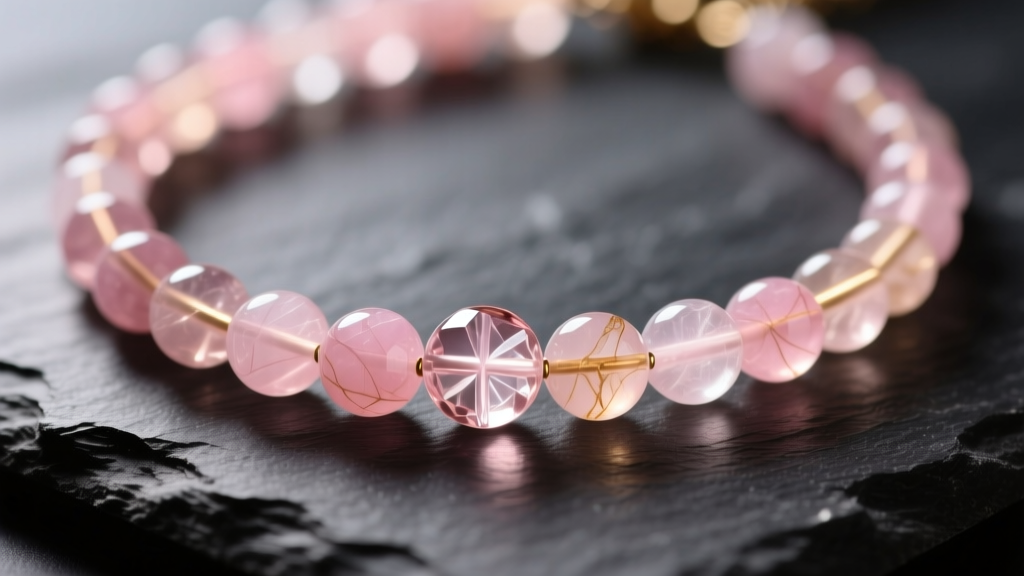
The Gemological Profile of Rose Quartz Beads
When sourcing or designing jewelry, understanding the mineralogical reality of rose quartz is critical for predicting how the material will behave during manufacturing and wear. Rose quartz is a macrocrystalline variety of silicon dioxide (SiO2). Unlike amethyst or citrine, which frequently form distinct, terminated crystals, rose quartz almost exclusively occurs in massive, compact habits. This structural reality is precisely why it is so heavily utilized for tumbling, cabbing, and bead cutting.
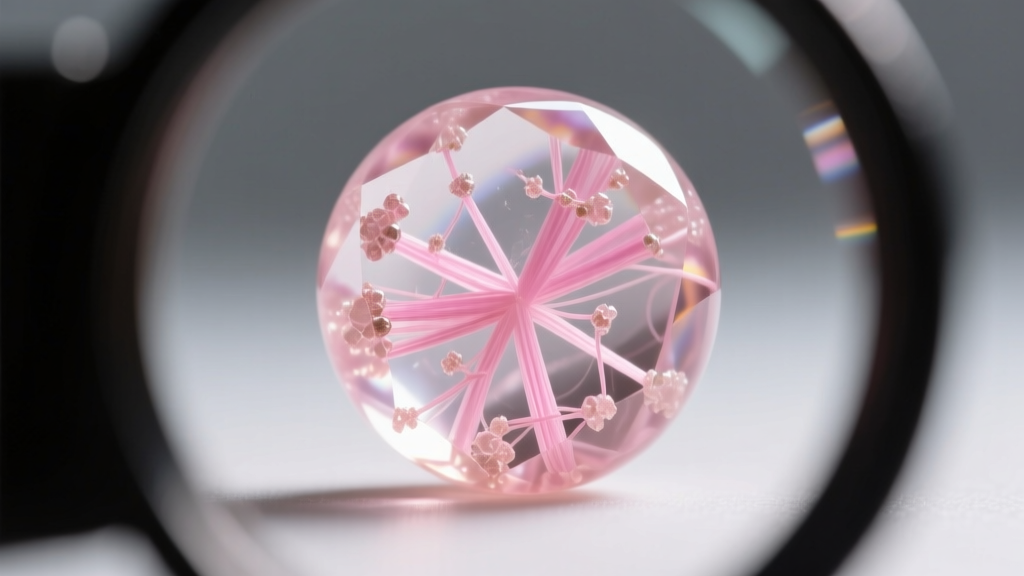
Historically, the pink coloration of rose quartz was attributed to trace amounts of titanium, manganese, or iron. However, modern gemological research, including extensive studies cited by the Gemological Institute of America (GIA), has revealed that the color in most massive rose quartz is actually caused by microscopic fibrous inclusions of a borosilicate mineral related to dumortierite. These fibers are incredibly dense and randomly oriented, which gives high-quality rose quartz necklace beads their prized, uniform translucency and soft, glowing color distribution.
With a Mohs hardness of 7 and a specific gravity (SG) of 2.65, rose quartz is highly durable for everyday wear. However, its conchoidal fracture and lack of cleavage mean that lapidaries must use precise, low-vibration drilling techniques to prevent internal shattering during the bead-making process.
Grading Systems for Rose Quartz Necklace Beads
The commercial gemstone bead market lacks a universally standardized grading system, but reputable wholesalers and gemologists generally categorize rose quartz necklace beads into three distinct tiers based on translucency, color saturation, and the presence of visible inclusions or fractures.
| Grade | Translucency | Color Saturation | Inclusions & Clarity | Typical Price Range (per 15" strand of 8mm beads) |
|---|---|---|---|---|
| Grade C (Commercial) | Opaque to slightly cloudy | Pale, washed-out pink | Heavy white quartz veiling, visible surface fractures | $4.00 - $8.00 |
| Grade B (Medium) | Semi-translucent | Moderate, even pink | Minor internal clouding, no surface-reaching fractures | $12.00 - $22.00 |
| Grade A (Fine/Gem) | Highly translucent, glassy | Deep "bubblegum" or vivid pink | Eye-clean, uniform dumortierite distribution, no white veiling | $35.00 - $65.00+ |
Note: "Star Rose Quartz" is a separate category. It contains dense, oriented rutile needle inclusions that create asterism (a six-rayed star) when cut en cabochon. Because asterism requires a specific domed geometry to be visible, star rose quartz is almost never cut into round or faceted beads.
Drilling Techniques and Bead Hole Sizing
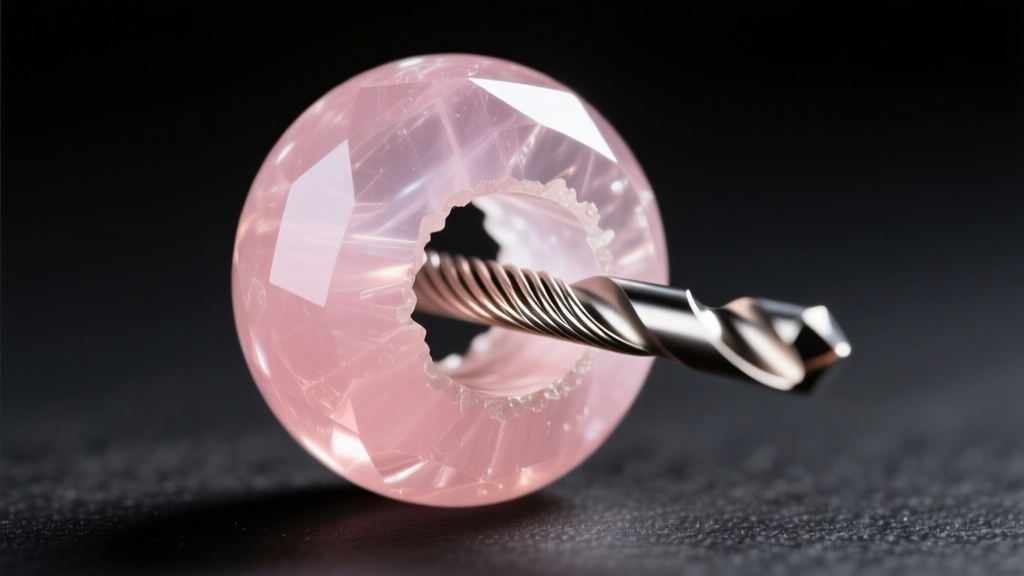
The structural integrity of a beaded necklace is entirely dependent on the quality of the drill holes. Rose quartz is hard and brittle. Mass-produced, low-grade beads are often drilled using high-speed steel or carbide bits, which generate excessive heat and cause "blowout"—a jagged, crater-like fracture on the exit side of the drill hole.
The Danger of Unconed Drill Holes
Blowout creates microscopic, razor-sharp quartz edges inside the bead channel. When strung, these edges act like a reciprocating saw against the stringing material, leading to catastrophic necklace failure. High-quality lapidaries use CNC ultrasonic drilling or slow-speed diamond core bits with continuous water cooling. Furthermore, premium rose quartz necklace beads are "coned" or countersunk. Coning involves using a tapered diamond burr to slightly widen and smooth the very edges of the drill hole, creating a safe, rounded entry and exit point that protects the stringing wire from acute bending and abrasion.
- Standard Hole Sizes: 6mm to 8mm beads typically feature 0.8mm to 1.0mm holes.
- Large Hole Beads: 10mm+ beads may feature 1.2mm to 1.5mm holes to accommodate heavier gauge wires or leather cords.
Optimal Stringing Materials for Quartz
A common and costly mistake made by novice jewelry designers is stringing rose quartz on silk thread or standard nylon. Because quartz ranks 7 on the Mohs scale, it is significantly harder than most polymers. Over time, the natural friction of wear will cause the quartz beads to sever silk and nylon threads. According to the International Gem Society, matching the stringing material's tensile strength and abrasion resistance to the gemstone's hardness is paramount for longevity.
Recommended Stringing Solutions
- 49-Strand Micro-Fused Stainless Steel Wire (e.g., Soft Flex or Beadalon): This is the gold standard for rose quartz. The 49-strand construction provides a supple, thread-like drape while offering immense tensile strength. For 6mm to 8mm beads, a 0.018-inch (0.45mm) diameter wire is optimal. It fits easily through standard 0.8mm holes while leaving enough room for the wire to flex without kinking.
- Braided Polyethylene (e.g., Power Pro): If a knotting technique is desired between beads, ultra-high-molecular-weight polyethylene (UHMWPE) thread is required. It boasts a tensile strength up to 10 times greater than steel by weight and is highly resistant to the abrasive inner channels of quartz.
- Finishing Components: Always use 2x2mm sterling silver or gold-filled crimp tubes. Crush the crimp bead using a micro-crimping tool to fold it into a smooth, rounded bead shape, preventing sharp metal edges from catching on the wearer's skin or clothing.
Pro-Tip: Never use elastic cord (like Stretch Magic) for heavy, large-diameter (10mm+) rose quartz beads. The weight of the quartz will permanently stretch the elastomer over time, causing the beads to gap and eventually snap without warning.
Identifying Treatments, Dyes, and Synthetics
As the demand for high-grade, vivid pink rose quartz has surged, so has the prevalence of treated and simulated alternatives in the wholesale bead market. Gemologists and informed buyers must be vigilant against two primary deceptive practices:
1. Dyed Howlite and Quartzite
Howlite is a highly porous, naturally white or gray borate mineral with a Mohs hardness of just 3.5. It is routinely dyed pink to imitate rose quartz. To identify dyed howlite, examine the drill holes under a 10x triplet loupe. Dye will pool and concentrate in the microscopic fractures radiating from the drill hole, appearing as dark pink or red spiderwebbing. Furthermore, a simple scratch test with a steel needle (Mohs 5.5) will easily scratch howlite, but will leave no mark on genuine rose quartz.
2. The Acetone Test
If you suspect surface-level dye on a quartzite simulant, dip a cotton swab in pure, undiluted acetone (nail polish remover) and rub it firmly against the bead. If the swab picks up pink pigment, the bead has been artificially colored. Genuine rose quartz gets its color from internal mineral inclusions and will never bleed color when exposed to solvents.
Sizing and Proportions for Necklace Construction
When designing with rose quartz necklace beads, the physical weight of the stone dictates the ideal proportions. Because quartz is relatively dense (SG 2.65), a 36-inch opera-length necklace made of 12mm beads will be excessively heavy and uncomfortable, pulling aggressively on the cervical spine.
- Chokers (14-16 inches): Best suited for 4mm to 6mm beads, providing a delicate, lightweight fit.
- Princess Length (18 inches): The most versatile length. Ideal for 8mm to 10mm beads, allowing the central beads to rest perfectly at the clavicle.
- Matinee (20-24 inches): Can support 10mm to 12mm beads, but ensure the stringing wire is upgraded to 0.024-inch thickness to handle the increased dynamic load and swing weight.
By prioritizing gemological integrity, precision drilling, and appropriate stringing mechanics, you ensure that rose quartz necklace beads not only look breathtaking but endure as heirloom-quality garments for decades.


