Rubber Duck Necklace Materials: Silicone vs Resin vs Enamel
Discover the material science behind the rubber duck necklace. Compare silicone, resin, and enamel properties, durability, and chain pairings.

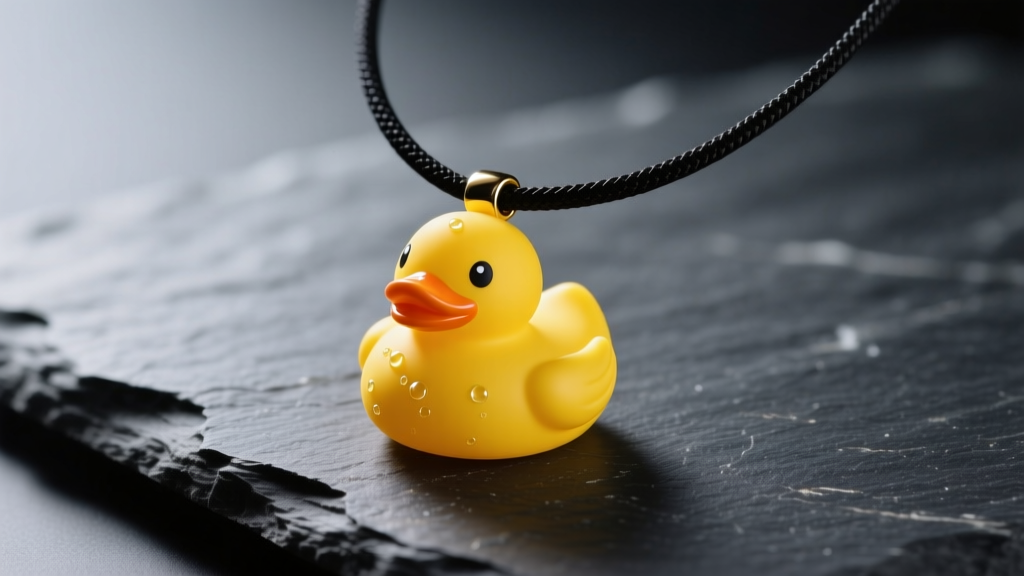
The Material Science of Whimsical Jewelry
In the evolving landscape of novelty and streetwear jewelry, the rubber duck necklace has carved out a surprisingly resilient niche. Once relegated to cheap carnival prizes, these whimsical pendants have been elevated by independent jewelers and polymer artists into legitimate fashion statements. However, as we navigate the jewelry market in 2026, a critical disconnect remains between consumer expectations and material realities. The term "rubber" is fundamentally a misnomer in modern jewelry design. Natural latex and vulcanized rubber are highly unsuitable for prolonged skin contact due to oxidation, sulfur blooming, and severe allergenic properties.
Instead, contemporary rubber duck necklaces are engineered from advanced polymers and traditional metallurgical enamels. Understanding the exact material composition—whether platinum-cure silicone, UV-stabilized polyurethane resin, or vitreous enamel over brass—is essential for evaluating durability, skin safety, and long-term aesthetic retention. This guide deconstructs the material properties of the rubber duck necklace, providing a rigorous framework for collectors, makers, and daily wearers.
The Myth of "Rubber" in Modern Pendants
True natural rubber (polyisoprene) degrades rapidly when exposed to UV light, body oils, and ozone. If a pendant were cast from natural rubber, it would become brittle, crack, and emit a foul odor within months. Furthermore, the sulfur used in the vulcanization process reacts with silver chains, causing rapid and severe tarnishing. Therefore, when reputable artisans advertise a "rubber" duck necklace, they are referencing the tactile aesthetic of rubber, not its chemical composition. The industry relies on three primary alternatives: silicone elastomers, cast resins, and vitreous enamel.
Material Breakdown: Silicone vs. Resin vs. Enamel
Platinum-Cure Silicone (The Premium Elastomer)
For a rubber duck necklace that mimics the satisfying squish of a bath toy, platinum-cure (addition-cure) silicone is the undisputed gold standard. Unlike tin-cure silicones, which release ethanol as a byproduct and suffer from long-term shrinkage, platinum-cure silicones offer zero shrinkage and exceptional chemical stability. Artisans typically select a Shore A hardness of 20 to 30, providing a flexible, skin-safe pendant that resists tearing.
According to Smooth-On's polymer technical guidelines, platinum silicones are FDA-compliant for skin contact, making them ideal for wearers with sensitive skin or metal allergies. However, silicone possesses a high static charge, meaning it acts as a magnet for lint and dust. High-end makers mitigate this by applying a specialized matte polyurethane clear coat to the cured silicone, reducing surface tack without sacrificing flexibility.
Polyurethane and Epoxy Resins (The Rigid Contenders)
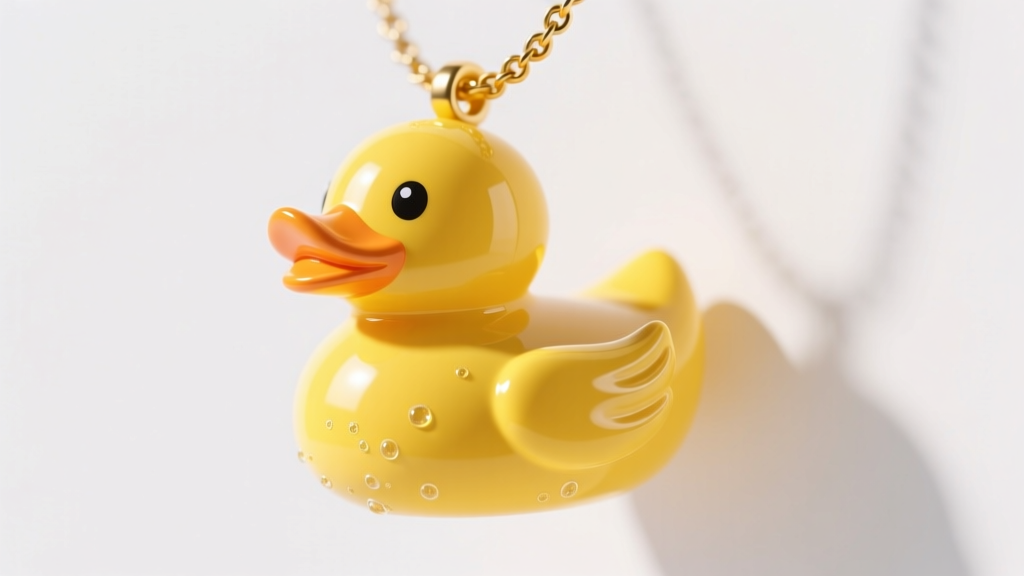
When the design demands sharp, rigid details—such as a steampunk duck with intricate gear engravings or a translucent duck with suspended glitter—jewelers turn to resins. Polyurethane resins offer high impact resistance and can be formulated to mimic hard plastics, while epoxy resins provide unmatched optical clarity for "water-filled" or translucent duck designs.
The primary failure mode for resin rubber duck necklaces is UV degradation, manifesting as a yellowing of the polymer matrix (measured by Delta E color shift). To combat this, expert casters incorporate Hindered Amine Light Stabilizers (HALS) and Ultraviolet Absorbers (UVAs) into the mixture before pouring. A well-stabilized epoxy resin duck will retain its vibrant yellow hue for years, whereas an unstabilized resin will turn amber within a single summer of outdoor wear.
Vitreous Enamel Over Brass (The Heritage Alternative)
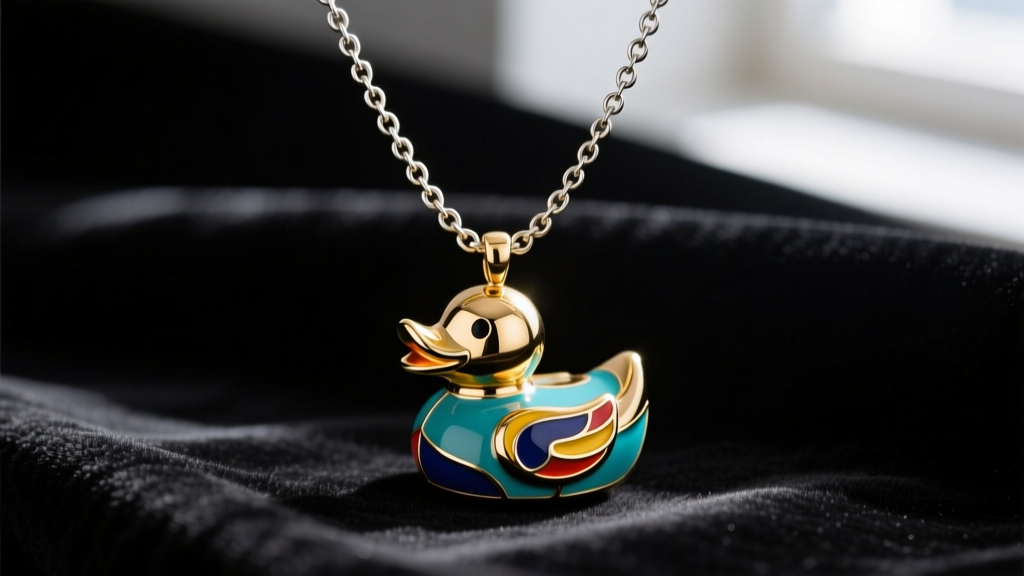
For those who prefer traditional fine jewelry techniques, the vitreous enamel rubber duck necklace offers a luxurious, glass-like finish. Vitreous enamel is essentially powdered glass fused to a metal substrate at temperatures exceeding 1400°F. While copper and fine silver are the preferred bases for enameling, brass is frequently used for novelty items to keep costs manageable.
The challenge with brass, as noted in Ganoksin's comprehensive enameling archives, is its zinc content. Zinc can vaporize during the firing process, causing bubbles or pitting in the glass surface. Master enamelists counteract this by applying a specialized lead-free flux and firing the piece in multiple short, controlled cycles. The result is a heavy, cold-to-the-touch duck pendant with unparalleled color permanence, though it is highly susceptible to shattering if dropped on a hard surface.
Comparative Data: Polymer & Enamel Properties
Selecting the right rubber duck necklace requires matching the material's physical properties to your lifestyle. Below is a technical comparison of the most common manufacturing materials used in 2026.
| Material | Shore Hardness | UV Resistance | Skin Safety | Avg. Price Range |
|---|---|---|---|---|
| Platinum Silicone | Shore A 20-30 | Excellent | Hypoallergenic | $25 - $60 |
| Epoxy Resin | Shore D 75-80 | Moderate (w/ HALS) | Safe when fully cured | $30 - $85 |
| Polyurethane Resin | Shore D 60-70 | Poor to Moderate | Safe when fully cured | $15 - $40 |
| Vitreous Enamel/Brass | N/A (Glass/Metal) | Perfect | Safe (unless nickel alloy) | $80 - $250+ |
Chain & Cord Pairings for Duck Pendants
The structural integrity of a necklace relies heavily on the pairing between the pendant's weight and the suspending medium. A mismatched chain can lead to premature breakage or aesthetic dissonance.
- PTFE (Teflon) Cords for Silicone: Silicone pendants are lightweight (typically 5-15 grams). A 2.0mm PTFE cord is the optimal pairing. PTFE is highly hydrophobic, meaning it won't absorb sweat or pool water, and its matte texture complements the soft finish of silicone.
- Stainless Steel Rolo Chains for Resin & Enamel: Cast resin and enamel ducks are significantly denser, often weighing between 20 and 45 grams. To support this weight without kinking, a 3.5mm to 4.0mm 316L stainless steel rolo chain is required. The interlocking rounded links distribute the pendant's weight evenly, preventing stress fractures at the jump ring.
- Sterling Silver Box Chains: For high-end vitreous enamel ducks, a 2.5mm sterling silver box chain provides a refined, jewelry-grade aesthetic. However, silver requires regular polishing to prevent sulfide tarnishing, especially if worn against the skin in high-humidity environments.
Care, Maintenance, and Failure Modes
Proper maintenance extends the lifespan of your rubber duck necklace, but care protocols vary drastically by material.
Silicone Care
Silicone is virtually impervious to water and sweat, making it perfect for beachwear. However, never clean silicone with silicone-based solvents or oil-based makeup removers. Like dissolves like; introducing silicone oils to the surface can cause the polymer matrix to swell, become permanently tacky, and lose its structural integrity. Wash with warm water and a mild, oil-free dish soap.
Resin Polishing
Resin pendants inevitably accumulate micro-scratches from daily wear, which dulls their high-gloss finish. To restore optical clarity, use a specialized plastic polish (such as Novus Plastic Polish #2). Apply with a microfiber cloth using circular motions. Avoid ultrasonic cleaners, as the high-frequency vibrations can propagate existing micro-fractures within the resin.
Enamel Protection
Vitreous enamel is essentially glass. While it will never fade or yellow, it is brittle. The most common failure mode is spalling—where a sharp impact causes a chip in the glass, exposing the brass underbody to oxidation. Store enamel duck necklaces in a padded jewelry box, completely isolated from harder gemstones or metal chains that could strike the surface during transit.
Sourcing & Authenticity in 2026
As the novelty jewelry market expands, so does the influx of poorly manufactured alternatives. When shopping for a rubber duck necklace, scrutinize the product descriptions for material transparency. Avoid listings that simply state "PVC" or "soft plastic" without certification. Cheap, unregulated PVC often relies on phthalate plasticizers to achieve flexibility, which can off-gas and cause contact dermatitis over prolonged wear.
Instead, seek out independent artisans who explicitly state their use of FDA-compliant platinum silicones or REACH-certified resins. By prioritizing material science over mass-produced novelty, you ensure that your whimsical jewelry piece remains a durable, safe, and vibrant staple in your collection for years to come.


