Ruby Necklace Cayo Perico Price & Care Guide 2026
Discover the real-world value behind the ruby necklace Cayo Perico price, plus expert cleaning, maintenance, and storage tips for fine corundum jewelry.

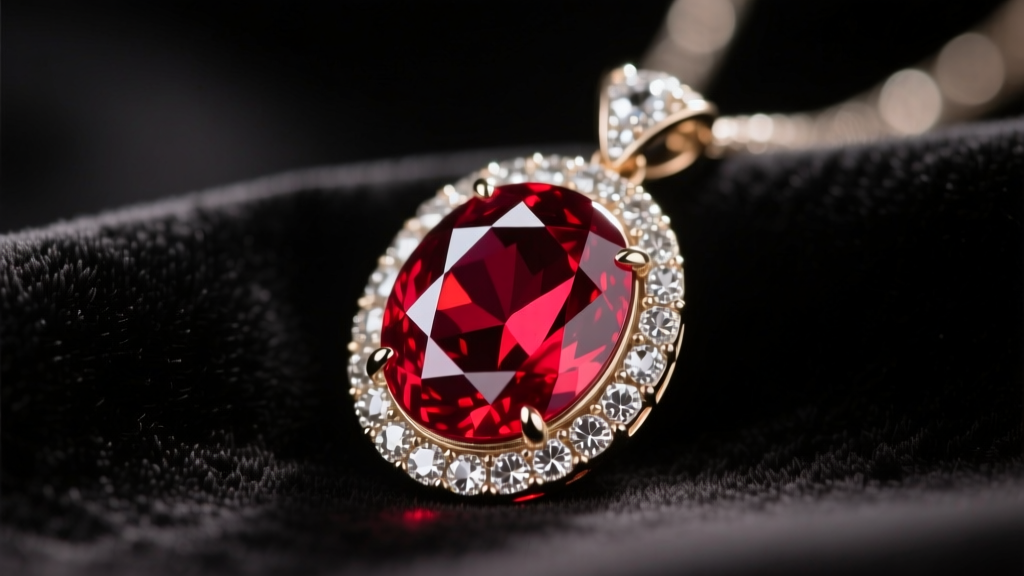
The "Cayo Perico" Phenomenon vs. Real-World Ruby Valuation
Search trends for the ruby necklace cayo perico price have surged dramatically, driven by pop-culture heist references and gaming communities hunting for high-tier virtual loot. However, for serious gemologists, collectors, and fine jewelry enthusiasts, the real-world equivalent of a "heist-grade" ruby necklace requires museum-level care and commands auction-house prices. In the real gemological market, a necklace featuring a center stone comparable to elite fictional loot—such as an unheated, 15-carat Burmese "Pigeon's Blood" ruby—can easily fetch between $1.5 million and $4 million at auction houses like Sotheby's or Christie's.
Whether you own a high-investment unheated ruby pendant or a beautiful heat-treated Mozambique ruby choker, maintaining the structural integrity and optical brilliance of corundum requires specific, scientifically grounded care protocols. Ruby is a variety of the mineral corundum, rating a 9 on the Mohs hardness scale. While it is exceptionally durable, the treatments applied to the stone and the metals used in the setting dictate exactly how the piece must be cleaned and stored.
Understanding Your Ruby: The Chemistry of Treatments
Before applying any cleaning solution to your ruby necklace, you must identify its treatment status. According to the Gemological Institute of America (GIA), the vast majority of rubies on the market undergo some form of enhancement, and confusing these treatments can lead to catastrophic damage.
- Heat Treatment (Standard): Over 90% of commercial and mid-range rubies are heat-treated to improve color and clarity. This process is permanent and stable. Heat-treated rubies are generally safe for ultrasonic and steam cleaning, provided the setting is secure.
- Fracture Filling / Lead-Glass Composite: Lower-tier rubies are often filled with lead-glass to mask surface-reaching fractures. This filler has a much lower melting point and is highly reactive to alkaline and acidic solutions. Never place a glass-filled ruby in an ultrasonic cleaner, and avoid commercial jewelry dips, which can dissolve the filler and leave the stone cloudy and heavily fractured.
- Unheated / Untreated: These are investment-grade stones. While the corundum itself is resilient, the immense financial value of unheated rubies dictates that they should only be cleaned manually to avoid any risk of chipping against an ultrasonic tank wall.
Step-by-Step Cleaning Protocol for High-Carat Rubies
For routine maintenance of both the ruby and its surrounding diamond pavé or metalwork, a gentle, manual approach is always the safest and most effective. Follow this professional jeweler's protocol:
- Pre-Cleaning Inspection: Use a 10x jeweler's loupe to examine the prongs. If you notice lifted metal, worn V-prongs, or a stone that rattles slightly when tapped, do not clean it. Take it to a bench jeweler immediately.
- The Solution: Mix lukewarm distilled water with a few drops of mild, non-detergent dish soap (like original Dawn). Avoid hard tap water, as mineral deposits can leave a film on the stone's pavilion.
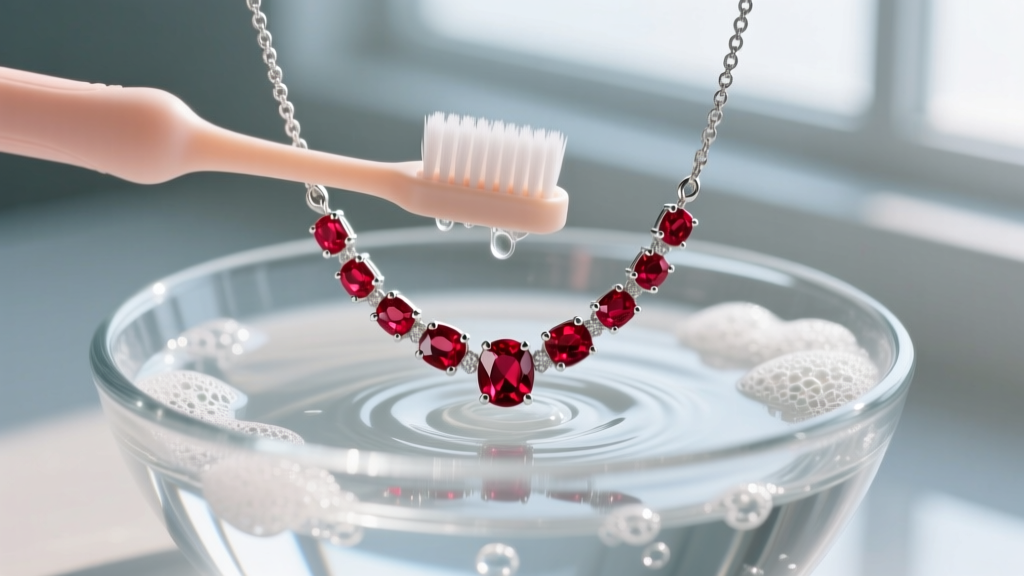
- Agitation: Submerge the necklace for 10-15 minutes. Use a brand-new, ultra-soft baby toothbrush to gently sweep the back of the ruby (the pavilion), where skin oils and lotions accumulate and block light return.
- Rinsing: Rinse under a gentle stream of lukewarm distilled water. Ensure the drain is securely plugged.
- Drying: Pat dry with a lint-free microfiber cloth. Do not air-dry, as water spots can form on the metal setting.
Storage and Maintenance: Protecting Prongs and Pavé
Because ruby is a 9 on the Mohs scale, it is harder than gold, platinum, silver, and almost all other gemstones (including emeralds and sapphires). If you store your ruby necklace in a communal jewelry box, the ruby will act as an abrasive, scratching the metal chains and scuffing adjacent diamonds or softer gems.
Always store ruby necklaces individually in soft, acid-free tissue paper or a dedicated microfiber pouch. For necklaces with delicate chains, such as serpentine or box chains, lay them flat or hang them vertically to prevent micro-kinks. If your necklace features a pear-cut or marquise-cut ruby, pay special attention to the V-prongs that protect the pointed tips. These prongs are highly susceptible to catching on knitwear and lifting, which exposes the most vulnerable part of the crystal structure to chipping.
Real-World Price Guide: What Is a Museum-Quality Ruby Necklace Worth?
To contextualize the real-world market against viral fictional heist values, below is a breakdown of ruby necklace pricing based on origin, treatment, and market tier as of 2026. Data is synthesized from recent Sotheby's Magnificent Jewels archives and wholesale gemological markets.
| Ruby Category | Origin / Treatment | Approx. Price Per Carat | Ultrasonic Safe? | Primary Care Concern |
|---|---|---|---|---|
| Investment Grade | Mogok, Burma (Unheated) | $50,000 - $1M+ | No (Manual Only) | Prong security & insurance appraisal updates |
| Fine Jewelry | Mozambique (Heat Only) | $2,500 - $15,000 | Yes (Gentle) | Pavé diamond grease buildup |
| Commercial Grade | Various (Heat + Flux) | $500 - $2,000 | Yes (Caution) | Flux residue in surface fractures |
| Composite / Filled | Various (Lead-Glass Filled) | $10 - $50 | NO (Destructive) | Acid/alkaline exposure dissolves filler |

When to Seek Professional Gemological Services
While at-home maintenance keeps the stone brilliant, it does not replace professional bench work. The GIA recommends having fine jewelry inspected by a professional at least once a year. For ruby necklaces worn daily, this interval should be shortened to every six months.
A professional jeweler will perform three critical services that cannot be replicated at home:
- Prong Re-tipping: Over time, friction from clothing wears down the platinum or gold prongs holding the ruby. A jeweler will add fresh metal to the prong heads without applying heat directly to the stone, which could alter certain treatments.
- Rhodium Re-plating: If your ruby is set in 18k white gold, the rhodium plating will eventually wear off, revealing the slightly yellowish alloy beneath. Professional polishing and re-plating restore the bright white contrast that makes the ruby's red saturation pop.
- Deep Steam Extraction: Jewelers use high-pressure steam to blast microscopic debris out of the gallery and undercarriage of the setting, ensuring maximum light refraction through the ruby's table and crown facets.
Whether you are researching the ruby necklace cayo perico price out of gaming curiosity or you are the proud owner of a genuine corundum masterpiece, understanding the intersection of market value and material science is the key to preserving these magnificent gems for generations.


