How to Style a Ruby Necklace: Cayo Perico Luxury Guide
Learn how to source, authenticate, and style a high-end ruby necklace for tropical vacations, channeling ultimate Cayo Perico luxury in 2026.

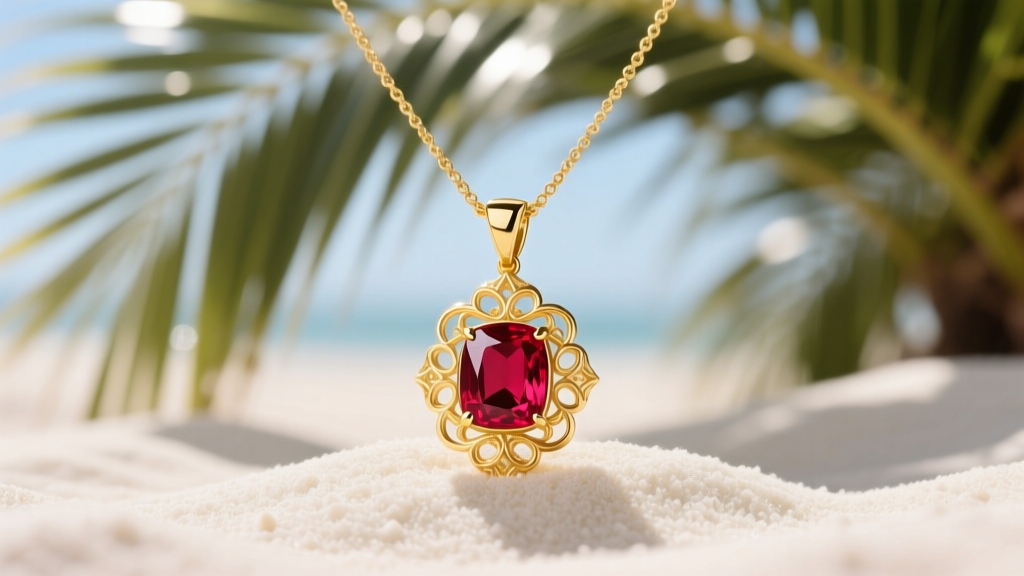
The Allure of the Cayo Perico Aesthetic in Fine Jewelry
The intersection of high-stakes gaming culture and real-world luxury fashion has birthed a highly specific, unapologetically bold trend for 2026: the tropical resort heist aesthetic. When collectors and style enthusiasts search for a ruby necklace cayo perico vibe, they are looking for more than just a piece of jewelry. They are seeking a statement of island luxury, high-value loot, and vibrant, sun-drenched opulence. Channeling the fictional tropical paradise of Cayo Perico means embracing rich, saturated gemstones, heavy gold settings, and a styling approach that transitions seamlessly from a daytime yacht excursion to a high-roller evening at an oceanfront casino.
However, pulling off this level of luxury requires a deep understanding of gemology, metallurgy, and tropical climate care. A ruby is not just a red stone; it is a complex mineral that demands specific handling, especially when exposed to saltwater, sweat, and sunscreen. In this step-by-step guide, we will break down exactly how to source, authenticate, and style a premium ruby necklace that captures this elite island aesthetic while maintaining its structural integrity and investment value.
Step 1: Sourcing and Authenticating Your Ruby
The foundation of any high-end ruby necklace is the gemstone itself. According to the Gemological Institute of America (GIA), ruby is the red variety of the mineral corundum, scoring a 9 on the Mohs hardness scale. However, hardness does not equate to indestructibility, and the market is currently flooded with treated stones that can degrade in tropical environments.
Understanding Ruby Origins and Treatments
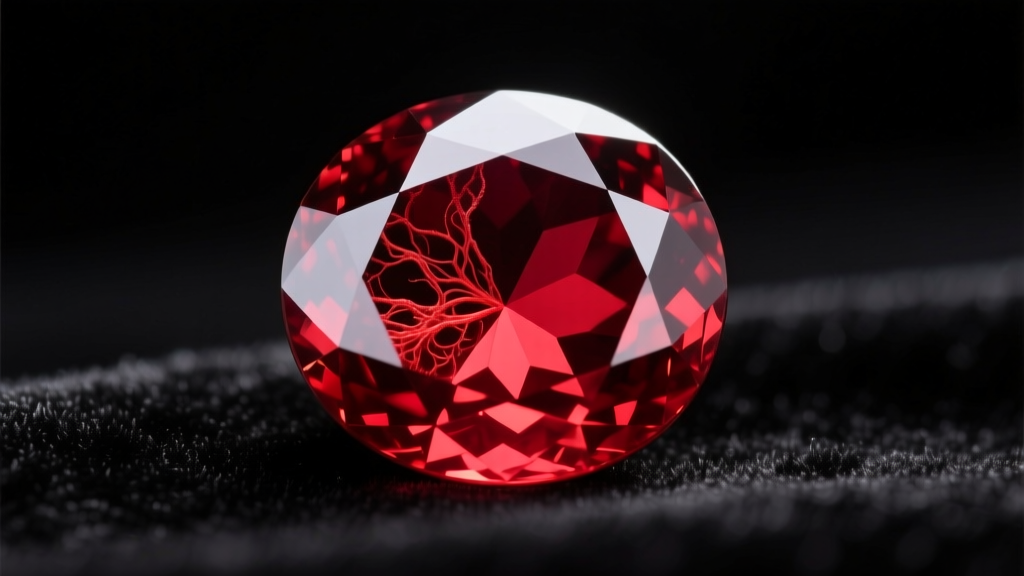
To achieve that deep, saturated 'Pigeon's Blood' red associated with top-tier luxury, you must understand the origin and treatment of the stone. Lotus Gemology, a leading authority on corundum, emphasizes that unheated Burmese rubies command the highest premiums. However, for a bold, large-carat statement piece suited for resort wear, high-quality Mozambican rubies offer exceptional color saturation at a more accessible price point, provided they are only traditionally heat-treated and not fracture-filled.
Avoid 'composite' or 'glass-filled' rubies at all costs for tropical wear. These stones are infused with lead glass to mask fractures. The glass is highly susceptible to damage from mild acids, including the citric acid in tropical cocktails, lime wedges, and even the chemical filters found in modern sunscreens.
| Ruby Origin | Typical Color Profile | Common Treatments | 2026 Price Range (per ct) |
|---|---|---|---|
| Myanmar (Burma) | Pigeon's Blood, intense red | Unheated or Mild Heat | $15,000 - $100,000+ |
| Mozambique | Deep purplish-red to pure red | Traditional Heat | $1,500 - $8,000 |
| Madagascar | Pinkish-red to vivid red | Traditional Heat | $1,200 - $5,000 |
| Thailand/Cambodia | Dark, garnet-like red | Heat, sometimes flux-healed | $500 - $2,500 |
Step 2: Selecting the Right Chain for Heavy Gemstones
A large ruby pendant requires a chain that can support its weight without snapping, while also resisting the corrosive effects of a tropical climate. The 'Cayo Perico' aesthetic demands thick, luxurious gold that catches the sunlight, but the metallurgy behind the gold is critical for skin health and jewelry longevity.
Why 18k Gold is Mandatory for Tropical Climates
While 14k gold is standard for everyday jewelry in the US, it contains a higher percentage of alloy metals like copper and zinc to increase durability. In hot, humid environments where sweating is constant, the copper in 14k gold can oxidize, leaving a green or black residue on your skin and dulling the metal. For a luxury resort necklace, 18k yellow gold (75% pure gold) is the superior choice. It offers a richer, warmer yellow hue that perfectly complements the deep red of a ruby, and its lower copper content makes it highly resistant to sweat-induced tarnishing.
Chain Styles and Gauge Specifications
For a pendant weighing between 5 and 15 carats, you need a chain with a minimum thickness of 2.2mm to 3.0mm. Here are the best structural options:
- Rope Chain (2.5mm - 3.0mm): The twisted links reflect light from multiple angles, mimicking the sparkle of the gemstone. It is highly durable and fits the heavy, luxurious aesthetic perfectly.
- Wheat Chain (2.2mm - 2.8mm): Woven oval links create a smooth, continuous tube. It is incredibly strong and less likely to pull on chest hair or snag on linen resort wear.
- Cuban Link (3.0mm+): For a more aggressive, modern streetwear-meets-resort look, a flat Cuban link provides a heavy, masculine drape that anchors a large ruby pendant.
Pro Tip: Always ensure your chain features a solid lobster clasp rather than a spring-ring clasp. Spring rings are notorious for failing under the weight of heavy gemstones and can easily snap when caught on a towel or beach chair.
Step 3: Tropical Styling and Wear-and-Tear Prevention
Wearing fine jewelry in a tropical environment requires a strategic approach to chemical exposure and physical impact. While ruby is a 9 on the Mohs scale—making it highly resistant to scratching—it possesses 'fair to poor' toughness due to its crystal structure, meaning it can chip or cleave if struck against a hard surface like a marble bar or a boat deck.
Protecting Your Rubies from Sunscreen and Saltwater
The biggest threat to your ruby necklace on a tropical vacation is not theft, but chemistry. Modern sunscreens contain active ingredients like oxybenzone and avobenzone, suspended in lotions that leave a microscopic, greasy film on gemstones. This film drastically reduces the ruby's refractive index, making a vibrant $20,000 stone look like a dull, lifeless piece of red glass.
- The Application Rule: Apply all sunscreen, tanning oils, and insect repellents at least 30 minutes before putting on your ruby necklace. Allow the chemicals to fully absorb into the skin.
- The Saltwater Protocol: Never wear your ruby necklace in the ocean. Saltwater can corrode the solder points on your gold chain and degrade the prongs holding the gemstone. Furthermore, the physical force of waves can knock the pendant against your body or nearby objects, risking a chip.
- Evening Cleaning: After a day in the sun, gently wipe the ruby with a lint-free microfiber cloth to remove sweat, body oils, and residual sunscreen before storing it in a soft pouch.
Step 4: Layering for the Ultimate Resort Evening Look
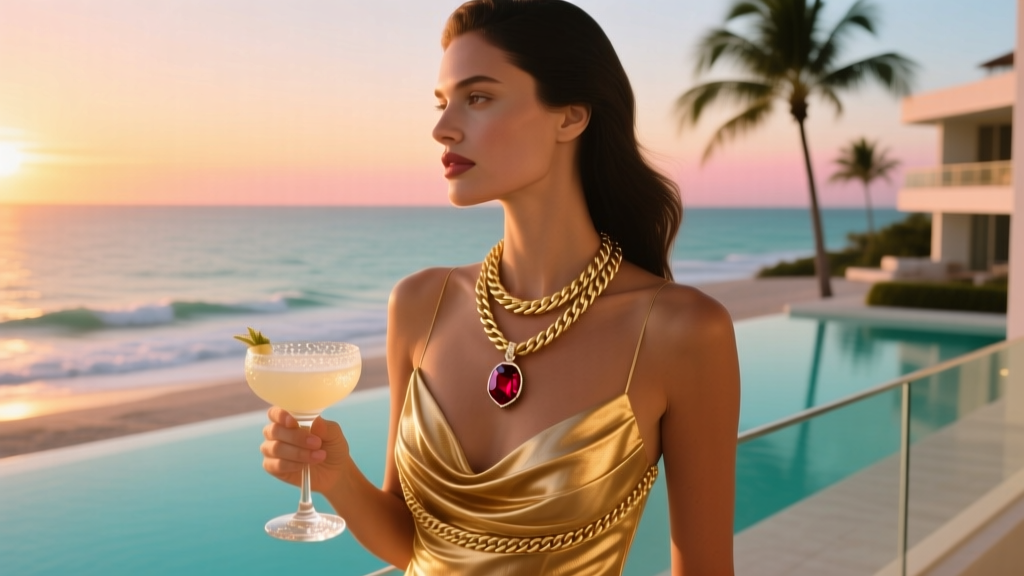
The Cayo Perico luxury aesthetic is all about calculated maximalism. A single ruby pendant is beautiful, but layering it with complementary gold chains creates a curated, high-stakes look that commands attention during evening resort events.
The Rule of Thirds for Necklace Layering
To avoid a tangled, cluttered mess, use the 'rule of thirds' for spacing your necklaces. Start with your ruby pendant as the focal point and build outward:
- Layer 1 (The Choker/Collar): A 16-inch, 1.5mm 18k gold box chain. This sits high on the collarbone and provides a subtle base layer of gold without competing with the ruby.
- Layer 2 (The Focal Point): Your 18-inch or 20-inch ruby pendant on a 2.5mm rope chain. This should rest squarely in the V-neck of a linen shirt or the neckline of a silk resort dress.
- Layer 3 (The Anchor): A 24-inch, 2.0mm gold wheat chain featuring a small, understated gold coin or geometric medallion. This draws the eye downward and elongates the torso.
When styling for a tropical evening, pair this layered gold and ruby arrangement with breathable, unstructured fabrics. Crisp white linen, raw silk, and lightweight cotton allow the heavy gold and vibrant red corundum to pop against the skin, perfectly capturing the essence of island luxury. By understanding the gemological realities and climate-specific care requirements, your ruby necklace will remain a stunning, high-value asset for every tropical getaway you take.


