Ruby Necklace Plant Care & Botanical Ruby Pendant Value Assessment
Discover ruby necklace plant care tips and compare them to the budget, value, and maintenance of botanical-inspired ruby gemstone pendants in 2026.

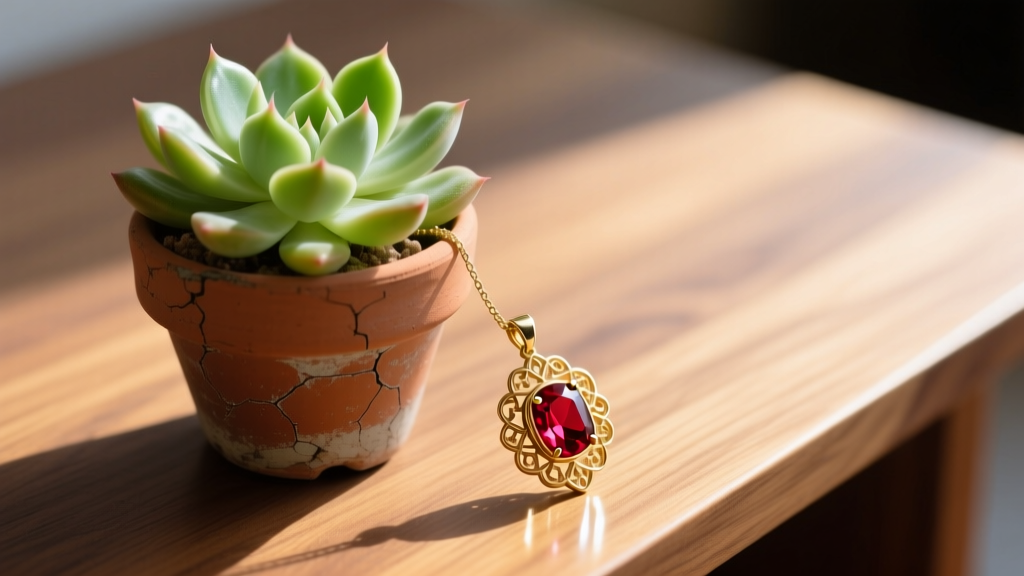
When you type "ruby necklace" into a search engine, you are likely to encounter a fascinating digital crossroads. Half the results will direct you to Othonna capensis, a stunning trailing succulent famous for its purple-ruby hues. The other half will lead you to precious corundum gemstones strung on precious metal chains. As jewelry experts at Jewel Style Radar, we frequently encounter botanical enthusiasts crossing over into nature-inspired gemstone jewelry. In this 2026 guide, we bridge the gap between the greenhouse and the jeweler's bench. We will provide essential ruby necklace plant care while conducting a rigorous budget and value assessment of botanical-inspired ruby pendants, exploring where horticulture and high jewelry intersect.
The Botanical Muse: Othonna Capensis vs. Corundum
The visual parallels between the Othonna capensis 'Ruby Necklace' plant and a natural ruby gemstone are striking, yet their chemical origins are entirely different. The succulent earns its "ruby" moniker through the production of anthocyanins—protective pigments that emerge when the plant is exposed to high UV light and mild drought stress. Conversely, a natural ruby owes its crimson fire to chromium atoms substituting for aluminum within a rigid aluminum oxide (Al2O3) crystal lattice. In 2026, custom lapidaries and boutique jewelry designers are increasingly drawing inspiration from the trailing, bean-shaped leaves of the Othonna plant, carving both lab-grown and natural rubies into intricate botanical motifs. Understanding the value of these nature-inspired pendants requires a dual appreciation for organic growth and geological pressure.
Ruby Necklace Plant Care: A Quick Masterclass
Before we assess the financial value of ruby pendants, let us address the horticultural needs of the living ruby necklace. According to World of Succulents, this South African native requires specific conditions to maintain its signature color and structural integrity.
- Soil Composition: A well-draining mix is non-negotiable. Use a blend of 40% pumice, 40% coco coir, and 20% worm castings. Heavy peat-based soils will retain too much moisture, leading to rapid root rot.
- Light Requirements: To maintain the deep ruby-purple coloration, the plant requires at least 6 hours of direct sunlight daily. In low-light conditions, the plant will etiolate (stretch out) and revert to a pale, leggy green.
- Watering Protocol: Employ the "soak and dry" method. Water thoroughly only when the top two inches of soil are completely bone dry. During winter dormancy, reduce watering to once a month.
Budget & Value Assessment: Botanical Ruby Pendants
Translating the organic inspiration of the Othonna plant into fine jewelry involves significant budget considerations. Carving a gemstone with a Mohs hardness of 9 (corundum) into delicate, trailing leaf motifs requires advanced laser-assisted lapidary techniques. Here is how the 2026 market values these botanical ruby pendants across three distinct tiers.
Tier 1: Hydrothermal Lab-Grown Ruby Carvings ($150 - $450)
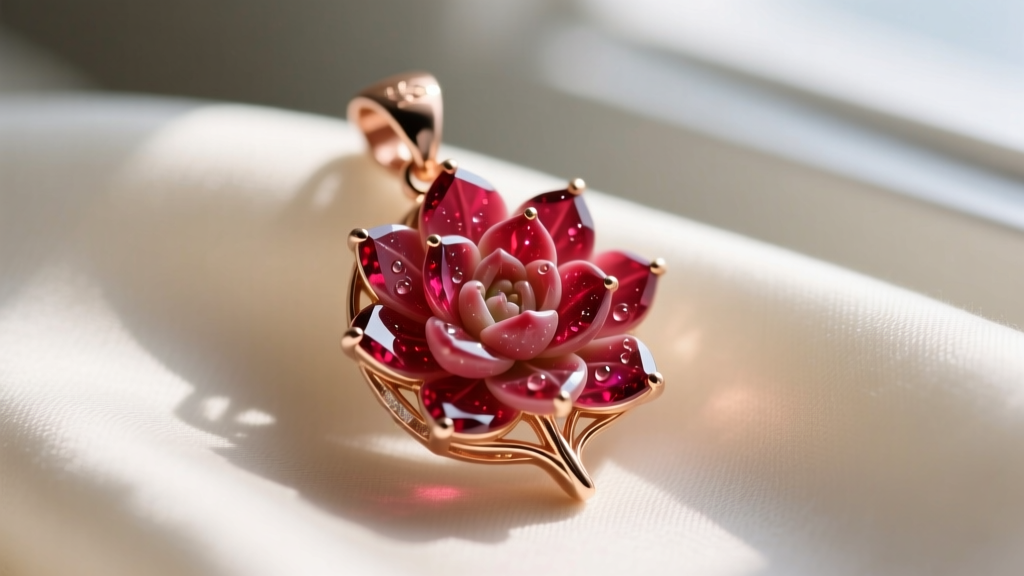
Lab-grown rubies possess the exact same chemical and physical properties as mined stones but are created in controlled environments. Hydrothermal synthesis allows for flawless clarity, making it the ideal medium for intricate botanical carvings where natural inclusions might cause the stone to fracture during the carving process. A 14k gold pendant featuring a lab-grown ruby carved into a cluster of succulent leaves typically retails between $150 and $450, offering exceptional aesthetic value without the premium of mined origin.
Tier 2: Natural Mined Ruby Cabochons in Floral Bezels ($800 - $2,500)
For collectors who demand earth-mined stones, lower-clarity natural rubies (often opaque to translucent) are frequently cut into smooth cabochons and set into botanical or floral bezel settings. While not carved into leaves, the organic, smooth domes mimic the plump foliage of the ruby necklace plant. These pieces rely on the artistry of the metalwork—often featuring hand-engraved vines and leaves in oxidized sterling silver or 14k rose gold—to achieve the botanical theme.
Tier 3: Pigeon Blood Natural Ruby Botanical Pendants ($5,000+)
At the apex of the market are highly transparent, pigeon-blood natural rubies that are custom-faceted or subtly carved into leaf motifs. Because carving removes significant carat weight, jewelers reserve this treatment only for exceptional rough. These investment-grade pendants are usually accompanied by Gemological Institute of America (GIA) reports verifying their unheated status and Burmese or Mozambican origin.
The Hidden Danger: Plant Care vs. Fracture-Filled Rubies
Here is a highly specific, real-world troubleshooting insight that bridges both worlds: the danger of combining your plant care routine with budget-friendly ruby jewelry. The market is currently flooded with "fracture-filled" or "lead-glass filled" rubies. These are low-grade, heavily included stones that have been infused with a high-lead-content glass to improve transparency. They are incredibly cheap, often selling for $15 to $40 per carat.
The Vulnerability: The glass filler has a Mohs hardness of roughly 5.5 and is highly reactive to acids. If you are repotting your Othonna capensis while wearing a fracture-filled ruby pendant, you are putting the stone at severe risk. Succulent potting mixes often contain acidic components like pine bark, and liquid succulent fertilizers typically have a slightly acidic pH (around 5.5 to 6.0). If a drop of fertilizer or acidic soil dust lands on a fracture-filled ruby, it will chemically etch the glass filler, leaving permanent, cloudy white spots on the surface of the stone. Always remove budget-tier ruby jewelry before engaging in botanical care.
2026 Investment & Care Matrix
How do the living plant and the gemstone interpretations compare as long-term investments and lifestyle accessories? The table below breaks down the budget, lifespan, and maintenance requirements for each.
| Category | Initial Budget (2026) | Lifespan | Maintenance Level | Resale / Heirloom Value |
|---|---|---|---|---|
| Living Othonna Capensis | $12 - $25 | 10-20+ years (with propagation) | High (Requires strict light/water balance) | None (Propagations gifted for free) |
| Lab-Grown Botanical Pendant | $150 - $450 | Lifetime (Mohs 9) | Low (Ultrasonic cleaning safe) | Low (Retains scrap gold value only) |
| Natural Ruby Botanical Pendant | $800 - $10,000+ | Generational | Medium (Avoid harsh chemicals/heat) | High (Appreciates with GIA certification) |
Conclusion: Nurturing Nature in All Forms
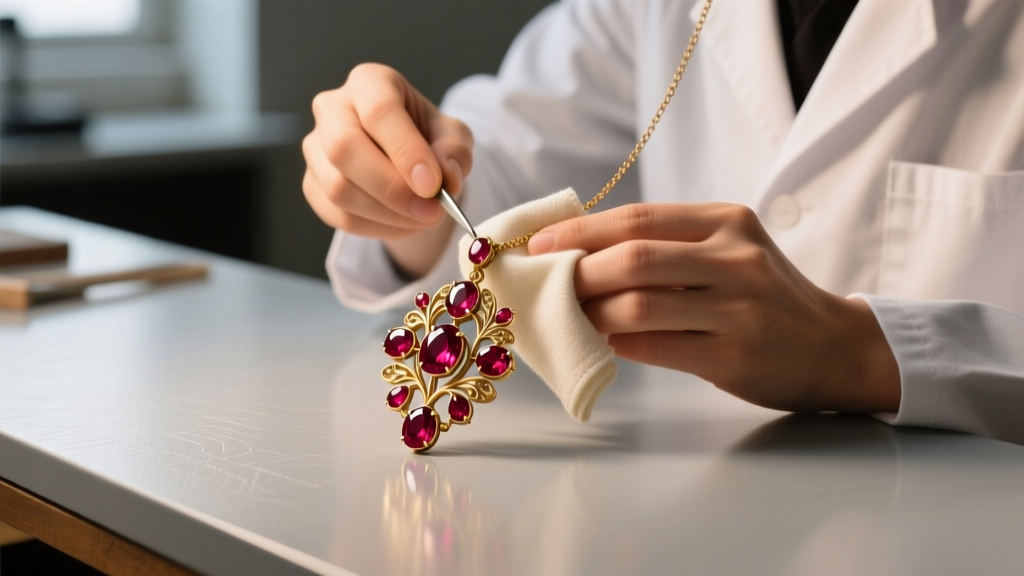
Whether you are meticulously adjusting the UV exposure of your Othonna capensis to coax out its deepest purple hues, or you are investing in a masterfully carved lab-grown ruby pendant that captures the essence of botanical trailing vines, both pursuits require an eye for detail and a respect for natural beauty. By understanding the specific care requirements of the living plant and the rigorous value metrics of the gemstone market, you can confidently navigate the "ruby necklace" search results, equipped with the expert knowledge to cultivate your garden and curate your jewelry box with equal proficiency.


