Safe Cleaning & Care Guide for Your Kids Cross Necklace
Learn how to safely clean and maintain a kids cross necklace. Expert tips for sterling silver, gold, and stainless steel to keep it tarnish-free.


The Unique Challenges of Kids' Jewelry
When it comes to everyday accessories, a kids cross necklace holds profound sentimental and spiritual value. However, children's jewelry faces a uniquely harsh environment compared to adult pieces. Active play, frequent exposure to chlorinated pool water, and the daily application of modern sunscreens—often thick with zinc oxide and titanium dioxide—create a perfect storm for grime buildup. Furthermore, children naturally produce different levels of sebum and sweat, which can accelerate the oxidation of certain metals. Maintaining the structural integrity and hygienic safety of a kids cross necklace requires more than a quick wipe with a cloth; it demands a targeted, material-specific approach to cleaning and care.
Decoding the Metals: What Is Your Cross Made Of?
Before applying any cleaning solution, you must identify the exact metal composition of the cross pendant and its chain. Using the wrong chemical agent can permanently strip plating or cause irreversible pitting.
14k and 18k Gold
Gold is a classic choice for children's religious jewelry due to its hypoallergenic properties. However, pure 24k gold is too soft for daily wear. Most high-quality pieces are crafted in 14k gold (58.5% pure gold alloyed with copper, silver, and zinc for tensile strength). While 18k gold offers a richer yellow hue, its higher gold content makes it more susceptible to scratching and denting during rough play. Gold does not tarnish, but it easily accumulates a filmy layer of soap scum and skin oils that dulls its brilliance.
925 Sterling Silver
Sterling silver is stamped '925', meaning it contains 92.5% pure silver and 7.5% copper. It is the copper content that reacts with sulfur and moisture in the air (and in sweat) to create silver sulfide—the black tarnish that frequently plagues a kids cross necklace. According to The Silver Institute, regular, gentle cleaning is the best way to prevent deep-set tarnish that requires professional polishing.
316L Surgical Stainless Steel
For highly active children or those with severe nickel allergies, 316L surgical stainless steel is the ultimate modern standard. Unlike standard 304 stainless steel, the 316L grade contains molybdenum, which drastically increases its resistance to chlorides. This means if your child wears their cross necklace into a saltwater ocean or a heavily chlorinated community pool, the metal will resist pitting and corrosion.
The Ultimate Step-by-Step Cleaning Protocol
For standard maintenance of gold, silver, and stainless steel crosses, follow this safe, non-abrasive cleaning protocol recommended by gemological experts.
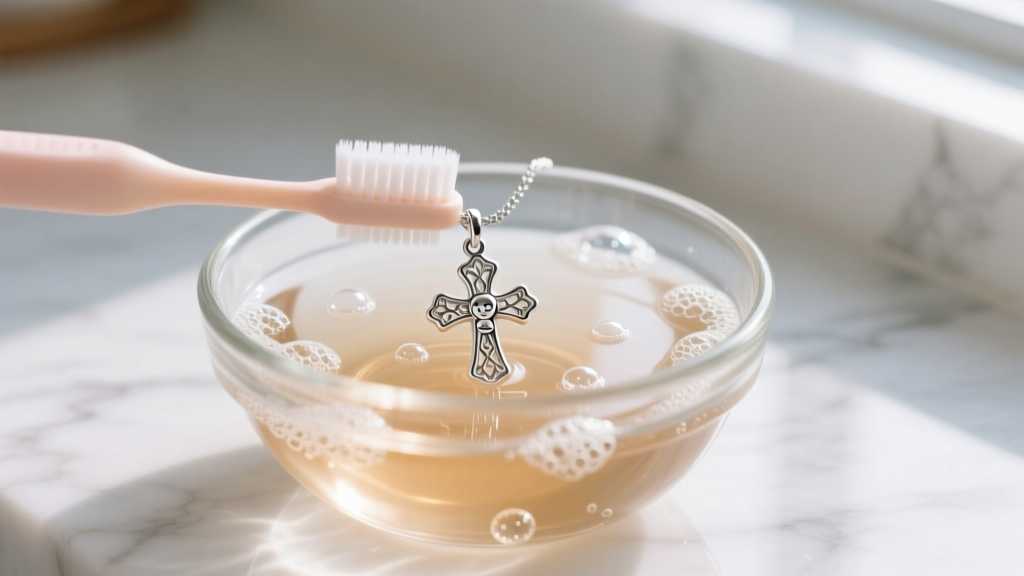
- Step 1: The Soak. Fill a small glass bowl with warm (not hot) distilled water. Add three drops of a mild, phosphate-free, and lotion-free dish soap. Submerge the necklace for 10 to 15 minutes to loosen sunscreen and sebum.
- Step 2: The Agitation. Use a brand-new, extra-soft baby toothbrush. Gently brush the crevices of the cross pendant and the clasp mechanism. Never use a standard adult toothbrush, as the stiff bristles can leave micro-scratches on high-polish gold finishes.
- Step 3: The Rinse. Rinse the necklace thoroughly under a gentle stream of lukewarm distilled water. Avoid tap water if your local supply is heavily mineralized, as hard water can leave calcium spots on the metal.
- Step 4: The Dry. Pat the piece completely dry using a lint-free microfiber cloth. Ensure the jump ring (the loop connecting the cross to the chain) is entirely moisture-free to prevent localized rust or tarnish.
Chain Link Anatomy: Where Dirt Hides
The design of the chain heavily dictates your cleaning strategy. A delicate cable chain features simple, open oval links that are relatively easy to wipe clean. In contrast, a box chain consists of hollow, square links that act as tiny traps for dead skin cells, lotion, and dirt. If your child's cross necklace features a box chain or a rope chain, you must ensure the soapy water fully penetrates the hollow spaces during the soaking phase, and you may need to use a wooden toothpick to gently dislodge compacted grime from the deepest crevices before brushing.
Cleaning Agents & Metal Compatibility Chart
| Metal Type | Safe Cleaning Agents | Agents to Strictly Avoid |
|---|---|---|
| 14k / 18k Gold | Mild dish soap, warm water, jewelry polishing cloth | Bleach, chlorine, toothpaste, ammonia |
| 925 Sterling Silver | Specialized silver dip (for heavy tarnish), mild soap | Baking soda paste, hard-bristled brushes |
| 316L Stainless Steel | Soap and water, rubbing alcohol for sanitization | Hydrochloric acid, abrasive scouring pads |
Critical Mistakes to Avoid
Well-meaning parents often turn to DIY internet hacks that end up destroying delicate jewelry. Here are the most common pitfalls to avoid when caring for a kids cross necklace:
The Toothpaste Myth
Many online guides suggest using toothpaste to scrub tarnish off silver or gold. Toothpaste contains silica and other abrasives designed to clean tooth enamel. These abrasives have a high RDA (Relative Dentin Abrasivity) value and will permanently scratch the mirror finish of a 14k gold cross, leaving it looking cloudy and dull.
Ultrasonic Cleaners
While ultrasonic cleaners are fantastic for adult diamond rings, they are highly risky for children's jewelry. If the cross pendant features pave-set cubic zirconia or small gemstones held in place by jewelry adhesive (rather than prongs), the high-frequency vibrations of an ultrasonic machine can easily shake the stones loose. Furthermore, ultrasonic waves can weaken the soldered joints on delicate chain clasps.
Safe Storage and Everyday Maintenance
Proper storage is just as critical as the cleaning process itself. When your child removes their cross necklace for sports or sleeping, it should never be tossed loosely into a drawer or left on a humid bathroom counter. Moisture and airborne sulfur are the primary catalysts for silver tarnish.
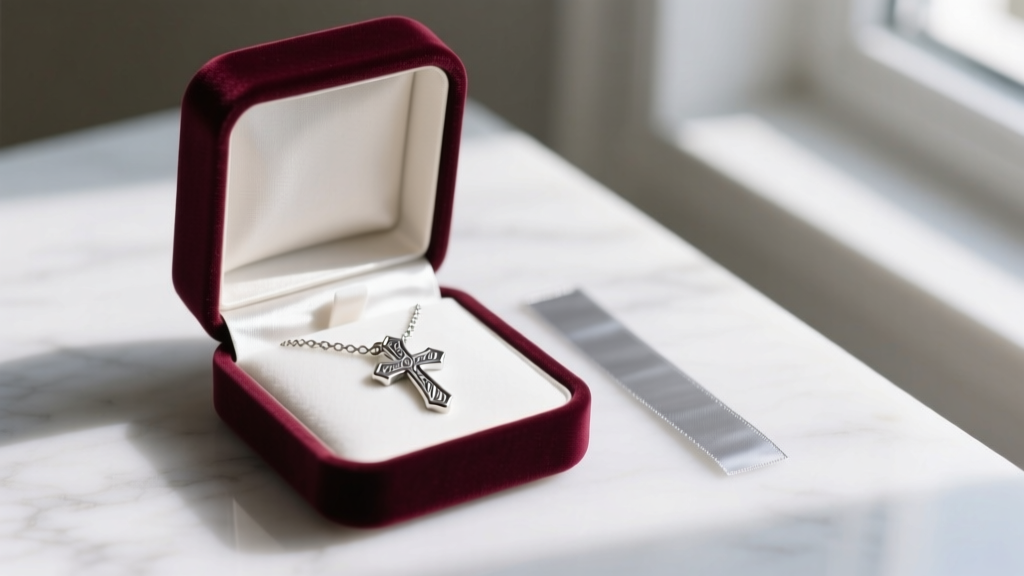
Store the necklace in an airtight zip-lock bag or a dedicated velvet jewelry box. For sterling silver pieces, always include a 3M anti-tarnish strip inside the storage container. These strips absorb airborne sulfur compounds and can keep a silver cross brilliantly shiny for up to 12 months without needing a wash. Additionally, always make it a rule that the necklace is the last thing your child puts on in the morning (after perfume, hairspray, and sunscreen) and the first thing they take off at night.
When to Seek Professional Jewelry Repair
Even with meticulous care, the physical demands of childhood will eventually take a toll on fine jewelry. Inspect the jump ring and the spring-ring clasp every three months. If you notice the jump ring has pulled slightly apart, or if the cross pendant wobbles loosely, take the piece to a certified jeweler for a quick laser soldering. Attempting to bend the metal back into place with household pliers will likely cause metal fatigue and result in a snapped chain. For comprehensive guidelines on maintaining the structural integrity of precious metals, refer to the Gemological Institute of America (GIA) care resources. By combining gentle, consistent cleaning with smart storage habits, you can ensure that your child's cross necklace remains a pristine, safe, and beautiful symbol of faith for years to come.


