The Saint Benedict Necklace: 2026 Style & Trend Guide
Discover 2026 styling trends for the Saint Benedict necklace. Learn about metal grades, chain pairings, and layering techniques for this iconic medal.


The Resurgence of Devotional Jewelry in 2026
Devotional jewelry has long transcended its purely religious roots to become a staple of contemporary personal style. As we navigate the fashion landscape of 2026, the saint benedict necklace stands at the fascinating intersection of spiritual grounding and high-fashion layering. Driven by the broader cultural pivot toward 'meaningful minimalism' and 'quiet luxury,' consumers are increasingly seeking out talismans that offer both aesthetic elegance and personal significance. The Saint Benedict medal, with its rich history and intricate iconography, has emerged as a premier choice for those looking to anchor their jewelry stacks with a piece that carries profound historical weight.
Unlike the generic coin pendants that dominated the early 2020s, today's collectors and style enthusiasts are demanding authenticity, superior metal purity, and precise craftsmanship. Whether you are drawn to the piece for its traditional role as a sacramental of protection or simply for its striking, symmetrical design, understanding the nuances of metal grades, chain pairings, and sizing is essential for building a cohesive look.
Anatomy of a High-Quality Saint Benedict Medal
Before selecting a chain or planning a layered stack, it is crucial to understand what separates a mass-produced trinket from a fine jewelry heirloom. The traditional medal features Saint Benedict on the obverse (front) holding a cross and a raven, surrounded by the Latin phrase Eius in obitu nostro praesentia muniamur (May we be strengthened by his presence in the hour of our death). The reverse (back) displays the famous Vade Retro Satana exorcism formula encoded around a central cross.
Material Grades and Durability
When investing in a saint benedict necklace, the base metal dictates not only the price but the longevity and skin-compatibility of the piece. According to the Jewelers of America, understanding metal purity standards is vital for avoiding premature tarnishing and allergic reactions.
- 14k Solid Gold (58.5% purity): The undisputed champion for everyday wear. It offers the perfect balance of rich color and structural hardness, ensuring the intricate Latin engravings do not wear down easily over decades of use.
- 18k Solid Gold (75% purity): Offers a deeper, more saturated yellow hue but is slightly softer. Best reserved for medals with deeper 3D casting rather than shallow surface engraving.
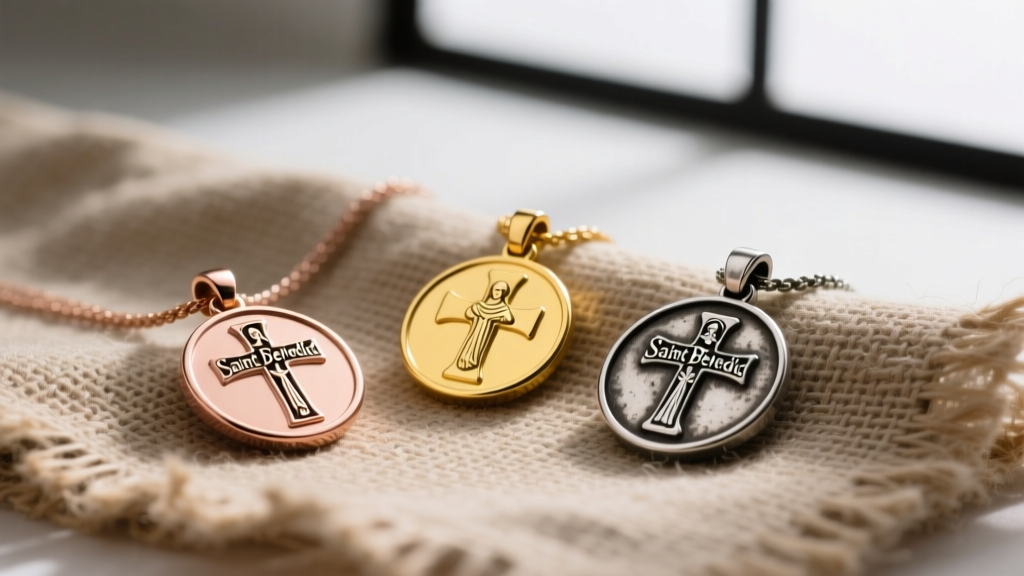
- Sterling Silver (925): A classic, affordable choice. However, ensure the piece is rhodium-plated to prevent the oxidation that can quickly fill in the medal's engraved grooves with dark tarnish, muddying the design.
- Gold Vermeil: A trendy 2026 choice for budget-conscious buyers, but proceed with caution. True vermeil requires a sterling silver base and a minimum of 2.5 microns of gold plating. Anything less is standard gold-plated brass, which will inevitably pit and discolor.
Enamel vs. Engraved Details
Historically, medals were struck with deep relief and left as bare metal. In 2026, we are seeing a bifurcation in design trends. Purists prefer high-contrast, diamond-cut engravings that catch the light, while modern fashion houses are introducing vitreous enamel accents. Black or deep navy enamel baked into the recessed Latin initials on the reverse side creates a striking, legible contrast that elevates the medal from a simple charm to a graphic design element.
Chain Pairings: Matching the Medal to the Link
A common styling mistake is pairing a visually heavy, detailed medal with a chain that is either too flimsy to support it or too thick, competing for attention. The Catholic Company notes that traditional medals range from 12mm to over 30mm in diameter. For contemporary everyday styling, the 15mm to 18mm sweet spot offers the best versatility.
Below is a structural guide to matching your medal size with the appropriate chain gauge and link style.
| Chain Style | Ideal Gauge (Thickness) | Best Medal Size | Style Vibe & Functionality |
|---|---|---|---|
| Cable Chain | 1.0mm - 1.5mm | 12mm - 15mm | Dainty, minimalist, sits close to the collarbone. Prone to kinking if the medal is too heavy. |
| Figaro Chain | 1.8mm - 2.5mm | 16mm - 22mm | Classic Italian heritage look. The alternating link pattern adds texture without overpowering the medal. |
| Rope Chain | 1.5mm - 2.2mm | 18mm - 25mm | High brilliance and light reflection. Excellent durability and a slightly vintage, maximalist aesthetic. |
| Box Chain | 1.2mm - 2.0mm | 14mm - 20mm | Modern, geometric, and highly resistant to tangling. Provides a sleek, contemporary backdrop for the medal. |
Pro-Tip on Clasps: Always inspect the clasp mechanism. A high-quality saint benedict necklace should feature a sturdy lobster clasp rather than a fragile spring ring, especially for chains exceeding 20 inches in length or supporting 18k gold medals which carry significant weight.
Layering Frameworks: The 2026 Stack
The single-pendant look remains elegant, but the 2026 trend cycle heavily favors the 'curated stack.' Layering a saint benedict necklace requires an understanding of spatial distribution and visual weight to avoid a cluttered neckline. The golden rule of necklace layering is the 2-3-4 Inch Drop Rule, ensuring each piece occupies its own distinct visual tier.
The Everyday Talisman Stack
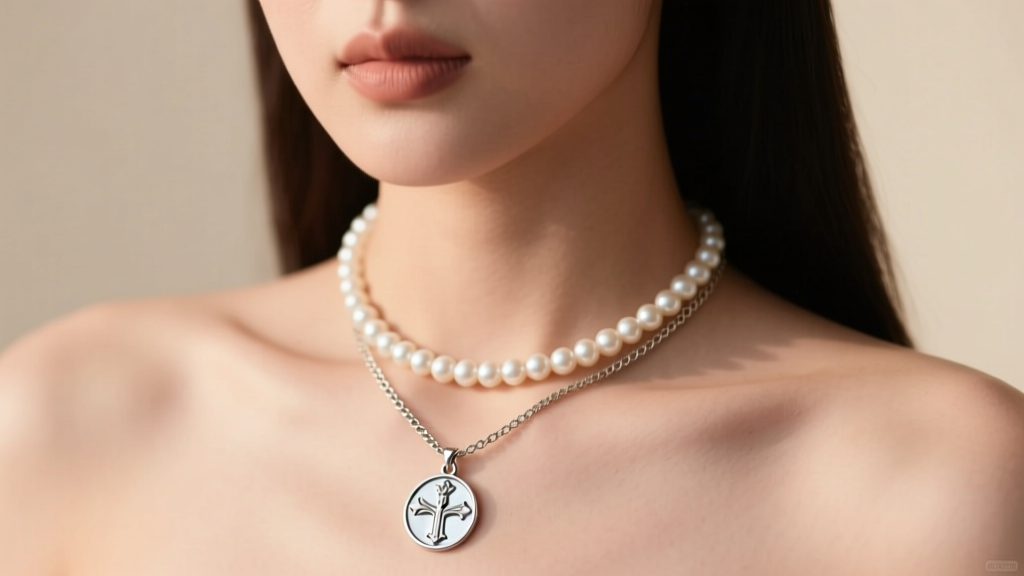
- Tier 1 (The Choker): A 14-inch or 16-inch freshwater pearl choker or a simple 1.5mm herringbone chain. This sits at the base of the neck and provides a soft, textural contrast to the hard metal of the medal.
- Tier 2 (The Anchor): Your 15mm or 18mm saint benedict necklace on an 18-inch or 20-inch figaro or cable chain. This is the focal point of the stack, resting perfectly on the upper sternum.
- Tier 3 (The Elongator): A 24-inch to 28-inch chain featuring a simple, unadorned bar pendant or a larger, plain gold hoop. This draws the eye downward, elongating the torso and framing the central Saint Benedict medal.
Maintenance and Care for Engraved Medals
Because the saint benedict necklace relies heavily on the legibility of its microscopic Latin abbreviations (such as C S S M L and V R S N S M V), keeping the grooves clean is paramount. Lotions, perfumes, and natural skin oils quickly accumulate in the deep relief of the casting, dulling the contrast and making the design look muddy.
Forget harsh chemical dips, which can strip rhodium plating or damage enamel accents. Instead, use a dedicated, extra-soft baby toothbrush with a single drop of mild dish soap and warm water. Gently agitate the bristles in a circular motion across the face and reverse of the medal, rinse thoroughly, and pat dry with a microfiber cloth. For oxidized silver pieces where the dark patina in the grooves is intentional, avoid brushing the recessed areas entirely to preserve the contrast.
Pricing Tiers and Authenticity
Navigating the market requires an understanding of what you should realistically expect to pay in 2026. Beware of 'solid gold' claims on medals priced under $150, as these are almost invariably gold-filled or heavily plated base metals.
- Entry Tier ($40 - $90): Sterling silver medals, often rhodium-plated, on standard cable or box chains. Excellent for everyday wear, though they may require more frequent polishing.
- Mid Tier ($120 - $250): High-quality gold vermeil (minimum 2.5 microns over sterling silver) or 10k solid gold pieces with shallower engravings. Often feature upgraded lobster clasps and jump rings.
- Heirloom Tier ($350 - $800+): Solid 14k or 18k gold, featuring deep 3D die-struck reliefs, vitreous enamel detailing, and premium Italian-made chains. These are generational pieces meant to be passed down.
Final Styling Verdict
The saint benedict necklace has firmly cemented its place in the modern jewelry lexicon, bridging the gap between ancient tradition and contemporary sartorial expression. By prioritizing precise metal grades, selecting structurally sound chain pairings, and employing deliberate layering techniques, you can transform this historic sacramental into a sophisticated, deeply personal style signature that will endure far beyond the fleeting trends of 2026.


