Expert Care Guide: Cleaning Your Saint Sebastian Necklace
Learn expert cleaning and maintenance tips for your Saint Sebastian necklace. Discover how to remove tarnish from intricate silver and gold arrow motifs.

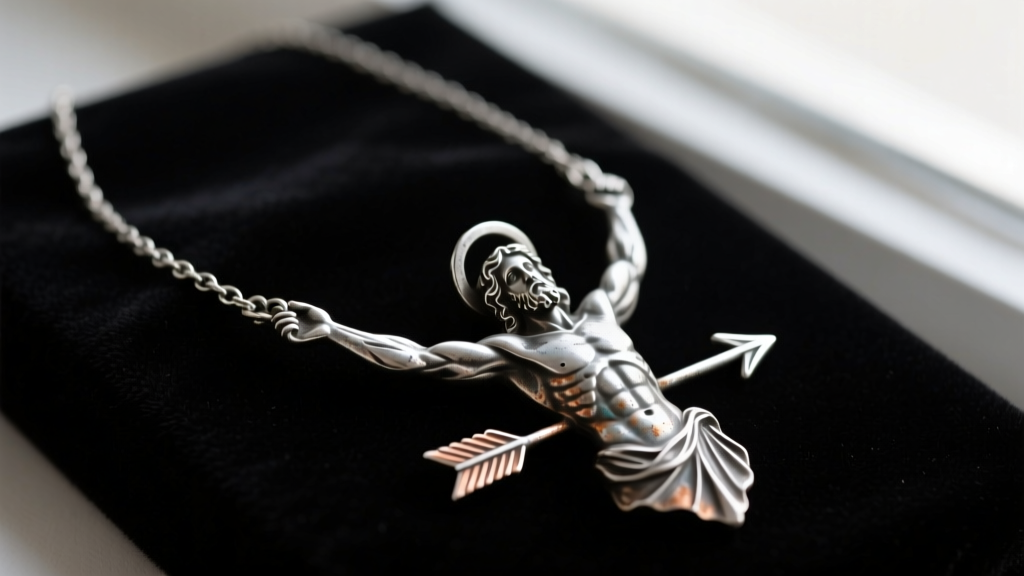
The Saint Sebastian necklace is a profound symbol of resilience, protection, and athletic triumph. However, from a purely metallurgical and design standpoint, the traditional depiction of the martyr—bound to a pillar or tree, with muscular anatomy detailed and multiple arrows piercing his torso—creates a unique set of maintenance challenges. The intricate crevices, deep relief carvings, and protruding arrow shafts act as magnets for sebum, dead skin cells, environmental pollutants, and cosmetic residues. Whether your piece is crafted from oxidized sterling silver, 14k solid gold, or gold vermeil, maintaining its structural integrity and visual depth requires a specialized approach. This comprehensive guide details the exact protocols for cleaning, preserving, and storing your Saint Sebastian pendant.
The Unique Maintenance Challenges of Saint Sebastian Pendants
Unlike flat, minimalist pendants, a Saint Sebastian motif relies heavily on three-dimensional relief. The 90-degree angles where the arrow shafts intersect the figure's torso, as well as the deep shadows carved to define muscular anatomy, are prime locations for debris accumulation. Over time, the natural acids in human sweat, combined with sulfur in the atmosphere, accelerate the formation of silver sulfide (tarnish) in these recessed areas. Furthermore, if your necklace features an intentionally oxidized finish—a common technique used by artisan jewelers to darken the recesses and make the raised silver details pop—standard cleaning methods can ruin the piece by stripping the deliberate patina.
Material-Specific Cleaning Protocols
Before applying any cleaning agent, you must identify the exact metal composition of your necklace. According to the Gemological Institute of America (GIA), improper chemical use is the leading cause of irreversible damage to fine jewelry finishes.
Sterling Silver and Oxidized Finishes
If your Saint Sebastian necklace is made of sterling silver (.925) and features dark, oxidized crevices, you must absolutely avoid liquid silver dips. These commercial solutions contain thiourea, a chemical that instantly dissolves silver sulfide but will also strip the intentional oxidation, leaving your pendant looking flat and unnaturally bright. Instead, use a high-quality jeweler's polishing cloth (such as a Sunshine cloth) impregnated with micro-abrasives and jeweler's rouge. Gently rub only the raised, high-polish areas of the figure and the arrows. For the recessed, darkened areas, use a dry, soft-bristled makeup brush to sweep away dust and skin cells without disturbing the patina.
Gold Vermeil and Plated Pieces
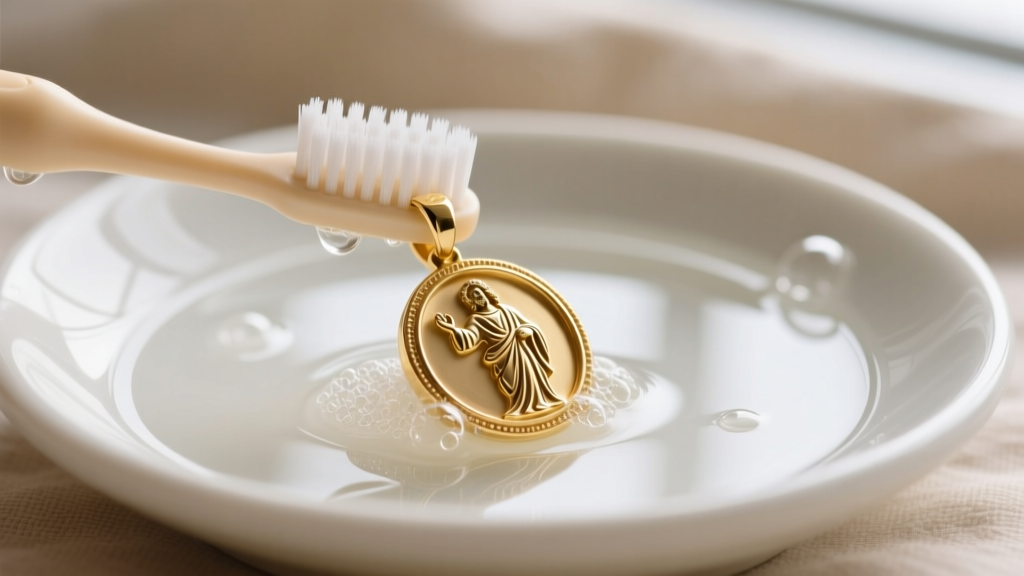
Gold vermeil consists of a thick layer of gold (legally required to be at least 2.5 microns) bonded over a sterling silver base. Because the arrows on a Saint Sebastian pendant protrude outward, they are highly susceptible to friction and wear. Never use baking soda pastes, toothpaste, or stiff-bristled brushes on vermeil, as these will micro-scratch the gold layer and eventually expose the silver beneath. Clean vermeil pieces using only a pH-neutral liquid dish soap (like original Dawn) and a baby toothbrush with ultra-soft bristles.
Solid Gold (14k and 18k)
Solid gold is highly resistant to tarnish and corrosion, making it the most forgiving material for intricate pendants. However, the alloy metals mixed with the gold (like copper and zinc in 14k gold) can still attract grease. A simple bath in warm water with a few drops of mild surfactant, followed by gentle agitation, will easily lift oils from the detailed anatomy of the saint.
Step-by-Step Deep Cleaning Routine for Intricate Motifs
For a heavily soiled Saint Sebastian necklace that has lost its luster due to months of daily wear, follow this meticulous deep-cleaning framework:
- Dry Dusting: Before introducing moisture, use a can of compressed air (held at least six inches away) to blow out loose dust and lint from the deep crevices around the arrows and the binding ropes or pillars.
- The Surfactant Bath: Mix a bowl of distilled water (tap water contains chlorine and minerals that can cause spotting) with three drops of pH-neutral, phosphate-free dish soap. Submerge the pendant for exactly five minutes to soften hardened sebum.
- Targeted Agitation: Remove the pendant and use a 0.5mm interdental brush or a soft baby toothbrush to gently scrub the junctions where the arrows meet the body. Use short, light strokes. Never apply heavy downward pressure on the protruding arrow tips, as thin cast silver or gold can easily bend or snap.
- The Rinse: Rinse thoroughly under a gentle stream of lukewarm distilled water. Ensure all soap residue is flushed from the clasp and the bale (the loop connecting the pendant to the chain).
- Drying: Do not air dry. Immediately pat the piece dry with a lint-free microfiber cloth, then use a hairdryer on the "cool" setting to evaporate any remaining moisture trapped in the deepest crevices. Water spots left to air-dry can etch into certain metal alloys over time.
Chain Maintenance: Preventing Tarnish and Breakage
The chain supporting your Saint Sebastian pendant requires its own maintenance protocol. Cable and rolo chains, commonly used for heavier religious pendants, easily trap skin oils between their individual links. According to Jewelers of America, regular chain cleaning prevents the premature wearing down of link joints. Furthermore, the lobster clasp or spring ring clasp is a mechanical failure point. Lint and clothing fibers often become wedged in the clasp's lever mechanism, preventing it from closing securely. Use a sterilized sewing needle to gently pick out debris from the clasp hinge, and apply a microscopic drop of synthetic watch oil to the spring mechanism once a year to maintain smooth operation.
Cleaning Agents: What to Avoid vs. Safe Alternatives
The internet is rife with DIY jewelry cleaning hacks, many of which are disastrous for detailed, multi-finish religious pendants. Review the table below before treating your necklace.
| Cleaning Method | Verdict | Why It Fails or Succeeds |
|---|---|---|
| Baking Soda & Aluminum Foil Bath | Avoid | Creates an ion exchange that strips intentional oxidation and can leave a dull, chalky residue in deep crevices. |
| Commercial Liquid Silver Dip | Avoid | Contains thiourea; instantly ruins oxidized finishes and can cause micro-pitting in cast silver over time. |
| Ultrasonic Cleaners | Avoid | High-frequency vibrations can loosen soldered joints on delicate arrow tips and shatter any enamel accents. |
| Mild Dish Soap & Distilled Water | Safe | pH-neutral surfactants safely lift oils without reacting with silver, gold, or intentional patinas. |
| Impregnated Polishing Cloths | Safe | Provides controlled, mechanical polishing for high-relief areas without flooding crevices with chemicals. |
Proper Storage to Prevent Arrow Bending and Tarnish
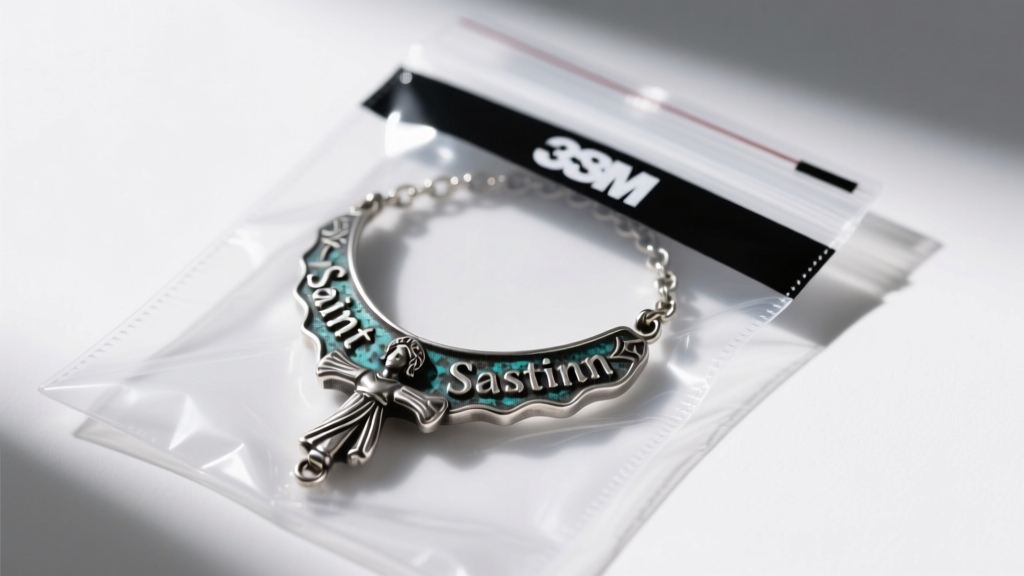
How you store your Saint Sebastian necklace is just as critical as how you clean it. The protruding arrows make this pendant highly vulnerable to crushing and bending if tossed loosely into a jewelry box. Always store the necklace in an individual, airtight polyethylene ziplock bag. Never use PVC (polyvinyl chloride) bags, as PVC off-gasses chemicals that accelerate tarnishing and can permanently stain silver and bronze. Drop a 3M anti-tarnish strip or a piece of activated charcoal into the bag to absorb ambient sulfur and moisture. Lay the pendant completely flat; do not fold the chain tightly over the arrows, as the chain links can scratch the high-polish surfaces of the figure during transit.
When to Seek Professional Jeweler Intervention
While routine cleaning can be managed at home, certain maintenance tasks require a professional bench jeweler. If the tips of the arrows become bent or snapped from catching on clothing, do not attempt to bend them back into place with pliers; cast metals suffer from work-hardening and will snap if manipulated without annealing. Additionally, if your Saint Sebastian pendant features gemstone accents (such as ruby or garnet cabochons representing drops of blood), have a jeweler inspect the prongs or bezels annually. Finally, if the bale (the loop at the top) shows visible thinning or grooving from chain friction, a jeweler can laser-weld a new reinforcement ring to prevent the loss of your cherished pendant.


