Sampaguita Necklace Buying Guide: Metals, Motifs & Care Tips
Discover how to choose the perfect sampaguita necklace. Compare metals, filigree techniques, and chain styles in our expert jewelry buying guide.

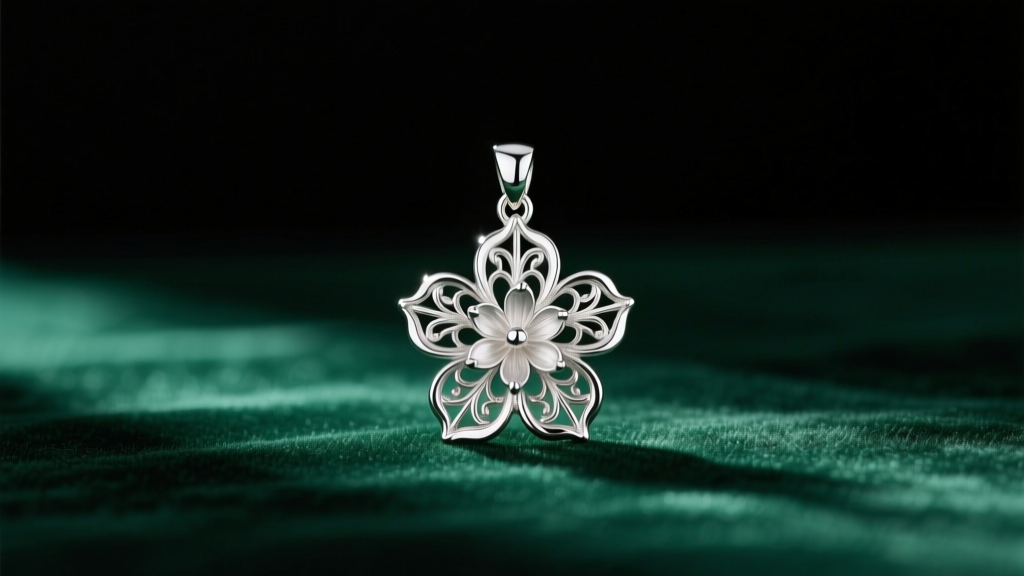
The sampaguita (Jasminum sambac) is more than just the national flower of the Philippines; it is a profound symbol of purity, simplicity, and resilience. While traditional garlands of real jasmine blossoms have been woven for centuries to welcome guests and honor dignitaries, the transition of this iconic bloom into fine jewelry has created a highly sought-after niche in botanical motifs. A well-crafted sampaguita necklace captures the delicate, layered petals and prominent stamen of the jasmine flower in enduring metals and enamels.
However, shopping for floral motif jewelry requires a discerning eye. The intricate nature of flower pendants means that poor craftsmanship can result in fragile petals, snagging edges, or trapped moisture that degrades the metal. This comprehensive buying guide will walk you through the critical material, structural, and stylistic considerations you need to evaluate before investing in a sampaguita necklace.
The Cultural Weight of the Sampaguita Motif
Before evaluating the metallurgy, it is essential to understand the design anatomy of an authentic sampaguita pendant. Unlike generic five-petal daisies or roses, the Jasminum sambac typically features a layered, slightly asymmetrical petal structure with a distinct, elongated tubular base. High-end jewelers will replicate the subtle recurve of the petals and the prominent central stamen. When browsing, look for designs that honor this specific botanical accuracy rather than relying on mass-produced, generic floral molds. The cultural significance demands a level of artisanal respect that separates heirloom-quality pieces from fast-fashion trinkets.
Decoding Metal Choices for Tropical & Everyday Wear
Because floral pendants feature deep crevices and layered textures, the choice of metal dictates not only the necklace's longevity but also how easily it can be cleaned. According to the Gemological Institute of America (GIA), silver alloys are highly susceptible to sulfur-induced tarnishing, which can quickly turn the deep grooves of a floral pendant black. Here is how the most common metals compare for this specific motif:
| Metal Type | Purity / Grade | Tarnish Resistance | Avg. Price Range | Best Use Case |
|---|---|---|---|---|
| Sterling Silver | 92.5% Ag, 7.5% Cu | Low (Requires Rhodium) | $45 - $150 | Everyday wear, budget-conscious |
| Gold Vermeil | 2.5μm Au over 925 | Medium | $85 - $250 | Occasional wear, luxury aesthetic |
| Solid 14k Gold | 58.5% Au | High | $350 - $900+ | Lifelong heirlooms, humid climates |
| Cast Brass | Cu/Zn Alloy | Very Low | $20 - $60 | Fashion jewelry, temporary wear |
Expert Tip: If you opt for sterling silver, ensure the piece is heavily plated with rhodium (at least 0.75 to 1.0 microns thick). Rhodium not only provides a brilliant, white-gold-like finish but also seals the copper alloy beneath, preventing the deep petal crevices from oxidizing and turning your skin green.
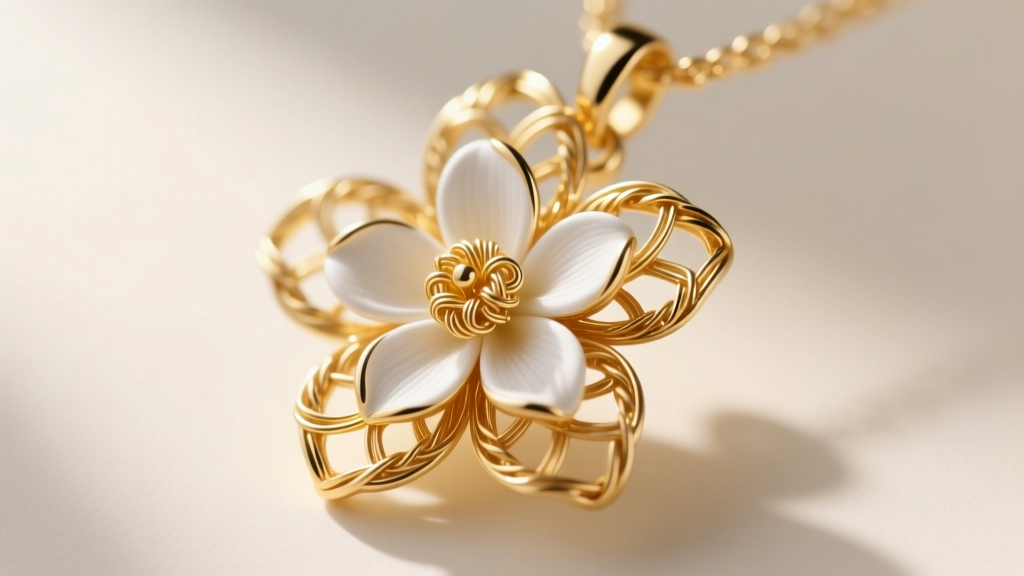
Craftsmanship: Cast vs. Handcrafted Filigree
The manufacturing method profoundly impacts the durability and visual lightness of a sampaguita pendant. There are two primary techniques you will encounter:
Lost-Wax Casting
Most commercial floral pendants are cast. A wax model is created, encased in investment plaster, burned out, and replaced with molten metal. While efficient, cast floral pieces can suffer from 'porosity'—tiny air bubbles trapped in the metal during cooling. Furthermore, cast pendants are often solid on the back. A solid back traps sweat, perfumes, and skin oils against the metal, accelerating degradation and causing skin irritation. Always flip the pendant over; look for an 'ajouré' or open gallery (a hollowed-out back) which reduces weight, saves on metal costs, and allows the skin to breathe.
Handcrafted Filigree and Wirework
For true collectors, hand-woven filigree represents the pinnacle of sampaguita jewelry. Artisans twist and solder microscopic wires of gold or silver to mimic the delicate veins of the jasmine petal. Filigree is inherently lighter and more flexible than cast metal, making it less likely to dent if dropped. When inspecting filigree, use a jeweler's loupe to check the solder joints at the base of the petals. Weak solder points will appear as dull, grayish blobs rather than seamless, flowing metal transitions.
Selecting the Right Chain and Bail
A heavy, intricate floral pendant requires a chain that offers both structural support and visual harmony. The bail—the loop that connects the pendant to the chain—is equally critical.
- The Bail: Avoid hidden bails for wide floral pendants, as they can cause the flower to flip upside down. A tapered loop bail or a fixed jump ring soldered directly to the top petal ensures the sampaguita lays flat against the sternum.
- Chain Width and Style: For pendants weighing between 3 to 8 grams, a 1.2mm to 1.5mm chain is ideal. Jewelry care experts often recommend box chains or wheat chains for textured pendants. These chains have smooth, uniform surfaces that will not catch on the delicate, protruding stamen or petal edges of the sampaguita motif, unlike rope or herringbone chains which are notorious for snagging.
- Length: A 16-inch choker length places the flower directly on the collarbone, mimicking the placement of a real floral lei. An 18-inch princess length allows the pendant to rest on the upper chest, which is generally more flattering for larger, 25mm+ pendants.
Enamel and Gemstone Accents
While monochromatic metal is classic, many artisans incorporate color to bring the sampaguita to life. If the design includes green leaves or a colored center, pay close attention to the enameling technique.
Vitreous (Glass) Enamel is fired in a kiln at temperatures exceeding 1400°F, fusing the glass powder to the metal. It is highly durable, scratch-resistant, and possesses a deep, luminous translucency. Conversely, Cold Enamel (essentially a hardened epoxy resin) is cured at room temperature. While cheaper and available in brighter, more opaque colors, cold enamel will yellow over time when exposed to UV light and will chip easily if the necklace is dropped.
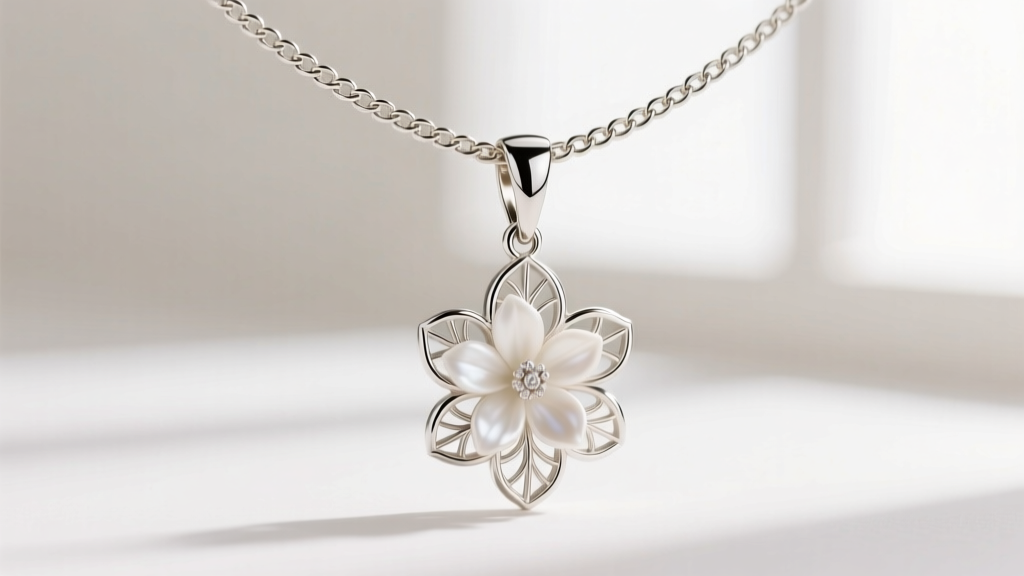
For the central stamen, jewelers often use accent stones. Cultured freshwater pearls (typically 2mm to 3mm) are a traditional and highly appropriate choice, echoing the organic origin of the flower. If diamonds or cubic zirconia are used, ensure they are bezel-set rather than prong-set; prongs on micro-stones frequently catch on silk blouses and sweaters.
Hallmarks, Proportions, and Sizing
Proportion is the silent killer of floral jewelry design. A sampaguita pendant should ideally measure between 15mm and 25mm in diameter. Anything smaller loses the intricate petal detailing, appearing as a generic metal blob from a distance. Anything larger than 30mm risks looking costume-like and becomes too heavy for delicate chains.
Always verify the metal hallmarks. According to GIA guidelines on gold jewelry, a legitimate piece must bear a purity mark (e.g., 925, 14K, 18K) and, ideally, a maker's mark. Be highly suspicious of pieces stamped simply 'Tibetan Silver' or 'Alpaca,' as these are nickel-heavy alloys that can cause severe contact dermatitis and lack any precious metal value.
Care and Maintenance for Floral Pendants
The layered petals of a sampaguita necklace create microscopic shelves where lotion, dead skin cells, and environmental dust accumulate. Improper cleaning can ruin the piece.
- Routine Cleaning: Mix a few drops of mild, phosphate-free dish soap in lukewarm water. Use a clean, ultra-soft baby toothbrush to gently sweep the bristles along the grain of the petals and into the central stamen crevices. Rinse thoroughly under a gentle stream of water.
- Drying: Never air-dry intricate floral jewelry, as hard water spots will lodge in the crevices. Use a can of compressed air to blow water out of the deep recesses, followed by a gentle polish with a microfiber cloth.
- Ultrasonic Warnings: Never place a sampaguita necklace in an ultrasonic cleaner if it features glued pearls, cold enamel, or oxidized (blackened) silver detailing. The high-frequency vibrations will shatter the glue bonds and strip the intentional antiquing from the petal grooves.
By prioritizing botanical accuracy, open-gallery craftsmanship, and appropriate chain pairing, you can secure a sampaguita necklace that serves as both a stunning sartorial anchor and a meaningful cultural heirloom.


