Sand Shark Tooth Necklace Buying Guide: What to Look For
Discover how to choose an authentic sand shark tooth necklace. Learn about fossil grading, bail settings, structural failure points, and pricing tiers.

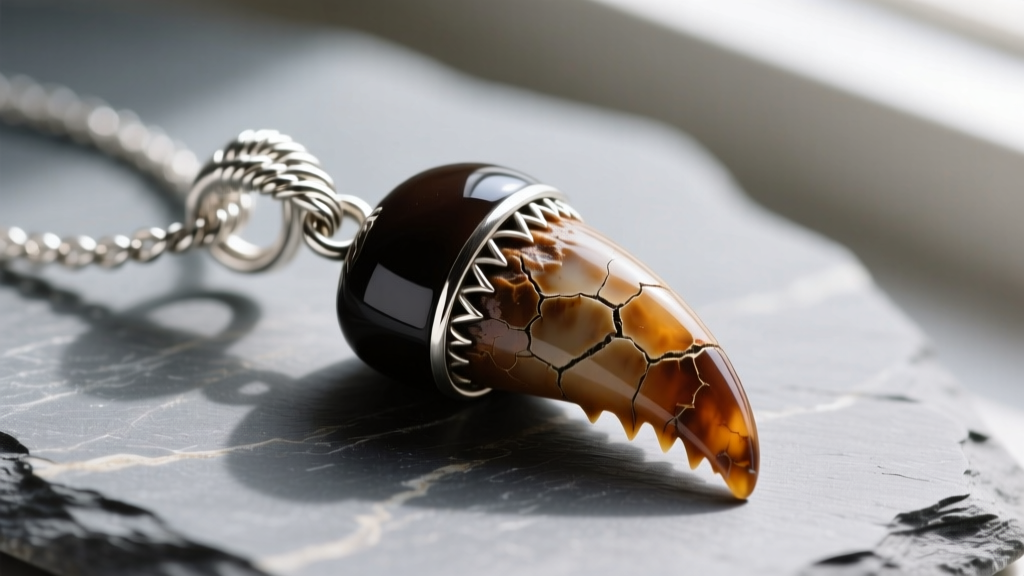
The allure of prehistoric marine predators has made the sand shark tooth necklace a staple in coastal, surfer, and bespoke jewelry markets. However, navigating this niche requires a sharp eye for geological authenticity, structural integrity, and ethical sourcing. As of 2026, the market is saturated with both genuine fossilized specimens and highly deceptive resin casts. Whether you are sourcing a piece from the phosphate beds of Morocco or the riverbeds of South Carolina, understanding the anatomy of the tooth and the mechanics of the setting is critical to making a lasting investment.
The Great Misnomer: Sand Shark vs. Sand Tiger Shark
Before evaluating quality, we must address a pervasive industry misnomer. True 'sand sharks' (family Carcharhinidae, such as the sandbar shark) possess small, needle-like teeth that are rarely used in statement jewelry. When jewelers and collectors refer to a 'sand shark tooth necklace,' they are almost exclusively referring to the Sand Tiger Shark (Carcharias taurus), also known as the ragged-tooth shark.
Sand tiger sharks are famous for their protruding, jagged, and highly textured teeth. In the fossil record, these teeth are prized for their imposing crowns and distinct root structures. According to paleontological archives documented by Fossilera, the sand tiger shark's teeth were perfectly adapted for gripping slippery prey, leaving behind a fossilized silhouette that is both aggressive and beautifully symmetrical. When shopping, always verify if the seller is offering a true sand tiger fossil or a modern, ethically restricted species.
Geological Origins: Morocco vs. The Cooper River
The provenance of a fossilized tooth dictates its color, density, and market value. The two primary sources for commercial sand tiger shark teeth are the Kem Kem beds of Morocco and the Cooper River of South Carolina.
- Moroccan Phosphate Beds (Cretaceous Period): Teeth from this region typically exhibit lighter hues—ranging from pale grey to rich caramel and mottled brown. The enamel is often well-preserved, but the roots can be fragile due to the alkaline nature of the surrounding sandstone matrix.
- Cooper River, South Carolina (Miocene/Pliocene): Submerged in iron-rich, anoxic river sediment, these teeth undergo heavy permineralization. The result is a striking, glossy black or deep mahogany tooth. The iron oxide infusion makes Cooper River specimens significantly denser and heavier than their Moroccan counterparts, which directly impacts the choice of necklace hardware.
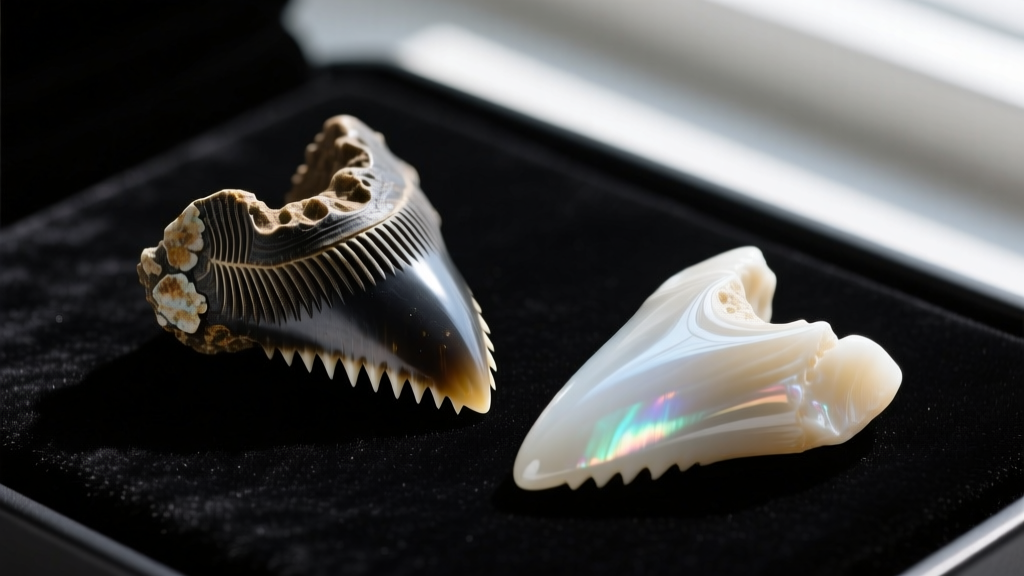
Setting and Bail Mechanics: Preventing Structural Failure
The most common point of failure in a sand shark tooth necklace is the connection between the fossil and the chain. Fossilized dentine and cementum (the porous root material) are inherently brittle. How the jeweler attaches the bail dictates the pendant's lifespan.
The Danger of Direct Drilling
Many mass-produced pendants feature a hole drilled directly through the root or the top of the crown. Unless this is performed using a diamond-tipped core drill under continuous water lubrication, the friction generates micro-fractures. Over time, the natural oils from your skin, combined with the mechanical stress of walking and movement, will cause the tooth to snap cleanly at the drill site. Avoid drill-set pendants unless the seller can verify professional lapidary techniques.
Wire-Wrapping and Bezel Settings
For high-end specimens, non-invasive settings are mandatory. A custom sterling silver or 14k gold-filled bezel cage cradles the fragile root without applying localized pressure. Alternatively, artisanal wire-wrapping using 20-gauge dead-soft wire distributes the tension evenly across the tooth's natural grooves. Wire wrapping also allows the collector to remove the fossil for safe storage or cleaning without risking damage to the enamel.
Chain Pairings for Heavy Fossils
A common mistake buyers make is pairing a dense, 30-gram Cooper River fossil with a delicate 1.5mm cable chain. The sheer pendulum effect of a heavy, jagged tooth will quickly fatigue the soldered links of a lightweight chain, leading to catastrophic snapping.
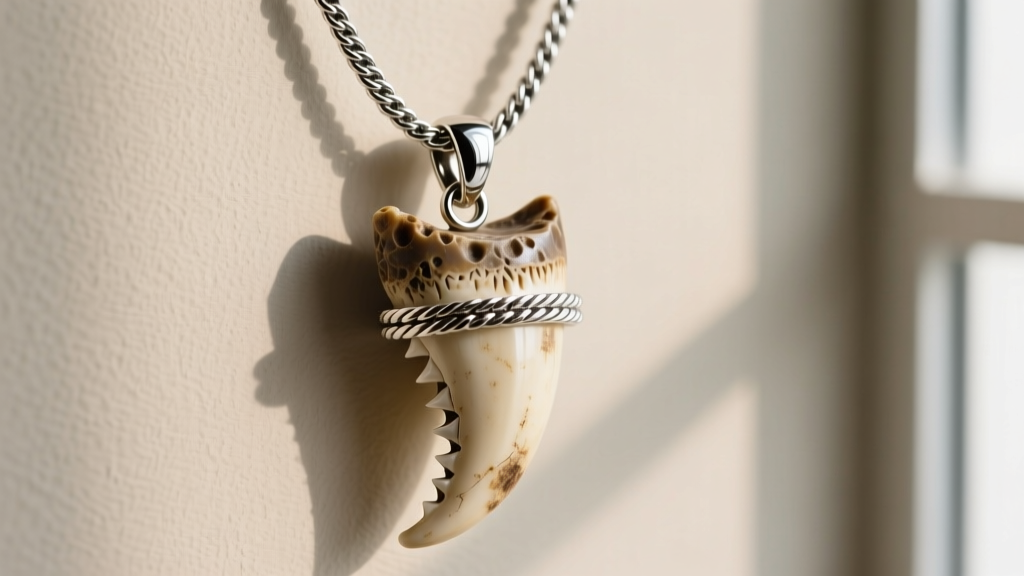
For any sand shark tooth necklace exceeding 20 grams, you must upgrade your chain hardware. Look for the following specifications:
- Rope or Figaro Chains (2.5mm to 3.5mm): The interlocking, twisted links of a rope chain provide immense tensile strength while maintaining a nautical aesthetic that complements the fossil.
- Braided Leather Cords (2mm to 3mm): A classic choice for surfer-style pendants. Ensure the leather is sealed and the end-caps are crimped with heavy-duty steel or sterling silver, rather than cheap base metals that corrode when exposed to sweat and saltwater.
- Jump Ring Integrity: The jump ring connecting the bail to the chain must be soldered closed or feature a locking mechanism. Standard split rings will easily be pried open by the weight of a swinging sand tiger tooth.
Identifying Fakes and Resin Casts
As demand for prehistoric jewelry has surged into 2026, so has the sophistication of counterfeit manufacturing. Unscrupulous vendors frequently use 3D-printed molds of genuine sand tiger teeth to cast polyurethane resin duplicates. To authenticate a piece, employ these non-destructive tests:
- The Thermal Test: Genuine fossilized enamel feels cool to the touch and takes several seconds to warm up against your skin. Resin casts will immediately absorb body heat and feel warm or plasticky.
- The UV Light Test: Under a 365nm ultraviolet flashlight, natural fossilized bone and dentine will often fluoresce with a dull, mottled green or yellow hue due to trace phosphates. Modern resins will either glow a uniform, blinding white or remain completely inert.
- Weight Discrepancy: Resin is significantly less dense than permineralized stone. A 2-inch resin tooth will feel suspiciously light compared to the heavy, satisfying heft of a genuine Moroccan or Cooper River specimen.
Pricing Tiers and Authentication Matrix
Understanding the market value prevents overpaying for commercial-grade specimens or falling for 'rare' marketing gimmicks. The table below outlines current pricing expectations based on origin, size, and setting quality.
| Specimen Grade | Origin | Size (Inches) | Setting Type | Estimated Price Range |
|---|---|---|---|---|
| Commercial / Craft | Morocco | 1.0 - 1.5 | Drilled / Glued Bail | $25 - $45 |
| Collector / A-Grade | Morocco | 1.5 - 2.2 | Wire-Wrapped / Bezel | $60 - $120 |
| Premium / Museum | Cooper River, SC | 1.5 - 2.5 | Custom Sterling Bezel | $150 - $350+ |
| Rare Pathological | Global | Varies | Custom Gold / Silver | $400 - $1,000+ |
Ethical Sourcing and Conservation Laws
When purchasing a sand shark tooth necklace, it is vital to distinguish between fossilized teeth and modern teeth. The harvesting and sale of modern shark parts are strictly regulated globally to protect dwindling populations. Organizations like the Shark Trust continuously advocate against the trade of modern shark derivatives. Fossilized teeth, being millions of years old, are exempt from CITES (Convention on International Trade in Endangered Species) restrictions and are entirely ethical to buy, sell, and wear. Always demand a certificate of authenticity or a written guarantee from the seller stating that the tooth is a genuine fossil and not sourced from modern, bycatch fisheries.
Care and Maintenance for Porous Enamel
Unlike polished gemstones, fossilized shark teeth require specialized care. The root structure (cementum) is highly porous and can absorb oils, lotions, and perfumes, leading to permanent dark staining or degradation over time.
- Never use ultrasonic cleaners. The high-frequency vibrations will shatter the microscopic crystalline structures within the fossilized root.
- Avoid chemical dips. Silver polishing liquids will seep into the tooth's pores and cause irreversible chemical burns to the enamel.
- Routine Cleaning: Use a soft-bristled makeup brush and mild, non-detergent soap to gently dust the serrations. Dry immediately with a microfiber cloth.
- Storage: Store the necklace flat in a padded box. Allowing a heavy sand tiger tooth to dangle freely in a jewelry box risks it swinging into other pieces, potentially chipping the fragile serrated edges of the crown.
By prioritizing non-invasive settings, verifying geological origins, and demanding structural chain integrity, you can secure a sand shark tooth necklace that is not only a striking piece of natural history but a durable, lifelong accessory.


