Step-by-Step Guide to Styling a Brown Gemstone Necklace
Learn how to select, layer, and care for a brown gemstone necklace. Expert tips on smoky quartz, tiger's eye, metals, and neckline pairing.

The Appeal of Earth-Toned Jewelry
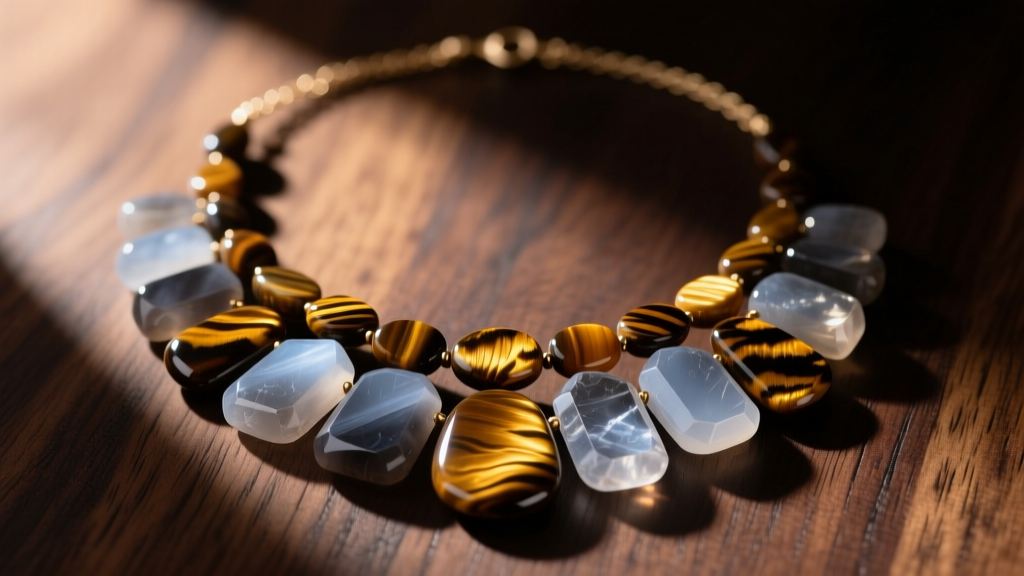
Earth-toned jewelry has transcended seasonal trends to become a staple in sophisticated capsule wardrobes. A well-chosen brown gemstone necklace offers unparalleled versatility, bridging the gap between rustic bohemian aesthetics and refined, modern elegance. Unlike stark white diamonds or vivid sapphires, brown gemstones—ranging from the golden bands of tiger's eye to the deep, smoky translucence of quartz—provide a warm, grounding focal point that complements nearly every skin undertone. However, styling these organic-hued stones requires a nuanced understanding of color theory, metallurgy, and gemological durability. This step-by-step guide will walk you through selecting, layering, and maintaining your brown gemstone jewelry with expert precision.
Step 1: Selecting the Right Brown Gemstone
Not all brown gemstones are created equal. Their mineral composition dictates not only their visual depth but also their structural integrity and appropriate use cases. Before purchasing, evaluate the Mohs hardness and cleavage properties of the stone to ensure it matches your lifestyle.
| Gemstone | Mohs Hardness | Structural Risk | Avg. Price Range |
|---|---|---|---|
| Smoky Quartz | 7.0 | Conchoidal fracture; avoid hard impacts | $15 - $60 per strand |
| Tiger's Eye | 7.0 | Fibrous structure; high risk in ultrasonic cleaners | $10 - $40 per strand |
| Bronzite | 5.5 - 6.5 | Prone to surface scratching; store separately | $20 - $50 per strand |
| Champagne Diamond | 10.0 | Extremely durable; safe for daily wear | $800 - $3,000+ per carat |
According to mineralogical data from Mindat.org, tiger's eye is a pseudomorph where quartz replaces crocidolite asbestos. This fibrous history gives it its signature chatoyancy (the cat's-eye effect) but also creates directional weaknesses. Conversely, smoky quartz derives its brown hue from natural or artificial irradiation of aluminum impurities, resulting in a more uniform, glass-like durability.
Step 2: Matching Metals to Warm Undertones
The metal setting acts as the frame for your brown gemstone necklace. Pairing the wrong metal can muddy the stone's natural warmth, while the right alloy will amplify its internal fire.
The 14k Rose Gold Standard
Rose gold is alloyed with copper, which imparts a pinkish-red warmth. A 14k rose gold chain (containing 58.5% pure gold and a higher copper ratio than 18k) provides a stunning, high-contrast backdrop for faceted smoky quartz. The copper tones pull out the subtle amber flashes hidden within the brown facets, creating a cohesive, monochromatic warmth that flatters olive and deep skin tones beautifully.
Oxidized Sterling Silver for Contrast
For a more rugged, vintage aesthetic, opt for oxidized 925 sterling silver. The intentional darkening of the silver's crevices creates a moody, antique frame that pairs exceptionally well with smooth, cabochon-cut tiger's eye or raw, unpolished bronzite beads. This combination is ideal for masculine or androgynous styling, leaning heavily into industrial and neo-Victorian design languages.
Step 3: The 3-Tier Layering Blueprint
Layering a brown gemstone necklace requires balancing visual weight and chain thickness. The most common mistake is using chains of identical thickness and length, which leads to tangling and visual clutter. Follow this 3-tier framework for a flawless cascade:
- Tier 1: The Choker (14-16 inches) Use a delicate 1.0mm to 1.5mm oxidized silver cable chain. Keep this layer minimal—perhaps a single, small 4mm bronzite bead or a tiny gold geometric charm. This anchors the look without competing with the main pendant.
- Tier 2: The Princess (18 inches) This is your hero piece. Feature a substantial brown gemstone pendant, such as a 15x20mm faceted smoky quartz teardrop, suspended on a slightly heavier 2.0mm box chain. The box chain's flat surfaces catch the light, complementing the faceted stone.
- Tier 3: The Matinee (22-24 inches) Finish with a textured strand. A 3.0mm braided leather cord featuring a rustic tiger's eye barrel bead or a raw champagne diamond slice adds organic texture and draws the eye downward, elongating the torso.
Expert Pro-Tip: Always mix chain styles. If your princess layer is a rigid box chain, ensure your choker is a fluid cable chain and your matinee is a rope or leather cord. This variance in texture prevents the chains from interlocking and knotting throughout the day.
Step 4: Neckline Pairing Matrix
A brown gemstone necklace must interact harmoniously with the geometry of your clothing. Here is how to calibrate your pendant drop and chain length based on specific necklines:
The V-Neck and Plunge
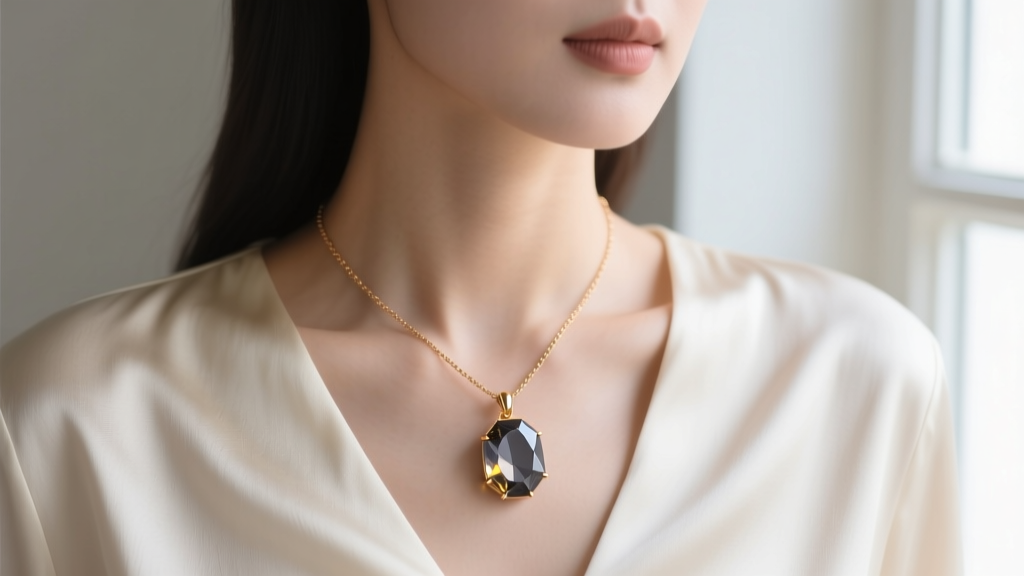
Mirror the geometry of the garment. A V-neck demands a Y-necklace or a pendant with a sharp, downward-pointing silhouette (like a marquise or teardrop smoky quartz). Keep the chain length at exactly 18 inches so the gemstone rests precisely one inch above the apex of the V-neck fabric.
The Crew Neck and Turtleneck
High, closed necklines require longer, heavier pieces to break up the expanse of fabric. Opt for a 24-inch matinee length featuring a large, horizontal geometric tiger's eye pendant. The horizontal lines of the stone will contrast beautifully with the vertical drape of a knit turtleneck, creating a balanced, sophisticated winter silhouette.
The Scoop and Boat Neck
These wide, horizontal necklines expose the collarbones. Utilize a shorter 16-inch choker featuring a cluster of small, round champagne diamonds or a curved, horizontal bar of polished bronzite. This follows the natural curve of the clavicle without dangling awkwardly into the empty space of the neckline.

Step 5: Maintenance and Cleaning Protocols
Brown gemstones often feature complex internal inclusions and treatments that dictate strict care protocols. Improper cleaning can permanently cloud a stone or fracture its internal matrix.
The Danger of Ultrasonic Cleaners
While ultrasonic cleaners are excellent for removing sebum and lotion buildup from plain gold chains, they are highly destructive to certain brown gemstones. The Gemological Institute of America (GIA) explicitly warns against using ultrasonic vibrations on stones with fibrous structures or liquid inclusions. The high-frequency vibrations can cause tiger's eye to split along its fibrous cleavage planes and can shatter smoky quartz if it contains internal stress fractures. Furthermore, many commercial 'chocolate diamonds' are fracture-filled with glass-like resins; ultrasonic heat and vibration will melt or dislodge these fillings, ruining the stone's clarity.
The Safe Cleaning Method
For all brown gemstone necklaces, rely on the manual, low-impact cleaning method:
- Prepare the Solution: Mix three drops of mild, phosphate-free dish soap (like Dawn) into a bowl of lukewarm—not hot—distilled water. Hot water can shock temperature-sensitive stones and weaken adhesive settings.
- Soak Briefly: Submerge the necklace for no more than 3 to 5 minutes. Prolonged soaking can degrade the silk or nylon thread used in beaded tiger's eye strands.
- Agitate Gently: Use an extra-soft baby toothbrush to gently sweep the back of the gemstone (the pavilion), where skin oils and cosmetics accumulate. Brush in small, circular motions, avoiding direct pressure on the prongs.
- Dry Thoroughly: Pat dry with a lint-free microfiber cloth. Ensure the clasp and jump rings are completely dry to prevent oxidation on sterling silver components.
By understanding the specific gemological traits and styling mechanics of earth-toned stones, you can elevate a simple brown gemstone necklace from a casual accessory to a masterclass in personal styling. Whether you are layering oxidized silver with raw bronzite for a weekend market, or showcasing a solitary champagne diamond in 18k rose gold for an evening gala, the key lies in intentional pairing and meticulous care.


