Vintage Caravelle Necklace Watch: 2026 Trend Analysis
Discover why the vintage Caravelle necklace watch is the ultimate 2026 style staple. Explore pricing, authentication, and layering tips.

The Resurgence of Analog Horological Jewelry
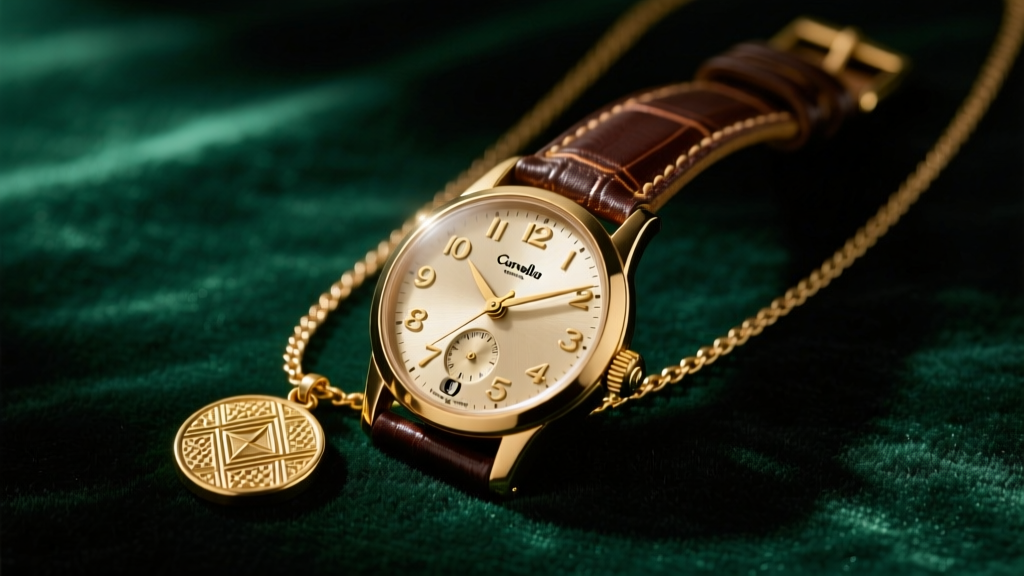
As we navigate the fashion landscape of 2026, the pendulum has swung decisively away from the ubiquitous smartwatch and back toward the tactile, mechanical romance of the past. At the forefront of this revival is a highly specific, fiercely hunted artifact: the vintage Caravelle necklace watch. Originally introduced as an accessible, fashion-forward offshoot by Bulova, these pendant timepieces have evolved from mid-century novelty items into cornerstone pieces for modern horological layering. But what exactly drives the contemporary obsession with these specific mid-century pendants, and how can you integrate them into a modern wardrobe without looking like you are wearing a costume? This comprehensive trend analysis breaks down the anatomy, market valuation, and styling frameworks necessary to master this unique accessory.
Anatomy of the Mid-Century Caravelle Pendant
To understand the appeal, one must first understand the construction. Caravelle was launched by Bulova in 1962 to compete in the rapidly expanding affordable fashion watch market. While Bulova focused on precision tuning forks and high-end mechanicals, Caravelle utilized reliable, cost-effective pin-lever (Roskopf) movements and early quartz calibers. When applied to necklace watches in the late 1960s and 1970s, this allowed for wild, experimental case designs that would have been prohibitively expensive in solid gold.
Materials and Case Construction
Most vintage Caravelle pendant watches from the 1970s feature cases made from 10k or 14k gold-filled brass, or Rolled Gold Plate (RGP). Unlike modern flash plating, which wears off in months, vintage gold-filled cases feature a thick mechanical bond of gold that can survive decades of friction against the skin. The cases often exhibit heavy texturing—bark finishes, Florentine engraving, or geometric Art Deco revivals—designed to catch the light when resting against the sternum.
The Acrylic Crystal and Dial
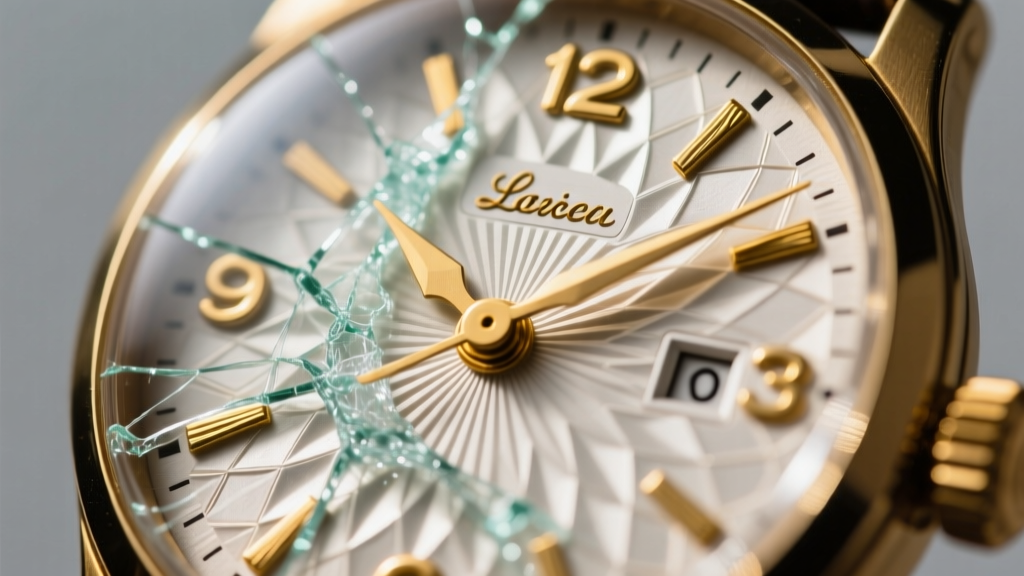
The dials are typically small, ranging from 14mm to 20mm in diameter, protected by heavily domed acrylic crystals. While acrylic scratches easily, it provides a warm, distortion-free view of the dial and can be polished to factory clarity using compounds like Polywatch. The indices are often applied gold batons or minimalist sunburst patterns, reflecting the sleek, space-age optimism of the era.
Decoding Bulova Date Codes & Authentication
When sourcing a vintage Caravelle necklace watch, authentication is paramount. Because these pieces were mass-produced, counterfeits are rare, but misattributions (e.g., selling a generic 1980s pendant as a 1960s Caravelle) are common. The most reliable authentication method relies on Bulova’s famous date code system, stamped directly onto the caseback.
- 1960s (The L Era): Codes begin with 'L' (e.g., L0 for 1960, L9 for 1969).
- 1970s (The M Era): Codes begin with 'M' (e.g., M0 for 1970, M5 for 1975).
- 1980s (The N Era): Codes begin with 'N' (e.g., N0 for 1980).
Additionally, the dial should explicitly state "Caravelle" and frequently includes "by Bulova" in smaller script. According to Bulova's official historical archives, the Caravelle line was instrumental in democratizing luxury aesthetics, making these date codes a vital tool for serious collectors.
2026 Market Valuation & Sourcing Guide
The market for vintage pendant watches has matured significantly. As noted by vintage experts at Hodinkee's vintage watch guides, buyers are increasingly prioritizing condition and originality over pure brand prestige. Below is the current 2026 pricing matrix for genuine Caravelle necklace watches in the secondary market.
| Condition Grade | Movement Status | Aesthetic Condition | Estimated 2026 Price Range |
|---|---|---|---|
| Mint / Serviced | Running accurately, recently serviced | Flawless gold-filled case, pristine dial, polished crystal | $140 - $280 |
| Good / Original | Running, but service history unknown | Minor wear on the bail, light micro-scratches on acrylic | $75 - $130 |
| Fair / As-Is | Not running, or running poorly | Visible brassing on high edges, cracked crystal | $35 - $65 |
Bail Wear: The Hidden Failure Point
When inspecting a piece, always examine the bail—the small loop at the top of the case where the chain attaches. Decades of friction from a steel or gold-filled chain can wear a hole straight through the soft brass core of a gold-filled bail. If the bail is compromised, the watch will eventually detach and be lost. Factor the cost of a jeweler soldering a new jump ring or bail ($40-$60) into your purchasing decision.
The Horological Layering Framework
Wearing a vintage Caravelle necklace watch in 2026 requires moving beyond the "librarian on a chain" stereotype. The goal is intentional, curated layering that treats the timepiece as a functional pendant. Here is the structural framework for styling these pieces.
1. The Rule of Weight and Gauge
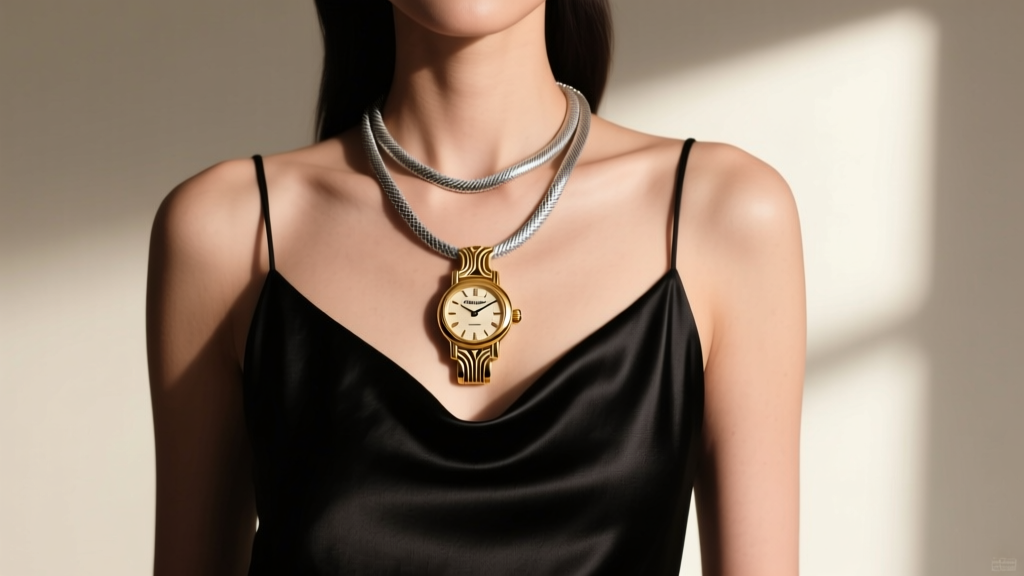
Caravelle pendants are visually heavy but physically light. To anchor them, avoid thick, chunky chains that overpower the delicate 18mm case. Instead, opt for a 1.5mm to 2.0mm snake chain or flat curb chain in a matching gold tone. The chain should be sized between 24 and 28 inches, allowing the watch to rest precisely at the lower sternum or solar plexus. This creates a striking vertical line that elongates the torso.
2. Neckline Pairings
The pendant watch demands specific architectural necklines to shine:
- The Deep V-Neck & Silk Slip Dress: The ultimate 2026 evening pairing. The bare skin provides a high-contrast canvas for the textured gold-filled case, while the deep V naturally guides the eye down to the dial.
- The Fine-Gauge Turtleneck: For autumn and winter, layering the watch over a black or charcoal merino wool turtleneck creates a sophisticated, intellectual aesthetic. The fabric prevents the cold metal from touching the skin and eliminates the risk of sweat degrading the gold-filled finish.
- The Structured Blazer: Worn over a crisp white poplin shirt with the top three buttons undone, the watch acts as a functional alternative to a traditional tie bar or lapel pin.
"The beauty of the Caravelle pendant lies in its duality. It is a precision instrument masquerading as a piece of mid-century costume jewelry. When you check the time by lifting the pendant, you are engaging with a mechanical ritual that a smartwatch simply cannot replicate."
Maintenance & Real-World Troubleshooting
Owning a vintage pin-lever or early quartz Caravelle requires a specific maintenance mindset. Pin-lever movements are robust but lack the jewel bearings found in higher-end mechanicals. Over time, the pivot holes in the brass plates can oval out, leading to friction and stoppage. If your vintage Caravelle necklace watch stops running, a standard clean, oil, and adjust (COA) service from a watchmaker will typically cost between $80 and $120. Given that the watch itself may only cost $100, many owners opt to treat them as "run until failure" pieces, or have the original mechanical movement swapped for a modern, battery-operated quartz module (such as a Miyota 2035) to ensure daily reliability without sacrificing the vintage exterior.
Final Thoughts on Sustainable Adornment
The rising popularity of the vintage Caravelle necklace watch is symptomatic of a broader 2026 consumer shift toward sustainable, story-rich adornment. By rescuing these mid-century timepieces from estate sale bins and integrating them into contemporary layering techniques, we are not just preserving horological history; we are redefining what functional jewelry can be. Whether you are drawn to the intricate bark-finish cases of the 1970s or the sleek, geometric lines of the late 1960s, the Caravelle pendant remains an unmatched masterclass in accessible vintage style.


