Seed Necklace Value Guide: Pricing & Quality in 2026
Discover the true value of your seed necklace. Our 2026 guide breaks down pricing, material grades, and quality markers for seed beads and pearls.

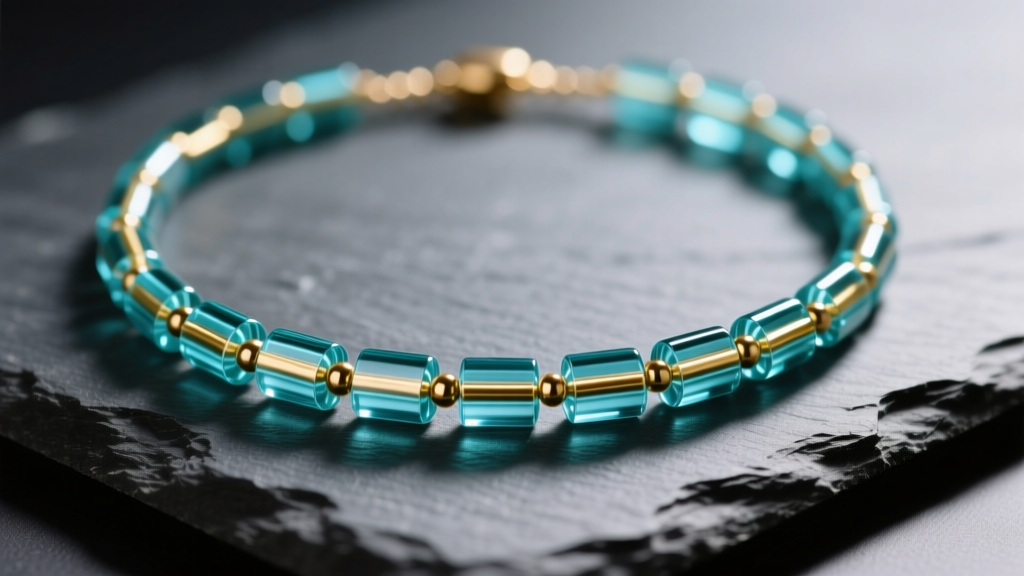
When evaluating a seed necklace, buyers often face a confusing market where a seemingly similar piece can range from $15 to $1,500. The term 'seed' broadly encompasses both tiny glass seed beads and microscopic seed pearls, yet the value assessment for each requires a completely different framework. In 2026, with global supply chain shifts affecting both Japanese glass manufacturing and freshwater pearl harvesting, understanding the true cost breakdown of these intricate accessories is essential for smart collectors and everyday buyers alike.
This comprehensive value assessment will dissect the anatomy of seed necklaces, exposing the hidden costs of stringing materials, labor-intensive weaving techniques, and raw material grades. Whether you are looking at a multi-strand glass bead collar or a delicate seed pearl choker, this guide provides the exact metrics you need to determine if the price tag matches the craftsmanship.
The Anatomy of a Seed Necklace: Glass vs. Pearl
The first step in any budget assessment is identifying the core material. Glass seed beads and seed pearls sit at opposite ends of the pricing spectrum, yet they are frequently marketed under the same 'seed necklace' umbrella.
- Glass Seed Beads: Ranging from 15/0 (microscopic, ~1.3mm) to 6/0 (large, ~4mm), these are measured in aught sizes. Value is dictated by manufacturing origin, uniformity, and finish durability.
- Seed Pearls: Defined by the Gemological Institute of America (GIA) as pearls under 3mm in diameter. Value here is dictated by luster, nacre thickness, and the exponential rarity of perfectly round specimens under 2mm.
If a retailer is selling a 'seed necklace' for under $40, it is almost certainly glass. If it is marketed as pearl but lacks a certificate of authenticity or specific millimeter sizing, you are likely paying a premium for mislabeled glass or heavily blemished, low-grade freshwater chips.
Material Grades & Price Tiers
Not all glass seed beads are created equal. The manufacturing origin dramatically impacts the drape, durability, and ultimate retail price of the finished necklace. Below is the 2026 market matrix for raw material costs, which directly influences retail valuation.
| Material Grade | Origin / Brand | Uniformity | Raw Cost (Approx.) | Best Use Case |
|---|---|---|---|---|
| Precision Cylinder | Japan (Miyuki Delica, Toho Treasures) | 99% Uniform | $8 - $15 per 5g | Intricate peyote/brick stitch, geometric collars |
| Standard Round | Japan (Miyuki Round, Toho Round) | 95% Uniform | $5 - $9 per 8g | Fringe, right-angle weave, flexible ropes |
| Traditional Round | Czech Republic (Preciosa) | 80% Uniform | $3 - $6 per hank | Multi-strand draping, vintage-style embroidery |
| Faceted / Charlotte | Czech Republic | Highly Irregular | $4 - $8 per hank | Light-catching accents, bohemian layering |
| Cultured Seed Pearl | China / Japan (Akoya Keshi) | Organic Variation | $50 - $300+ per strand | Heirloom chokers, bridal multi-strands |
Value Insight: If an artisan is charging $250 for a 20-inch tubular peyote stitch necklace, verify they are using Japanese cylinders. Using Czech glass for precision weaving results in structural warping and justifies a much lower price point (closer to $80-$120).
Stringing Materials: The Hidden Cost of Durability
The most common failure mode in budget seed necklaces is not the bead itself, but the internal stringing material. A necklace that stretches, sags, or snaps destroys the garment's value instantly.
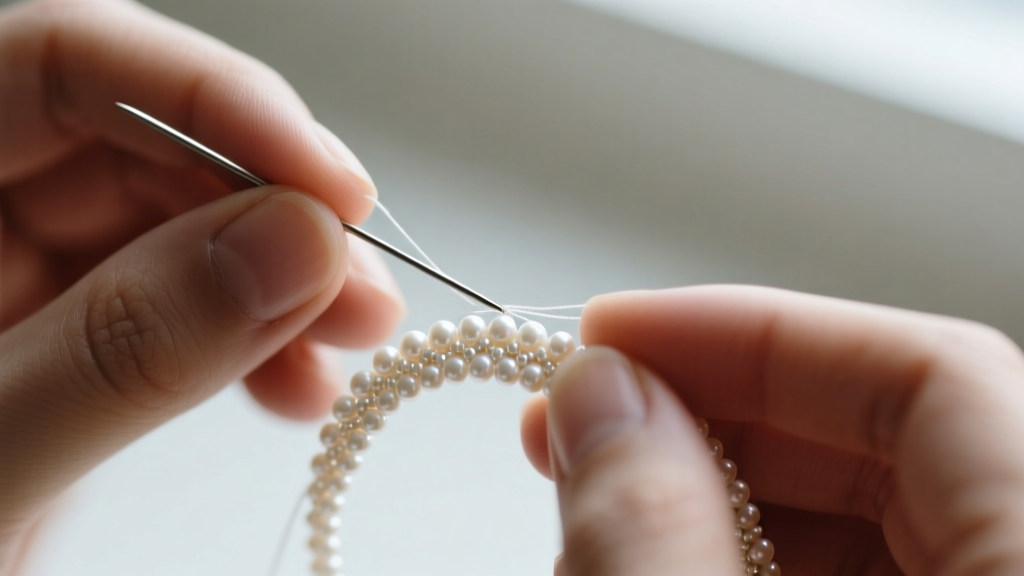
Thread vs. Wire: A Structural Breakdown
According to the Fire Mountain Gems Beading Encyclopedia, the choice of stringing medium must match the bead's hole size and the necklace's weave structure.
- Nylon (Nymo, Silamide): The traditional choice. It is cheap and drapes beautifully but is highly susceptible to stretching over time. A heavy multi-strand seed bead necklace strung on basic nylon will develop 'drape sag' within two years of regular wear. Value impact: Low.
- Thermally Bonded Polyethylene (WildFire, FireLine): The modern gold standard for woven seed bead jewelry. It is waterproof, zero-stretch, and abrasion-resistant. It costs roughly 4x more than nylon but guarantees the structural integrity of complex weaves like right-angle weave (RAW). Value impact: High.
- Beading Wire (Soft Flex): Used for simple strung seed necklaces (no weaving). A 49-strand micro wire is necessary for seed pearls to prevent kinking. Cheap 7-strand wire will kink and permanently deform under the weight of glass beads. Value impact: Medium.
When assessing a high-ticket seed necklace, always ask the maker what thread was used. If they cannot name a premium brand like WildFire or FireLine, the piece is not priced for longevity.
Evaluating Craftsmanship: Tension and Weave Structures
Labor is the most significant cost driver in artisan seed bead jewelry. Unlike cast metals, woven seed necklaces cannot be mass-produced by machines; every single bead is picked up and placed by hand using a beading needle. The weave structure dictates the labor multiplier.
The Labor Multiplier Matrix
- Simple Stringing (1x Multiplier): Beads are strung in a single line. A 16-inch necklace takes 30 minutes. Retail price should closely mirror material costs plus a modest hourly wage.
- Tubular Peyote Stitch (4x Multiplier): Creating a hollow, flexible rope requires picking up beads in staggered rows and stepping up. A 20-inch rope can take 15 to 25 hours of continuous, eye-straining labor. A fair artisan rate ($25/hr) means labor alone is $375-$625.
- Right-Angle Weave (RAW) (6x Multiplier): Requires four distinct thread passes per unit. Often used with seed pearls or crystal bicones. Extremely time-consuming and requires frequent thread reinforcement.
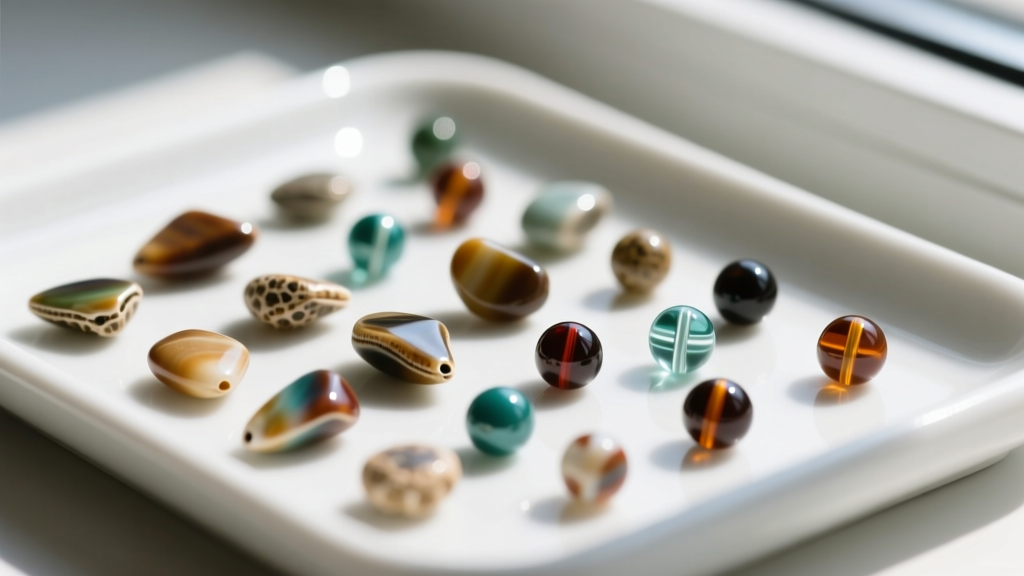
If you find a complex, multi-layered peyote stitch collar selling for $60 on a mass-market marketplace, it is a red flag. It indicates either exploitative overseas labor, the use of dangerously cheap, breakable thread, or a misrepresentation of the weave (e.g., a factory-molded plastic imitation). True artisan weaving commands a premium that reflects the sheer hours of microscopic handiwork.
Clasp Hardware: The Weak Link
A $400 seed pearl necklace is rendered worthless if it is secured by a $0.10 hollow lobster claw clasp that snaps under tension. When evaluating the budget and value of a seed necklace, inspect the findings.
The 2026 Clasp Standard: High-value seed necklaces (especially multi-strand or heavy glass collars) should utilize magnetic slide clasps, custom bead-embroidered toggle clasps, or solid sterling silver/gold barrel clasps. The clasp should account for at least 10-15% of the total material cost.
Furthermore, the transition from the beadwork to the clasp (the 'step-up' or 'transition row') must be reinforced with multiple thread passes. Fraying thread near the clasp ring is the number one indicator of a poorly finished, low-value piece.
Final Verdict: How to Spot a Fair Deal
To accurately assess the value of a seed necklace in today's market, apply this three-point checklist before purchasing:
- Verify the Origin: Demand to know if the beads are Japanese (Miyuki/Toho) for geometric weaves, or Czech for organic draping. Seed pearls must have clear millimeter sizing and luster grading.
- Interrogate the Thread: Ensure the use of zero-stretch, abrasion-resistant threads for woven pieces, or 49-strand micro wire for strung pieces.
- Calculate the Labor: Mentally estimate the hours required for the weave. If the price doesn't logically cover a fair hourly wage for that time, you are buying a mass-produced knockoff or compromised quality.
A seed necklace is a masterclass in miniature engineering. By looking past the surface sparkle and evaluating the structural realities of the beads, thread, and labor, you can confidently invest in pieces that offer genuine, lasting value.


