Expert Care and Cleaning Tips for a Dragon Bone Necklace
Learn expert care, cleaning, and maintenance tips for your dragon bone necklace. Protect organic and fossilized pendants from damage.

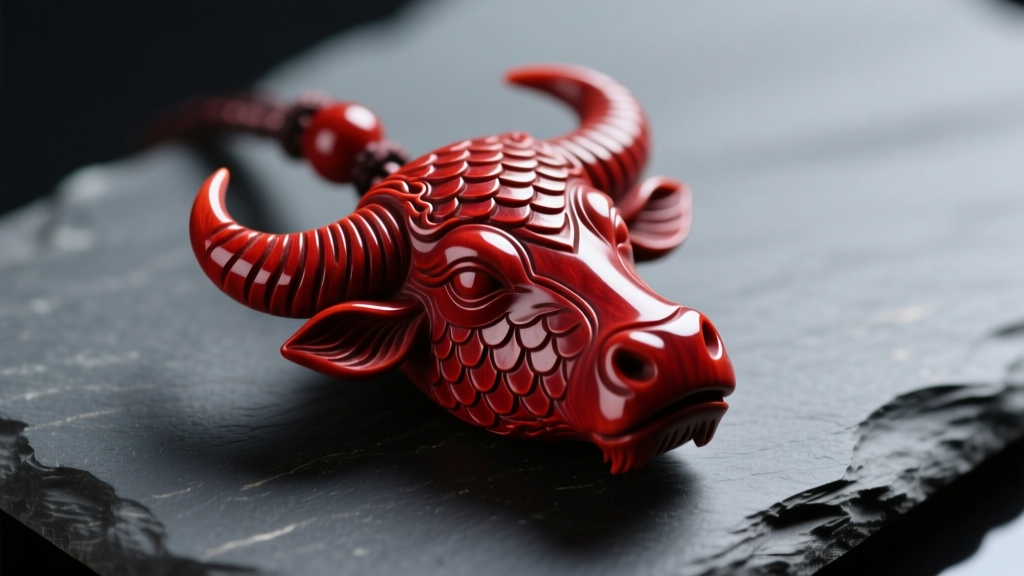
The dragon bone necklace is a striking staple in gothic, fantasy, and alternative jewelry collections. However, the term 'dragon bone' is an industry catch-all that typically refers to two vastly different materials: intricately carved organic bone (usually water buffalo or camel bone, dyed and textured to mimic mythical scales) and agatized fossilized dinosaur bone (often sold in metaphysical and high-end lapidary markets). Because these two materials sit on opposite ends of the Mohs hardness scale and possess entirely different chemical structures, applying a one-size-fits-all cleaning approach will result in catastrophic damage. According to the Gemological Institute of America (GIA), organic gems require highly specialized conservation techniques to prevent desiccation and structural collapse. This comprehensive guide provides exact, actionable protocols to clean, condition, and preserve your specific type of dragon bone necklace.
Decoding Your Dragon Bone Material
Before applying any moisture or polish, you must accurately identify your pendant's core material. The maintenance requirements for organic bone and fossilized bone are mutually exclusive.
Organic Carved Bone (The Fantasy Standard)
Most fantasy-themed dragon bone necklaces are carved from dense animal bone, such as water buffalo. This material is primarily composed of a calcium phosphate mineral matrix reinforced by a flexible collagen protein network. It is highly porous, relatively soft (Mohs 2.5), and deeply susceptible to environmental fluctuations. The 'dragon scale' textures are achieved through deep carving, and the dramatic colors (crimson, obsidian, emerald) are the result of penetrating aniline dyes.
Agatized Fossil Bone (The Lapidary Standard)
Metaphysical and high-end jewelry markets often refer to agatized dinosaur bone as 'dragon bone.' Over millions of years, groundwater rich in silica replaces the organic bone structure with quartz and agate. This material is essentially stone (Mohs 6.5 to 7), featuring stunning crystalline cell structures. While it lacks the porosity of organic bone, it is prone to fracturing along ancient stress lines if subjected to ultrasonic vibrations.
The Chemistry of Daily Wear and Environmental Hazards
Wearing a dragon bone necklace exposes it to a hostile microenvironment. Human sweat has a pH ranging from 4.5 to 7.0 and contains lactic acid, urea, and sodium chloride. When this acidic moisture settles into the deep crevices of a carved organic bone pendant, it slowly dissolves the calcium phosphate matrix. Over time, this results in a chalky white residue known as efflorescence, which permanently dulls the carved details.
Furthermore, organic bone is hygroscopic, meaning it absorbs and releases moisture from the air. Rapid transitions between high humidity (like a summer outdoor festival) and dry, air-conditioned interiors cause the collagen matrix to expand and contract. This uneven stress leads to micro-fracturing, warping, and eventually, the splitting of the pendant along its thinnest carved points.
Step-by-Step Cleaning Protocol for Organic Bone
If your dragon bone necklace is carved from organic material, water is your enemy. Submerging organic bone in water causes the collagen fibers to swell rapidly, leading to irreversible warping and the leaching of protective dyes.
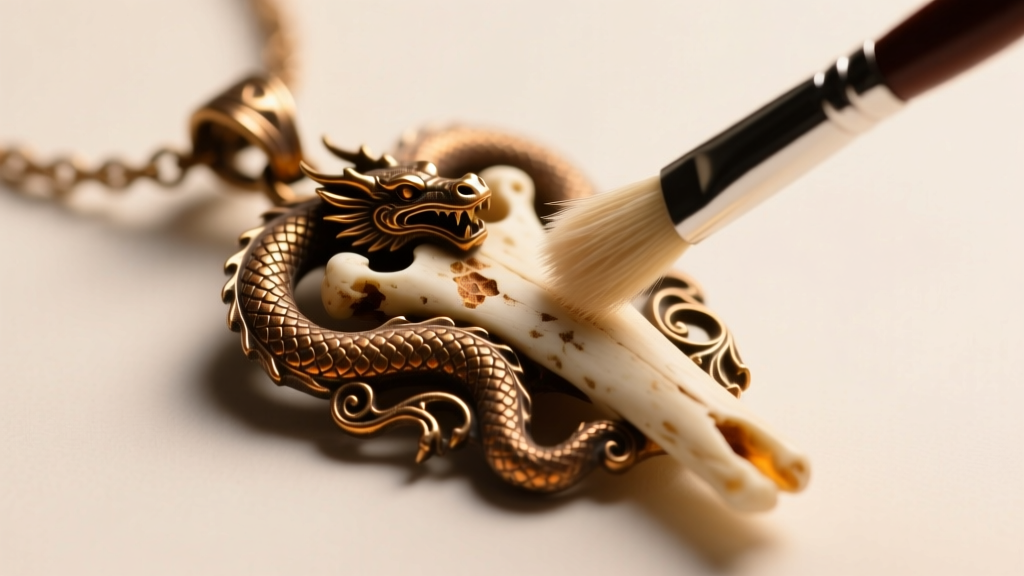
- Dry Dusting: Use a clean, dry makeup brush with soft natural bristles to gently sweep dust and dead skin cells out of the deep dragon scale crevices. Avoid stiff toothbrushes, which can leave micro-scratches on polished bone surfaces.
- Targeted Spot Cleaning: For stubborn sweat buildup, slightly dampen a microfiber cloth with distilled water (never tap water, as minerals will leave deposits). Wring it out until it is barely moist. Gently wipe the surface of the bone, avoiding the deep grooves where moisture can pool.
- Acid Neutralization: If you notice a chalky white buildup (acid etching from sweat), dip a cotton swab in a solution of 90% distilled water and 10% mild, phosphate-free dish soap. Roll the swab gently over the affected area, then immediately dry it with a separate, clean cotton swab.
Hydration and Sealing: Preventing Desiccation
Cleaning is only half the battle; organic bone must be 'fed' to maintain its structural integrity. As the natural oils from the bone deplete, the material becomes brittle. You must introduce a stable, inert lipid to replace them.
Organic bone is essentially a calcium phosphate sponge. When it dries out, the collagen matrix collapses, leading to irreversible micro-fracturing. You aren't just cleaning it; you are preserving its structural hydration.
Never use plant-based oils (like olive, coconut, or almond oil) on your dragon bone necklace. Plant oils contain unsaturated fats that undergo lipid oxidation, eventually turning rancid, yellowing the bone, and emitting a sour odor. Instead, use food-grade mineral oil or a specialized microcrystalline wax like Renaissance Wax, which is the standard for museum artifact conservation.
| Maintenance Product | Application Method | Frequency | Best For |
|---|---|---|---|
| Food-Grade Mineral Oil | Apply 1 drop to a cloth, rub in, let sit 1 hour, buff off excess. | Every 3-4 months | Deep hydration of unsealed, matte-finish bone. |
| Renaissance Wax | Apply a micro-thin layer with a soft cloth, let dry 10 mins, buff. | Every 6-12 months | Sealing dyed bone, protecting against sweat and UV light. |
| Jojoba Oil | Apply sparingly; it is a liquid wax ester, not a triglyceride. | Every 4-5 months | Quick touch-ups for bone that is frequently worn. |
Caring for Agatized Fossil 'Dragon Bone'
If your necklace features agatized fossil bone, your primary concern is not hydration, but fracture prevention. Because fossilized bone is essentially quartz, it is highly resistant to sweat, acids, and water. You can safely wash a fossil bone pendant with warm water and mild dish soap.
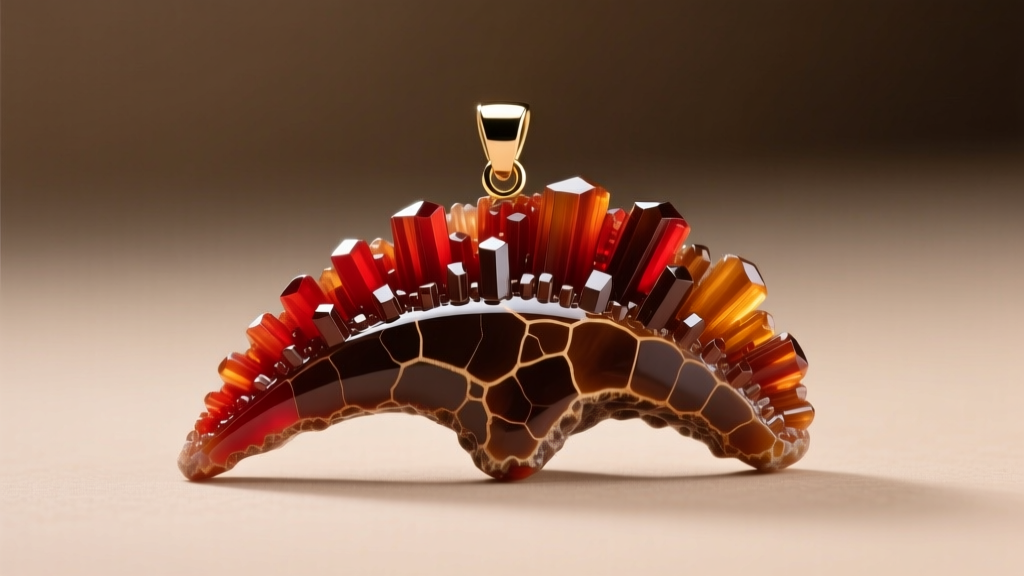
However, you must never place fossil bone in an ultrasonic jewelry cleaner. The high-frequency acoustic cavitation bubbles generated by ultrasonic machines will aggressively exploit microscopic fault lines in the agate structure, causing the pendant to shatter internally. Additionally, avoid steam cleaners, as sudden thermal shock can crack the silica matrix. According to guidelines from the Jewelers of America, porous or fractured gemstones and organic artifacts should only ever be cleaned by hand to preserve their structural integrity.
Proper Storage Techniques
How you store your dragon bone necklace when it is not being worn dictates its lifespan. Never store organic bone in airtight plastic bags or PVC-lined jewelry boxes. Plastic traps ambient moisture, creating a microclimate that encourages mold growth and the degradation of aniline dyes.
- Breathable Enclosures: Store the necklace in an unbleached cotton pouch or a tarnish-proof flannel bag that allows for slight air exchange.
- Humidity Buffering: Place a small silica gel desiccant packet in the drawer or box where the necklace is stored to maintain a stable relative humidity of around 45-55%. Ensure the silica packet does not directly touch the bone, as it can draw moisture out of the material too aggressively.
- UV Protection: Keep the necklace out of direct sunlight. UV radiation will rapidly photobleach the dyes used in fantasy dragon bone carvings, turning vibrant crimsons and deep purples into washed-out pinks and grays.
Troubleshooting Common Issues
Even with meticulous care, organic dragon bone necklaces can develop specific issues over time. Here is how to troubleshoot them without causing further damage:
The Pendant Develops an Odor
Organic bone can absorb environmental odors (smoke, perfume, cooking oils). Do not use perfume or chemical deodorizers to mask the smell. Instead, place the necklace in a sealed glass jar alongside an open box of baking soda or activated charcoal for 48 hours. The carbon will absorb the trapped volatile organic compounds (VOCs) without introducing moisture.
Micro-Fractures Appear in the Carving
If you notice a hairline crack forming along a dragon scale ridge, halt all cleaning immediately. The structural integrity is compromised. You can stabilize the crack by wicking a tiny amount of cyanoacrylate (jewelry-grade super glue) into the fissure using a toothpick, but for high-value pieces, consult a professional lapidary or conservator for acrylic resin stabilization.
Dye Transfer onto Skin or Clothing
If your dragon bone necklace bleeds dye onto your skin, the aniline dyes were not properly sealed at the factory. Wipe the pendant down with a dry cloth to remove loose surface dye, then apply a heavy coat of Renaissance Wax. The microcrystalline wax will lock the remaining dye into the bone's pores and create a friction-resistant barrier against your skin.


