How to Shoot Pearl Necklace Porn: A Macro Photography Guide
Learn how to capture drool-worthy macro pearl necklace porn. Master lighting, f-stops, and luster grading to photograph Akoya and South Sea pearls.

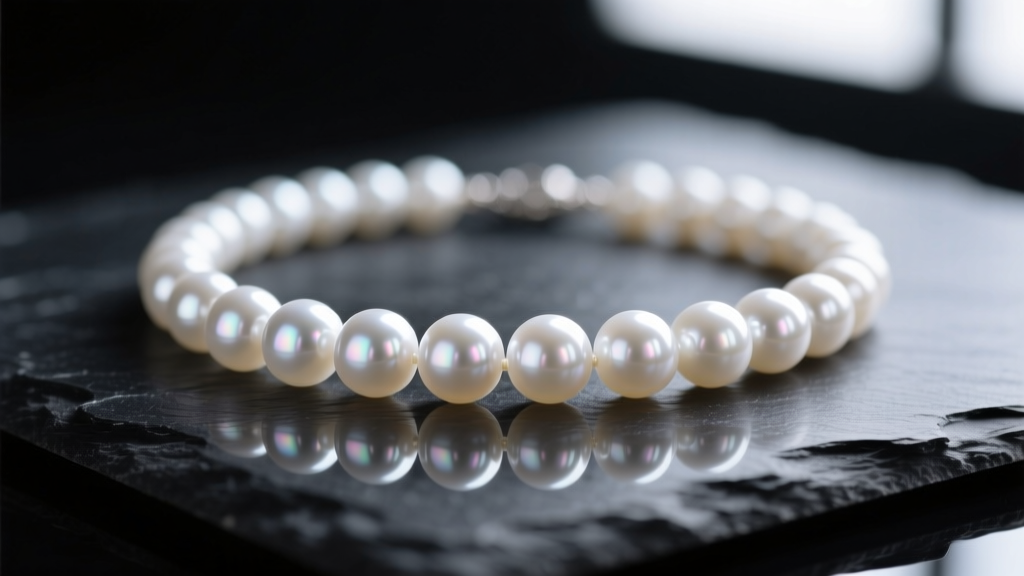
In the high-end jewelry community, the term 'jewelry porn' refers to hyper-detailed, visually intoxicating macro photography that makes collectors and enthusiasts swoon. When applied to pearls, capturing true 'pearl necklace porn' requires much more than a quick smartphone snapshot. It demands a deep understanding of nacre optics, precise lighting control, and specialized macro gear. Whether you are photographing a vintage Mikimoto strand or a modern, baroque Tahitian piece, the goal is to translate the three-dimensional depth, orient, and luster of the pearls into a two-dimensional image that stops scrollers in their tracks.
This 2026 guide breaks down the exact technical steps, gear requirements, and lighting setups needed to shoot breathtaking pearl necklace macro photography that highlights every nuance of the gem's surface.
Defining the Aesthetic: What Makes a Pearl Photo 'Drool-Worthy'?
To shoot compelling imagery, you must first understand what the human eye finds captivating about pearls. According to the Gemological Institute of America (GIA), the primary value factors for pearls are luster, surface quality, shape, color, and nacre thickness. In macro photography, luster and orient are your primary subjects.
- Luster: The sharpness and intensity of light reflecting off the surface. High-luster pearls (like top-tier Akoyas) act almost like convex mirrors.
- Orient: The iridescent play of colors (often seen as pink, green, or silver overtones) that appears to shift just beneath the nacre surface, particularly in Tahitian and Freshwater pearls.
- Nacre Texture: The microscopic crystalline structure of aragonite platelets that give the pearl its unique glow.
A successful macro shot isolates these elements, using high contrast and shallow depth-of-field transitions to emphasize the spherical geometry and the 'glow from within' that separates fine jewelry from costume pieces.
The Gear Matrix: Lenses, Sensors, and F-Stops
Shooting a pearl necklace requires capturing a wide field of view for the full strand, while simultaneously offering 1:1 or even 2:1 macro capabilities to showcase individual pearl blemishes and clasp mechanics. With the 2026 generation of 60MP+ mirrorless sensors, diffraction limits are more forgiving, but choosing the right focal length remains critical.
| Lens Type | Focal Length | Ideal Aperture | Best Use Case |
|---|---|---|---|
| Standard Macro | 60mm - 65mm | f/5.6 - f/8 | Clasp details, single pearl hero shots (requires very close working distance, risks casting shadows). |
| Telephoto Macro | 90mm - 105mm | f/8 - f/11 | The gold standard for pearl strands. Provides enough working distance to position lighting modifiers without blocking the lens. |
| Ultra-Macro | 100mm - 130mm (1:1) | f/11 - f/16 | Extreme close-ups of the nacre's aragonite platelets and drill hole edges. Often requires focus stacking. |
For the ultimate pearl necklace setup, a 100mm f/2.8 Macro lens (such as the Sony FE 90mm f/2.8 Macro G OSS or the Canon RF 100mm f/2.8L) is essential. These lenses allow you to compress the background and isolate the curve of the necklace while maintaining a working distance of about 6 to 10 inches from the front element to the pearls.
Step-by-Step: Lighting the Nacre and Orient
Pearls are essentially thousands of layers of translucent calcium carbonate. If you blast them with direct, hard flash, you will blow out the highlights, resulting in flat, chalky white orbs with zero depth. To capture the orient, you need diffused directional light combined with negative fill.
Step 1: The Diffusion Tent Method
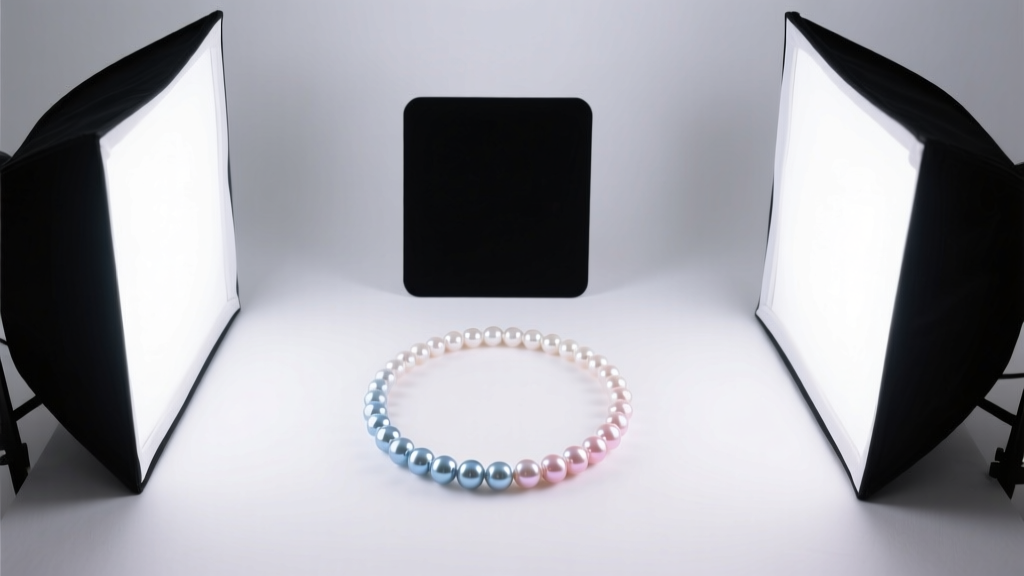
Place the pearl necklace inside a high-quality, seamless white photography tent or use a large curved white acrylic sweep. This creates a continuous, soft gradient of light that wraps around the spherical pearls. Use two continuous 5500K daylight LED panels (like the Godox SL60W or Aputure Amaran) positioned at 45-degree angles on the left and right.
Step 2: Introducing Negative Fill
This is the secret to 'jewelry porn.' Pure white reflections on a pearl are boring; the eye craves contrast. Take a piece of stiff black foam core and place it just out of frame, directly beneath or to the side of the pearls. This black card will reflect a sharp, dark gradient onto the lower hemisphere of the pearls, instantly giving them 3D volume and making the bright highlights pop.
Step 3: The Snoot for the Orient
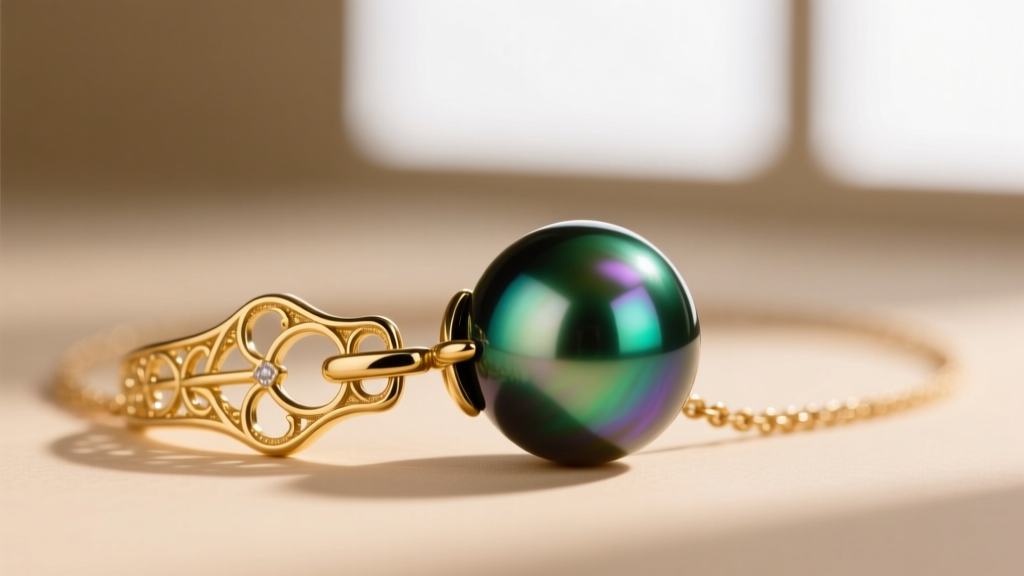
To bring out the iridescent overtones (the 'orient') of a Tahitian or South Sea pearl, use a small grid spot or snoot attached to a third, low-powered LED. Position it at a steep, raking angle (about 15 degrees from the surface). This grazing light penetrates the top layers of nacre and scatters, illuminating the pinks, greens, and silvers hidden within the pearl's structure.
Prepping the Pearls: Cleaning and Staging
Macro photography is entirely unforgiving. A single fingerprint, a microscopic piece of lint, or a smudge of skin oil will be magnified 10x and ruin the illusion of luxury.
- Cleaning: Never use chemical jewelry dips or ultrasonic cleaners on pearls; they will strip the nacre and dissolve the silk thread. Instead, use a brand-new, ultra-soft optical microfiber cloth to gently buff each pearl individually.
- Handling: Wear powder-free nitrile gloves while staging the necklace. The natural oils from your fingertips will leave smudges that are incredibly difficult to clone out in post-production.
- Staging: Use museum wax (microcrystalline wax) to secure the clasp and specific pearls to the surface. To create the perfect 'S-curve' or draped look, use hidden armature wire beneath the silk thread to bend the necklace into elegant, sweeping shapes without kinking the delicate silk.
Focus Stacking: The 2026 Standard for Macro Depth
When shooting at 1:1 magnification with a 100mm macro lens, your depth of field at f/8 might be less than 2 millimeters. This means if you focus on the front of a 12mm South Sea pearl, the back of the pearl and the adjacent pearls will be completely blurred. While bokeh is beautiful, high-end jewelry buyers want to see the entire strand in sharp focus.
Enter focus stacking. Modern 2026 mirrorless cameras feature in-camera focus bracketing, automatically shifting the focal plane by microscopic increments across 50 to 100 frames. Once captured, these RAW files are imported into software like Helicon Focus or Adobe Photoshop, which aligns the sharpest pixels from each frame into a single, infinitely deep composite image. This technique is non-negotiable for professional pearl necklace photography, ensuring that every millimeter of the nacre, from the clasp's diamond pavé to the final pearl, is tack-sharp.
Post-Processing: Enhancing Without Faking
The final step in creating drool-worthy imagery is color grading and contrast enhancement. According to experts at B&H Photo Video, macro post-processing should enhance reality, not fabricate it.
- White Balance: Pearls are highly susceptible to color casts. Use a neutral gray card in your first frame to set a custom white balance. Akoya pearls often have subtle rose overtones; ensure your white balance doesn't accidentally neutralize this natural beauty.
- Clarity and Dehaze: Apply localized masks to the pearls and gently increase the 'Clarity' or 'Texture' slider. This enhances the micro-contrast of the aragonite crystals, making the luster appear sharper and more mirror-like.
- Dust Removal: Use the healing brush tool at 400% zoom. Even in a clean room, dust will settle on the silk knots and the nacre. Meticulously removing these distractions elevates the image from a simple product photo to a piece of visual art.
Mastering the art of pearl necklace macro photography transforms a simple accessory into a mesmerizing subject. By controlling your light, respecting the nacre, and utilizing modern focus-stacking techniques, you can consistently produce the kind of hyper-detailed, visually stunning 'jewelry porn' that commands attention and drives serious collector engagement.


