Shih Tzu Necklace Value Guide: Metals, Pricing & Quality
Discover the true value of a Shih Tzu necklace. Compare pricing tiers, metal grades, and chain durability to find the best breed-specific jewelry.

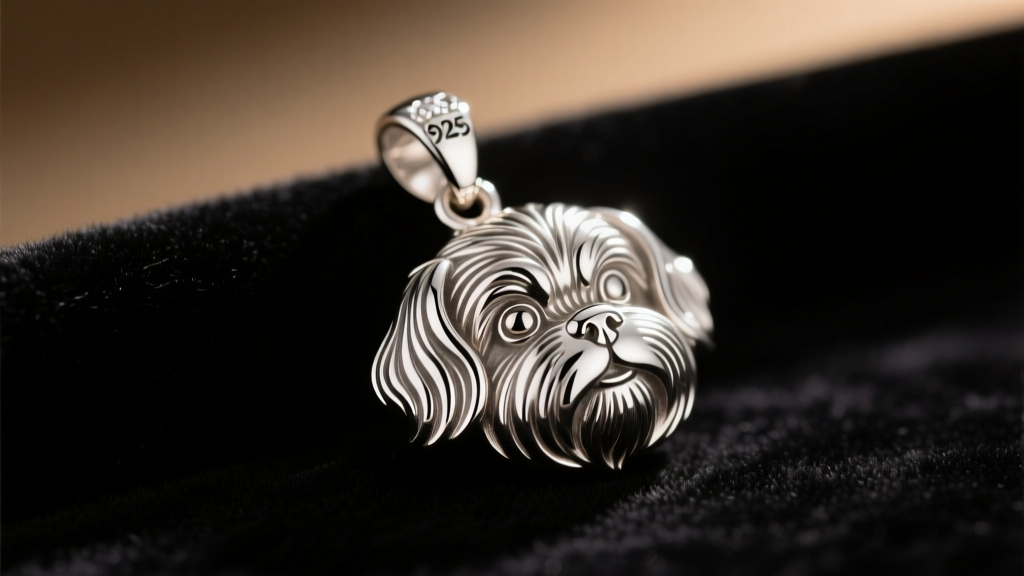
The market for breed-specific jewelry has exploded, but not all pieces are created equal. When shopping for a Shih Tzu necklace, buyers are often caught between ultra-cheap mass-produced charms and exorbitantly priced custom pieces. As a jewelry evaluator, I see countless dog owners overpay for base metals disguised as artisan work, or conversely, miss out on incredible value in the mid-tier sterling silver market. This guide breaks down the exact metallurgy, pricing matrices, and structural integrity you need to assess the true value of a Shih Tzu pendant in 2026.
The True Cost of Breed-Specific Jewelry: What Are You Paying For?
Breed-specific pendants require specialized molding. Unlike generic bone or paw-print charms, a Shih Tzu pendant demands intricate detailing to capture the breed's signature domed skull, drop ears, and flowing double coat. This complexity means the initial CAD (Computer-Aided Design) and mold-making costs are higher. However, once a mold is created, the cost to cast it drops significantly. The price disparity you see online—from $12 to $450—is rarely about the design itself; it is almost entirely dictated by the metal alloy, casting method, and finishing techniques.
Material Breakdown: Assessing Value Across Metal Tiers
Base Metals & Plated Options (The $15–$40 Tier)
If you see a Shih Tzu necklace priced under $40, you are looking at base metals. These are typically zinc alloys (often marketed as 'Tibetan Silver' or 'antique bronze') or brass, flash-plated with a microscopic layer of gold or silver.
- The Reality: The plating is usually less than 0.5 microns thick. With daily wear, the friction against your skin and exposure to sweat will wear through the plating in 3 to 6 months, exposing the reactive brass or zinc underneath.
- Value Verdict: Poor long-term value. Furthermore, many cheap alloys contain nickel, a common contact allergen. According to the FTC Jewelry Guides, metal compositions must be accurately disclosed, yet many overseas dropshippers bypass these regulations entirely.
Solid Sterling Silver (The $50–$120 Sweet Spot)
Sterling silver (92.5% pure silver, 7.5% copper) is the undisputed champion of value for daily-wear dog breed jewelry. A high-quality 925 silver Shih Tzu pendant should weigh between 3 to 6 grams, translating to a raw material and labor cost that justifies a $60 to $100 retail price.
Look for pieces that are rhodium-plated. Rhodium is a platinum-group metal that prevents the copper in sterling silver from oxidizing (tarnishing) and gives the piece a bright, white-gold-like finish. A well-cast silver piece will feature deep relief carving, allowing the oxidized recesses to contrast beautifully with the polished high points of the dog's fur.
Solid Gold & Custom Enamel (The $150–$500+ Investment)
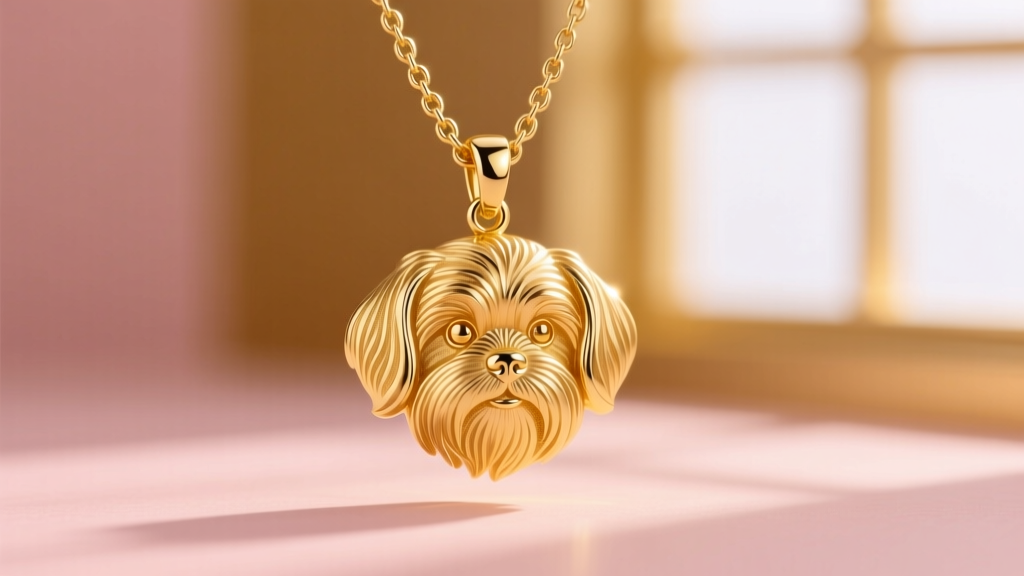
For heirloom-quality pieces, solid 10k or 14k gold is the standard. Because gold is priced by weight and spot market value, a 4-gram 14k gold Shih Tzu charm will inherently carry a premium. The value here lies in the hand-engraving. Instead of a smooth, cast finish, artisan jewelers will use burins to hand-carve the texture of the Shih Tzu's coat, creating light-catching facets that cast molding simply cannot replicate. For a deep dive into gold purity and hallmarking standards, the Gemological Institute of America (GIA) provides excellent baseline education on karatage and durability.
Enamel Techniques: Cold Resin vs. Vitreous Glass
Many Shih Tzu necklaces feature color to capture the breed's classic gold-and-white or brindle coat patterns. How that color is applied drastically affects the necklace's value.
| Enamel Type | Composition | Durability | Value Assessment |
|---|---|---|---|
| Cold Enamel | Epoxy resin | Low (scratches, yellows over time) | Acceptable only in budget ($20-$50) tiers |
| Vitreous Enamel | Crushed glass fused at 1400°F+ | Extremely High (will not fade or scratch) | Expected in luxury ($200+) custom pieces |
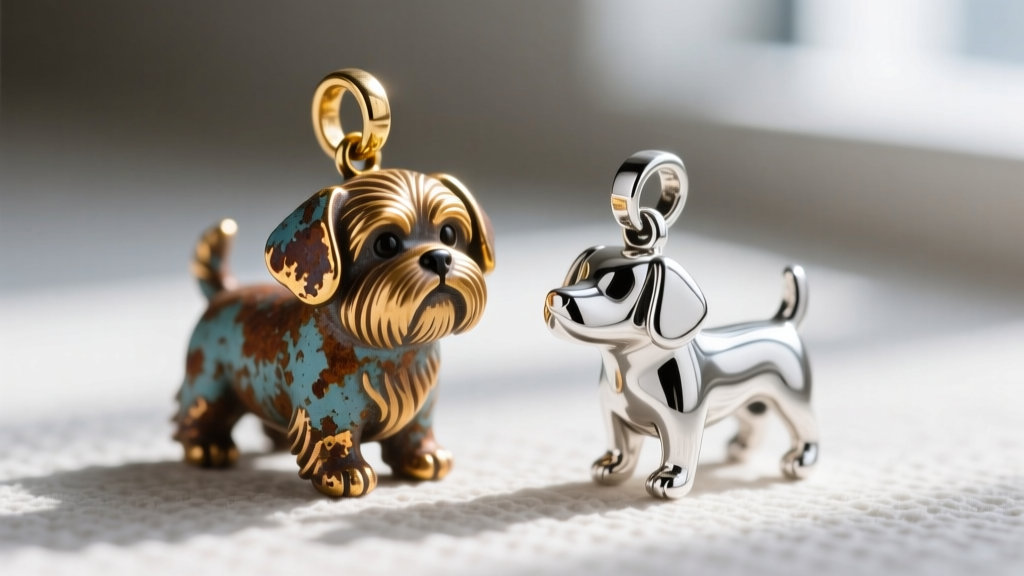
If a seller is charging over $150 for a Shih Tzu pendant with 'enamel' details, you must verify if it is vitreous. Cold enamel (resin) will eventually chip if dropped on a hard tile floor, whereas vitreous glass enamel is essentially permanent, though it can crack under extreme blunt force.
Pricing Matrix: Shih Tzu Necklace Value Comparison
Use this matrix to benchmark quotes from custom jewelers or online boutiques.
| Tier | Material | Expected Price Range | Chain Included? | Best For |
|---|---|---|---|---|
| Budget | Zinc Alloy / Brass | $15 – $35 | Yes (weak base metal) | Occasional wear, gifts |
| Mid-Tier | 925 Sterling Silver | $55 – $110 | Sometimes | Daily wear, excellent value |
| Premium | 10k / 14k Solid Gold | $180 – $450 | Rarely | Heirlooms, allergy-prone skin |
| Bespoke | Gold + Vitreous Enamel | $500 – $1,200+ | No | Exact coat-color matching |
Chain Mechanics: Gauge Sizes and Clasp Durability
A common trap in the $50–$100 tier is a beautiful sterling silver Shih Tzu pendant paired with a structurally deficient chain. The pendant might weigh 5 grams, but if it's hung on a 0.6mm hollow cable chain, the link will snap under the dynamic load of you bending over or the pendant catching on a sweater.
The Ideal Chain Specifications
- Gauge (Thickness): For a standard 3g–6g Shih Tzu pendant, you need a chain thickness of at least 1.0mm to 1.2mm. Anything under 0.9mm is a liability.
- Link Style: Box chains and Rolo chains offer superior tensile strength compared to delicate cable or snake chains. Snake chains are particularly prone to kinking and snapping if bent at a sharp angle.
- The Clasp: Discard spring-ring clasps. They are notoriously difficult to operate and fail when the internal tension spring degrades. Insist on a lobster clasp with a properly soldered jump ring.
How to Spot Overpriced Dropshipped Fakes
The internet is flooded with 'handcrafted' Shih Tzu necklaces priced at $85 that are actually $4 mass-produced brass items shipped directly from overseas warehouses. Here is your E-E-A-T checklist for verifying authenticity:
- The Reverse Image Search: Take the product photo and run it through a reverse image search. If the exact same Shih Tzu pendant appears on AliExpress, Temu, or Amazon under five different 'boutique' brand names, it is a mass-produced cast.
- The Sprue Mark: Look closely at the photos of the pendant's back or the top of the bail (the loop the chain goes through). Mass-produced castings often leave a tiny, unpolished bump called a sprue mark where the metal was injected into the mold. Artisan pieces are filed and polished flush.
- The Bail Size: Cheap pendants often feature a tiny, stamped sheet-metal bail that barely fits a 0.8mm chain. Quality cast pendants feature a sturdy, rounded, soldered bail capable of accommodating thicker, safer chains.
Final Verdict: Where Should You Allocate Your Budget?
If you want a Shih Tzu necklace for everyday wear that won't turn your skin green or fall apart, the $60 to $90 range for solid 925 sterling silver is the undisputed value sweet spot. Ensure the piece is rhodium-plated, paired with a 1.2mm box chain, and secured with a lobster clasp. Avoid the temptation of ultra-cheap base metals, and unless you are commissioning a bespoke heirloom with vitreous enamel, be highly skeptical of gold-plated items masquerading as luxury investments. By understanding the metallurgy and mechanics behind the charm, you can confidently invest in a piece that honors your companion without overpaying for marketing illusions.


