The Ultimate Shrimp Necklace Buying Guide: Styles & Metals
Discover how to choose the perfect shrimp necklace. Explore metal grades, enamel types, chain pairings, and pricing in our expert crustacean jewelry guide.

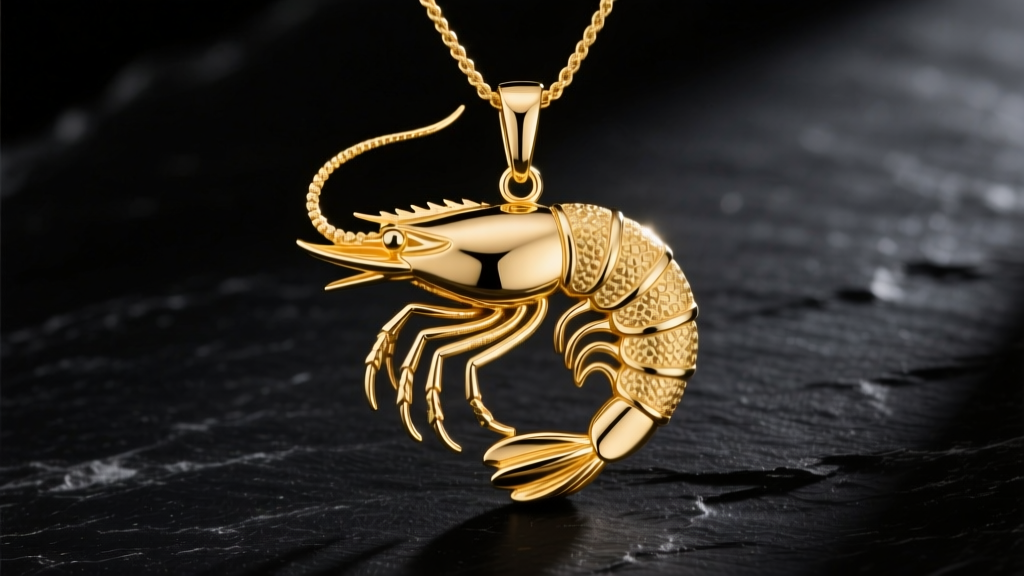
The Resurgence of Surrealist & Quirky Crustacean Jewelry
When searching for the perfect shrimp necklace, buyers in 2026 are navigating a fascinating intersection of high-end surrealist art jewelry and playful, retro-inspired novelty pieces. The crustacean motif has evolved far beyond simple beach souvenirs. Today, it represents a bold statement in the maximalist jewelry movement, drawing inspiration from mid-century surrealism and the quirky, glass-beaded aesthetics popularized by London-based indie brands. Whether you are investing in a meticulously cast 14k solid gold shrimp pendant or layering a vibrant enamel and glass bead piece, understanding the metallurgy, structural integrity, and craftsmanship is essential.
As a senior jewelry appraiser and style analyst, I have evaluated hundreds of animal-motif pendants. The shrimp, with its intricate segmented tail, delicate antennae, and curved carapace, presents unique manufacturing challenges. This comprehensive buying guide will dissect exactly what to look for regarding metal grades, enamel applications, chain pairings, and common structural failure modes, ensuring your investment withstands daily wear.
Decoding Materials: Solid Gold vs. Vermeil vs. Enamel
The longevity and price of your shrimp necklace are entirely dictated by its base material and surface treatments. The intricate anatomy of a shrimp requires precise casting or hand-carving, which behaves differently across various metals.
| Material Grade | Composition & Standards | Average Price Range | Durability & Best Use Case |
|---|---|---|---|
| 14k Solid Gold | 58.5% pure gold, alloyed with copper/silver/zinc. | $800 - $2,500+ | Exceptional. Best for heirloom surrealist pieces with delicate wire antennae. |
| 18k Gold Vermeil | 925 Sterling Silver base plated with at least 2.5 microns of 18k gold. | $150 - $400 | Moderate. Ideal for occasional wear; prone to friction wear on the underbelly. |
| Sterling Silver + Vitreous Enamel | 925 Silver fused with glass powder at 1400°F. | $250 - $600 | High. The glass enamel resists scratching but can shatter upon hard impact. |
| Gold Plated Brass + Cold Enamel | Brass base with epoxy resin color fills. | $30 - $90 | Low. Resin yellows over time; brass may cause skin oxidation. |
According to the Federal Trade Commission (FTC) Jewelry Guides, a piece can only be legally marketed as 'vermeil' if it features a sterling silver base coated with gold of at least 10k fineness, with a minimum thickness of 2.5 microns. Many fast-fashion brands sell 'gold-plated' shrimp pendants that only feature 0.5 microns of gold over brass, which will wear away to reveal the base metal within months of friction against the collarbone.
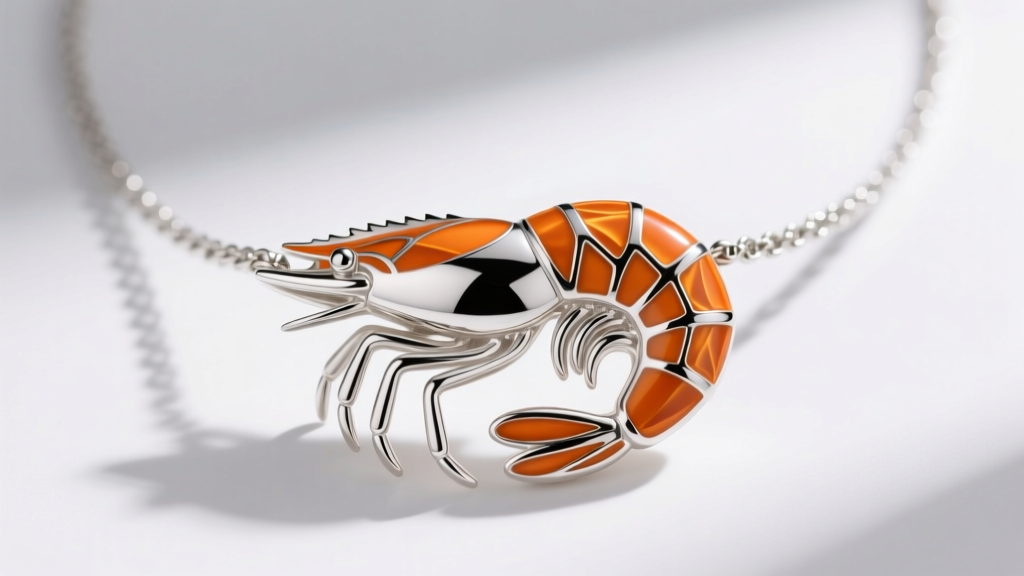
Chain Selection: Pairing the Right Link with Your Shrimp
A common mistake buyers make is pairing a heavy, three-dimensional cast shrimp pendant with an inadequate chain. The curved nature of a shrimp pendant creates an off-center center of gravity, which puts uneven tensile stress on the chain links and the bail (the loop connecting the pendant to the chain).
- Box Chains (1.2mm - 1.5mm): The optimal choice for solid gold or heavy silver shrimp pendants. The interlocking square links distribute weight evenly and resist kinking, which is crucial when the pendant swings.
- Rope Chains (1.5mm - 2.0mm): Excellent for a nautical, textured aesthetic that complements the crustacean theme. Ensure the rope chain is solid or semi-solid; hollow rope chains will easily crush if the heavy pendant swings and hits a hard surface.
- Cable Chains (0.8mm - 1.0mm): Reserve these strictly for lightweight, flat, enamel-filled shrimp charms. A 5-gram 3D gold shrimp will eventually snap an 18-gauge (1.0mm) or 20-gauge (0.8mm) cable chain at the clasp jump ring due to metal fatigue.
Common Failure Modes & How to Avoid Them
Animal motifs are notoriously difficult to engineer for daily wear. Based on my bench repair experience, here are the specific failure modes associated with shrimp necklaces and how to spot poorly constructed pieces before purchasing.
1. Antennae Snagging and Metal Fatigue
Surrealist gold shrimp pendants often feature long, sweeping wire antennae. If these are cast in high-karat gold (like 18k or 22k), the metal is too soft and will bend permanently when snagged on knitwear. What to look for: Seek out 14k gold or platinum alloys for the antennae, as the higher zinc or copper content increases the tensile strength. Alternatively, look for designs where the antennae are swept back and fused to the carapace at multiple points, creating a closed-loop structure rather than a fragile cantilever.
2. Enamel Micro-Fractures and Delamination
When buying a vibrant, colored shrimp necklace, you must determine if the color is achieved through vitreous enamel or cold enamel (epoxy). Vitreous enamel is essentially glass fused to metal at over 1400°F. It will never fade or yellow, but it can chip if dropped on tile. Cold enamel is a resin that is painted on and air-dried. What to look for: Inspect the edges of the enamel under a jeweler's loupe. If you see slight shrinking, bubbling, or a meniscus pulling away from the metal walls, it is cold enamel. As the Gemological Institute of America (GIA) notes in their metal and treatment overviews, proper alloy preparation is vital for enamel adhesion; poorly cleaned silver bases will cause even high-quality vitreous enamel to delaminate over time.
3. Lobster Clasp Spring Failure
Because shrimp pendants are often worn as statement pieces, they are frequently taken on and off. The tiny internal spring inside a standard 12mm lobster clasp is the first point of failure. Upgrade your purchase to a 15mm or 18mm solid cast lobster clasp, or opt for a custom toggle clasp which relies on gravity and tension rather than a micro-spring.
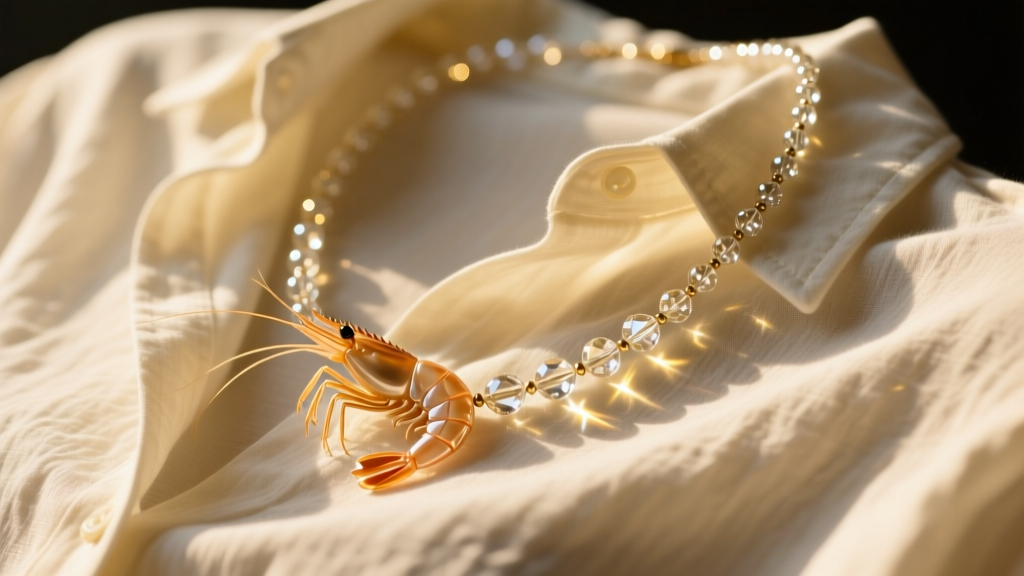
The 'Shrimp' Brand Aesthetic: Glass Beads & Retro Charms
Beyond literal crustacean pendants, the term 'shrimp necklace' is heavily associated with the playful, retro-inspired aesthetic championed by the cult-favorite jewelry brand Shrimp. This style relies on hand-strung glass beads, freshwater pearls, and quirky enamel charms.
If you are buying into this specific aesthetic, the E-E-A-T criteria shift from metallurgy to stringing integrity and glass quality. Authentic glass beads should feel cool to the touch and possess a high refractive index. Avoid acrylic or plastic beads, which will scratch easily and develop a cloudy, matte patina from skin oils and lotions within a single summer season. Ensure the stringing material is a high-tensile nylon thread or flexible beading wire (like Soft Flex) rather than standard cotton thread, which degrades when exposed to humidity and perfume.
Sizing & Proportion: Getting the Drop Length Right
The visual impact of a shrimp necklace relies heavily on the drop length and the scale of the pendant relative to the wearer's neckline.
Pro Tip: A 3D surrealist shrimp pendant should ideally sit at the 'Princess' length (18 inches), resting perfectly on the collarbone. This allows the curved tail to lay flat against the skin rather than flipping upside down, which often happens on longer 24-inch chains where the pendant swings freely.
For flat, enamel-filled shrimp charms or glass-beaded variations, a 'Choker' length (15 to 16 inches) creates a highly stylized, contemporary look that pairs beautifully with deep V-necks or off-the-shoulder summer garments. Always verify the exact millimeter dimensions of the pendant in the product description; a 'dainty' shrimp is typically 12mm to 15mm, while a 'statement' piece will exceed 35mm and require a much heavier chain gauge to support it.
Final Verdict: Investment vs. Novelty
When purchasing a shrimp necklace, clearly define your intent. If you are seeking a daily-wear, heirloom-quality piece that captures the surrealist jewelry trend of 2026, invest in a 14k solid gold casting with reinforced antennae and a sturdy 1.5mm box chain. Expect to pay upwards of $1,000, but you are purchasing a durable work of art. Conversely, if you are embracing the quirky, colorful, retro-pop aesthetic for seasonal layering, a sterling silver and vitreous enamel piece, or a high-quality glass bead strand in the $100 to $250 range, offers exceptional stylistic value without the anxiety of wearing fine jewelry to the beach. By scrutinizing the micron thickness, enamel firing methods, and chain gauges, you ensure your crustacean companion remains a staple in your jewelry box for years to come.


