Heart Choker Necklace Silver: Technical Guide to Alloys & Fit
Discover the technical details of a heart choker necklace silver. Expert insights on sterling alloys, chain weaves, clasp mechanics, and precise fit.

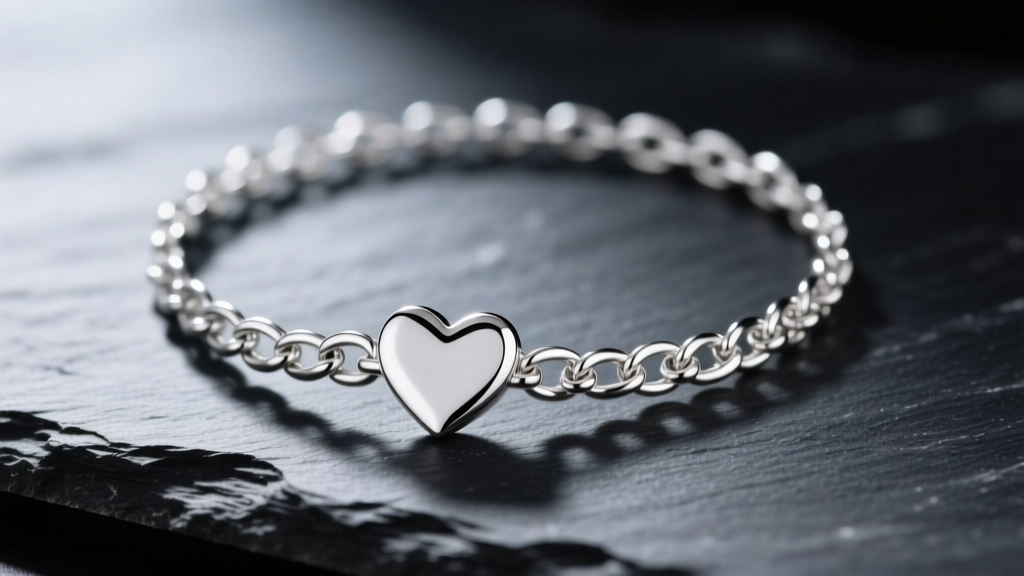
Introduction to Choker Metallurgy and Mechanics
When evaluating a heart choker necklace silver, consumers and jewelers alike must look beyond the immediate aesthetic appeal of the pendant. A choker operates under unique mechanical stresses compared to longer opera or matinee chains. Sitting tightly against the base of the neck, a choker is subjected to constant lateral torsion, friction against the clavicle, and exposure to higher concentrations of skin oils and perspiration. Therefore, selecting the right piece requires a deep understanding of silver metallurgy, chain weave tensile strength, and pendant center-of-gravity engineering.
In this technical deep dive, we deconstruct the anatomy of premium silver chokers. From the elemental composition of modern tarnish-resistant alloys to the precise ergonomics of a 15-inch collar fit, this guide provides the actionable data you need to make an expert-grade purchase or design decision.
Silver Metallurgy: Beyond Basic Sterling
The foundation of any high-quality silver necklace lies in its alloy composition. Pure silver (999 fine) is too malleable for daily-wear chokers; it will stretch, warp, and lose its structural integrity under the tension of a tight neck fit. To solve this, copper is traditionally added, but this introduces new chemical vulnerabilities.
925 Sterling vs. Argentium Silver
Traditional 925 sterling silver consists of 92.5% silver and 7.5% copper. While this provides excellent tensile strength, the copper content is highly reactive. When exposed to sulfur compounds in the air and the acidic pH of human sweat, the copper oxidizes, resulting in the black tarnish (copper sulfide) that plagues silver jewelry. Furthermore, during the manufacturing and soldering process, sterling silver develops "firescale," a deep copper oxide layer that requires aggressive polishing to remove.
Modern metallurgy offers a superior alternative: Argentium Silver. According to The Silver Institute, Argentium alloys replace a portion of the copper with germanium. This substitution fundamentally alters the metal's surface chemistry. When exposed to oxygen, the germanium migrates to the surface and forms a transparent, protective layer of germanium dioxide, which virtually eliminates firescale and drastically slows tarnish formation.
| Alloy Grade | Composition | Tarnish Resistance | Tensile Strength | Best Use Case |
|---|---|---|---|---|
| 925 Sterling | 92.5% Ag, 7.5% Cu | Moderate (Prone to Copper Oxide) | High | Heavy pendants, budget-conscious designs |
| Argentium 935 | 93.5% Ag, Cu, Ge | Exceptional (Germanium Layer) | Very High | Premium chokers, laser-welded components |
| Argentium 960 | 96.0% Ag, Cu, Ge | Exceptional | Moderate (Softer) | Intricate filigree, low-tension pieces |
Chain Weave Mechanics for Choker Tension
The chain is the load-bearing chassis of the necklace. Because a choker lacks the pendulum swing of a longer chain, it relies on structural rigidity and flexibility to maintain comfort. Not all weaves are engineered for this specific application.
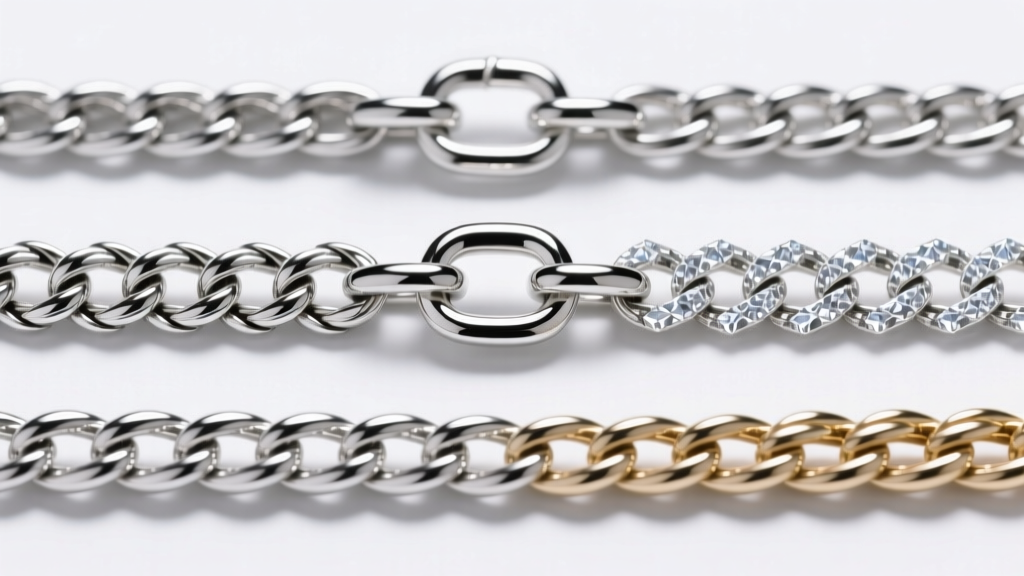
Why Standard Cables and Herringbones Fail
Standard cable chains, while ubiquitous, feature simple oval links that can easily twist and catch on skin or clothing when worn tightly. Herringbone chains offer a beautiful, flat, liquid-like drape that looks stunning in the display case. However, herringbone is notoriously fragile regarding lateral bending. Once a herringbone chain kinks—a common occurrence when taking a choker on and off over the head—the structural memory of the metal is permanently compromised, leading to irreversible weak points.
Optimal Weaves: Box, Wheat, and Rope
- Box Chain (Venetian): Composed of square, interlocking links, the box chain offers exceptional tensile strength and lays perfectly flat against the collarbone. Its geometric structure resists kinking and handles the friction of a choker fit without pulling hair.
- Wheat Chain (Spiga): Featuring braided, teardrop-shaped links, wheat chains provide a high degree of flexibility and a soft, textile-like drape. They are highly resistant to snapping but must be machine-polished to a high mirror finish to prevent catching fine neck hairs.
- Rope Chain: Created by twisting oval links into a spiral, rope chains boast the highest tensile strength per millimeter of thickness. A 1.5mm silver rope chain can withstand significantly more pull-force than a 1.5mm cable chain, making it ideal for supporting heavier solid-cast heart pendants.
Pendant Engineering: The Heart Motif
The heart shape is inherently asymmetrical in its mass distribution, particularly when featuring off-center gemstone settings or beveled edges. Engineering a heart pendant for a choker requires precise attention to the bail and the center of gravity.
Bail Design and Center of Gravity
The bail is the loop that connects the pendant to the chain. If the bail is soldered even a millimeter off the pendant's true vertical center of mass, the heart will perpetually tilt to one side, failing to lay flat against the sternum. Expert jewelers use CAD (Computer-Aided Design) software to calculate the exact volumetric mass of the 3D model before casting, ensuring the bail is positioned at the precise equilibrium point.
Furthermore, the internal diameter of the bail must be calibrated to the specific chain weave. A bail designed for a 1.2mm box chain will slide awkwardly and cause excess wear if paired with a 2.0mm rope chain. The clearance should be exactly 0.3mm to 0.5mm larger than the chain's thickness to allow for fluid movement without abrasive friction.
Soldering and Prong Integrity
For heart pendants featuring gemstones (such as a central birthstone or diamond), the method of attaching the bail is critical. Traditional torch soldering exposes the entire piece to high heat, which can fracture heat-sensitive stones or melt delicate prongs. Modern manufacturing utilizes laser welding, a technique highlighted by the Gemological Institute of America (GIA) for its precision. Laser welding focuses a concentrated beam of light to melt a microscopic dot of silver, attaching the bail without raising the ambient temperature of the pendant, thereby preserving the integrity of the stone settings and the polish of the metal.
Ergonomics and Precision Sizing
A true choker sits above the collarbone, wrapping snugly around the base of the neck. Misjudging the sizing by even half an inch can transform a comfortable accessory into a restrictive garment. Understanding the anatomical spectrum of choker lengths is vital for both custom jewelers and buyers.
The 14 to 16-Inch Choker Spectrum
- 14-Inch (Collar): Sits tightly against the upper neck, similar to a Victorian velvet ribbon. This length is best suited for slender necks and requires a lightweight chain, as a heavy silver chain will cause discomfort and skin indentation over time.
- 15-Inch (Tight Choker): The most universally flattering choker length. It rests precisely at the hollow of the throat, allowing the heart pendant to sit in the suprasternal notch. This length accommodates average neck circumferences while maintaining the signature choker silhouette.
- 16-Inch (Standard Base): Often categorized as a standard necklace, a 16-inch chain functions as a relaxed choker on larger neck sizes. It sits just above the collarbone, allowing for a slightly heavier pendant without the restrictive feeling of a 14-inch collar.
Expert Tip: Always specify a 2-inch extender chain with a spring ring clasp. This allows the wearer to micro-adjust the fit based on daily fluctuations in swelling, clothing collars, and personal comfort preferences.
Clasp Hardware and Failure Points
The clasp is the most common point of mechanical failure on any necklace. On a choker, the clasp is subjected to repetitive stress every time the piece is fastened and unfastened, often blindly behind the neck.
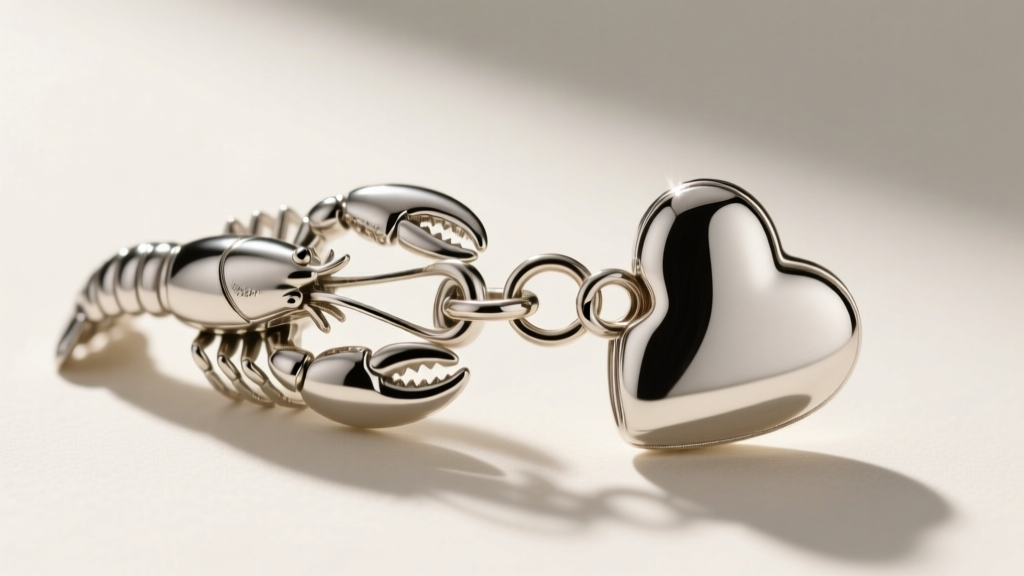
Lobster vs. Spring Ring Mechanics
Spring ring clasps are economical and lightweight, but their internal tension springs are notoriously weak and prone to fatiguing over time. For a premium silver choker, a lobster claw clasp is the mandatory standard. However, not all lobster clasps are created equal.
Cast Lobster Clasps: Often found on mass-produced jewelry, these are formed by pouring molten silver into a mold. They tend to be bulky, have a softer trigger pull, and can warp if caught on fabric.
Stamped Lobster Clasps: Manufactured by stamping a flat sheet of hardened silver into shape and folding it. Stamped clasps offer superior spring tension, a crisper trigger mechanism, and a lower profile that sits flush against the skin. When inspecting a high-end heart choker necklace silver, verify that the jump ring connecting the clasp to the chain is fully soldered shut, rather than merely butted together, to prevent the chain from slipping through the gap under tension.
Maintenance and Ultrasonic Risks
While Argentium silver resists tarnish, traditional 925 sterling requires maintenance. However, the cleaning method must be chosen carefully. Ultrasonic cleaners use high-frequency sound waves to cavitate microscopic bubbles in a cleaning solution. While excellent for removing trapped skin oils from a box chain, ultrasonic vibrations can loosen the tension in prong settings on a heart pendant, potentially dislodging gemstones. Furthermore, if the heart pendant features an intentionally oxidized (blackened) background to highlight engraved details, an ultrasonic cleaner or aggressive chemical dip will strip the oxidation, ruining the contrast. For mixed-finish silver chokers, manual polishing with a micro-abrasive jeweler's cloth remains the safest, most controlled maintenance protocol.


