Silver Heart Choker Necklace: 2026 Trend & Style Guide
Discover how to style the silver heart choker necklace in 2026. Explore material grades, layering techniques, and trend forecasts for this iconic piece.

The 2026 Evolution: From Y2K Nostalgia to Quiet Grunge
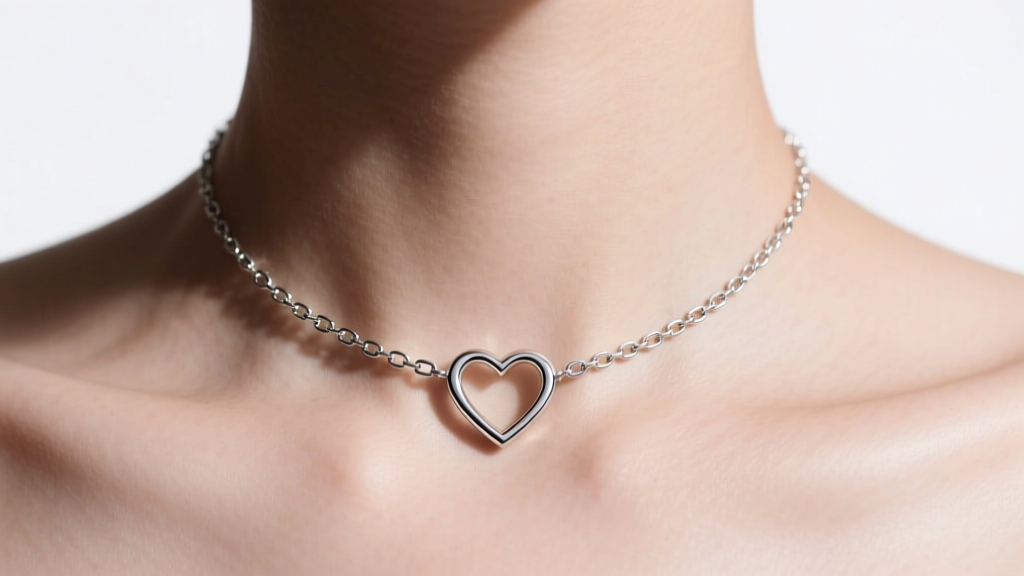
The silver heart choker necklace has completed a fascinating metamorphosis. While the early 2020s saw this piece defined by ultra-thin, fragile chains and polished, bubble-gum Y2K aesthetics, the 2026 landscape has shifted dramatically toward what trend forecasters call "quiet grunge" and "heavy romanticism." Today's iterations favor substantial hardware, matte or oxidized finishes, and anatomical or asymmetrical heart silhouettes. This is no longer just a nostalgic callback; it is a foundational anchor piece in contemporary jewelry layering. Understanding the metallurgy, chain architecture, and precise styling metrics of this accessory is essential for both collectors and everyday wearers looking to invest in pieces that offer longevity and sartorial relevance.
Metallurgy and Material Grades: Beyond Basic Sterling
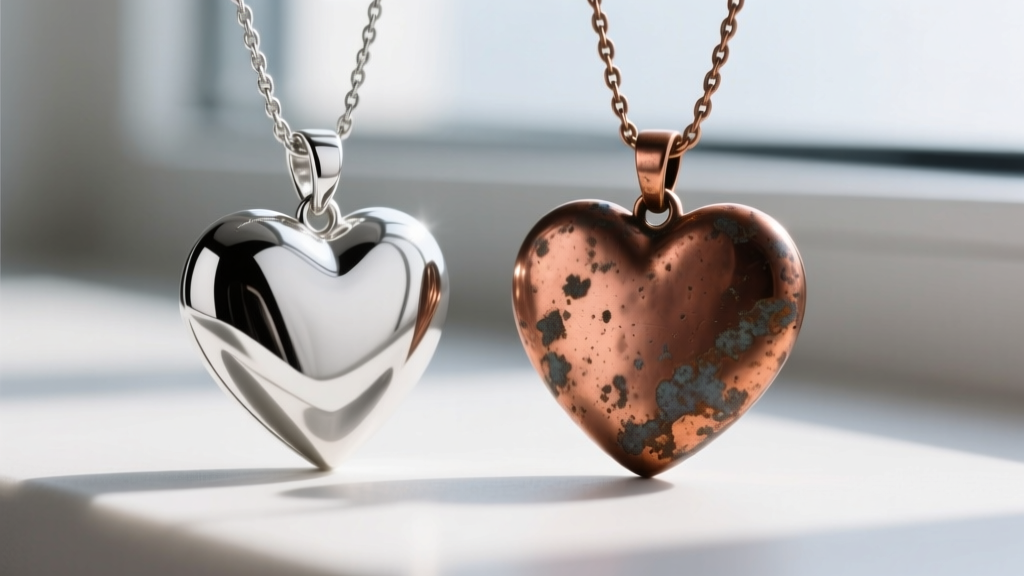
When shopping for a silver heart choker, the specific alloy composition dictates the piece's lifespan, tarnish resistance, and skin compatibility. Standard 925 sterling silver consists of 92.5% pure silver and 7.5% copper. While the copper adds necessary tensile strength, it is highly reactive to atmospheric sulfur, leading to the formation of silver sulfide—the black tarnish that plagues neglected jewelry boxes.
For the 2026 market, discerning buyers are pivoting toward Argentium silver. Alloyed with germanium instead of traditional copper, Argentium (typically 93.5% or 96% silver) forms a transparent, self-healing germanium oxide layer on the surface. This makes it up to seven times more tarnish-resistant than standard sterling and gives it a naturally brighter, whiter luster that rivals platinum. According to the Gemological Institute of America (GIA), understanding these alloy distinctions is critical for consumers who want low-maintenance fine jewelry.
| Material Grade | Composition | Tarnish Resistance | Avg. Price Premium | Best For |
|---|---|---|---|---|
| 925 Sterling | 92.5% Ag, 7.5% Cu | Low (Requires polishing) | Baseline | Classic, high-shine polished hearts |
| Argentium 935 | 93.5% Ag, Germanium | High (Self-healing oxide) | +20% to 35% | Everyday wear, matte/brushed finishes |
| Silver-Plated Brass | Brass core, thin Ag coat | Very Low (Prone to flaking) | -60% (Budget) | Temporary trend pieces, costume styling |
Chain Architecture and Gauge Specifications
The pendant is only half the equation; the chain architecture of a silver heart choker necklace defines its structural integrity and visual weight. In 2026, the delicate 0.8mm cable chains of the past decade have been largely replaced by more robust, architectural links. The ideal choker length sits precisely at 14 inches, resting snugly against the clavicle. At this tension, chain durability is paramount.
Popular Chain Profiles for 2026
- Paperclip Chains (2.0mm - 3.5mm gauge): Featuring elongated, rectangular links, these chains offer a modern, industrial edge that contrasts beautifully with a soft, rounded heart pendant. A 2.5mm gauge provides enough weight to drape elegantly without kinking.
- Figaro Chains (2.0mm gauge): With a pattern of three short links followed by one long link, the Figaro offers a vintage, masculine energy that plays perfectly into the current gender-fluid styling trends.
- Box Chains (1.5mm gauge): Composed of square, interlocking links, box chains are incredibly strong and resist tangling, making them the superior choice for heavier, solid-cast heart pendants.
Equally important is the clasp mechanics. Avoid traditional spring-ring clasps on any chain thicker than 1.5mm; the internal springs fail quickly under the tension of a snug 14-inch choker. Opt for a forged lobster claw or, for heavier chains, a custom magnetic neodymium clasp with a secondary safety catch.
Styling Frameworks: Necklines and Proportions
Styling a silver heart choker necklace requires an understanding of geometric balance. Because the choker sits high on the neck (14 inches), it draws the eye directly to the face and jawline. Here is a practical framework for pairing this piece with various necklines in your 2026 wardrobe.
The Solo Statement on Square Necklines
A square neckline creates a horizontal canvas across the chest. A 14-inch silver heart choker sits perfectly in the negative space between the collarbone and the fabric's edge. Choose a pendant with a slightly asymmetrical or "melted" heart silhouette to break up the rigid, geometric lines of the garment. Keep the pendant size between 12mm and 18mm to avoid overwhelming the delicate balance of the exposed skin.
The Asymmetric Layering Technique
Layering remains a dominant styling strategy, but the "messy stack" is out; calculated, asymmetric layering is in. To properly layer a silver heart choker, you must adhere to the two-inch rule: every subsequent chain must be at least two inches longer to prevent the clasps and pendants from tangling and scratching one another.
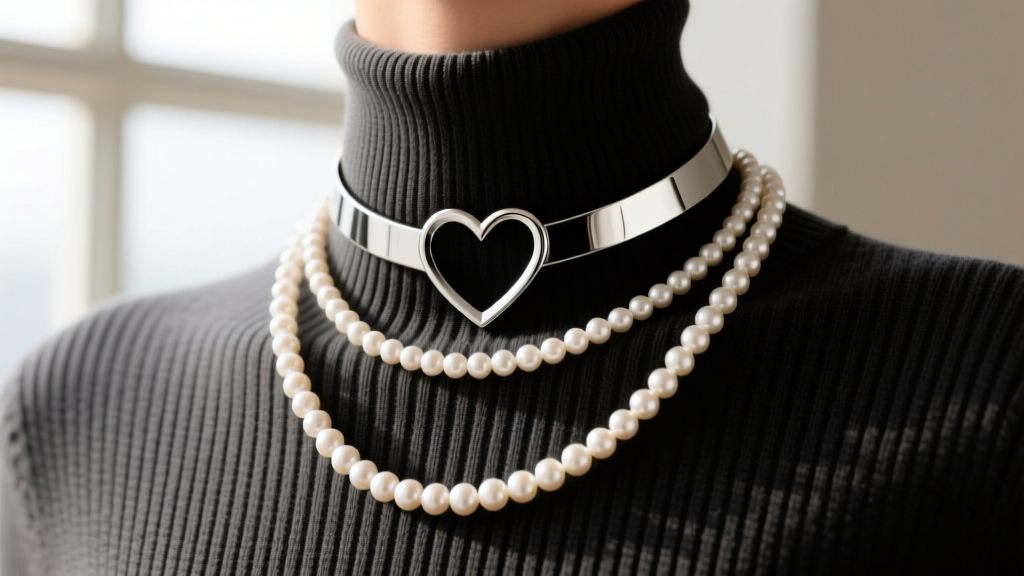
- Layer 1 (14 inches): The silver heart choker (e.g., 2.5mm paperclip chain with a 15mm solid heart).
- Layer 2 (16 inches): A minimalist silver herringbone snake chain (no pendant) to add a ribbon of metallic reflection.
- Layer 3 (18 inches): A mixed-media strand, such as freshwater baroque pearls or oxidized silver beads, terminating in a larger, contrasting motif like a compass or an elongated teardrop.
"The modern choker is no longer a standalone novelty; it is the critical anchor point of a curated neckline. By mixing metallic textures—like pairing a high-polish silver heart with a matte, oxidized chain layer—you create depth that reads as intentional rather than accidental." — The Silver Institute Style & Market Report.
Market Pricing and Brand Benchmarks
Navigating the pricing landscape for silver heart chokers requires a baseline understanding of silver spot prices and craftsmanship premiums. As of early 2026, with silver commodities holding steady, here is what you should expect to pay across different market tiers:
- Fast Fashion & Mass Market ($25 - $45): Typically silver-plated brass or hollow-cast 925 sterling. Pendants are often stamped from thin sheets and filled with epoxy resin to simulate weight. Expect a lifespan of 1-2 years before plating wears through or chains snap.
- Contemporary Independent Jewelers ($85 - $160): The sweet spot for quality. These pieces feature solid cast 925 or Argentium silver, hand-soldered jump rings, and reliable lobster clasps. Pendants will have substantial weight (3-6 grams) and feature hand-applied patinas or brushed finishes.
- Fine Jewelry & Designer ($250 - $600+): At this tier, you are paying for brand heritage, diamond or sapphire melee accents, and advanced metallurgical techniques like rhodium plating over Argentium for a permanent, platinum-like finish.
Care, Maintenance, and Tarnish Mitigation
Even the highest quality silver heart choker necklace will succumb to environmental factors if stored improperly. Human sweat, which contains varying levels of lactic acid and sulfur compounds, can accelerate tarnishing on standard 925 sterling silver within weeks of daily wear. Furthermore, polyurethane-based plastics and rubber bands emit sulfur gases that will blacken silver in a matter of days.
To maintain the structural and visual integrity of your choker, implement the following maintenance protocol:
- Post-Wear Wipe: After removing the choker, wipe the chain and pendant with a dry, untreated microfiber cloth to remove skin oils and environmental pollutants.
- Proper Storage: Store the piece in an airtight polyethylene ziplock bag alongside a 3M anti-tarnish strip or a silica gel desiccant packet. Never store silver in cardboard boxes or wooden drawers, which off-gas acidic compounds.
- Deep Cleaning: For stubborn tarnish, avoid harsh chemical dips that strip the metal's natural luster and damage oxidized detailing. Instead, use a few drops of phosphate-free dish soap in warm water, gently agitate with a soft-bristled baby toothbrush, and dry thoroughly. For heavy oxidation, consult the GIA's official silver care guidelines before attempting abrasive polishing.
Final Verdict
The silver heart choker necklace has firmly cemented its place in the 2026 jewelry lexicon, transitioning from a fleeting trend into a versatile, enduring staple. By prioritizing advanced alloys like Argentium silver, selecting architectural chain profiles in the 2.0mm to 3.5mm gauge range, and applying calculated layering frameworks, you can elevate this iconic piece from a simple accessory to a masterclass in personal styling. Whether worn solo against a structured square neckline or anchored in a meticulously measured three-piece stack, the silver heart choker remains an indispensable tool for modern sartorial expression.


