Silver Owl Necklace Guide: Metallurgy, Casting & Chain Pairing
Discover the technical anatomy of a silver owl necklace. Learn about sterling grades, lost-wax casting, hallmark verification, and ideal chain pairings.

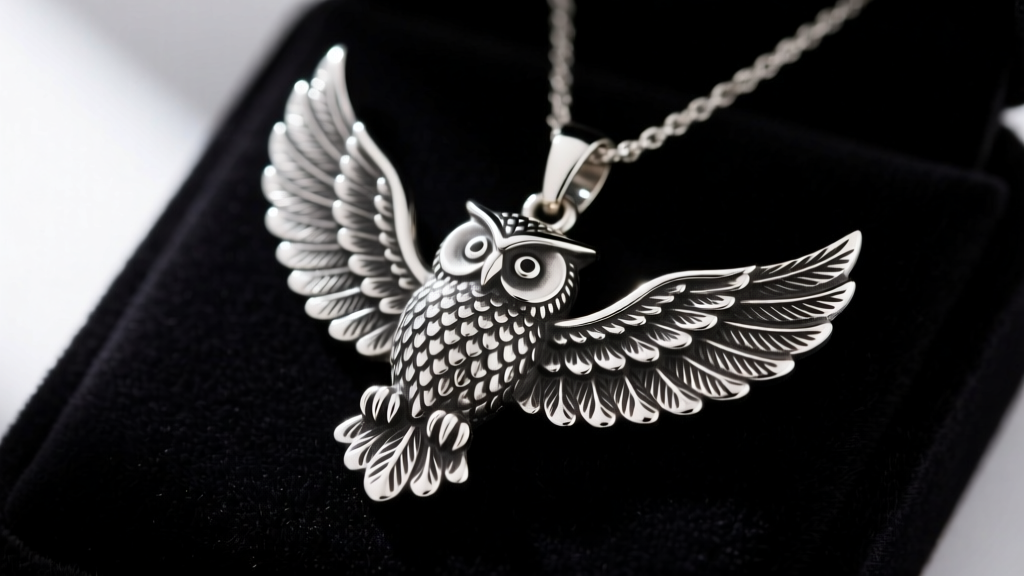
The Technical Anatomy of a Silver Owl Necklace
While the owl motif has symbolized wisdom and mystery for centuries, the structural integrity of a modern silver owl necklace relies entirely on precise metallurgy and advanced manufacturing techniques. For jewelry collectors and everyday wearers alike, understanding the technical specifications of your pendant—from the exact silver alloy used to the mechanics of the bail and chain—is crucial for ensuring longevity. This expert deep dive bypasses generic style advice to examine the material science, casting methods, and failure modes inherent in silver owl jewelry.
Metallurgical Breakdown: Choosing the Right Silver Alloy
The foundation of any high-quality silver owl necklace is its alloy composition. Pure silver (.999 fine silver) is rarely used for detailed animal pendants because it is too soft; the delicate talons, beak, and wingtips of an owl will easily bend or warp under minor pressure. Instead, jewelers rely on alloyed silver to introduce structural hardness.
Sterling Silver (.925)
Standard sterling silver consists of 92.5% pure silver and 7.5% copper. The copper acts as a hardening agent, raising the Vickers hardness (HV) from roughly 25 HV (fine silver) to approximately 65 HV. This increased hardness is essential for holding the crisp, microscopic lines of lost-wax cast feathers. However, the copper content makes .925 sterling highly susceptible to oxidation when exposed to atmospheric sulfur.
Argentium Silver (.935 / .960)
For buyers seeking a low-maintenance silver owl necklace, Argentium silver replaces a portion of the copper with germanium. This creates a transparent germanium dioxide layer on the surface, making it up to seven times more tarnish-resistant than traditional sterling. According to The Silver Institute, modern silver alloys with germanium or platinum group metals represent the cutting edge of precious metal durability, making them ideal for bright, un-oxidized owl designs meant for daily wear.
Manufacturing Techniques: Lost-Wax Casting vs. Die Stamping
The visual depth and weight of your owl pendant are dictated by its manufacturing method. Understanding these techniques helps you evaluate pricing and quality.
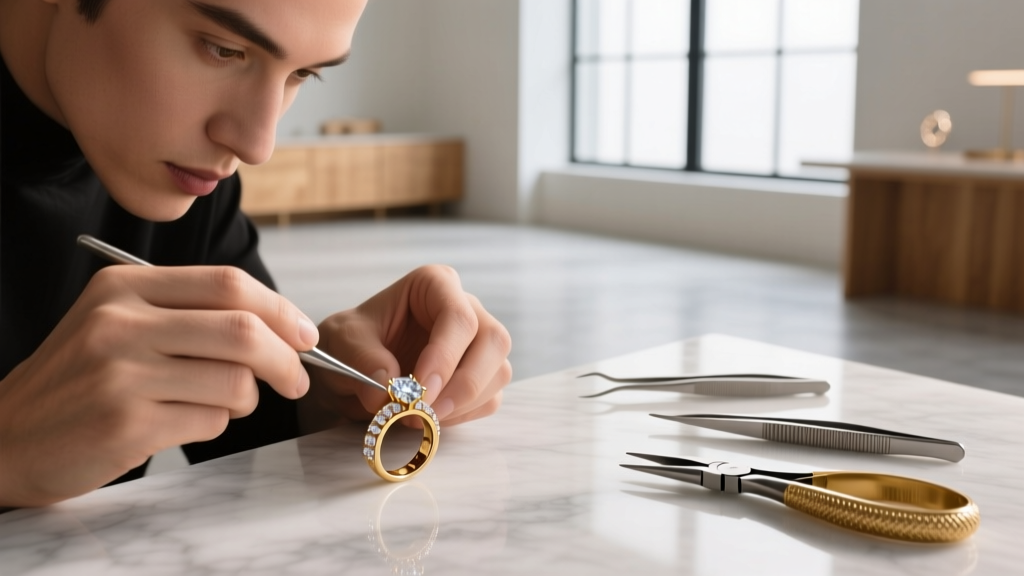
Lost-Wax Casting (Investment Casting)
High-end, three-dimensional silver owl necklaces are typically created via lost-wax casting. A master model is carved from wax, encased in a plaster-like investment material, and burned out in a kiln. Molten .925 silver is then centrifugally or vacuum-cast into the cavity. This method allows for severe undercuts—such as wings wrapping around a branch or intricate talons gripping a gemstone—which cannot be achieved with flat stamping. Cast pieces are generally heavier (often 15g to 30g) and possess a sculptural, organic feel.
Die Stamping and Fabrication
Conversely, vintage-style or minimalist owl pendants are often die-stamped from sheet silver. A hardened steel die strikes the silver sheet with immense pressure, forcing the metal into a shallow relief. Stamped owls are lightweight (typically 3g to 8g), lay flat against the sternum, and are far less prone to casting porosity. However, they lack the 360-degree detailing of a cast piece.
Alloy Comparison Data Matrix
Use the following technical matrix to determine which silver alloy best suits your environmental conditions and aesthetic preferences for an owl pendant.
| Alloy Grade | Composition | Vickers Hardness (HV) | Tarnish Resistance | Best Owl Application |
|---|---|---|---|---|
| .925 Sterling | 92.5% Ag, 7.5% Cu | ~65 HV | Low | Oxidized, detailed feather textures |
| .958 Britannia | 95.8% Ag, 4.2% Cu | ~55 HV | Medium-Low | Softer, vintage-style castings |
| .935 Argentium | 93.5% Ag, Ge, Cu | ~95 HV (Hardened) | Very High | Bright, mirror-polished modern owls |
| .999 Fine | 99.9% Ag | ~25 HV | High | Enamel cloisonné inlays (rare) |
Surface Finishes and Patina Application
The striking contrast seen in premium silver owl necklaces is achieved through chemical patination. Jewelers use Liver of Sulfur (potassium polysulfide) to accelerate tarnishing, turning the silver black. The pendant is submerged in the heated solution, coating the entire piece. A jeweler then uses a rotary brass brush or polishing cloth to remove the black oxidation from the high points (the beak, the crown, the outer wings) while leaving it trapped in the recessed crevices of the feathers and eyes. This technique, known as antiquing, provides the visual depth necessary to make the owl's plumage look realistic. If a seller claims a piece is "naturally tarnished," be skeptical; true depth requires controlled chemical application.
Chain Pairing and Bail Mechanics
A heavy cast silver owl pendant requires specific chain mechanics to prevent structural failure. The bail—the loop connecting the pendant to the chain—is the most common point of failure.
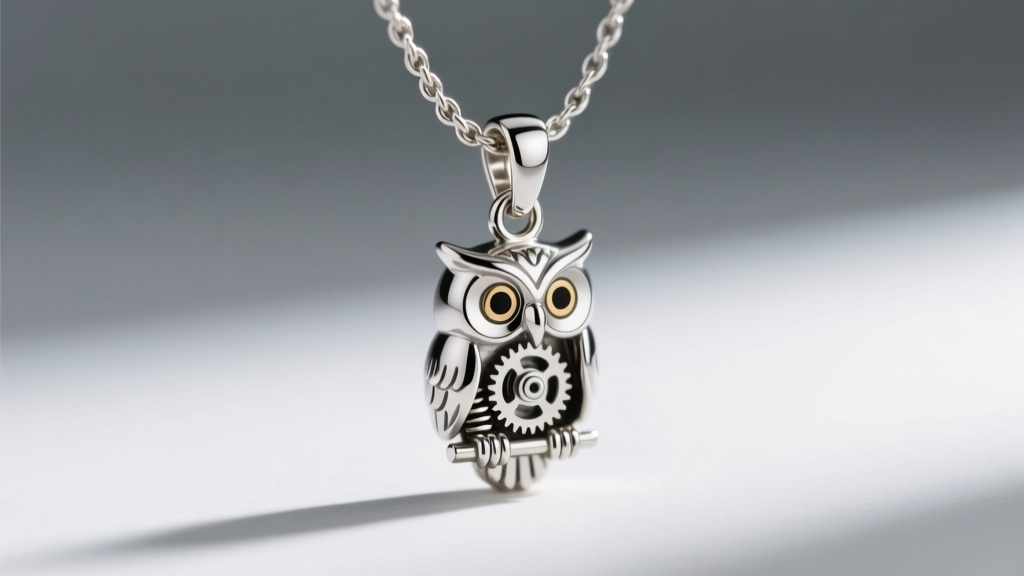
Bail Sizing and Solder Joints
For a 3D cast owl weighing over 15 grams, avoid standard glued or lightly soldered bails. Look for a heavy-duty hidden bail or a soldered tube bail with an inner diameter of at least 4mm x 6mm. The solder joint connecting the bail to the owl's back or head must be fully flowed (using hard silver solder, which melts at a higher temperature) rather than soft-soldered, which can snap under the pendulum effect of a walking wearer.
Chain Gauge and Weave
Pair your pendant with a chain that can support its weight without kinking. A 1.2mm to 1.5mm box chain or rope chain is ideal. Rope chains distribute the pendant's weight across multiple interlocking links, preventing the localized stress that causes standard cable chains to stretch and snap. Always opt for a lobster clasp over a spring-ring clasp; the internal spring mechanism in a lobster clasp is thicker and less likely to fail when supporting a heavy silver owl.
Hallmark Verification and Authenticity
Verifying the authenticity of your silver owl necklace goes beyond a simple magnet test. According to The Assay Office, a legitimate hallmark in regions like the UK consists of three distinct marks: the sponsor's (maker's) mark, the standard mark (e.g., the lion passant for .925 sterling), and the assay office mark. In the US, a simple "925" stamp is legally sufficient but offers no traceability. For vintage pieces, such as the highly sought-after 1970s Taxco silver owls from Mexico, look for the specific eagle assay mark alongside the maker's initials and a registration number. Counterfeiters often stamp base metals with "925," so purchasing from reputable dealers who provide X-ray fluorescence (XRF) testing guarantees is paramount for high-value antique owl jewelry.
Failure Modes and Maintenance Warnings
To preserve the structural and aesthetic integrity of your silver owl necklace, you must avoid common maintenance errors. Never place an oxidized silver owl pendant in an ultrasonic cleaner. The high-frequency cavitation will strip the liver of sulfur patina from the feather crevices, leaving the piece looking flat, gray, and lifeless. Furthermore, the vibrations can loosen any gemstone inlays (such as moonstone or onyx eyes) if the bezel settings were not properly burnished. Instead, clean your necklace using a soft, treated silver polishing cloth, gently rubbing only the high-polish areas while avoiding the recessed, darkened textures. Store the piece in an anti-tarnish flannel bag infused with activated carbon to absorb atmospheric sulfur and prolong the life of the finish.


