Silver Rabbit Necklace: Casting, Alloys & Chain Pairing Guide
An expert metallurgical and structural guide to choosing a silver rabbit necklace, covering alloys, casting methods, and chain pairing.

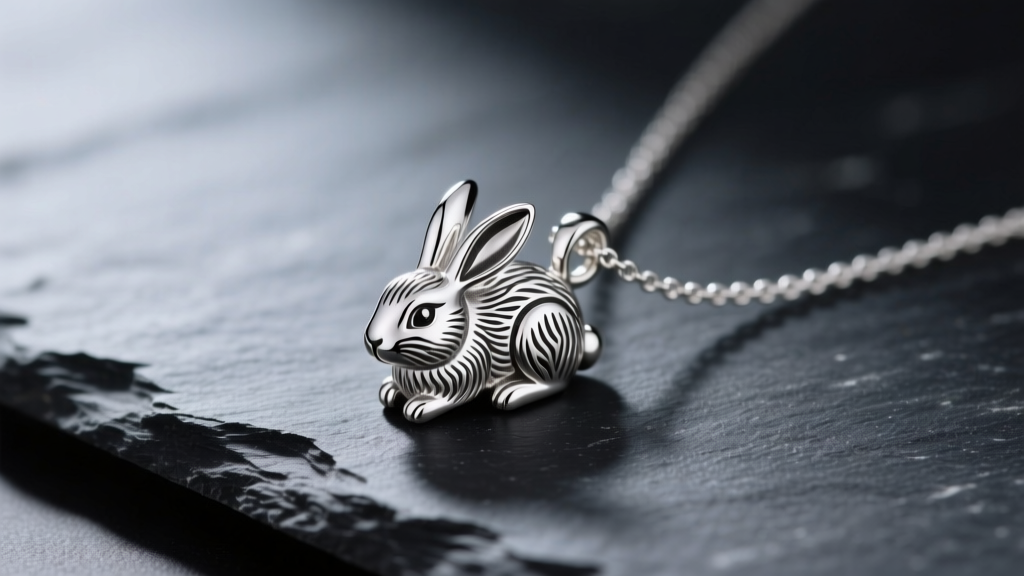
The Anatomy of a Sterling Silver Rabbit Pendant
When evaluating a silver rabbit necklace, most consumers focus purely on the aesthetic charm of the zoomorphic design. However, as jewelry professionals, we must look beneath the surface. The rabbit motif—characterized by elongated ears, delicate paws, and intricate fur texturing—presents unique metallurgical and structural challenges that do not exist in simpler geometric pendants. Understanding the alloy composition is the first step in making an informed acquisition.
Traditional 925 sterling silver consists of 92.5% pure silver and 7.5% copper. While the copper provides necessary tensile strength, it is also the primary catalyst for oxidation. For a rabbit pendant featuring deep, carved fur textures, this copper content means tarnish will rapidly accumulate in the micro-crevices, turning the intricate details black. According to the Gemological Institute of America (GIA), this is a natural chemical reaction, but it requires rigorous maintenance.
To mitigate this, expert jewelers increasingly recommend Argentium silver for intricate animal figurines. Argentium replaces a portion of the copper with germanium, which forms a transparent, self-healing oxide layer on the surface. This makes the silver highly resistant to tarnish, ensuring that the delicate fur detailing on your rabbit pendant remains bright and legible without weekly polishing.
Lost-Wax Casting vs. Die Striking: Manufacturing Realities
The manufacturing method dictates both the level of detail and the structural integrity of your silver rabbit necklace. There are two primary techniques used in modern jewelry production:
- Lost-Wax Casting: This is the industry standard for 3D zoomorphic pendants. A wax model is carved or 3D-printed, encased in investment plaster, and burned out in a kiln. Molten silver is then injected into the void via centrifugal force or a vacuum caster. This method captures microscopic fur textures and facial expressions perfectly.
- Die Striking: This involves stamping sheet silver under immense pressure between two hardened steel dies. While die-struck pieces are incredibly dense and durable due to the compression of the silver's grain structure, they are generally limited to flat, 2D silhouettes. You will rarely find a highly detailed, 3D die-struck rabbit pendant.
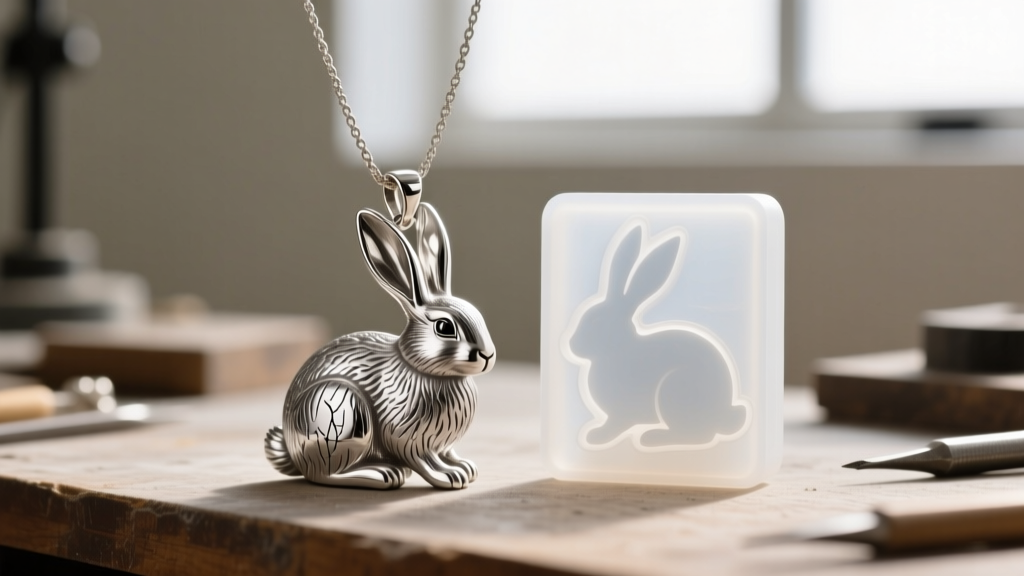
Structural Vulnerabilities and Porosity Risks
Lost-wax casting, while beautiful, introduces the risk of gas porosity. If the molten silver cools too quickly or traps atmospheric gases, microscopic bubbles form inside the metal. In a rabbit pendant, the ears act as structural levers. If a casting flaw occurs at the base of an elongated ear (where the cross-sectional gauge is often less than 1.5mm), the ear becomes a critical failure point. A minor snag on clothing can apply enough torque to snap the ear cleanly off. When inspecting a cast silver rabbit necklace, always use a jeweler's loupe to examine the base of the ears and the tail for pitting or dark spots, which are visual indicators of subsurface porosity.
Chain Pairing: Matching Weight, Gauge, and Bail Dynamics
A common mistake in styling animal pendants is pairing a heavy, solid-cast figurine with an inadequate chain. The bail—the loop through which the chain passes—bears the entire dynamic load of the pendant. A standard cast silver rabbit pendant weighs between 6 and 14 grams. If suspended on a flimsy 0.6mm cable chain, the friction will eventually saw through the chain links or warp the bail.
Below is a technical matrix for pairing chains with zoomorphic silver pendants based on weight and bail dimensions:
| Pendant Weight | Recommended Chain Style | Minimum Wire Gauge | Bail Clearance Required |
|---|---|---|---|
| 3g - 7g (Hollow/Small) | Standard Cable or Curb | 0.8mm - 1.0mm | 2.0mm |
| 8g - 15g (Solid/Medium) | Box Chain or Wheat | 1.2mm - 1.5mm | 3.0mm |
| 16g+ (Heavy/Large) | Rope Chain or Foxtail | 1.8mm - 2.2mm | 4.0mm+ |
Wheat and Box chains are generally preferred for a silver rabbit necklace because their woven or geometric link structures distribute the pendant's weight evenly, preventing the localized stress that causes oval-shaped cable links to stretch and eventually snap.
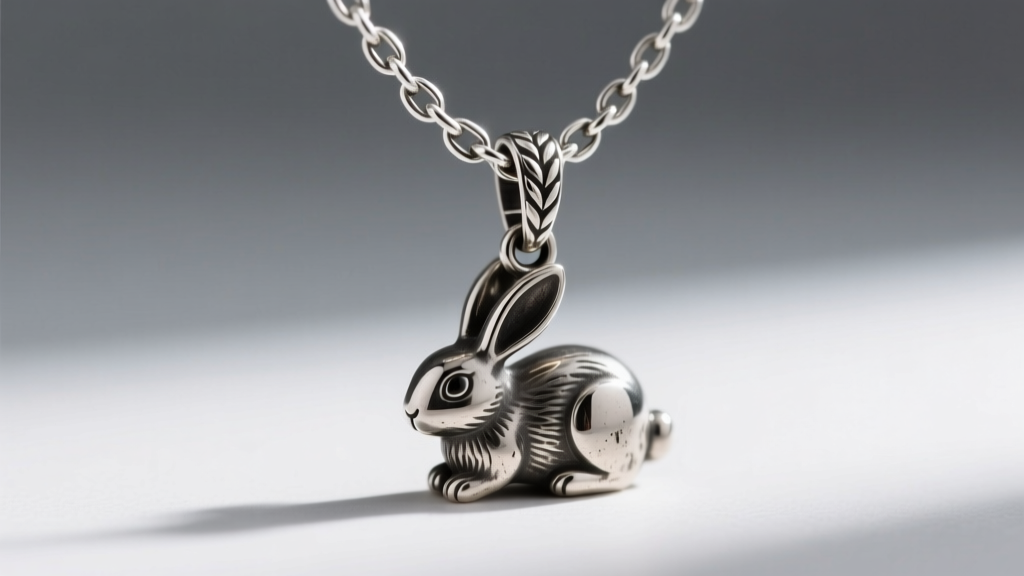
The Tarnish Trap: Cleaning Intricate Silver Crevices
Tarnish on silver is not dirt; it is silver sulfide ($Ag_2S$), a corrosion layer that forms when silver reacts with sulfur compounds in the air or on human skin. In a rabbit pendant, the carved fur and recessed eyes trap moisture, dead skin cells, and environmental sulfur, accelerating localized tarnishing.
Warning on Liquid Dip Cleaners: Never submerge an oxidized or antiqued silver rabbit necklace in commercial liquid tarnish removers (thiourea-based dips). These chemicals are highly aggressive and will strip the intentional dark patina from the recessed fur textures, leaving the pendant looking flat, bright, and artificially washed out. Furthermore, if your rabbit features glued-in gemstone eyes (such as black onyx or cubic zirconia), the harsh solvents in dip cleaners will degrade the jeweler's epoxy, causing the eyes to fall out.
According to metallurgical guidelines from Rio Grande Jewelry Supply, the safest method for cleaning intricate silver animal pendants is mechanical agitation with a mild surfactant. Use a few drops of phosphate-free dish soap in warm water, and gently agitate the crevices with an ultra-soft baby toothbrush. For polishing the high-relief areas (the nose, the tips of the ears), use a treated jeweler's cloth impregnated with microscopic jeweler's rouge.
Market Pricing and Authenticity Verification
The market for silver animal jewelry is saturated with mass-produced imports and high-end artisan pieces. Knowing how to verify authenticity and understand pricing tiers is crucial for the informed buyer.
Hallmarks and XRF Testing
Always look for the '925' or 'Sterling' stamp, usually located on the back of the rabbit's base or the interior of the bail. However, stamps can be easily faked. For high-value artisan pieces (typically priced over $150), reputable sellers will provide X-ray Fluorescence (XRF) testing results, which definitively prove the elemental breakdown of the alloy without damaging the piece.
Pricing Brackets
- Mass-Market Castings ($25 - $60): Typically produced overseas using rubber mold vulcanization. Details may be slightly soft due to mold degradation, and the silver is often plated with a thin layer of rhodium or fine silver to delay tarnishing. Once the plating wears off, rapid tarnishing occurs.
- Mid-Tier Studio Castings ($80 - $180): Cast from original hand-carved waxes or high-resolution 3D resin prints. Expect sharp, distinct fur textures, properly weighted bails, and often the use of Argentium silver or intentional, high-contrast liver-of-sulfur antiquing.
- Artisan / Master Fabricated ($250+): Rarely cast. These are often fabricated from sheet and wire, or feature mixed metals (e.g., a sterling silver rabbit body with 18k gold accents on the inner ears or a gemstone-set collar). These pieces are structural marvels and are built for generational wear.
By understanding the metallurgy, casting vulnerabilities, and proper maintenance protocols, you can select a silver rabbit necklace that is not just a charming accessory, but a structurally sound piece of wearable art engineered to last a lifetime.


