Silver Scapular Necklace Value Guide: Pricing & Material Truths
Discover the true value of a silver scapular necklace. We break down pricing tiers, 925 sterling vs. plated metals, and craftsmanship markers.

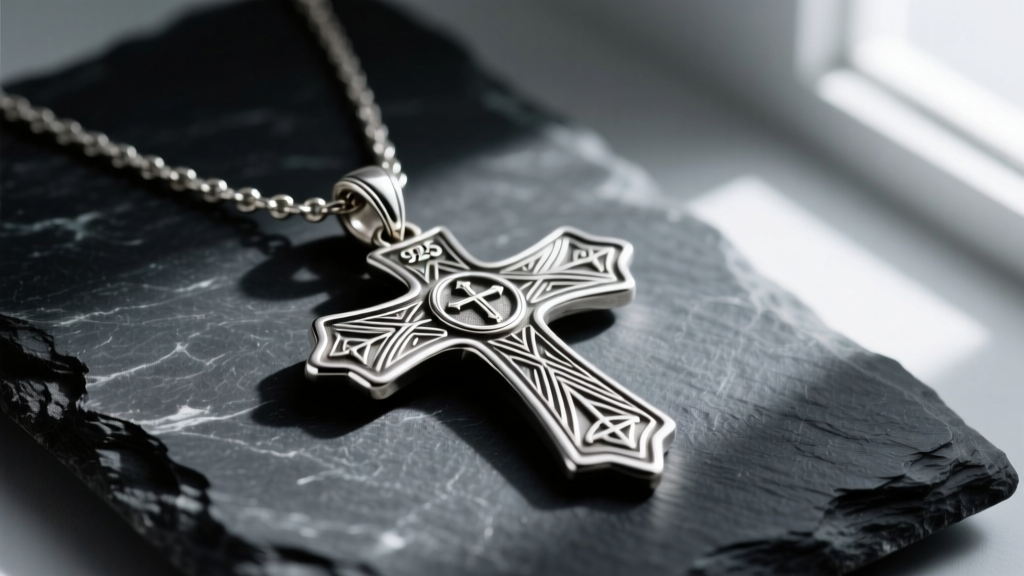
When shopping for devotional or heritage jewelry, the silver scapular necklace occupies a unique space. Unlike a standard pendant that rests solely on the chest, a traditional scapular necklace features two distinct medals—one resting on the front of the chest and the other draped down the back. This dual-pendant architecture creates specific structural stresses and material demands that mass-market jewelers often ignore. If you are evaluating a silver scapular necklace from a budget and value perspective, you must look beyond the initial price tag and assess the metallurgy, chain engineering, and long-term wearability.
The Anatomy of a Scapular: Why Construction Dictates Value
A genuine scapular necklace is not simply a long chain with two charms attached at random intervals. In high-quality jewelry, the chain is either a continuous loop with the medals soldered at precise anatomical drop points, or it features a reinforced Y-drop junction. Because the back pendant is subject to constant friction against clothing and the spine, the metal must resist warping, and the jump rings must withstand repetitive tensile stress. Budget jewelry brands frequently use lightweight, hollow-cast medals and unsoldered jump rings, leading to broken chains and lost pendants within months. True value lies in structural integrity.
The Material Matrix: Solid Sterling vs. Silver-Plated
The most critical factor in your budget assessment is the base metal. The market is flooded with deceptive terminology. Here is how the materials actually break down in terms of longevity and intrinsic value:
- 925 Sterling Silver: Composed of 92.5% pure silver and 7.5% copper. This is the industry standard for fine jewelry. It holds intricate engravings well and can be polished indefinitely. According to the Silver Institute, genuine sterling must be stamped, though vintage or international pieces may vary in hallmarking.
- Argentium Silver (935 or 960):strong> A modern alloy that replaces some copper with germanium. It is highly tarnish-resistant and hypoallergenic. Expect to pay a 20% to 35% premium over standard 925, but the reduced maintenance offers immense long-term value.
- Silver-Plated Brass or Copper: A base metal coated with a microscopic layer of silver (often less than 0.5 microns). Once the back pendant wears through from friction, the piece is ruined. This is pure costume jewelry and holds zero intrinsic value.
- Silver-Filled: A thicker layer of silver mechanically bonded to a brass core (usually 5% or 10% silver by weight). Better than plating, but still impossible to deeply engrave or repair if the core is exposed.
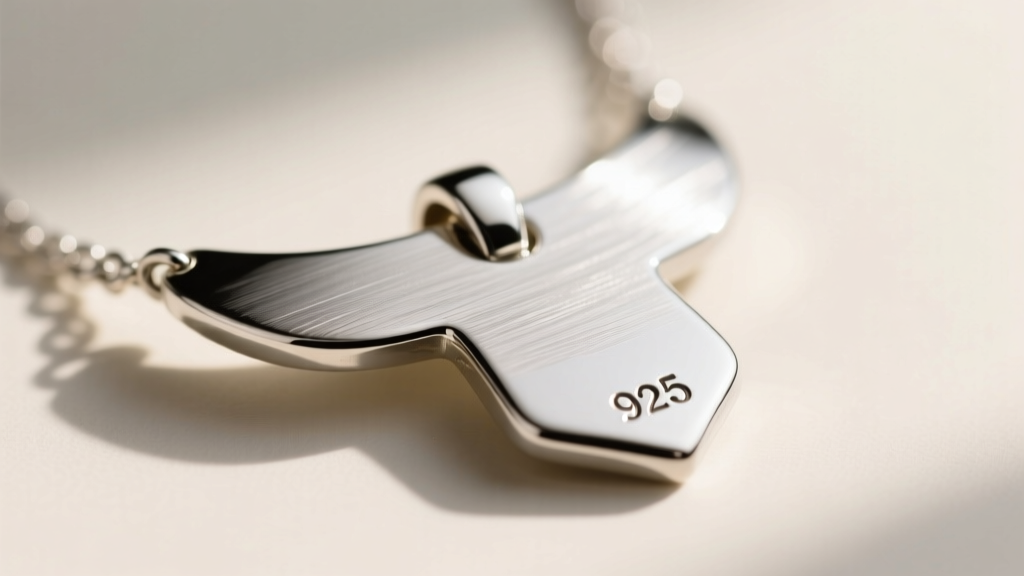
Always inspect the clasp and the back of the medals for hallmarks. Under the FTC National Stamping Act, any jewelry sold in the US as 'silver' or bearing a '925' stamp must legally meet that purity standard, and must also bear a registered manufacturer's trademark. If you see '925' but no maker's mark, proceed with extreme caution.
Pricing Tiers: What Should You Actually Pay?
To accurately assess if you are getting a fair deal, compare the piece against this market matrix. Prices reflect 2026 retail averages for dual-medal scapular necklaces.
| Tier | Material | Chain Gauge | Total Weight | Price Range | Value Verdict |
|---|---|---|---|---|---|
| Entry / Fast Fashion | Silver-Plated Brass | 0.6mm - 0.8mm | 2g - 4g | $15 - $35 | Poor. High failure rate, skin discoloration. |
| Mid-Tier Commercial | Solid 925 Sterling | 0.9mm - 1.1mm | 5g - 8g | $55 - $95 | Good. Reliable daily wear, standard laser engraving. |
| Artisan / Heirloom | Solid 925 or Argentium | 1.2mm - 1.5mm | 10g - 18g | $130 - $280+ | Excellent. Deep die-struck relief, soldered rings. |
Chain Engineering and High-Stress Points
The chain on a scapular necklace works twice as hard as a standard pendant chain. The back medal acts as a pendulum, creating micro-tensions on every link. When evaluating a piece in the $55 to $95 range, check the chain style. Box chains and welded rolo chains offer superior tensile strength compared to standard cable or snake chains, which are prone to kinking and snapping under the dual-weight load. Furthermore, examine the jump rings connecting the medals to the chain. If the jump ring has a visible gap and is not soldered shut, it is a structural liability. A reputable jeweler will use soldered jump rings or heavy-gauge split rings to ensure the medals never detach.
Engraving and Artisan Craftsmanship Markers
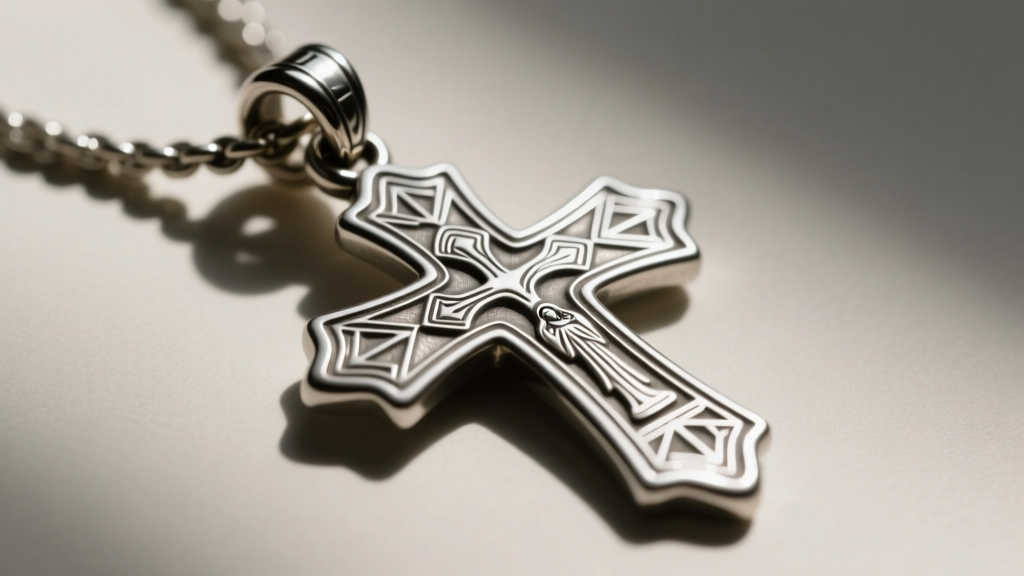
Scapular medals traditionally feature religious motifs, sacred hearts, or Marian imagery. The method used to apply these designs drastically affects the necklace's lifespan and value. Budget pieces utilize shallow laser engraving. While initially crisp, laser engraving sits on the surface; a few years of aggressive polishing with a jeweler's cloth will erase the details entirely. High-value, heirloom-grade scapulars utilize die-striking or deep 3D casting. In these pieces, the imagery has actual topographical relief. You can run your fingernail over the edges of the design and feel distinct, steep drops in the metal. This deep relief ensures the imagery survives generations of wear and polishing.
Red Flags: Spotting Overpriced Costume Jewelry
Do not let a high price tag guarantee authenticity. Some boutique brands charge $120+ for silver-plated items by relying on aesthetic packaging. Protect your budget by performing these quick assessments:
- The Thermal Test: Pure silver and sterling silver are highly thermally conductive. If you hold the medal between your fingers, it should rapidly draw heat from your skin and feel distinctly cold. Plated brass or stainless steel will warm up much slower and feel closer to room temperature.
- The Weight Discrepancy: Because silver is less dense than brass, a solid silver scapular will actually feel slightly lighter than a brass-plated fake of the exact same dimensions. If a delicate-looking scapular feels suspiciously heavy and dense, it is likely a base metal core.
- Magnetic Reaction: While silver is paramagnetic (virtually non-magnetic), the copper alloy in 925 sterling is also non-magnetic. If a neodymium magnet pulls strongly on the chain or the clasp mechanism, the piece contains ferrous metals (like steel or iron) and is absolutely not solid sterling silver. For deeper insights into metal verification, the UK Assay Office provides extensive documentation on precious metal testing and hallmarking standards.
Final Verdict: Where to Allocate Your Budget
If you are purchasing a silver scapular necklace for daily, lifelong wear, bypass the sub-$40 plated options entirely. The friction from the back pendant will destroy the plating within a year. Your sweet spot for maximum value is the $65 to $110 range, where you can secure a solid 925 sterling piece with a 1.0mm or thicker rolo chain, solid cast medals, and soldered jump rings. For those seeking a zero-maintenance piece that will never tarnish, stretching your budget to $150 for an Argentium 935 scapular is a highly rational investment that pays dividends in longevity and wearability.


