The Anatomy of a Silver Sideways Cross Necklace: An Expert Guide
Explore the metallurgy, casting techniques, and chain mechanics behind the perfect silver sideways cross necklace in our expert technical deep dive.

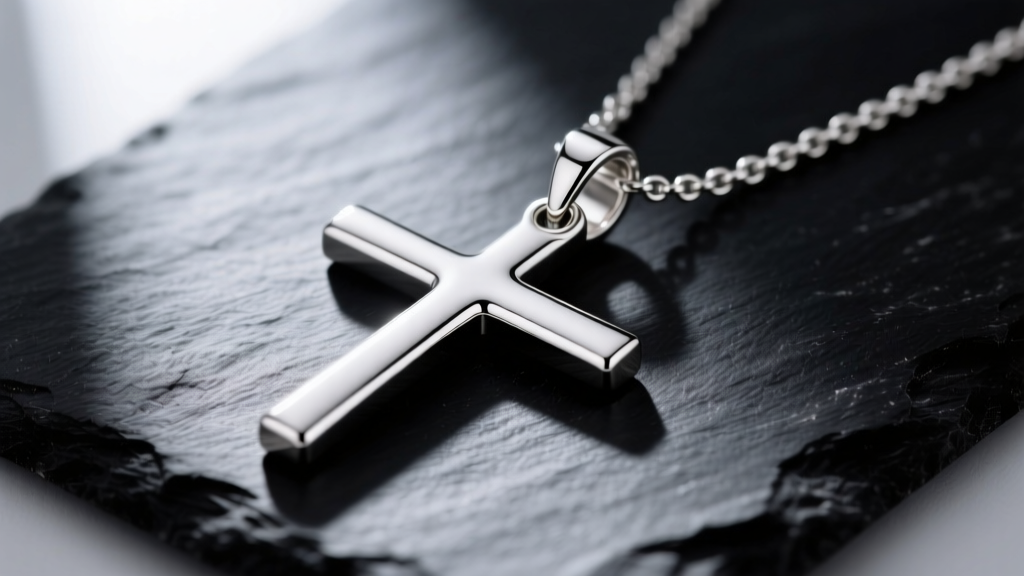
The sideways cross necklace—often referred to as a horizontal cross or St. Peter’s cross variant—has evolved from a niche symbolic piece into a staple of modern minimalist jewelry. However, from an engineering and metallurgical perspective, designing and manufacturing a high-quality silver sideways cross necklace presents unique structural challenges. Unlike traditional vertical pendants, a horizontal profile drastically alters the center of gravity, chain tension, and wear dynamics. In this expert deep dive, we deconstruct the anatomy of the sideways cross, examining silver alloys, manufacturing techniques, bail physics, and chain tensile matching.
The Metallurgical Divide: 925 Sterling vs. Argentium Silver
The foundation of any premium silver pendant is its alloy composition. Pure silver (999) is too malleable for daily wear; it will warp under minimal lateral pressure. Therefore, the industry relies on alloyed silver, but not all alloys perform equally on a wide, horizontal surface.
Standard 925 Sterling Silver
Traditional sterling silver comprises 92.5% silver and 7.5% copper. While the copper provides necessary tensile strength, it is highly reactive. According to The Silver Institute, copper oxidizes when exposed to atmospheric hydrogen sulfide and moisture, resulting in silver sulfide (tarnish). On a sideways cross, which typically features broad, flat planes or expansive high-polish surfaces, this tarnish is immediately visible and requires frequent maintenance.
Argentium 935 and 960 Silver
For a superior sideways cross, expert jewelers increasingly turn to Argentium silver. By replacing a portion of the copper with the metalloid germanium, Argentium (available in 935 and 960 purities) fundamentally alters the metal's surface chemistry. When exposed to oxygen, the germanium forms a transparent, protective layer of germanium dioxide. This layer dramatically slows tarnishing and eliminates 'fire scale' during the soldering process. For a horizontal pendant that rests flat against the clavicle and is prone to friction and sweat exposure, Argentium offers a distinct longevity advantage over standard 925.
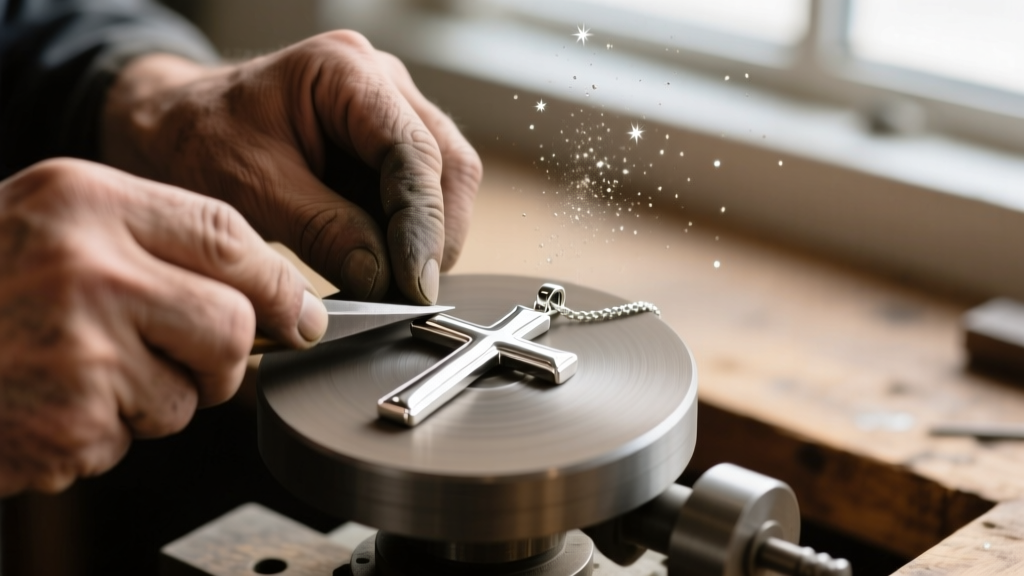
Manufacturing Techniques: Casting vs. Die Striking
The method used to form the silver sideways cross dictates its internal grain structure, density, and long-term durability. Because the horizontal arms of the cross extend outward (often measuring 20mm to 30mm across), they are susceptible to bending if the metal is porous or structurally weak.
- Lost-Wax Casting: The most common and cost-effective method. Molten silver is poured into a plaster mold created from a wax prototype. While excellent for intricate, 3D designs, cast silver can suffer from microscopic porosity. The crystalline grain structure is random, making the extended horizontal arms slightly more brittle and prone to snapping if caught on clothing.
- Die Striking: A superior technique for minimalist, flat sideways crosses. A hardened steel die stamps the cross shape out of a sheet of silver under immense pressure (often exceeding 50 tons). This compresses the silver molecules, aligning the grain structure and creating a denser, harder, and significantly more durable pendant. A die-struck sideways cross will resist bending and retain a sharper, mirror-like polish far longer than its cast counterpart.
Bail Engineering and the Center of Gravity
The most critical failure point in a poorly designed sideways cross necklace is the bail—the loop that connects the pendant to the chain. A traditional vertical cross hangs naturally from a top-mounted bail. A sideways cross, however, has a wide X-axis and a narrow Y-axis. If a standard loop bail is simply soldered to the top center edge of the horizontal cross, the pendant will suffer from the 'pendulum effect.' The chain's tension will pull the bail off-center, causing the cross to tilt diagonally or 'walk' along the chain.
To solve this center-of-gravity issue, expert manufacturers utilize specific bail configurations:
- The Integrated Slider Bail: A horizontal tube or channel is cast or soldered directly into the top center arm of the cross. The chain threads entirely through this channel, distributing the weight evenly across the X-axis and locking the pendant in a perfectly horizontal orientation.
- The Wide European-Style Hidden Bail: A broad, flattened bail is soldered to the back of the cross, spanning at least 40% of the pendant's total width. This wide footprint prevents lateral shifting and keeps the cross flush against the skin.

Chain Gauge and Tensile Matching
A sideways cross requires a chain that provides enough rigidity to support the horizontal profile without overwhelming the pendant. The chain must glide smoothly through the bail while maintaining structural integrity. According to the Gemological Institute of America (GIA), matching the chain's tensile strength and link geometry to the pendant's weight and bail aperture is essential for preventing premature wear and clasp failure.
| Chain Type | Recommended Gauge | Structural Profile | Suitability for Sideways Cross |
|---|---|---|---|
| Box Chain | 0.9mm - 1.1mm | Square, interlocking links | Excellent. The flat edges prevent twisting, ensuring the horizontal cross remains perfectly level. |
| Wheat Chain | 1.0mm - 1.2mm | Braided, oval links | Very Good. High tensile strength and a smooth, rounded profile that glides through slider bails effortlessly. |
| Rope Chain | 1.2mm - 1.5mm | Twisted, helical links | Moderate. The twisting nature of the rope chain can introduce rotational friction, potentially tilting lighter crosses. |
| Cable Chain | 0.8mm - 1.0mm | Uniform oval links | Poor. Prone to kinking and twisting, which disrupts the horizontal alignment of the pendant. |
Hallmarking and Authenticity Verification
When investing in a high-grade silver sideways cross, verifying the metal's authenticity is paramount. A genuine piece will bear a hallmark stamped in an inconspicuous area, often on the back of the cross or on the clasp of the accompanying chain. Look for 925 (Sterling), 935 (Argentium), or 999 (Fine Silver, usually only for cast, non-structural accents). Additionally, reputable manufacturers will include a Maker's Mark—a unique symbol or initials registered with an assay office. For absolute certainty, especially with high-value artisan pieces, jewelers utilize X-Ray Fluorescence (XRF) spectrometry to non-destructively analyze the exact elemental breakdown of the alloy, ensuring no deceptive base metals like nickel or lead are present beneath the silver plating.
Advanced Tarnish Mitigation and Care
Even with premium alloys, environmental factors will eventually impact silver. To preserve the mirror finish of a sideways cross, avoid chemical polishes containing thiourea, which can micro-abrade the surface over time, dulling the sharp edges of the horizontal arms. Instead, use a high-quality microfibre cloth impregnated with silver-cleaning compounds for routine maintenance. For storage, keep the necklace in an airtight polyethylene bag alongside a 3M Anti-Tarnish strip or activated charcoal sachet to absorb ambient hydrogen sulfide. By understanding the metallurgy and mechanical engineering behind your jewelry, you ensure your silver sideways cross necklace remains a structurally sound and visually flawless staple for decades.


