Silver Toggle Necklace Trends: 2026 Style & Fit Guide
Discover why the silver toggle necklace is the defining jewelry trend of 2026. Explore chain pairings, clasp mechanics, and expert styling tips.


The Functional Clasp Becomes the Focal Point
The jewelry landscape of 2026 has decisively shifted away from hidden, utilitarian hardware. For decades, the lobster clasp and spring ring were relegated to the nape of the neck, designed to be as invisible as possible. Today, the silver toggle necklace has emerged as the definitive statement piece, transforming a purely functional fastening mechanism into the primary focal point of the design. This "hardware as hero" movement, initially championed by avant-garde silversmiths and high-fashion runways in late 2025, has now saturated the mainstream market. The appeal lies in its architectural duality: the toggle clasp provides a striking geometric contrast to the fluid drape of the chain, offering a modern, industrial edge to classic sterling silver.
Unlike traditional pendants that hang passively from a chain, the toggle demands attention. It sits squarely on the collarbone or sternum, acting as an anchor for the entire silhouette. This shift reflects a broader consumer desire for versatile, multi-functional jewelry that bridges the gap between fine and fashion accessories. However, as the silver toggle necklace transitions from a niche artisan craft to mass-market production, understanding the engineering and styling nuances of this specific clasp type has never been more critical for both collectors and everyday wearers.
Anatomy of a High-Quality Silver Toggle
Not all toggles are engineered equally, and the structural integrity of a silver toggle necklace relies entirely on precise metallurgy and dimensional ratios. According to the Gemological Institute of America (GIA), 925 sterling silver—comprising 92.5% pure silver and 7.5% copper or other alloying metals—is the optimal standard for functional hardware. The copper alloy provides the necessary tensile strength and rigidity. In contrast, finer silvers like 960 Britannia silver are far too soft; a T-bar crafted from 960 silver will easily bend or warp under the leverage of a heavy chain, leading to catastrophic clasp failure.
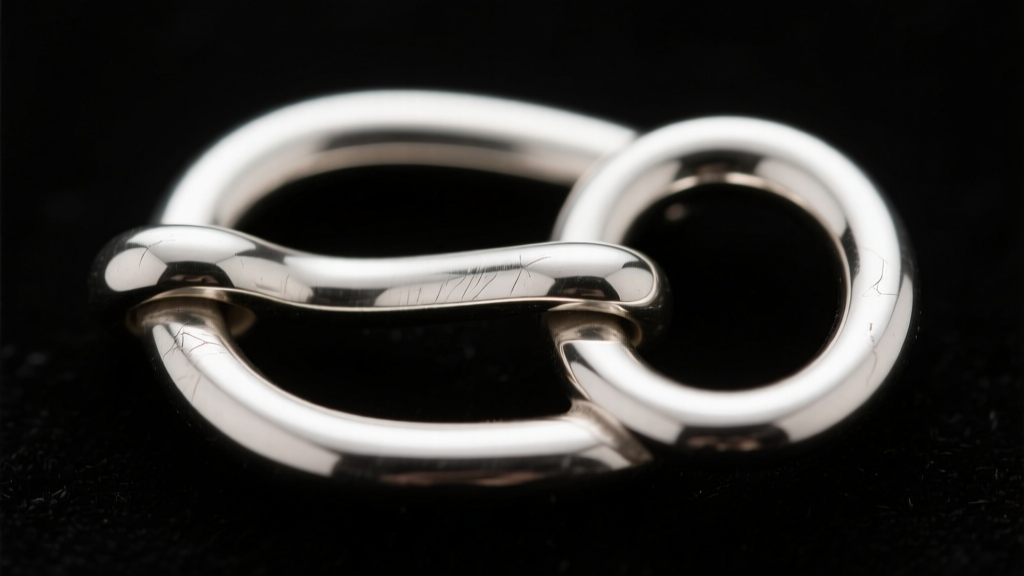
Beyond the alloy, the manufacturing method dictates longevity. Mass-market cast toggles often suffer from microscopic porosity, creating weak points where the T-bar meets the jump ring. Premium silver toggle necklaces utilize die-struck or CNC-machined hardware, which compresses the silver grain structure, resulting in a denser, more durable clasp capable of withstanding daily tension.
The most critical metric for any toggle is the T-bar to O-ring ratio. To prevent accidental unfastening when the chain is pulled taut, the T-bar must be at least 1.5 times the width of the O-ring's inner diameter (ID). For example, if the O-ring has an ID of 12mm, the T-bar must measure a minimum of 18mm in length. Furthermore, the T-bar should feature a slight taper or a textured grip at the ends to prevent it from sliding through the ring too easily when the wearer is in motion.
Chain Pairings: What Works and What Fails
The success of a silver toggle necklace hinges on the synergy between the chain weave and the clasp hardware. A chain that is too rigid will prevent the T-bar from flipping flat against the chest, while a chain that is too delicate may snap under the weight of an oversized toggle. Below is a technical breakdown of how popular 2026 chain styles interact with toggle hardware.
| Chain Style | Hardware Weight Capacity | Toggle Compatibility | Engineering Notes |
|---|---|---|---|
| Paperclip | High (up to 45g) | Excellent | Elongated links provide maximum fluidity, allowing the T-bar to pivot and seat perfectly within the O-ring. |
| Figaro | Medium (up to 25g) | Good | The alternating flat links can occasionally catch on the O-ring edge; requires a slightly oversized ring ID. |
| Rope | High (up to 50g) | Excellent | The spiral weave offers immense tensile strength and glides through the O-ring without friction snags. |
| Box | Low (up to 15g) | Poor | Highly rigid geometric links restrict movement, preventing the T-bar from laying flat and increasing the risk of unclasping. |
| Snake | Medium (up to 30g) | Fair | The stiff, tubular nature of snake chains requires a heavy, oversized toggle to weigh the front down sufficiently. |
Sizing and the "Drop" Factor
One of the most common mistakes consumers make when purchasing a silver toggle necklace is miscalculating the total wear length. Unlike a lobster clasp, which adds a negligible 10mm to the chain's total circumference, a toggle clasp is a substantial piece of hardware. A standard T-bar and O-ring combination can add anywhere from 1 to 1.5 inches (25mm to 38mm) to the overall length of the piece.
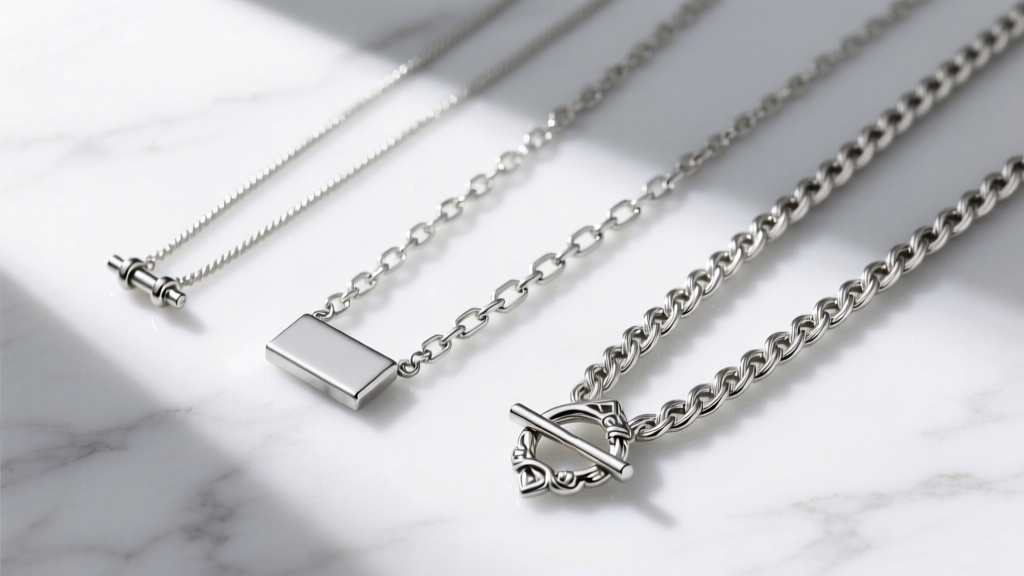
If you typically wear a 16-inch choker, ordering a 16-inch chain with a toggle clasp will result in a necklace that actually wears at 17.5 inches, completely altering the intended drape. Furthermore, a toggle necklace requires built-in "slack" to function securely. If the chain is pulled completely taut, the tension will force the T-bar to align parallel with the O-ring, allowing it to slip through. For a secure fit, you must ensure there is at least 1.5 inches of slack in the chain when fastened, allowing the hardware to rest flat and lock into place naturally.
2026 Styling Frameworks: Necklines and Layering
The styling rules for the silver toggle necklace have evolved significantly this year. The prevailing 2026 aesthetic favors the "asymmetrical drape," where the toggle is intentionally positioned slightly off-center, resting on the upper clavicle rather than dead center on the sternum. This creates a relaxed, effortless silhouette that pairs exceptionally well with deep V-necks, open-collar button-downs, and square-neck tops.
When layering, the toggle must serve as the heaviest and lowest piece in the stack. Pair a 20-inch chunky silver toggle necklace with a 16-inch delicate bezel-set diamond or cubic zirconia solitaire. The visual weight of the toggle anchors the layer, while the contrasting textures prevent the look from appearing overly matched or dated. Avoid layering a silver toggle necklace with other heavy pendants; the competing focal points will create visual clutter and cause the chains to tangle inextricably around the T-bar hardware.
Maintenance: Keeping the T-Bar Secure
Sterling silver is inherently prone to oxidation, and the mechanical nature of a toggle clasp makes maintenance slightly more complex than standard jewelry. According to the Silver Institute, sulfur in the atmosphere reacts with the copper in sterling silver to form silver sulfide, commonly known as tarnish. While a light patina can add vintage character to the chain links, heavy tarnish buildup inside the O-ring or on the T-bar increases friction.
This increased friction can prevent the T-bar from seating flush against the inner wall of the O-ring, creating a micro-gap that compromises the security of the clasp. To maintain optimal function, clean the hardware weekly using a specialized silver polishing cloth, paying meticulous attention to the interior of the O-ring and the ends of the T-bar. Avoid liquid silver dips, as they can strip the protective rhodium plating often applied to high-end silver hardware to prevent tarnish and reduce friction. By respecting the mechanical engineering and metallurgical properties of the clasp, your silver toggle necklace will remain a secure, defining element of your wardrobe for years to come.


