Silver Turtle Necklace Trends 2026: Style & Symbolism Guide
Discover 2026 silver turtle necklace trends, styling tips for layering, and a buyer's guide to sterling silver grades and sea turtle symbolism.

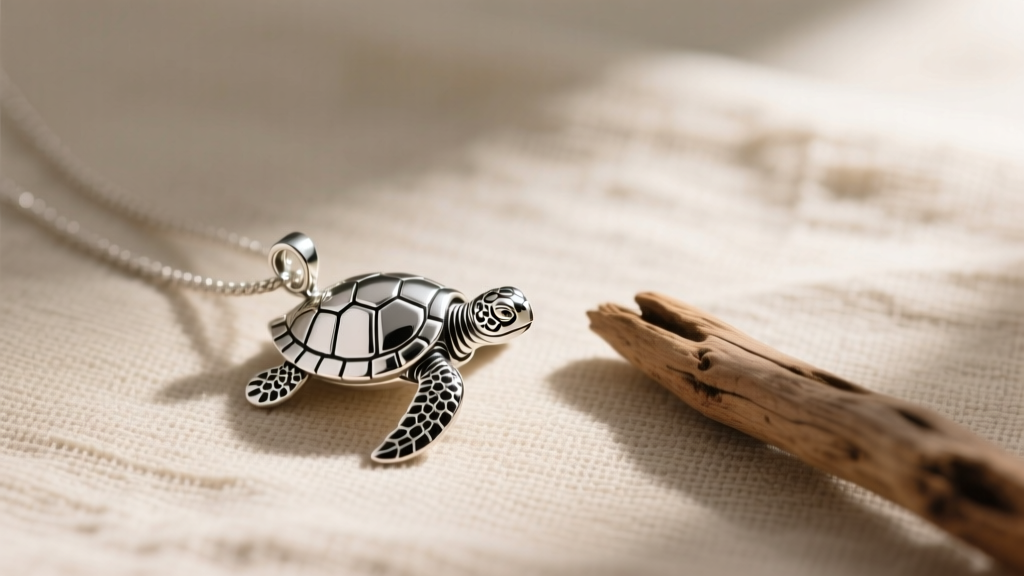
The Resurgence of Nature Talismans in 2026
In 2026, the jewelry landscape has decisively pivoted away from stark, industrial minimalism toward organic, meaning-driven talismans. At the forefront of this 'Marine Core' evolution is the silver turtle necklace. No longer relegated to souvenir shops or juvenile accessories, the sea turtle motif has been reclaimed by high-street jewelers and independent artisans alike. This shift reflects a broader consumer demand for pieces that offer both aesthetic versatility and a deeper narrative connection to nature and conservation.
As a staple in the necklaces and pendants category, the silver turtle pendant bridges the gap between everyday wearability and symbolic depth. Whether cast in oxidized sterling silver or polished to a mirror finish, this motif has become a definitive anchor piece for modern layering techniques. But navigating the market requires an understanding of metallurgy, chain mechanics, and contemporary styling frameworks.
Decoding the Symbolism: Why the Sea Turtle?
The enduring appeal of the turtle necklace lies in its rich cross-cultural symbolism. Historically, sea turtles represent navigation, endurance, and the matriarchal energy of the ocean. In Polynesian and Native Hawaiian cultures, the honu (sea turtle) is a symbol of longevity and spiritual guardianship. For the modern 2026 consumer, wearing a silver turtle pendant often signals a personal commitment to ocean conservation and environmental mindfulness.
Jewelry psychologists note that nature-based talismans provide a grounding effect for the wearer. In an increasingly digital world, a tangible, heavy-gauge silver turtle resting against the collarbone serves as a physical reminder of the natural world's slow, deliberate rhythms. This emotional resonance is a primary driver behind the motif's sustained commercial success over the past five years.
Material Deep-Dive: .925 Sterling vs. .999 Fine Silver
When investing in a silver turtle necklace, understanding the metallurgy is critical. The intricate details of a turtle's shell scutes and delicate flippers require a metal that balances malleability with structural integrity. According to the Gemological Institute of America (GIA), pure silver is too soft for daily-wear pendants, necessitating the use of specific alloys.
| Silver Grade | Composition | Hardness (Vickers) | Tarnish Rate | Ideal Application |
|---|---|---|---|---|
| .999 Fine Silver | 99.9% Silver, 0.1% Trace | ~25 HV (Very Soft) | Low | Bezels, wire wrapping, non-impact pieces |
| .925 Sterling Silver | 92.5% Silver, 7.5% Copper | ~65 HV (Durable) | Moderate to High | Cast pendants, detailed chains, daily wear |
| .950 Argentium | 95% Silver, 5% Germanium | ~70 HV (Hard) | Very Low | High-end artisan pendants, hypoallergenic needs |
Most premium silver turtle pendants are crafted from .925 sterling silver. The 7.5% copper alloy provides the necessary tensile strength to prevent the turtle's flippers from bending during daily wear. However, copper reacts with atmospheric sulfur and moisture, leading to tarnish. To combat this, many 2026 releases feature a micro-thin rhodium flash plating (typically 0.1 to 0.5 microns) over the sterling base, providing a bright, white-gold-like finish that resists oxidation. For buyers seeking the highest purity without the tarnish, Argentium .950 silver is the superior, albeit more expensive, choice.
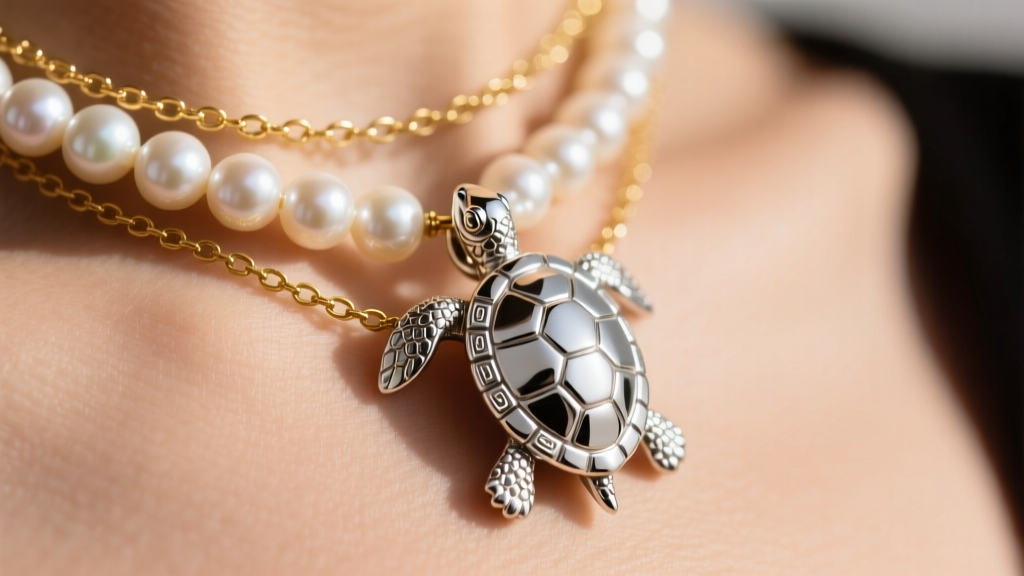
2026 Styling Framework: How to Wear the Silver Turtle
The 'Coastal Grandmother' aesthetic of the early 2020s has matured into what trend forecasters are calling 'Oceanic Minimalism.' This 2026 styling framework emphasizes intentional, asymmetrical layering and mixed-metal contrasts. Here is how to style your silver turtle necklace for maximum impact.
The Coastal Layering Technique
To achieve the quintessential 2026 layered look, pair your silver turtle pendant with contrasting textures. Start with a 16-inch oxidized silver cable chain choker. Next, add your primary 18-inch silver turtle necklace on a 1.2mm box chain. Finally, introduce a 20-inch 14k gold-filled satellite chain or a strand of irregular baroque freshwater pearls. This triad creates depth, drawing the eye downward and perfectly framing a scoop or V-neckline.
Mixed Metal Contrast
While purists may shy away from mixing metals, 2026 trends heavily favor the juxtaposition of cool silver and warm gold. A highly polished silver turtle pendant acts as a neutral anchor when layered with subtle gold accents. Look for pendants that feature a gold vermeil bail or a tiny gold bezel-set diamond on the turtle's shell to naturally bridge the two metal tones.
Chain Selection: Matching the Pendant to the Link
A common failure mode in necklace styling is pairing an organic, detailed pendant with an incompatible chain. The bail (the loop connecting the pendant to the chain) dictates your options. Standard cast silver turtle pendants feature a 4mm x 6mm hidden bail or a 3mm x 5mm standard bail.
- Box Chains (1.0mm - 1.5mm): The top recommendation for 2026. The geometric, square links provide a modern, structured contrast to the organic curves of the turtle. They are highly durable and resist kinking.
- Cable Chains (1.2mm - 2.0mm): A classic choice that offers a traditional, nautical feel. Opt for oxidized or blackened cable chains to enhance the vintage, oceanic vibe.
- Rope Chains (1.5mm - 2.5mm): Excellent for heavier, solid-cast turtle pendants. The twisted links catch the light beautifully but can trap skin oils, requiring more frequent cleaning.
- Snake Chains (Avoid): While sleek, snake chains are prone to permanent kinking and trap moisture against the silver bail, accelerating localized tarnish.
Price Expectations & Craftsmanship Red Flags
The market for silver turtle necklaces is heavily segmented by manufacturing technique. Understanding these tiers will help you identify true value and avoid overpriced mass-market goods.
Mass-Market / CAD-CAM Cast ($35 - $75): These pieces are designed in CAD software and cast in bulk using rubber molds. While affordable, they often lack under-cut detailing, resulting in a flat, two-dimensional appearance. The silver is usually lightweight and hollowed out on the back to save material costs.
Artisan / Lost-Wax & Sand Cast ($90 - $220): Independent jewelers often use traditional lost-wax casting or sand-casting techniques. Sand-cast silver yields a beautiful, slightly porous texture that mimics the natural feel of sea glass or weathered stone. Look for hand-engraved scutes and solid, heavy backing as hallmarks of quality.
High-End Designer ($250 - $600+): These pieces feature recycled .925 or .999 silver, ethically sourced accent gemstones (like turquoise or lapis lazuli inlaid into the shell), and certified hallmarking. According to The London Assay Office, a proper hallmark guarantees the precious metal content, providing peace of mind for luxury buyers.
Maintenance and Care for Longevity
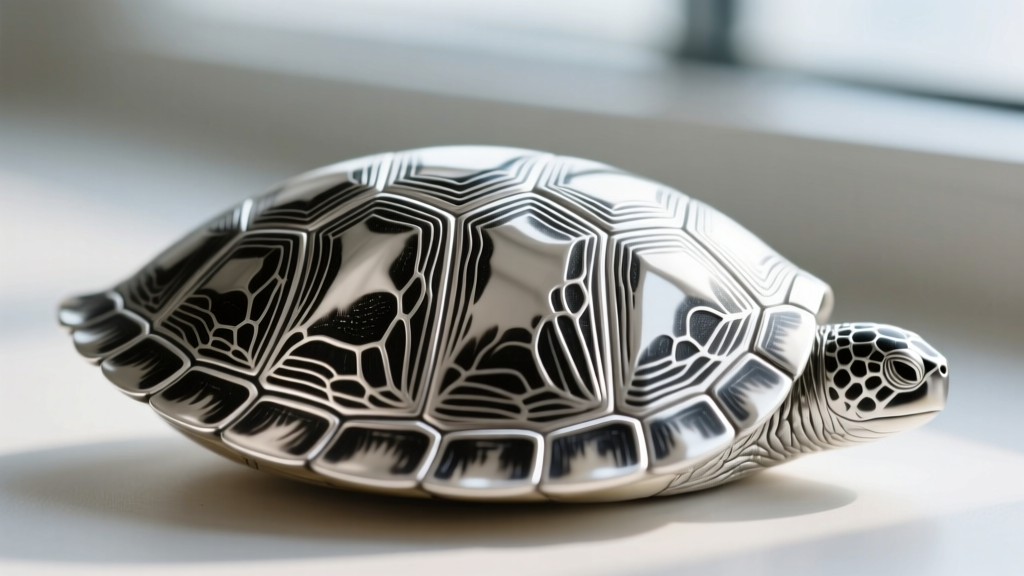
To preserve the intricate detailing of your silver turtle necklace, proper storage and cleaning are non-negotiable. Because the crevices of the turtle's shell trap ambient moisture and skin oils, the pendant is highly susceptible to localized sulfide tarnishing.
Store the necklace in an airtight anti-tarnish bag with a 3M anti-tarnish strip. When cleaning, avoid ultrasonic cleaners if your turtle pendant features any epoxy-set stones or mixed-material inlays, as the high-frequency vibrations can shatter the adhesive bond. Instead, use a soft-bristled baby toothbrush and a mild, phosphate-free dish soap to gently agitate the dirt from the shell's scutes, followed by a thorough drying with a microfiber cloth. For heavy oxidation in the crevices, a specialized silver polishing cloth wrapped around a wooden toothpick will restore the contrast between the dark recesses and the bright, polished high points.
Final Verdict: A Timeless Staple
The silver turtle necklace in 2026 is far more than a fleeting seasonal trend; it is a versatile, symbol-rich talisman that adapts to both casual and elevated wardrobes. By prioritizing .925 sterling or Argentium silver, selecting a geometric box chain for modern contrast, and embracing intentional, multi-textural layering, you can transform this nature-inspired motif into a cornerstone of your daily jewelry rotation. Whether you are drawn to its matriarchal symbolism or its undeniable aesthetic charm, a well-crafted silver turtle pendant is an investment in both style and storytelling.


