Small Initial Necklace Value: Gold Filled vs Solid
Discover the true value of a small initial necklace. We compare solid gold, vermeil, and gold-filled options to help you budget wisely.

The True Cost of Personalization
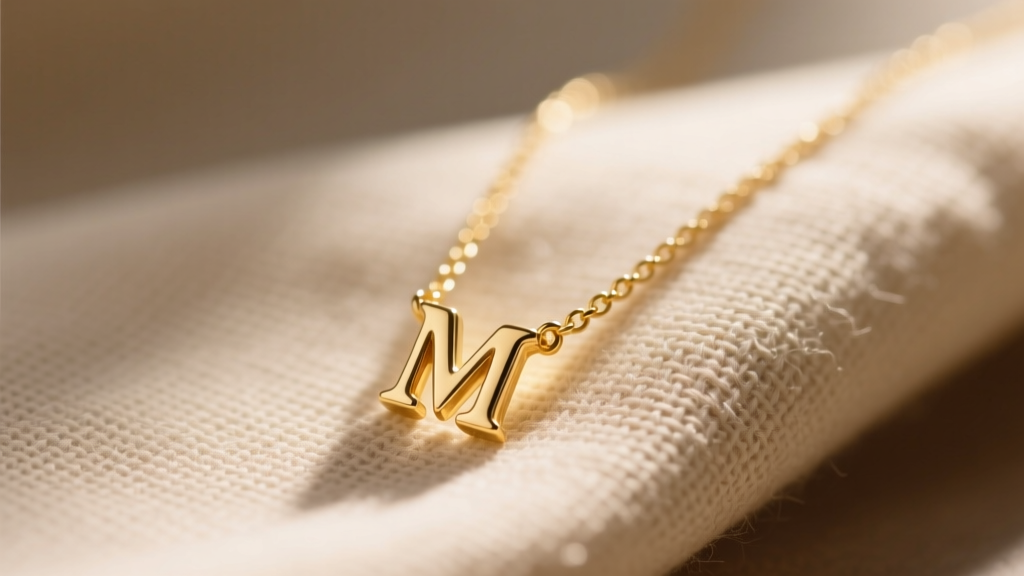
The appeal of a small initial necklace lies in its subtle, deeply personal nature. Whether you are commemorating a child, a partner, or your own identity, a delicate letter pendant is a staple of modern jewelry layering. However, the market is currently saturated with options ranging from $15 fast-fashion trinkets to $800 luxury designer pieces. For the savvy buyer, this massive price discrepancy raises a critical question: what are you actually paying for? In this comprehensive value assessment, we strip away the brand marketing and analyze the intrinsic material costs, manufacturing techniques, and structural integrity of initial necklaces to help you determine where your budget is best spent.
Anatomy of a Quality Initial Pendant
Before assessing the metal, we must evaluate the physical dimensions. A true 'small' initial pendant typically measures between 5mm and 8mm in height. While the footprint is tiny, the thickness (or gauge) of the metal blank dictates its lifespan. Many budget brands cut costs by using 0.3mm to 0.4mm thick metal sheets. At this thickness, a gold or silver letter will easily warp or bend if caught on a heavy sweater or pulled by a toddler. For a pendant that maintains its structural integrity over years of daily wear, you should look for a minimum thickness of 0.6mm, with 0.8mm being the ideal standard for premium pieces. Furthermore, the bail (the loop connecting the pendant to the chain) should be seamlessly soldered rather than simply pinched shut, preventing the pendant from slipping off during wear.
Material Breakdown: Where Your Money Goes
The most significant variable in the pricing of a small initial necklace is the base metal and the finishing technique. Understanding the strict definitions of jewelry metals is crucial for avoiding deceptive marketing. According to the Federal Trade Commission Jewelry Guides, terms like 'vermeil' and 'gold-filled' have specific legal requirements that separate them from cheap flash plating.
| Material Type | Composition | Expected Lifespan (Daily Wear) | Fair Market Price Range |
|---|---|---|---|
| Solid 14k Gold | 58.5% pure gold alloyed with silver/copper | Lifetime (generational) | $150 - $350 |
| Gold Vermeil | Sterling silver base + minimum 2.5 microns of gold | 1 to 3 years before fading | $60 - $120 |
| Gold-Filled | Brass base + minimum 5% gold by weight | 3 to 5 years with proper care | $40 - $85 |
| Sterling Silver | 92.5% silver, 7.5% copper | Lifetime (requires polishing) | $30 - $70 |
| Gold Plated (Brass) | Brass base + flash plating (under 0.5 microns) | 3 to 6 months | $15 - $35 |
As highlighted by the Gemological Institute of America (GIA), solid 14k gold remains the benchmark for fine jewelry due to its optimal balance of purity and durability. If your budget allows, a solid 14k gold small initial necklace is an investment that will never tarnish, turn your skin green, or require replating. However, if you are strictly budget-conscious, 14k gold-filled wire offers the best return on investment. Unlike electroplating, gold-filled metal is created through a mechanical bonding process that results in a gold layer up to 100 times thicker than standard plating, making it highly resistant to flaking.
The Hidden Costs: Chains, Clasps, and Hardware
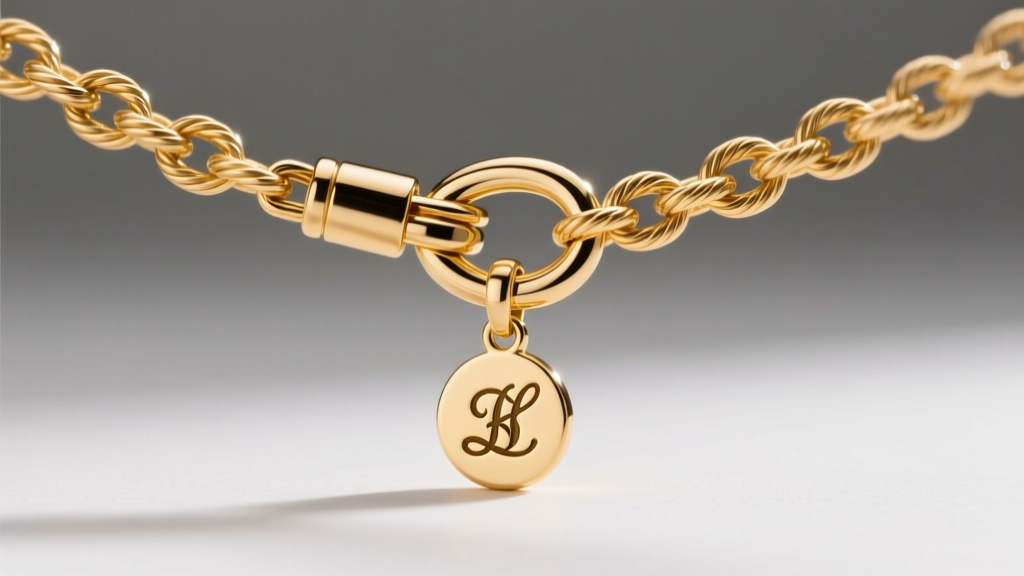
Consumers often fixate on the pendant and ignore the chain, yet the chain is the most common point of failure. A high-quality small initial necklace should feature a cable or paperclip chain with a minimum thickness of 1.0mm to 1.2mm. Chains thinner than 0.8mm are prone to kinking and snapping under minimal tension. Equally important is the clasp. Budget manufacturers frequently use tiny 5mm spring-ring clasps to save fractions of a cent per unit. These are notoriously difficult to operate and feature a weak internal tension spring that fails rapidly. A well-constructed necklace will utilize a 7mm or 9mm lobster clasp, which features a more robust internal mechanism and a solid soldered jump ring. When evaluating a $40 necklace versus an $80 necklace, the presence of a heavy-duty lobster clasp and a 1.2mm chain often accounts for the entire price difference—and it is a difference you will feel every time you put the piece on.
Laser Cutting vs. Hand Stamping
The manufacturing method of the initial itself also impacts value. Laser-cut pendants offer perfect, uniform typography and can accommodate intricate serif fonts. However, the edges can sometimes be microscopically sharp if not properly tumbled and polished post-cut. Hand-stamped initial necklaces, created by striking a steel stamp into a metal blank with a heavy mallet, possess a charming, slightly imperfect aesthetic. More importantly, the physical force of stamping work-hardens the metal, increasing its density and making the small pendant significantly more resistant to bending than a laser-cut piece of the exact same thickness.
Budget Tiers: What to Expect at Every Price Point
- Under $40 (The Fast Fashion Tier): Expect brass or copper bases with flash gold plating. The chains will be incredibly thin (0.6mm) with spring-ring clasps. The initial will likely fade or turn your skin green within a few months of daily wear. Only buy at this tier for temporary, occasional use.
- $40 to $90 (The Accessory Tier): This is the sweet spot for high-quality gold-filled and sterling silver pieces. You will find durable 1.0mm chains, secure lobster clasps, and properly sealed edges. This tier offers the highest 'cost-per-wear' value for trend-focused buyers.
- $90 to $200 (The Fine Jewelry Tier): Here, you transition into solid 10k and 14k gold, as well as premium heavy vermeil. The craftsmanship improves, with soldered bails, diamond-cut bevels on the letters for extra sparkle, and premium packaging. This is the recommended tier for meaningful gifts meant to last decades.
- $200+ (The Designer Markup Tier): Once you cross the $200 threshold for a simple small initial necklace, you are no longer paying for the gold. You are paying for brand equity, luxury retail overhead, and the signature blue or red box. From a purely metallurgical and budget-assessment perspective, the intrinsic value plateaus heavily in this tier.
Spotting Overpriced 'Luxury' Pendants
It is vital to separate material value from brand prestige. Many high-end fashion houses sell small initial necklaces crafted from sterling silver with a thin rhodium or gold wash for upwards of $350. While the design may be iconic, the actual melt value and manufacturing cost of the metal is often less than $25. If your goal is to acquire a recognizable status symbol, the brand markup is the price of admission. However, if your goal is to acquire a durable, beautiful piece of personalized jewelry that respects your budget, independent jewelers and specialized direct-to-consumer goldsmiths offer vastly superior material quality for a fraction of the designer price.
Final Verdict: Maximizing Your Investment
When shopping for a small initial necklace, always read the fine print regarding metal composition and chain gauge. A $65 gold-filled necklace with a 1.2mm cable chain and a lobster clasp will consistently outperform and outlast a $150 designer-plated brass necklace with a fragile 0.7mm chain. By prioritizing metal thickness, secure hardware, and transparent material sourcing over brand names, you can secure a deeply personal piece of jewelry that offers genuine, long-term value.


