Solar System Necklace Care: Cleaning & Maintenance Guide
Learn expert tips to clean, polish, and protect your solar system necklace. Discover safe methods for resin, gemstone, and wire-wrapped planetary jewelry.

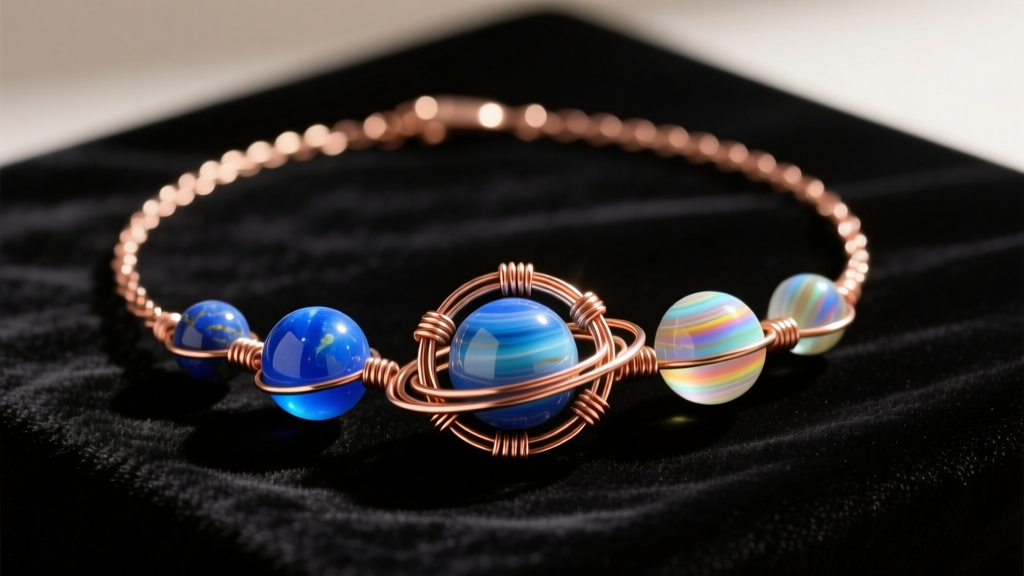
Solar system necklaces are masterpieces of miniature jewelry design, capturing the celestial beauty of our cosmos in a single, wearable piece. However, their intricate construction—often combining delicate wire-wrapped orbits, mixed-metal chains, and a diverse array of planetary materials ranging from porous gemstones to synthetic resins—makes them uniquely vulnerable to improper cleaning. What works for a solid gold chain can instantly ruin a resin Earth bead or bend a 26-gauge copper orbital ring.
As a jewelry care specialist, I see countless solar system pendants damaged by well-meaning owners who treat them like standard metallic jewelry. This comprehensive guide will break down the exact material science behind your planetary beads and provide a meticulous, step-by-step maintenance protocol to keep your personal galaxy shining brilliantly for decades.
Material Breakdown: What Are Your Planets Made Of?
Before applying any cleaning solution, you must identify the materials used for your planets. Artisan jewelers typically craft solar system necklaces using a mix of natural gemstones, borosilicate glass, and epoxy resin. Each material possesses a distinct Mohs hardness rating and chemical tolerance.
| Planet Material | Mohs Hardness | Primary Cleaning Risk | Safe Cleaning Agent |
|---|---|---|---|
| Lapis Lazuli (Earth/Neptune) | 5.0 - 6.0 | Waterlogging, chemical stripping of dyes/oils | Dry microfiber cloth only |
| Obsidian (Mercury/Pluto) | 5.0 - 5.5 | Scratching from abrasive brushes | Mild soap & distilled water |
| Borosilicate Glass (Jupiter/Saturn) | 6.5 - 7.0 | Thermal shock, shattering in ultrasonics | Mild soap & distilled water |
| Epoxy Resin (Various) | 2.0 - 3.0 | Clouding from alcohol, melting in hot water | Damp cloth, no chemicals |
| Tiger's Eye (Mars/Sun) | 7.0 | Harsh acid damage to fibrous structure | Mild soap & distilled water |
Step-by-Step Cleaning Guide for Gemstone & Glass Planets
For necklaces featuring natural stones like obsidian, tiger's eye, or hand-blown borosilicate glass, the "Dip and Swish" method is the safest approach. According to the Gemological Institute of America (GIA), porous stones require specialized care, but non-porous glass and hard gemstones can handle gentle aqueous cleaning.
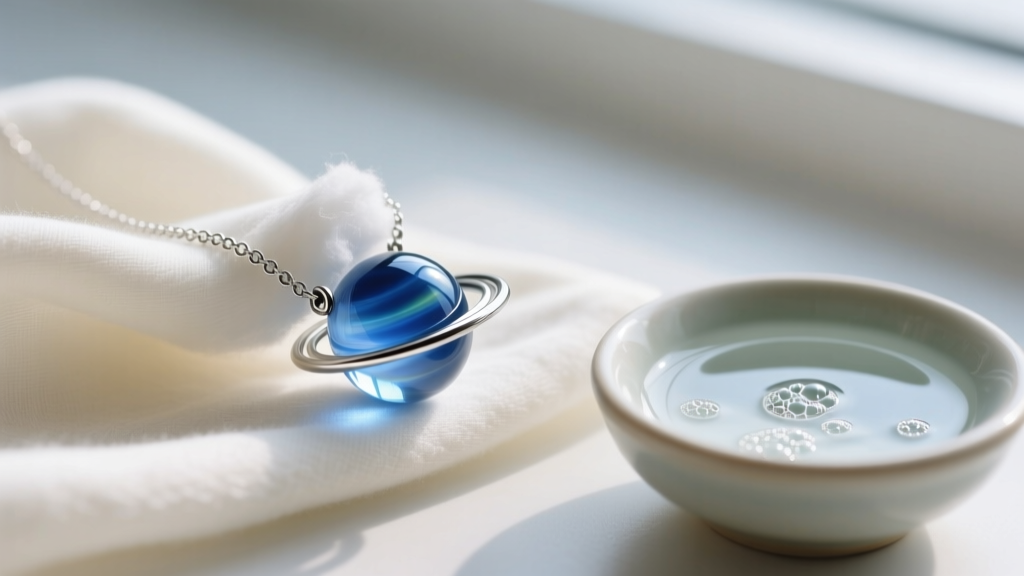
The Dip and Swish Protocol
- Prepare the Solution: Fill a glass bowl with lukewarm distilled water. Tap water contains chlorine and hard minerals that can leave microscopic calcified deposits on glass planets, dulling their internal swirls. Add two drops of pH-neutral dish soap (like original Dawn).
- Submerge Briefly: Dip only the gemstone and glass planets into the water. Avoid submerging the entire chain if it is made of oxidized or plated metals.
- Agitate Gently: Swish the planets in the water for 30 to 45 seconds. Do not scrub the wire wraps with a toothbrush; bristles easily catch on 24-gauge orbital wires and bend them out of their spherical shape.
- Rinse and Dry: Rinse the planets under a slow stream of distilled water. Immediately pat them dry with a lint-free microfiber cloth. Allow the necklace to air dry completely on a towel before storing.
Crucial Warning: Never place a solar system necklace in an ultrasonic cleaner. The high-frequency cavitation bubbles will easily shatter glass planets and fracture natural stones that contain internal inclusions or liquid-filled pockets.
How to Safely Clean Resin and Enamel Planetary Beads
Many affordable or highly stylized solar system necklaces utilize cast epoxy resin or painted enamel to achieve specific planetary textures, particularly for gas giants like Jupiter and Saturn. Resin is highly sensitive to both heat and solvents.
If your resin planets have accumulated skin oils or lotion buildup, do not use isopropyl alcohol, acetone, or commercial jewelry dips. These solvents will cause immediate micro-fractures on the resin's surface, leading to permanent cloudiness and a frosted appearance. Instead, use a slightly damp microfiber cloth with a microscopic drop of baby shampoo. Gently rub the resin planet in circular motions, then immediately buff it dry. To restore shine to dull resin planets, you can apply a tiny amount of mineral oil to a cotton swab, buff the bead, and wipe away the excess.
Polishing and Tarnish Removal for Wire-Wrapped Orbits
The "orbits" that encircle the planets are typically crafted from 24-gauge or 26-gauge dead-soft or half-hard wire. These wires are prone to kinking and tarnishing, especially when made from copper, brass, or sterling silver. For expert metal maintenance techniques, resources like Rio Grande's jewelry care guides emphasize the importance of using non-abrasive methods on delicate wirework.
Safe Polishing Techniques for Delicate Wire
- Sterling Silver & Gold-Filled Wire: Use a treated silver polishing cloth (such as a Sunshine Cloth). Slip the cloth under the wire orbit and gently pull back and forth. Never squeeze the wire, as the pressure will warp the circular orbit into an oval.
- Copper & Brass Wire: Copper oxidizes rapidly, developing a dark brown patina. If you prefer the bright, shiny copper look, you can create a mild acid bath using equal parts lemon juice and salt. Use a cotton swab to apply the mixture only to the copper wire, avoiding the gemstone planets entirely. Rinse immediately with distilled water and baking soda to neutralize the acid.
- What to Avoid: Never use baking soda paste or silver dip liquids on wire-wrapped solar system necklaces. Pastes get trapped in the tight coils where the wire wraps the bead, and liquid dips will strip the protective coatings off dyed gemstones.
Storage and Daily Wear Best Practices
Proper storage is arguably more important than cleaning when it comes to preserving the structural integrity of a solar system necklace. The protruding wire orbits act as natural snag points.
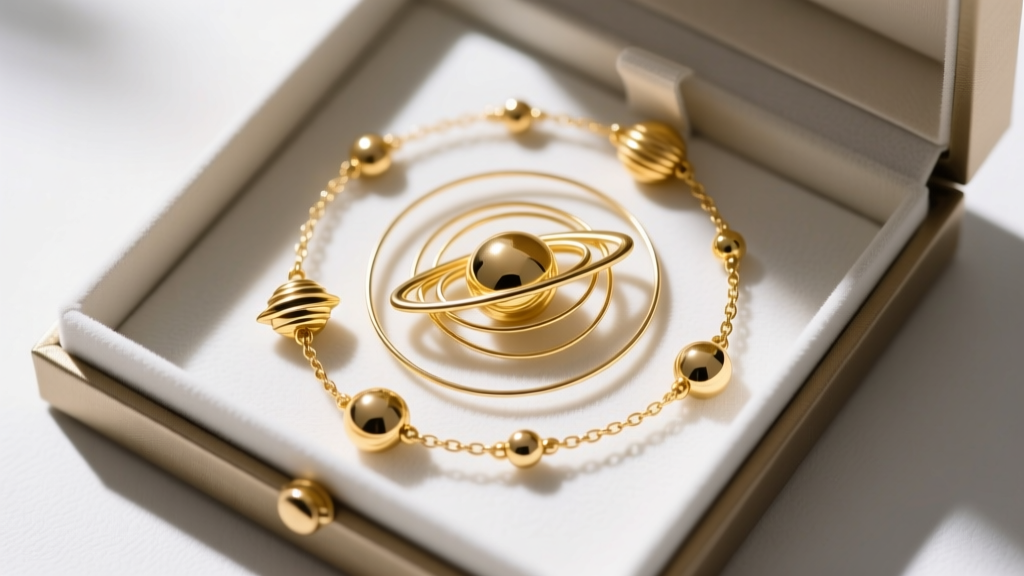
The "Orbit Snag" Prevention Method
Never toss a solar system necklace into a communal jewelry box. The wire orbits will inevitably hook onto other chains, and attempting to untangle them usually results in ripped wire wraps and scratched planetary beads. Store your necklace flat in an individual, anti-tarnish ziplock bag or a dedicated compartment in a velvet-lined box.
When wearing your necklace, put it on after applying perfumes, hairsprays, and lotions. The alcohol and aerosolized chemicals in cosmetics will degrade resin planets and accelerate the tarnishing of copper and silver orbits. Furthermore, remove the necklace before swimming; chlorine will permanently pit brass and copper wire wraps.
Troubleshooting Common Solar System Necklace Damage
Even with meticulous care, accidents happen. Here is how to address the most common issues specific to planetary jewelry:
1. Cloudy or Scratched Resin Planets
If a resin planet has lost its glass-like finish due to micro-scratches, you can gently wet-sand it using 3000-grit automotive sandpaper and a drop of water. Follow this by buffing the bead with a plastic polish (like Novus No. 2) to restore optical clarity.
2. Warped or Loose Wire Orbits
If the wire wrapping the Earth or Mars bead has pulled away, do not try to bend it back into place with your fingers; this will work-harden the metal and cause it to snap. Use nylon-jaw pliers to gently squeeze the wire back against the bead. If the wire has snapped, you will need to carefully unwrap the remaining wire and re-wrap the planet using a fresh spool of 24-gauge dead-soft wire.
3. Dye Transfer from Lapis Lazuli
Lower-grade Lapis Lazuli beads are often dyed to enhance their blue color. If the dye begins to rub off onto your silver wire, it indicates the stone was not properly sealed. Wipe the stone gently with a dry cloth and apply a very thin layer of Renaissance Wax to seal the pores and prevent further dye bleeding.
Conclusion
A solar system necklace is more than just an accessory; it is a complex assembly of diverse materials that requires a nuanced approach to maintenance. By respecting the Mohs hardness of your gemstones, avoiding harsh solvents on resin, and treating the delicate wire orbits with the utmost gentleness, you can ensure your miniature galaxy remains a breathtaking focal point for years to come. Always prioritize targeted, material-specific cleaning over generic jewelry dips, and your planets will continue to orbit in perfect, pristine condition.


