How Much Does a Gold Necklace Cost? 2026 Pricing & Value Guide
Discover how much a gold necklace costs in 2026. We break down karat weights, chain styles, gram pricing, and retail markups to help you buy smart.

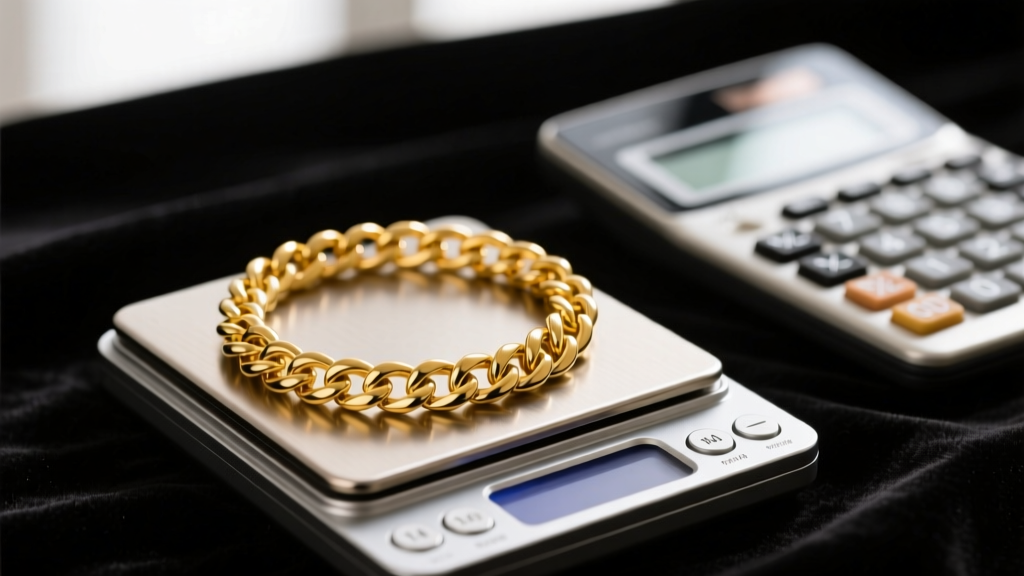
The Anatomy of Gold Necklace Pricing
When buyers ask, "how much does a gold necklace cost," they are often met with a frustrating answer: it depends. Unlike diamonds, which are priced based on the complex 4Cs, solid gold jewelry pricing is fundamentally tied to a transparent, globally traded commodity. However, the final retail price you see in a showcase is a composite of raw material value, manufacturing labor, structural integrity, and brand markup.
In 2026, with global economic shifts and precious metal volatility, understanding the anatomy of gold pricing is no longer just for investors—it is essential for anyone buying fine jewelry. A delicate 14k gold cable chain might cost $250, while a heavy 18k Miami Cuban link can easily exceed $8,000. To determine if you are getting a fair deal or being taken advantage of, you must break the cost down into four distinct layers: melt value, karat purity, labor premiums, and retail markup.
Step 1: Calculating the Intrinsic Melt Value
The foundation of any solid gold necklace's cost is its melt value—the exact worth of the raw gold if it were melted down into a bar today. Gold is traded on the commodities market per troy ounce (31.1 grams). According to real-time data from Kitco, the spot price of gold has seen historic fluctuations over the last few years, hovering in the high $2,000+ per ounce range in 2026.
To find the base cost of the gold in a necklace, use this formula:
Melt Value = (Weight in Grams) × (Karat Purity Decimal) × (Current Spot Price per Gram)
For example, if the spot price of gold is $75.00 per gram, and you are looking at a 20-gram chain, the pure gold content is the baseline. But because jewelry is rarely 24k pure gold, we must apply the karat multiplier.
Step 2: Karat Weight and Purity Multipliers
The Gemological Institute of America (GIA) defines gold purity by karats. Pure gold (24k) is too soft for everyday chain wear; it will stretch, warp, and snap under the weight of a pendant. Therefore, gold is alloyed with metals like copper, silver, and zinc for durability. This alloying process drastically changes the cost.
| Karat | Gold Purity | Purity Decimal | Estimated Base Gold Value (per 10g)* | Durability & Best Use |
|---|---|---|---|---|
| 10K | 41.7% | 0.417 | $312.75 | Highest durability, prone to tarnish, budget-friendly |
| 14K | 58.3% | 0.583 | $437.25 | Industry standard, excellent balance of color and strength |
| 18K | 75.0% | 0.750 | $562.50 | Rich yellow hue, softer, ideal for luxury pendants and light chains |
| 24K | 99.9% | 0.999 | $749.25 | Very soft, easily dented, mostly used in investment pieces or specific cultural jewelry |
*Based on a hypothetical spot price of $75/gram for 24k gold. Actual market prices vary daily.
Step 3: Chain Styles and Labor Premiums
Once you know the melt value, you must account for the labor required to turn raw gold into a wearable chain. The style of the chain dictates the manufacturing complexity, which in turn dictates the labor premium added to the final cost.
Weight and Style Comparisons (20-Inch Chains)
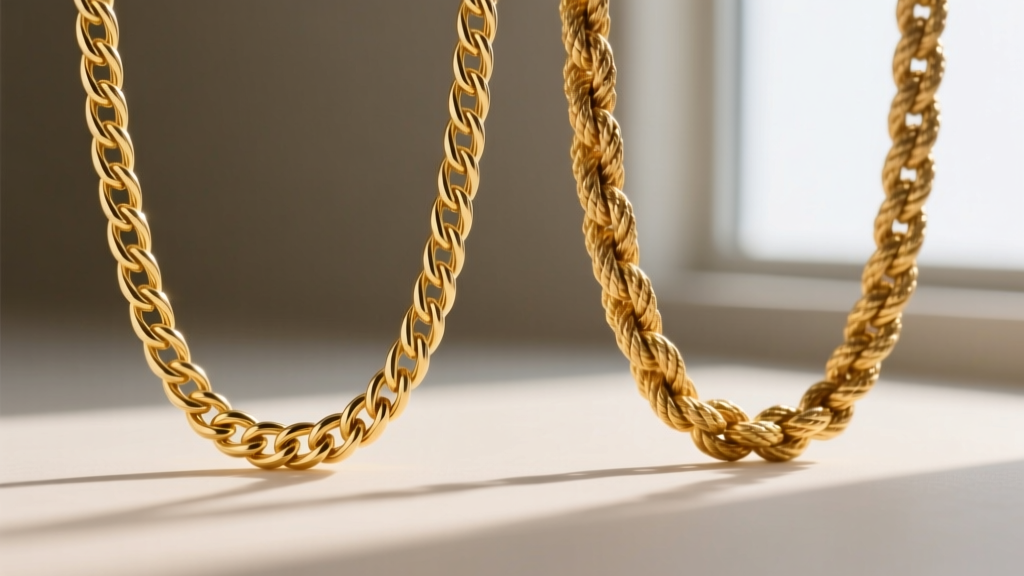
- Cable Chain (3mm): Weighs roughly 4-6 grams. Machine-made, simple oval links. Lowest labor premium. Expect to pay melt value + 20-40% markup.
- Box Chain (3mm): Weighs roughly 8-10 grams. Square links interlocked. Moderate labor premium. Excellent for holding heavy pendants.
- Rope Chain (3mm): Weighs roughly 12-15 grams. Twisted links that mimic a rope. High labor premium due to the complex twisting and soldering required. Expect to pay melt value + 60-100% markup.
- Miami Cuban Link (5mm): Weighs roughly 45-60 grams. Thick, interlocking oval links that are manually filed and polished to sit flat. Extremely high labor premium. Often priced at melt value + 100-150% markup due to the intensive hand-finishing required.
The Hollow vs. Solid Gold Trap
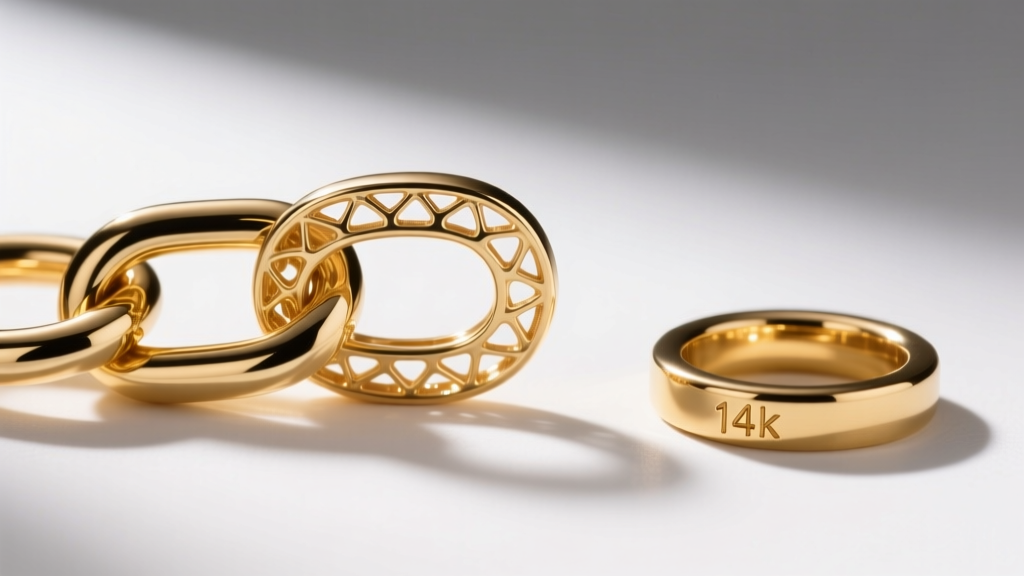
When researching how much a gold necklace costs, you will inevitably encounter "hollow" gold chains. These are created using an electroforming process that deposits a microscopic layer of gold over a base metal core, which is later dissolved. The result is a chain that looks massive (e.g., a 10mm Cuban link) but weighs only a fraction of its solid counterpart.
While a solid 10mm 14k Cuban chain might weigh 120 grams and cost over $6,000, a hollow version might weigh just 15 grams and sell for $900. Expert Advice: Avoid hollow chains for daily wear. They are notoriously fragile; a single snag on a sweater can dent or crush the links, and they are virtually impossible to repair. They offer high visual impact for low cost, but zero long-term value retention.
Step 4: Retail Markups and the "Brand Tax"
The final layer of cost is where the jewelry industry makes its profit. The World Gold Council tracks global demand, but retail markups are entirely localized and brand-dependent.
- Local Independent Jewelers: Typically charge 1.5x to 2.5x the melt value for standard chains. This is the gold standard for value. You are paying a fair wage for the jeweler's overhead and expertise.
- Shopping Mall Chains: Often charge 3x to 5x the melt value. The high overhead of mall leases and aggressive sales commissions are baked into the price of the gold.
- Luxury Designer Brands: Can charge 10x to 20x the melt value. When you buy an 18k gold chain from a high-end fashion house, you are paying for the logo, the marketing, and the retail experience, not the intrinsic value of the metal. A 10-gram 18k chain with a melt value of $560 might retail for $4,500.
Your 2026 Buyer's Appraisal Checklist
Before handing over your credit card, run the necklace through this quick assessment framework to ensure you understand exactly what you are paying for:
- Weigh It: Ask the jeweler to place the chain on a digital gram scale in front of you. Never buy gold by the inch; always buy by the gram.
- Verify the Stamp: Use a jeweler's loupe to find the hallmark. Look for 10K, 14K, 18K, or numerical stamps like 417, 585, and 750. If it says "HGE," "GF," or "GP," it is gold-plated or gold-filled, not solid gold, and should cost under $100.
- Do the Math: Pull up the current spot price of gold on your phone. Divide the per-ounce price by 31.1 to get the per-gram price. Multiply that by the chain's weight and the karat decimal. This is your baseline.
- Assess the Premium: If the retail price is more than 3x your calculated melt value (and it is not a highly complex handmade rope or Cuban chain), walk away or negotiate.
Understanding how much a gold necklace costs requires looking past the sparkle and focusing on the math. By mastering the relationship between spot prices, karat weights, and labor premiums, you can confidently navigate the 2026 jewelry market and invest in pieces that hold their value for a lifetime.


