2026 Gift Guide: Choosing the Perfect Square Diamond Necklace
Discover the ultimate 2026 gift guide for square diamond necklaces. Learn to match princess and Asscher cuts to milestones, settings, and budgets.

Why a Square Diamond Necklace is the Ultimate Milestone Gift
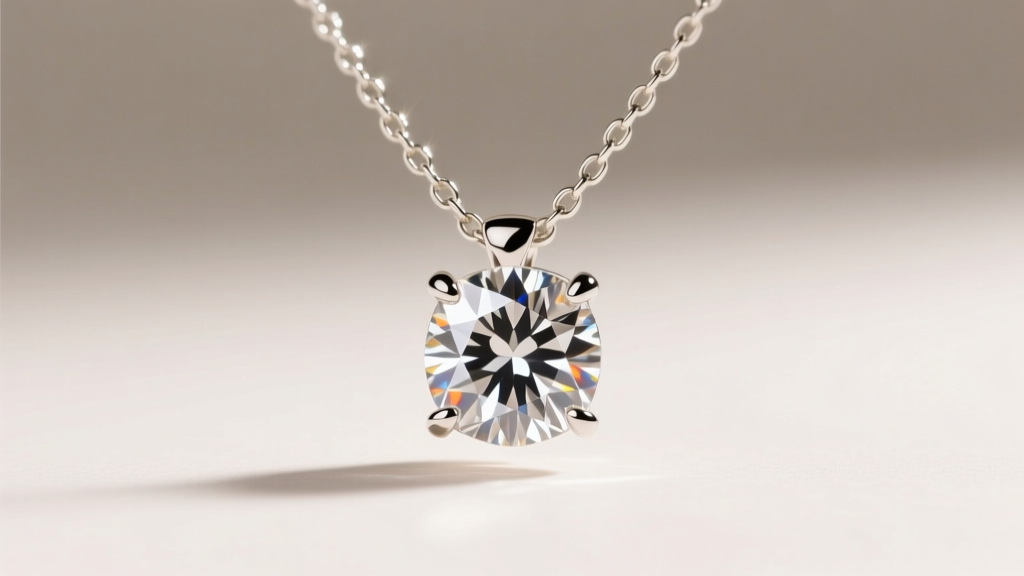
When it comes to milestone gifting, the square diamond necklace occupies a unique space in fine jewelry. Unlike the ubiquitous round brilliant, square silhouettes—encompassing Princess, Asscher, and Radiant cuts—project a sense of modern architecture, geometric precision, and deliberate intent. In 2026, as buyers move away from generic solitaire rounds toward highly personalized, character-driven gems, the square diamond pendant has emerged as a top-tier choice for anniversaries, graduations, and major career milestones.
But gifting a square diamond requires more than just picking a pretty stone. The sharp corners, specific depth requirements, and unique light performance of these shapes demand a technical understanding to ensure you are buying a piece that will last a lifetime. This guide breaks down the exact specifications, setting requirements, and occasion-matching frameworks you need to make an informed purchase.
Decoding the Square: Princess vs. Asscher vs. Radiant
Not all square diamonds are created equal. The term "square diamond necklace" generally refers to three distinct faceting styles, each with its own optical behavior and vulnerability profile. According to the Gemological Institute of America (GIA), understanding the facet arrangement is critical for evaluating light return and structural integrity.
Princess Cut: The Modern Brilliant
The Princess cut is a square modified brilliant with 76 facets. It offers the fiery scintillation of a round brilliant but in a sharp, 90-degree cornered silhouette. Expert Spec: Look for a depth percentage between 65% and 75%, and a table percentage under 75%. Because the four corners are extremely sharp and prone to chipping upon impact, a Princess cut must be set with V-prongs or a full bezel to ensure daily wearability.
Asscher Cut: The Art Deco Step-Cut
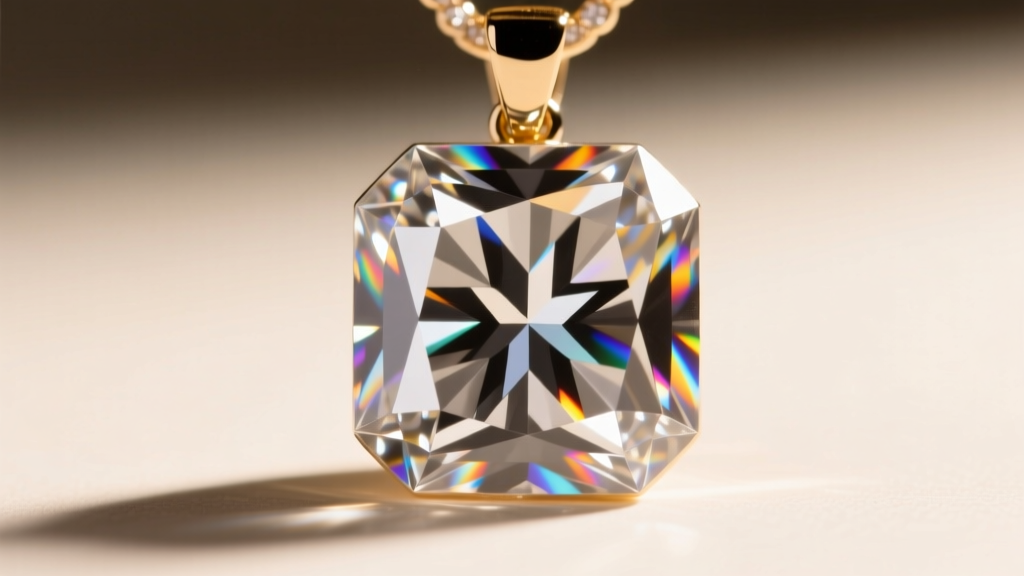
For the vintage-loving recipient, the Asscher cut is a square step-cut with cropped corners and typically 58 facets. It produces a mesmerizing "windmill" or "hall of mirrors" effect. Expert Spec: Step-cuts hide color poorly but highlight clarity. Always demand a minimum of VS2 clarity and G color, as the large open facets make inclusions and yellow undertones highly visible. Ideal depth is 60% to 68%. Because the corners are cropped, standard 4-prong settings are safe.
Radiant Cut: The Crushed Ice Compromise
The Radiant cut combines the cropped corners of an Emerald or Asscher cut with the brilliant faceting of a round. This results in a "crushed ice" scintillation. It is the most durable square shape for an active lifestyle, as the cropped corners eliminate the primary chip risk found in Princess cuts while maintaining maximum brilliance.
Matching the Occasion: A Gifting Framework
A square diamond necklace should align with the gravity of the occasion. A heavy, multi-carat halo piece might overwhelm a high school graduate, while a tiny bezel-set chip might feel inadequate for a 10th anniversary. Use this 2026 framework to match the carat weight, setting, and chain to the milestone.
| Occasion | Ideal Carat Weight | Recommended Cut & Setting | Chain Pairing |
|---|---|---|---|
| College Graduation | 0.25ct – 0.50ct | Princess Cut, Bezel Setting | 16" Cable Chain (0.8mm) |
| 5th Anniversary | 0.75ct – 1.00ct | Radiant Cut, 4-Prong Basket | 18" Box Chain (1.0mm) |
| 10th Anniversary | 1.50ct – 2.00ct | Asscher Cut, Hidden Halo | 18" Wheat Chain (1.5mm) |
| Push Present / Major Milestone | 2.50ct+ | Princess Cut, Double Halo | 17" Rope Chain (2.0mm) |
Technical Buying Guide: Settings, Chains, and Necklines
The longevity of a square diamond necklace relies heavily on the metalwork. A poorly chosen setting or an overly delicate chain will result in lost stones and broken links.
Bezel vs. Prong Settings
- Full Bezel: A rim of metal completely encircles the diamond's girdle. This is the ultimate protective setting for Princess cuts, entirely shielding the sharp 90-degree corners from impact. It sacrifices about 10-15% of light entry but guarantees structural integrity.
- V-Prong: If you prefer the floating look of prongs, ensure the setting uses V-prongs at the four corners. Standard rounded prongs leave the sharp tips of a Princess cut exposed to catching on knit sweaters and chipping.
- Standard 4-Prong: Only appropriate for Asscher and Radiant cuts, which feature cropped (chamfered) corners that do not require V-shaped protection.
Chain Selection, Gauge Thickness, and Necklines
The chain must support the weight of the pendant without snapping, while also complementing the wearer's typical wardrobe. According to jewelry manufacturing standards, the chain's tensile strength must scale with the pendant's mass.
- Box Chains (0.9mm - 1.2mm): The gold standard for pendants up to 1.5 carats. The square links mirror the geometry of the diamond and offer excellent tensile strength.
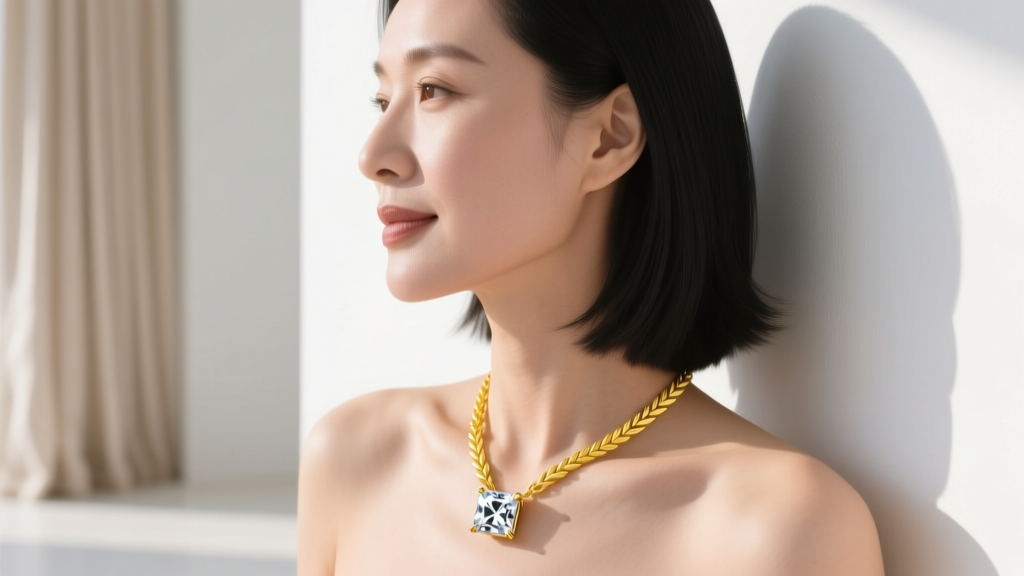
- Wheat Chains (1.2mm - 1.5mm): Braided and highly durable, ideal for heavier 2-carat Asscher or Radiant pendants. The woven texture prevents kinking.
- Cable Chains (0.7mm - 0.9mm): Best reserved for lightweight, sub-half-carat graduation gifts. Anything heavier risks stretching the oval links over time.
For crew necks and high collars, a 16-inch choker length sits perfectly above the fabric. For V-necks and scoop necks, an 18-inch princess length allows the square pendant to rest precisely in the negative space of the neckline, elongating the neck.
"Always pair a square diamond pendant with a lobster clasp rather than a spring-ring clasp. The structural asymmetry of square stones causes them to flip and drag on the chain, putting immense stress on the clasp mechanism. A solid cast lobster clasp prevents accidental unfastening." — Master Jeweler Bench Note, 2025
2026 Pricing Tiers and Market Realities
The diamond market has shifted dramatically with the normalization of lab-grown stones. When shopping for a square diamond necklace, buyers now have two distinct pricing tiers. Lab-grown diamonds are chemically and optically identical to mined diamonds but offer significant carat-size advantages for fixed budgets.
- Entry-Level (0.25ct - 0.50ct): Lab-grown Princess cuts in 14k gold bezel settings range from $400 to $800. Natural equivalents sit between $1,200 and $2,500.
- Mid-Tier (0.75ct - 1.25ct): High-quality lab-grown Radiant cuts (VVS clarity, D-F color) in 18k gold box chains range from $1,100 to $2,000. Natural stones of the same spec command $4,500 to $8,000.
- Heirloom Tier (2.00ct+): For major milestones, a 2-carat natural Asscher cut pendant with a hidden halo will cost between $12,000 and $18,000, depending on origin and fluorescence. Lab-grown alternatives offer the exact same visual footprint for $2,500 to $4,000.
Color is particularly unforgiving in step-cuts like the Asscher. While a Princess cut's brilliant faceting can mask an H or I color grade, an Asscher cut will readily display yellow or brown undertones if you drop below a G color grade. Budget accordingly. For comprehensive pricing metrics and market analysis, industry buyers often refer to the Blue Nile Diamond Education Center to compare real-time shape premiums, as square cuts generally carry a 10-20% discount per carat compared to round brilliants.
Final Gifting Tips: Certification and Presentation
Never purchase a square diamond necklace over 0.50 carats without a reputable grading report. For natural diamonds, insist on a GIA (Gemological Institute of America) report. For lab-grown diamonds, IGI (International Gemological Institute) or GCAL are the industry standards, as GIA's lab-grown reports are often digital-only and less detailed on the physical inscription.
Finally, consider the presentation. Because square pendants are highly geometric, they look best when presented in a slim, velvet-lined travel box rather than a bulky traditional ring box. Include a microfiber polishing cloth and a small bottle of jewelry cleaner in the gift bag, as the large, open facets of Asscher and Radiant cuts show skin oils and fingerprints more readily than complex brilliant cuts, requiring more frequent maintenance to keep their geometric lines looking crisp and icy.


