Square Necklace Chain Engineering: Gauge, Strength & Link Design
Explore the metallurgy, gauge tolerances, and structural integrity of the square necklace chain. Expert insights on box and square link durability.

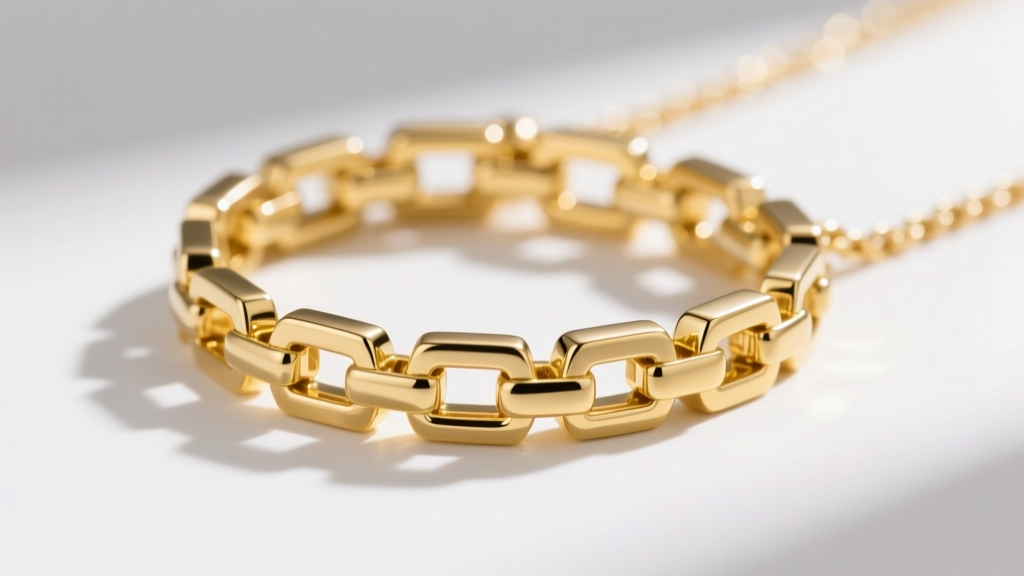
The Anatomy of a Square Necklace Chain: Box vs. Square Link
When jewelers and metallurgists discuss the square necklace chain, they are typically referring to one of two distinct structural categories: the continuous box chain (often called a Venetian chain) or the individual square link chain (such as a square Cuban or square curb). While both share a geometric aesthetic defined by crisp 90-degree angles, their engineering, manufacturing processes, and failure modes are vastly different.
A box chain is constructed from flat wire that is folded into hollow, square-shaped links and then woven together in a continuous, interlocking sequence. This creates a fluid, fabric-like drape. In contrast, a square link chain is manufactured from solid round or square wire that is bent into individual links, linked together, and often twisted or filed to create flat, geometric surfaces. Understanding this distinction is critical because the structural integrity of a square necklace chain relies heavily on how stress is distributed across its specific geometry.
The defining feature of any square chain is the 90-degree internal corner. In materials science, sharp internal corners act as stress concentrators. This phenomenon, known as notch sensitivity, means that under tensile load, the force is not distributed evenly across the wire's cross-section but is instead amplified at the inner corners. Consequently, the alloy composition and the work-hardening state of the wire are paramount to preventing catastrophic link failure.
Metallurgical Considerations: Alloys and Vickers Hardness
The durability of a square necklace chain is directly tied to the Vickers Hardness (HV) of the precious metal alloy used. Pure gold (24k) and pure silver are far too malleable for chain making; they would deform under the weight of even a light pendant. Therefore, alloying elements are introduced to increase yield strength and hardness through solid solution strengthening and grain refinement.
Sterling Silver (925)
Standard 925 sterling silver consists of 92.5% silver and 7.5% copper. In its fully annealed (soft) state, 925 silver has a Vickers Hardness of approximately 65 HV. However, the wire used to manufacture high-quality square chains is heavily cold-worked (drawn through progressively smaller dies). This cold-working process introduces dislocations into the metal's crystal lattice, raising the hardness to 110-130 HV. This work-hardened state is what gives a sterling silver box chain its rigidity and resistance to stretching.
Gold Alloys (14k vs. 18k)
According to the Gemological Institute of America (GIA), 14k gold (58.5% pure gold) is alloyed with a higher percentage of copper, silver, and zinc compared to 18k gold (75% pure gold). This higher volume of alloying metals makes 14k gold inherently harder and more resistant to the abrasion and tensile stress that square chains endure. An 18k square necklace chain, while richer in color, is more prone to link distortion and requires a thicker gauge to achieve the same tensile yield as a 14k counterpart.
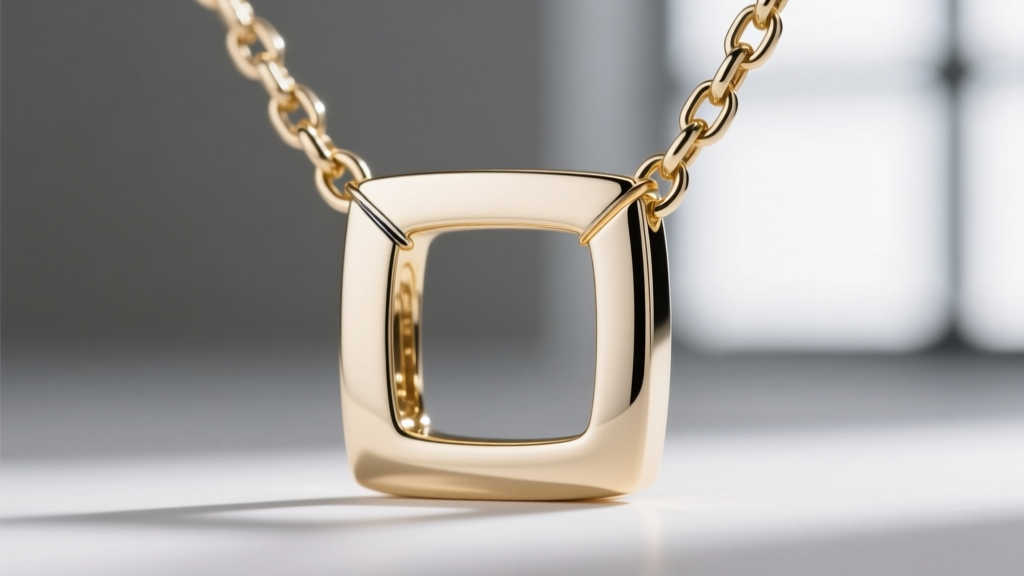
Gauge Thickness, Tensile Strength, and Failure Points
Selecting the correct wire gauge is the most critical decision in chain engineering. The American Wire Gauge (AWG) system is inversely proportional to thickness; a lower number indicates a thicker, stronger wire. Below is a technical breakdown of standard gauges used in square necklace chains, their approximate tensile yield limits (based on work-hardened 14k yellow gold), and their recommended applications.
| AWG Gauge | Diameter (mm) | Approx. Tensile Yield | Recommended Use Case | Primary Failure Mode |
|---|---|---|---|---|
| 22 AWG | 0.64 mm | 12 - 18 lbs | Lightweight pendants (<5g), layering | Hinge bind and kinking in box chains |
| 18 AWG | 1.02 mm | 35 - 50 lbs | Medium pendants (5-15g), daily wear | Solder seam fatigue in square links |
| 14 AWG | 1.63 mm | 90 - 120 lbs | Heavy pendants, standalone statement pieces | Clasp ring deformation |
| 10 AWG | 2.59 mm | 200+ lbs | Heavy menswear chains, high-tensile requirements | Link abrasion at contact points |
For a standard square necklace chain intended to hold a 10-gram diamond pendant, an 18 AWG (1.02mm) chain is the engineering sweet spot. It provides sufficient tensile strength while maintaining a refined drape. However, if the chain is a box style, the failure point is rarely the wire snapping; instead, it is the 'hinge'—the tiny folded tabs that interlock the links. If subjected to lateral torque, these hinges can splay open, causing the chain to unravel.
Advanced Soldering Techniques and Clasp Mechanics
The method used to solder the individual links and attach the clasp drastically affects the lifespan of a square necklace chain. Traditional torch soldering requires applying flux and a lower-melting-point solder alloy (such as 'easy' or 'medium' solder) to the seam. The risk with torch soldering on square chains is twofold: first, the broad heat application can round off the crisp 90-degree edges of the link, ruining the geometric aesthetic; second, the heat anneals the surrounding work-hardened wire, creating a localized soft spot that is highly susceptible to kinking.
To mitigate this, premium jewelry manufacturers utilize Nd:YAG laser welding. As noted by industrial jewelry suppliers like Rio Grande, laser welding focuses intense thermal energy onto a microscopic spot (often 0.2mm to 0.5mm). This allows the jeweler to fuse the metal or add a microscopic drop of filler wire without transferring heat to the rest of the link. The result is a square link chain that retains its full work-hardened temper and crisp corners. Consumers should expect to pay a 30% to 40% premium for laser-welded square chains due to the specialized equipment and labor involved.
Clasp Integration
The clasp is inherently the weakest link in any necklace. For square chains, a standard spring ring is inadequate due to its small internal jump ring, which can easily pull through the square links. A heavy-duty lobster claw with a reinforced, laser-welded jump ring is the minimum standard. For thicker square link chains (14 AWG and below), a custom-fabricated box clasp with a secondary safety figure-eight wire is required to distribute the tensile load across a wider surface area.
Maintenance: Preventing Kinking and Link Distortion
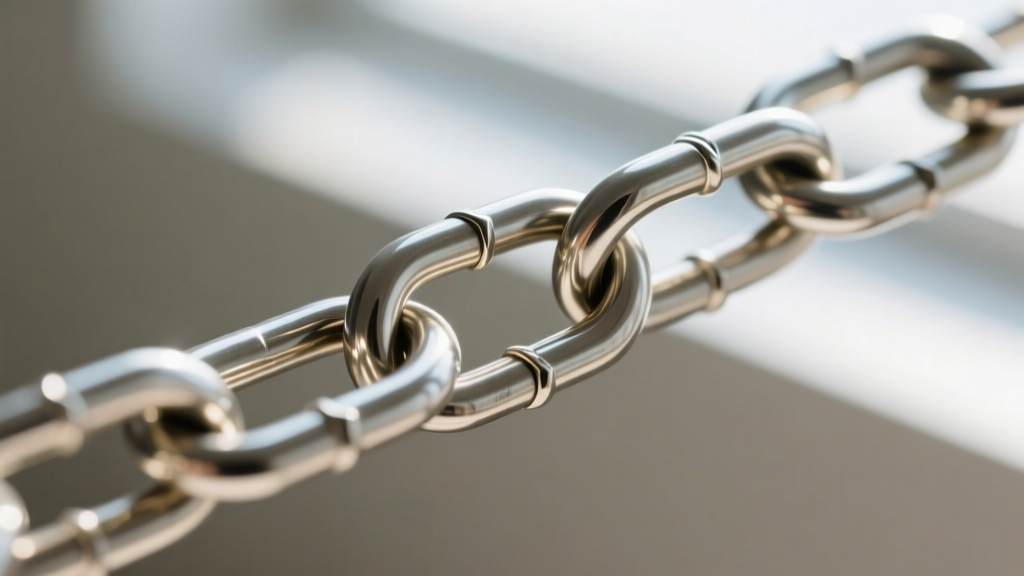
The most common catastrophic failure of a square box chain is kinking. This occurs when the chain folds back on itself, and the square links lock at an acute angle. If the wearer pulls on the chain while it is kinked, the folded link acts as a wedge, prying the adjacent links open and permanently distorting the hinge tabs.
Never apply tensile force to a kinked box chain. The mechanical advantage of the folded square link will easily exceed the yield strength of the hinge, causing irreversible structural damage.
The Burnisher Technique for Un-Kinking
If a square necklace chain becomes kinked, it must be coaxed back into planar alignment. Lay the chain flat on a polished steel bench block. Apply a microscopic drop of light sewing machine oil to the kinked joint to reduce friction. Using a smooth, hardened steel burnisher or a soft acrylic mallet, gently roll and tap the kinked area. The goal is to apply localized compressive force to flatten the links back into their intended 90-degree alignment without stretching the wire.
Furthermore, the 90-degree internal corners of square chains are notorious for trapping sebum, dead skin cells, and environmental dust. When cleaning, avoid harsh bristle brushes that can scratch the polished flat surfaces. Instead, use an ultrasonic cleaner with a mild, non-ammoniated jewelry detergent for 3 to 5 minutes, followed by a rinse in distilled water and immediate drying with compressed air to prevent water spots on the flat geometric planes.


