Square Necklace Guide: Comparing Gold, Silver, and Titanium
Compare gold, silver, steel, and titanium for your square necklace. Discover how metal hardness impacts edge retention, weight, and long-term durability.

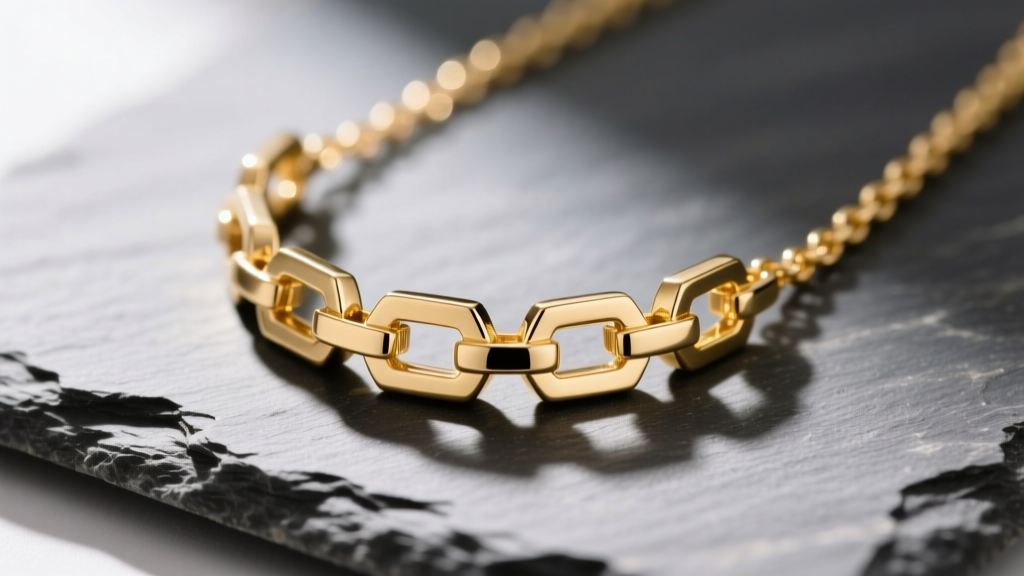
When browsing contemporary jewelry collections, the square necklace stands out as a masterclass in geometric precision. Whether you are looking at a classic box chain, a modern square Cuban link, or a minimalist square tube pendant, the appeal lies in the sharp, light-catching facets that round chains simply cannot replicate. However, this distinct geometry introduces unique metallurgical challenges. Flat planes and sharp 90-degree corners interact with the environment—and the wearer—very differently than cylindrical links.
In 2026, advancements in CNC machining and laser welding have made square link chains more precise than ever, but the fundamental laws of metallurgy still apply. The material you choose will dictate how well those sharp edges hold up over time. This guide breaks down the material properties, hardness ratings, and failure modes of the most popular metals used in square necklaces, helping you make an informed, data-driven purchase.
The Geometry of Square Links: Why Metal Hardness Matters
To understand material selection, we must first look at the physical structure of a square necklace. Unlike round cable chains, which scatter light and hide minor surface abrasions, square links feature broad, flat planes that act like mirrors. Any micro-scratch, dent, or deformation on a flat surface immediately disrupts the light reflection, making wear and tear highly visible.
Furthermore, the 90-degree corners of square links act as stress concentrators. When the necklace is bent, folded, or pulled, the mechanical stress is disproportionately focused on these outer edges. Therefore, the Vickers Hardness (HV) of the metal is the single most critical metric for square jewelry. A softer metal will quickly suffer from 'corner blunting,' where the sharp geometric edges round off, fundamentally altering the aesthetic of the piece. According to manufacturing data from Rio Grande Jewelry Supply, selecting an alloy with a high HV rating is non-negotiable for preserving geometric integrity in flat-faced chains.
Material Breakdown: Properties of Popular Square Necklace Metals
Sterling Silver (925) - The Classic but Soft Choice
Sterling silver is an alloy consisting of 92.5% pure silver and 7.5% copper. While it offers a brilliant, bright white luster that perfectly complements the reflective nature of square links, it is inherently soft. Pure silver has a Vickers Hardness of roughly 25 HV, and the copper alloy bumps sterling silver up to approximately 60-70 HV.
For a square necklace, this means the sharp corners will gradually round off with daily wear. Additionally, the copper content makes sterling silver prone to oxidation. In a square box chain, the tight, flush-fitting links create microscopic crevices where moisture and sulfur accumulate, leading to stubborn tarnish lines that are difficult to polish out without further rounding the edges.
Stainless Steel (316L) - The Budget Workhorse
If edge retention is your primary concern on a budget, 316L surgical stainless steel is exceptional. With a Vickers Hardness ranging from 150 to 200 HV, it is more than twice as hard as sterling silver. The chromium content forms a passive oxide layer that prevents tarnish and corrosion entirely.
Steel square chains maintain their factory-sharp corners for years. However, the trade-off is density and rigidity. Steel is relatively heavy, and its high tensile strength means that if a steel square chain kinks, it is nearly impossible to straighten without specialized jewelry pliers. It is also notoriously difficult to resize or solder if a link breaks.
Solid Gold (14k vs 18k) - The Luxury Standard
Gold is the traditional choice for fine square necklaces, but the karat weight drastically alters its structural viability. As noted by the Gemological Institute of America (GIA), pure 24k gold is far too soft for jewelry.
- 18k Gold (75% pure): With an HV of roughly 115, 18k gold is luxurious and rich in color, but it remains somewhat soft. It is acceptable for lightweight square pendants, but an 18k square Cuban chain will show edge wear and surface scratching relatively quickly.
- 14k Gold (58.3% pure): Alloyed with higher amounts of copper, silver, and zinc, 14k gold achieves an HV of 135-150. This makes it the optimal choice for square link chains, providing the perfect balance of precious metal value and the structural rigidity required to keep geometric edges sharp.
Titanium (Grade 5 / Ti-6Al-4V) - The Modern Lightweight
Grade 5 titanium is an aerospace alloy containing aluminum and vanadium. It boasts a staggering Vickers Hardness of 334 HV, making it virtually impervious to the edge blunting that plagues softer metals. According to AZoM Materials Science, Grade 5 titanium also possesses an incredibly high strength-to-weight ratio.
A titanium square necklace will feel significantly lighter on the neck than a steel or silver equivalent, reducing clasp strain. The primary drawback is manufacturing complexity; titanium cannot be soldered with standard jewelry torches and requires laser welding in an argon atmosphere, making repairs highly specialized and expensive.
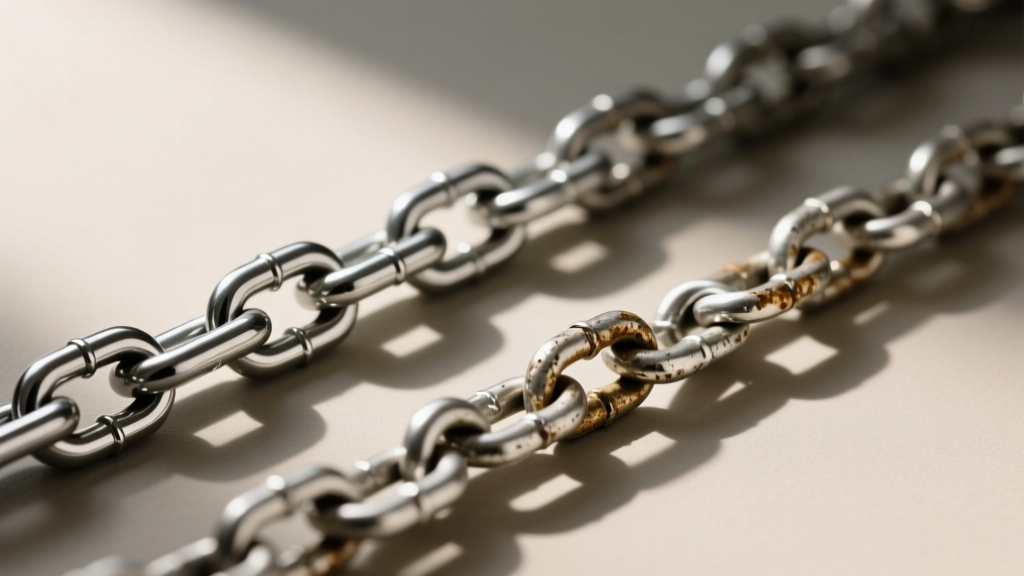
Comparative Data: Hardness, Weight, and Market Pricing
The following table synthesizes the critical metallurgical and economic data for an 18-inch, 4mm square link chain across the four primary materials.
| Metal Alloy | Vickers Hardness (HV) | Density (g/cm³) | Edge Retention | Avg. Retail Price (18' 4mm) |
|---|---|---|---|---|
| Sterling Silver (925) | 65 HV | 10.4 | Poor | $45 - $90 |
| 316L Stainless Steel | 160 HV | 8.0 | Excellent | $30 - $65 |
| 14k Yellow Gold | 140 HV | 13.5 | Good | $700 - $1,400 |
| Grade 5 Titanium | 334 HV | 4.4 | Superior | $90 - $180 |
Common Failure Modes in Square Necklaces
Because of their rigid geometry, square necklaces experience mechanical stress differently than fluid, round chains. Understanding these failure modes will help you inspect your jewelry and prevent catastrophic breaks.
1. Link Stretching and 'Pillowing'
In square box chains, the links are formed from thin, hollow or semi-solid square wire. If the chain is subjected to sudden tensile shock (e.g., getting caught on a door handle), the square links do not bend; they stretch. The flat sides of the square link will bow outward, a phenomenon jewelers call 'pillowing.' Once a square link pillows, it weakens the structural integrity of the adjacent links and ruins the uniform geometric aesthetic.
2. Clasp Fatigue and Jump Ring Distortion
Square chains, particularly solid gold and steel variants, are inherently heavier and stiffer than round chains. This stiffness means that when the necklace moves, the kinetic energy is transferred directly to the clasp rather than being absorbed by the chain's articulation. Standard spring-ring clasps will fail quickly under this stress. Always ensure your square necklace is fitted with a heavy-duty lobster clasp or a custom box clasp with a secondary safety figure-eight catch.
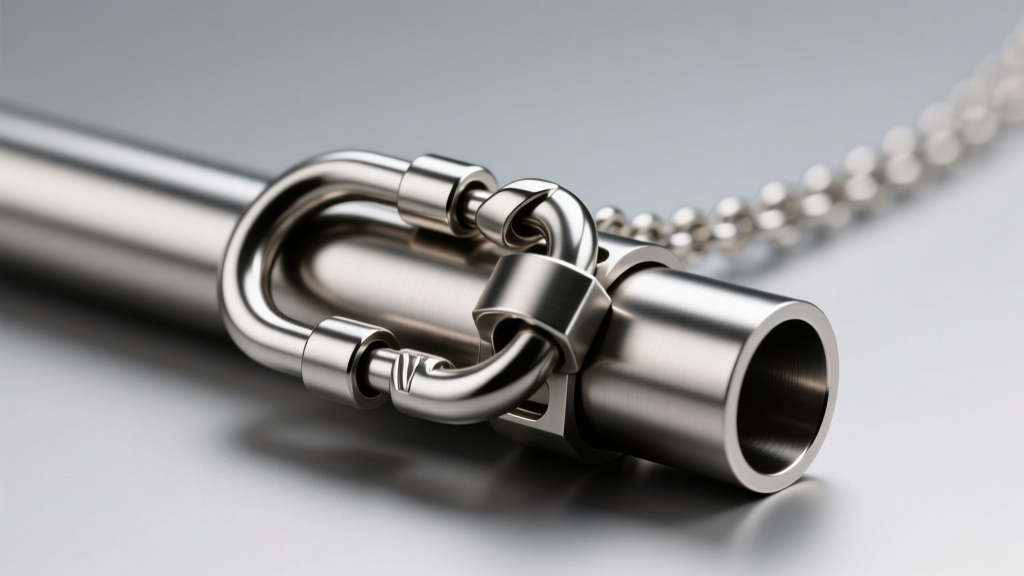
Maintenance and Polishing Protocols for Geometric Chains
Maintaining the mirror finish and sharp edges of a square necklace requires specific polishing techniques. If you take a square chain to a jeweler who uses a standard loose muslin buffing wheel, the abrasive compound will catch the 90-degree corners, aggressively rounding them off and destroying the geometric design.
Expert Tip: When polishing flat-faced square links, jewelers must use a hard, flat felt buff or a tightly stitched muslin wheel, applying the polishing compound parallel to the flat planes. The corners should be protected or polished exclusively by hand using a flat polishing stick to maintain the crisp 90-degree angles.
For at-home maintenance, avoid liquid silver dips or ultrasonic cleaners if your square chain features tension-set stones or hollow links. Instead, use a soft microfiber cloth and a mild, non-abrasive jewelry soap. For the tight crevices between flush-fitting square links, a soft-bristled makeup brush is far more effective and safer than a hard toothbrush, which can leave micro-scratches on the flat reflective surfaces.
Final Verdict: Choosing Your Metal
The ideal material for your square necklace depends entirely on your wear habits and budget. If you desire a lightweight, virtually indestructible piece for daily, active wear, Grade 5 Titanium is the undisputed champion of edge retention. For traditional fine jewelry that balances precious metal value with structural durability, 14k Gold remains the gold standard. Avoid 18k gold and sterling silver for heavy, daily-wear square chains, reserving those softer metals for lightweight pendants or occasional-wear pieces where the sharp geometry won't be subjected to constant friction.


