Square Pendant Necklace Silver: Technical Sizing & Alloy Guide
Discover the metallurgy, chain gauge matching, and structural engineering behind the perfect square pendant necklace silver in our expert guide.

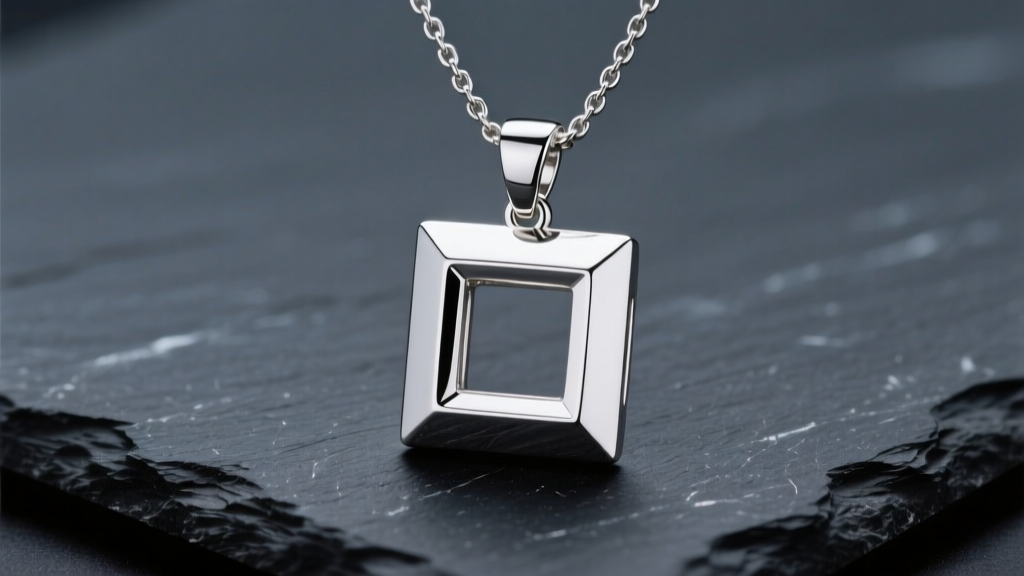
When evaluating a square pendant necklace silver, most buyers focus solely on the aesthetic appeal of the geometric silhouette. However, as a structural piece of jewelry, a square pendant introduces unique engineering challenges that round or organic shapes do not. The sharp corners, the distribution of mass, and the specific alloy composition all dictate how the necklace will drape, wear, and age over time. In this expert deep dive, we bypass generic styling advice to examine the metallurgy, dimensional tolerances, chain gauge physics, and clasp mechanics required to engineer a flawless square silver pendant.
The Metallurgy of Silver: 925 Sterling vs. Argentium 960
The foundation of any high-quality silver pendant is its alloy. Pure silver (999 fine) is too soft for structural jewelry; it will warp under minimal pressure and lose its polish within days. Therefore, the industry relies on alloyed silver. According to The Silver Institute, the two dominant alloys in modern jewelry manufacturing are traditional 925 Sterling and the advanced Argentium 960.
Traditional 925 Sterling Silver
Standard sterling silver consists of 92.5% pure silver and 7.5% copper. The copper provides the necessary Vickers hardness (typically around 65-70 HV) to maintain the sharp 90-degree angles of a square pendant. However, copper is highly reactive with sulfur and moisture in the atmosphere, leading to the rapid formation of silver sulfide (tarnish). For a square pendant, which is often polished to a mirror finish to emphasize its geometric planes, tarnish in the micro-crevices of the bail or along the chamfered edges can quickly degrade the visual impact.
Argentium 960 Silver
For buyers seeking superior performance, Argentium silver replaces a portion of the copper with germanium. This results in an alloy that is 96% pure silver, highly tarnish-resistant, and possesses a naturally brighter, whiter luster that more closely mimics platinum. While a square pendant necklace silver crafted from Argentium will cost approximately 20% to 30% more than its 925 counterpart, the elimination of routine chemical polishing makes it the superior choice for low-maintenance, high-impact geometric jewelry.
Geometric Proportions and Edge Engineering
The visual weight of a square pendant is deceptive. A 20mm square appears significantly larger and heavier than a 20mm circular pendant due to the increased surface area and the presence of corners. When selecting dimensions, precision in thickness and edge finishing is critical.
- Dimensional Tolerances: A standard 'medium' square pendant should measure between 15mm and 20mm across. Anything exceeding 25mm transitions from a versatile daily piece to a heavy statement item.
- Thickness and Warping: The pendant must be at least 1.5mm thick. A 1.0mm thick 20mm silver square lacks the structural rigidity to resist bending if subjected to lateral pressure (e.g., being slept on or pressed against a hard surface).
- Edge Chamfering: This is a hallmark of expert silversmithing. A true, unmodified 90-degree edge on a 2mm thick silver square will act as a blade against silk, fine cotton, or even the wearer's skin. Master jewelers apply a 0.5mm micro-chamfer or a softened bevel to the perimeter. This preserves the sharp visual geometry while eliminating the tactile harshness and preventing the necklace from snagging on textiles.
Chain Gauge, Bail Mechanics, and Dynamic Load
The most common point of catastrophic failure in a square pendant necklace silver is the connection between the pendant bail and the chain. Because a square pendant has a concentrated center of gravity, it generates a higher dynamic pendulum load than a dispersed, organic shape when the wearer moves. The Gemological Institute of America (GIA) and jewelry manufacturing standards emphasize matching the chain gauge to the exact weight of the pendant to prevent shear failure.
| Pendant Dimensions (mm) | Average Weight (g) | Recommended Chain Gauge (mm) | Optimal Chain Style |
|---|---|---|---|
| 15 x 15 x 1.5 | 3.5 - 5.0 | 1.0 - 1.2 | Cable or Wheat |
| 20 x 20 x 2.0 | 8.0 - 11.0 | 1.5 - 1.8 | Box or Rope |
| 30 x 30 x 3.0 | 22.0 - 28.0 | 2.5 - 3.0 | Heavy Curb or Figaro |
Using a delicate 1.0mm wheat chain with a 20mm solid silver square pendant is a structural error. The dynamic swinging motion will eventually fatigue the thin wire links, leading to a snap. A 1.5mm to 1.8mm box chain provides the necessary tensile strength while complementing the rigid, linear aesthetic of the square pendant.
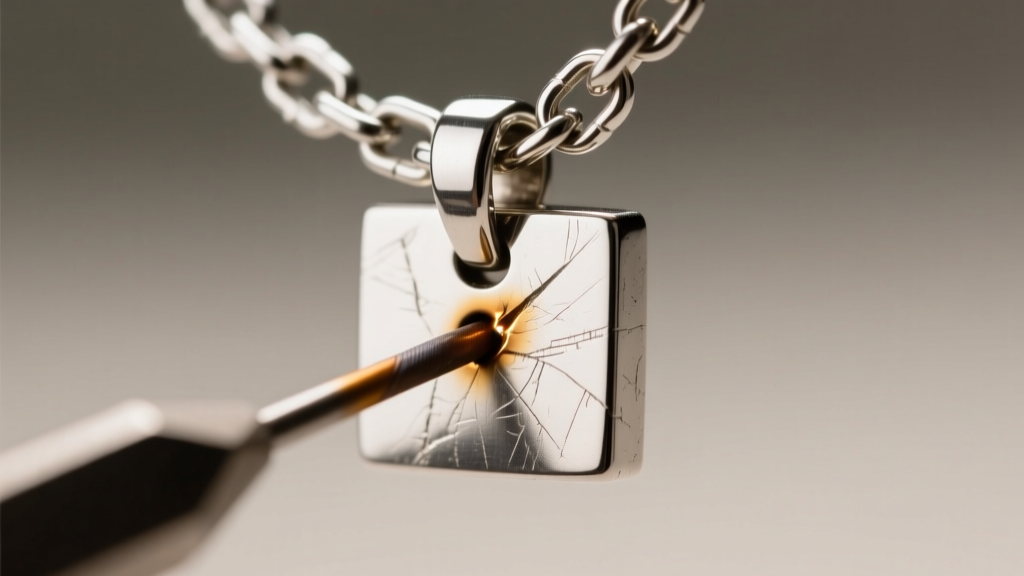
Bail and Jump Ring Shear Strength
The bail (the loop that connects the pendant to the chain) must be seamlessly integrated or securely soldered. If the pendant utilizes a traditional jump ring as a bail, that ring must be soldered shut. An unsoldered jump ring, even if tightly closed with pliers, will eventually pull apart under the leveraged weight of a geometric silver square. For pendants weighing over 10 grams, the jump ring wire should be at least 14-gauge (1.6mm thick) to resist deformation.
Clasp Engineering and Failure Points
The clasp is the secondary failure point. The industry-standard spring ring clasp is entirely inadequate for a square pendant necklace silver weighing more than 8 grams. The internal spring mechanism in a standard 5mm or 7mm spring ring is weak and prone to catching on hair or clothing, which can pull the lever open.
For any geometric silver pendant exceeding 10 grams, a forged lobster clasp measuring at least 12mm to 15mm is mandatory. The forged lever mechanism provides superior resistance to lateral pulling and ensures the necklace remains secure during active wear.
Furthermore, the jump ring connecting the lobster clasp to the opposite end of the chain must also be soldered. Many mass-produced necklaces use unsoldered split rings at the clasp connection, which act as weak links. Inspect the clasp hardware closely before purchasing; if the ring is split and unsoldered, have a local jeweler solder it shut or replace it with a solid, continuous ring.
Tarnish Resistance and Maintenance Protocols
Maintaining the high-contrast reflections of a polished silver square requires specific care protocols. Because the flat planes of a square pendant act as mirrors, even micro-scratches and light oxidation are immediately visible.
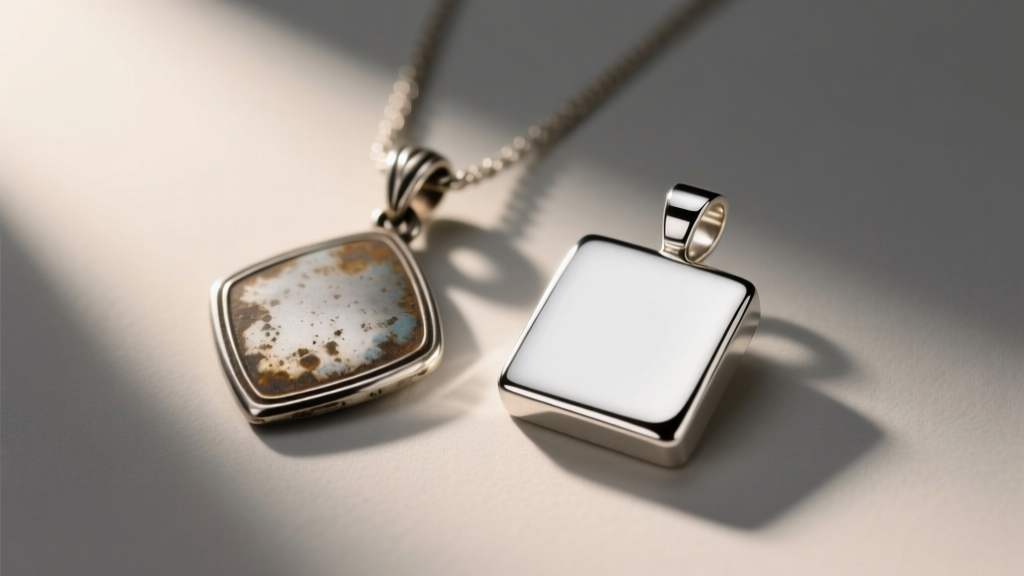
To mitigate tarnish, many manufacturers apply a rhodium flash or an anti-tarnish e-coating (electrophoretic coating). While rhodium provides a brilliant, platinum-like finish and excellent scratch resistance, it will eventually wear away on the high-friction edges of the square pendant, revealing the warmer tone of the silver beneath. An e-coating is generally thinner and more flexible, making it ideal for maintaining the natural look of the silver while providing a barrier against sulfur compounds.
For uncoated 925 sterling silver, store the necklace in an airtight polyethylene bag with an activated charcoal or 3M anti-tarnish strip. Never use abrasive silver dips or liquid chemical baths on a mirror-polished square pendant, as these can strip the luster and leave a dull, matte finish that requires professional machine polishing to restore.
Expert Verdict: Pricing and Provenance
A well-engineered square pendant necklace silver is an investment in precision manufacturing. Expect to pay between $60 and $120 for a high-quality, solid 925 sterling silver piece with a properly matched box chain and soldered findings. If the piece is crafted from Argentium 960 or features hand-chamfered edges and a heavy forged clasp, prices will realistically range from $150 to $250. Avoid ultra-cheap, hollow-stamped square pendants; they lack the mass required for a proper drape and will dent irreparably upon impact. By prioritizing alloy purity, structural gauge matching, and edge engineering, you ensure your geometric silver pendant remains a flawless, enduring staple in your jewelry wardrobe.


