How to Style a Mens Beaded Necklace: A Beginner Guide
Discover how to choose, size, and style a mens beaded necklace. Learn about bead sizes, durable stringing materials, and gemstone grades.

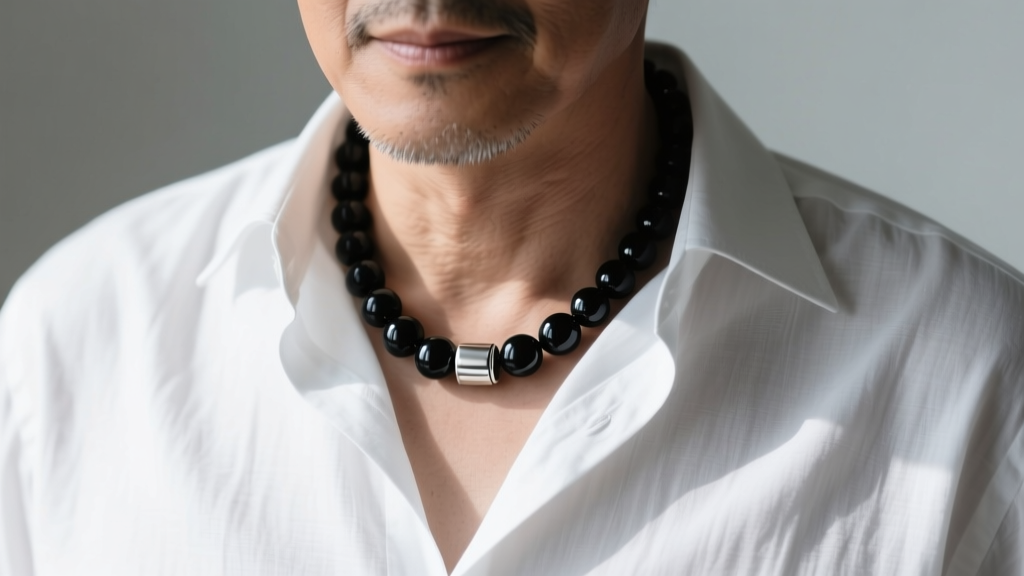
The Evolution of the Mens Beaded Necklace
Once relegated to the realm of surf-shop souvenirs and festival trinkets, the mens beaded necklace has undergone a massive renaissance in contemporary menswear. Driven by high-fashion runways and style icons like A$AP Rocky and Harry Styles, beaded necklaces have transitioned into a sophisticated layering staple. However, the line between a refined sartorial choice and a cheap-looking accessory is razor-thin. The difference lies entirely in the details: bead diameter, material grade, stringing hardware, and proportion.
For beginners, navigating the market can be overwhelming. Many mass-produced options utilize low-grade synthetic stones and weak elastic that snaps within months. This guide strips away the fluff and provides a data-driven, practical framework for selecting, sizing, and maintaining a premium beaded necklace that elevates your wardrobe.
The Millimeter Rule: Decoding Bead Sizes
The most common mistake beginners make is ignoring bead diameter. The millimeter (mm) size of the beads dictates the formality, weight, and visual impact of the necklace. Unlike chain necklaces where link width is secondary, bead size is the primary visual anchor.
- 4mm to 5mm (The Subtle Layer): These micro-beads mimic the drape of a delicate chain. They are ideal for professional environments or for layering underneath a pendant necklace. They sit lightly on the skin and rarely catch on shirt collars.
- 6mm (The Versatile Standard): The goldilocks zone for everyday wear. A 6mm bead offers enough visual weight to stand alone over a t-shirt but remains refined enough to be worn with a casual button-down. Most premium semi-precious stone necklaces default to this size.
- 8mm (The Statement Piece): Bold and unmistakable. An 8mm mens beaded necklace carries significant physical weight and demands attention. This size is best reserved for casual streetwear, hoodies, or deep V-necks where the stones can rest flat against the chest.
- 10mm and Above (The Maximalist): Strictly for high-fashion editorial looks or specific subcultures. Beads of this size can feel cumbersome and may pull on neck hair, making them impractical for daily wear.
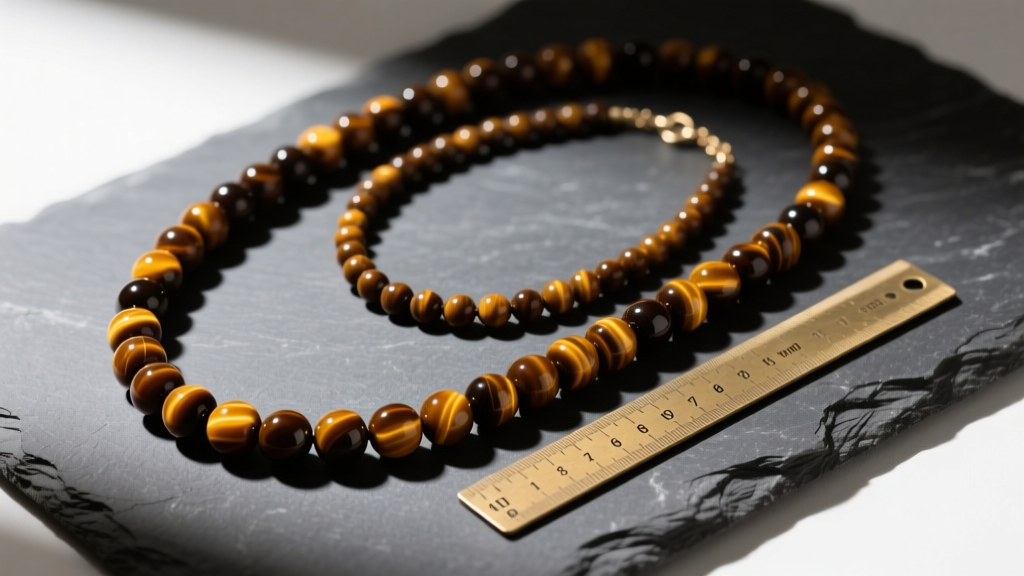
Material Grades and Gemstone Durability
Not all stones are created equal. When investing in natural gemstones, you must consider both the aesthetic depth of the material and its physical durability. The Gemological Institute of America (GIA) utilizes the Mohs scale of mineral hardness to classify scratch resistance, but for jewelry worn close to the skin, porosity and sweat resistance are equally critical.
Tier 1: High-Durability Semi-Precious Stones
Stones like Tiger’s Eye, Onyx, and Agate rank around a 7 on the Mohs scale. They are non-porous, meaning they will not absorb skin oils, colognes, or sweat. Matte black onyx is particularly versatile, offering a sleek, masculine profile that pairs effortlessly with silver or gold hardware. Expect to pay between $40 and $90 for a high-quality 6mm Tiger's Eye or Onyx strand.
Tier 2: Premium but Porous Stones
Lapis Lazuli, Turquoise, and Malachite offer stunning, vibrant colors but rank much lower on the Mohs scale (typically 3.5 to 6). More importantly, they are highly porous. If worn daily during summer or while exercising, the acids in your sweat will permanently discolor and degrade the stones over time. If you choose these materials, reserve them for evening wear or cooler months, and expect to invest $120 to $300 for genuine, un-dyed grades.
Tier 3: Organic Materials (Wood and Seed)
Sandalwood, Rudraksha seeds, and ebony wood offer a grounded, earthy aesthetic. However, organic materials are highly susceptible to moisture. According to jewelry conservation experts at Fire Mountain Gems, wood beads should never be submerged in water or exposed to heavy perspiration, as this causes the wood to swell, crack, and eventually rot the internal stringing material.
Stringing Materials: Where Cheap Necklaces Fail
The bead is only as good as the string that holds it. The most frequent point of failure in a mens beaded necklace is the stringing material. Understanding what holds your beads together will save you from the embarrassment of a snapped necklace in public.
| Stringing Material | Durability & Lifespan | Best Use Case | Failure Mode |
|---|---|---|---|
| Polyurethane Elastic | Low (6-12 months) | Budget/Stretch bracelets | Degrades from skin oils and UV exposure, snapping without warning. |
| Nylon-Coated Steel Wire (0.8mm) | High (5+ years) | Heavy 8mm+ gemstone beads | Kinks if bent sharply; requires professional crimping tools. |
| Braided Nylon Cord (1.5mm) | Very High (Decades) | Wood beads, sliding knot closures | Fraying at the clasp loop if not sealed with heat. |
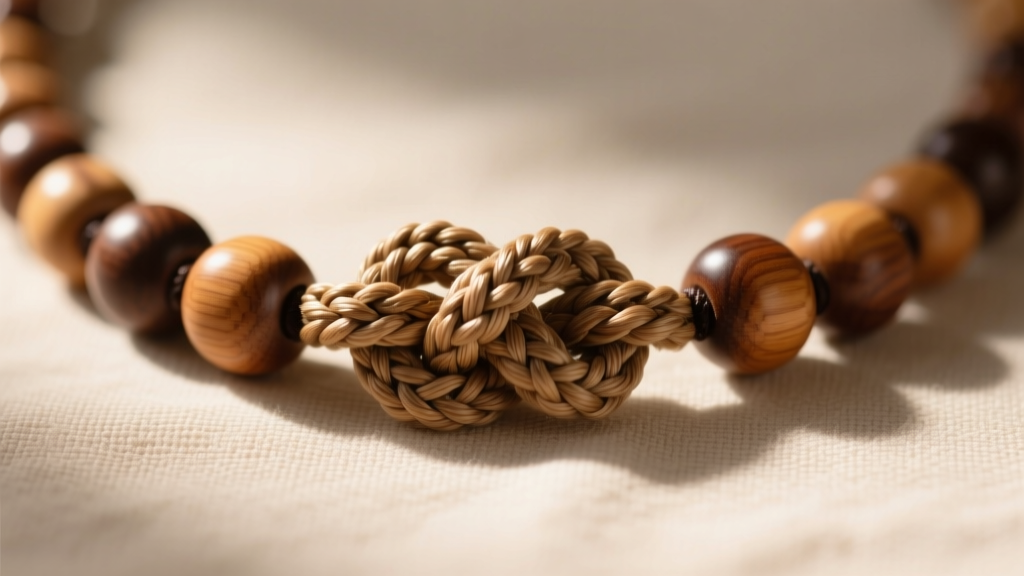
Expert Recommendation: Avoid elastic at all costs for necklaces. For gemstones, look for necklaces strung on nylon-coated stainless steel wire secured with a soldered jump ring and a stainless steel lobster clasp. For wood or casual beads, a braided nylon cord with a macrame sliding knot closure offers adjustable sizing and virtually indestructible tensile strength.
Sizing and Neckline Pairing Framework
Men’s necklaces generally fall into three length categories, each serving a distinct styling purpose based on your wardrobe's neckline.
The 18-Inch Collar
An 18-inch necklace sits tightly at the base of the throat, similar to a choker. This length is best suited for 4mm micro-beads. It pairs exceptionally well with open-collared linen shirts or deep V-necks, providing a subtle flash of texture without dangling into the chest hair. Avoid this length with crewneck t-shirts, as it will sit awkwardly above the fabric line.
The 20 to 22-Inch Standard
This is the most versatile length for a mens beaded necklace. A 20-inch strand rests just on the collarbone, while a 22-inch strand drops to the upper chest. This length works perfectly over a standard crewneck t-shirt, a Henley, or a lightweight sweater. It allows 6mm and 8mm beads to drape naturally without feeling restrictive.
The 24 to 28-Inch Streetwear Drape
Longer strands are designed to be worn over bulky clothing—think hoodies, denim jackets, or flannel overshirts. At this length, the beads act similarly to a long pendant chain, drawing the eye vertically and elongating the torso. Heavier 8mm or 10mm beads are required here; smaller beads will look lost against heavy fabrics.
Troubleshooting Common Beginner Mistakes
Even with the right materials, poor styling can undermine the look. Here are three critical mistakes to avoid:
- Clashing Undertones: If your beaded necklace features metallic spacer beads or a clasp, ensure the metal matches your other hardware (watch case, belt buckle, rings). Mixing silver clasps with gold watches creates visual dissonance.
- The 'Souvenir' Stack: Layering is highly encouraged, but avoid stacking multiple wildly different stone types (e.g., turquoise, wood, and tiger's eye all at once). Stick to a cohesive color palette or mix one stone strand with a simple metallic chain for contrast.
- Ignoring Proportion: A man with a slender build and narrow neck will be visually overwhelmed by a chunky 10mm bead necklace. Conversely, larger, broader builds should avoid delicate 4mm beads, which can look disproportionately fragile. Match the bead scale to your physical frame.
By prioritizing high-Mohs gemstones, demanding durable stringing hardware, and respecting the millimeter rule, you can confidently integrate a beaded necklace into your rotation. It is an accessory that rewards attention to detail, transforming a basic outfit into a considered, intentional look.


