Troubleshooting Your St Raphael Necklace: Fix Tarnish and Breakage
Is your St Raphael necklace tarnishing or breaking? Discover expert troubleshooting tips for chain repair, metal polishing, and daily wear maintenance.

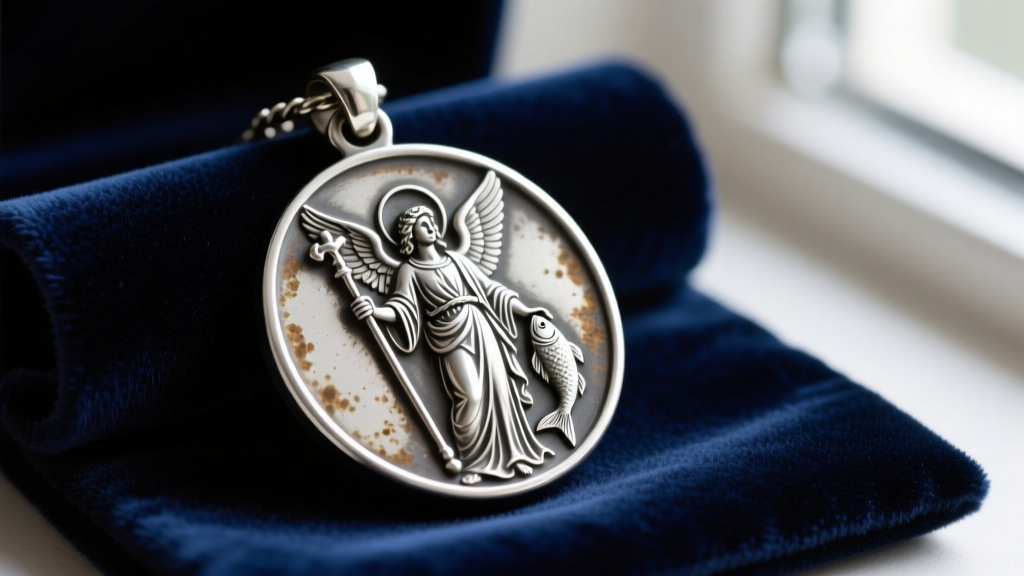
The Unique Challenges of Wearing a St Raphael Necklace
Saint Raphael the Archangel is widely revered as the patron saint of healing, medical workers, travelers, and the blind. Because of this specific patronage, a st raphael necklace is rarely worn purely as a static fashion accessory. Instead, it is frequently worn by nurses, surgeons, and frequent flyers who subject their jewelry to extreme environmental stressors. From repeated exposure to alcohol-based hand sanitizers and iodine in clinical settings to the high humidity and friction of international travel, these devotional pieces face unique structural and chemical threats.
If your saint medal is turning black, the chain is repeatedly snapping, or the intricate details of Raphael’s staff and fish are catching on your scrubs, you are experiencing common metallurgical and mechanical failures. This comprehensive troubleshooting guide will help you diagnose the exact issues plaguing your necklace and provide actionable, professional-grade solutions to restore and protect it.
Troubleshooting Metal Tarnish and Skin Reactions
The most common complaint regarding silver saint medals is rapid tarnishing or the dreaded "green skin" effect. It is a misconception that green skin means your jewelry is fake. According to the Gemological Institute of America (GIA), pure silver does not tarnish easily, but it is too soft for jewelry. Therefore, it is alloyed with copper to create 925 sterling silver. When the copper in your sterling silver St Raphael necklace reacts with the sulfur in your sweat, or with the chlorine in tap water, it creates copper chloride or silver sulfide—resulting in dark tarnish or green skin residue.
The Aluminum Foil Ion-Exchange Bath
Do not use abrasive silver dips, which strip away the antique oxidation that gives St Raphael medals their dimensional contrast. Instead, use a chemical ion-exchange bath to reverse the tarnish without removing any metal.
- Line a glass bowl with aluminum foil (shiny side up).
- Add 1 tablespoon of baking soda and 1 tablespoon of non-iodized salt.
- Pour 1 cup of boiling water over the mixture.
- Submerge your silver necklace completely, ensuring it touches the aluminum foil.
- Wait 3 to 5 minutes. The sulfur will transfer from the silver to the aluminum, leaving your medal bright and clean.
Comparing Metal Grades for Daily Wear
If you are a medical professional, standard 925 silver may require too much maintenance. Consider upgrading your chain or medal to a more resilient alloy.
| Metal Alloy | Composition | Tarnish Resistance | Best Environment |
|---|---|---|---|
| Argentium 935 | 93.5% Silver, Germanium | Very High | Daily Medical Wear |
| 925 Sterling | 92.5% Silver, Copper | Moderate | Occasion / Evening Wear |
| 316L Steel | Iron, Chromium, Molybdenum | Extreme | High-Friction / Water Exposure |
| 14k Gold | 58.3% Gold, Copper/Silver | High | Lifetime Heirloom Wear |
Chain Breakage: Why It Happens and How to Fix It
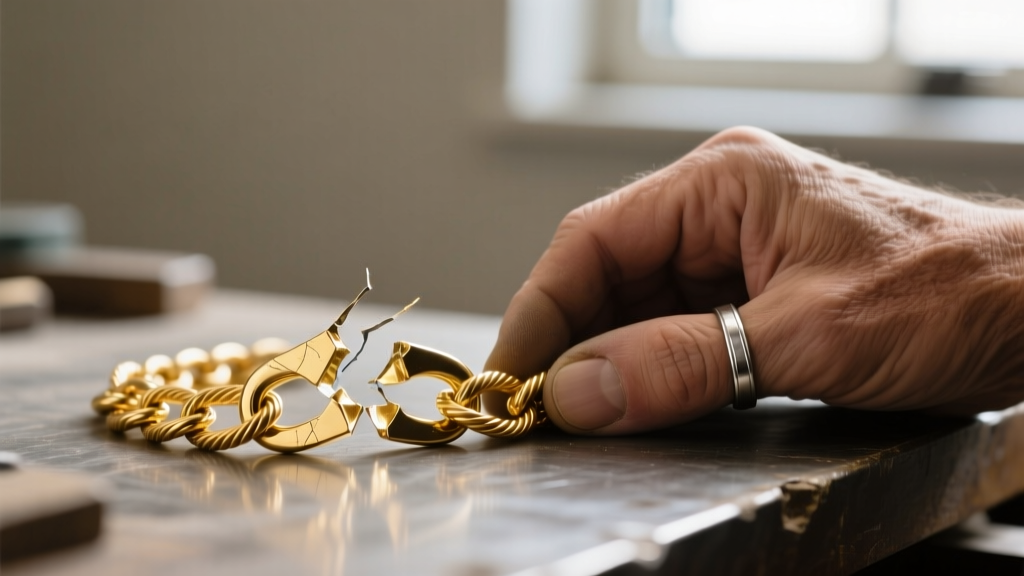
There is nothing more frustrating than reaching for your devotional pendant only to find the chain has snapped. The architecture of a St Raphael medal often includes a protruding "bail" (the loop that connects the medal to the chain). Over time, the friction between the bail and the chain links acts like a microscopic saw, wearing through the metal.
Tensile Strength of Common Chain Styles
Not all chains are created equal. If you are replacing a broken chain, you must choose a style that can withstand the weight of a solid metal saint medal.
- Cable Chains: Classic, but weak. If the links are unsoldered (meaning the tiny seam on each oval link is not welded shut), the weight of the medal will eventually pull the links apart.
- Box Chains: Excellent tensile strength due to their interlocking square geometry. However, they are prone to permanent kinking if bent backward, which weakens the structural integrity.
- Rope Chains: The strongest option for heavy pendants. The twisted, multi-link design distributes weight evenly. If a rope chain breaks, it requires a professional laser welder to repair seamlessly.
- Wheat (Spiga) Chains: Highly durable and resistant to kinking, making them an ideal, low-profile choice for wearing under medical scrubs.
Troubleshooting Tip: Inspect the inside of your medal's bail. If you see a deep groove worn into the metal, take it to a jeweler to have a "tube bail" soldered on. This replaces the friction point with a smooth, hardened steel or gold insert that will not saw through your chain.
Solving the "Scrubs and Uniform" Snagging Problem
Traditional St Raphael medals depict the archangel holding a pilgrim's staff and a fish (referencing the Book of Tobit). These intricate, protruding elements are notorious for catching on stethoscope tubing, scrub pockets, and hospital lanyards. When a necklace snags, the sudden kinetic shock can snap a chain or bend the medal.

Strategic Length and Clasp Upgrades
To prevent snagging in clinical environments, the length of your st raphael necklace is critical. A 16-inch choker length sits above the collarline, while a 24-inch rope length drops below the sternum. For medical workers, a 20-inch to 22-inch chain is the optimal troubleshooting solution. It allows the medal to rest flat against the sternum, safely beneath the neckline of standard V-neck scrubs, minimizing friction with stethoscopes.
Furthermore, upgrade your clasp. Standard spring-ring clasps are notoriously difficult to operate with gloved hands and can easily pop open if caught on a fabric loop. Swap to a lobster claw clasp for a secure, locking mechanism, or a magnetic neodymium clasp if you require quick removal for surgical scrubbing protocols.
Restoring Enamel and Painted Details
Many vintage or European-crafted St Raphael medals feature cold enamel (epoxy resin) or vitreous (fired glass) enamel to highlight the angel's wings or robes. Over time, exposure to UV light and harsh chemicals can cause this enamel to chip or yellow.
Warning: Never place an enameled saint medal in an ultrasonic jewelry cleaner. The high-frequency sound waves create microscopic cavitation bubbles that will shatter vitreous enamel and peel cold enamel right off the metal base. Instead, clean enameled pieces using only a soft baby toothbrush, warm water, and a drop of mild dish soap. If the enamel is severely chipped, consult a specialized artisan for "guilloché" enamel restoration, as attempting to fill it with hardware-store epoxy will result in a cloudy, uneven finish that ruins the medal's value.
Verifying Authenticity and FTC Compliance
If your necklace is causing severe contact dermatitis, it may contain nickel, a common allergen used in cheap base-metal castings. The Federal Trade Commission (FTC) Jewelry Guides strictly regulate metal markings. If your St Raphael necklace is stamped "925" but causes severe rashes, it may be a counterfeit silver-plated nickel alloy. To troubleshoot this, use a rare-earth magnet. Sterling silver and gold are non-magnetic; if your medal sticks firmly to a magnet, it is a ferrous base metal that requires immediate replacement to protect your skin barrier.
Final Maintenance Checklist
To ensure your St Raphael necklace remains a lasting symbol of protection and healing, implement this bi-annual maintenance routine:
- Monthly: Wipe the medal with a microfiber cloth to remove lotion, sanitizer, and sweat buildup.
- Bi-Annually: Inspect the chain links near the clasp and the bail for thinning. Use a jeweler's loupe (10x magnification) to check for micro-fractures.
- Annually: Have a professional jeweler ultrasonically clean the chain (excluding the medal if enameled) and polish the high-relief areas of the silver without stripping the recessed oxidation.
By understanding the metallurgy and mechanical stress points specific to your devotional jewelry, you can ensure that your St Raphael necklace remains intact, legible, and beautiful for decades of travel and healing work.


